 Ultimate guide
Why Natural Fur Is a Circular Fashion Choice
Last Updated: November 19, 2026
Quick Summary
Natural fur is a circular fashion choice because it is a long-lived, repairable, biodegradable material rather than a disposable one, so its production impact is spread across decades of use. A fur garment can be repaired, restyled, passed down, or repurposed into accessories and home goods, keeping the material in service and out of landfill.
- Longevity is the biggest lever in a garment's footprint, since production impact spreads across every year of use.
- A fair lifecycle comparison must state whether fur is farmed, wild, vintage, or recycled and how long each garment is worn.
- Buying vintage is the lowest-impact way to own fur because it requires no new production at all.
- A torn seam, worn lining, or loose hook is a repair, not a replacement.
- Ask what a certificate covers, who issued it, and whether it applies to the pelt or only the finished garment.
Table of Contents
- What Circular Fashion Means and Where Natural Fur Fits
- Durability and Longevity: The Core of Natural Fur's Circular Case
- Natural Fur vs Faux Fur Environmental Impact: A Lifecycle Comparison
- Vintage Fur Sustainability: Why the Secondhand Market Matters
- Fur Garment Repair and Restyling Extends the Lifecycle
- Fur Recycling and Reuse: Closing the Loop at End of Life
- Sourcing, Animal Welfare, and Evidence Quality in Sustainability Claims
- Choosing a Fur Accessory That Fits a Circular Wardrobe
- Frequently Asked Questions
What Circular Fashion Means and Where Natural Fur Fits
Circular fashion is a production and consumption model in which materials stay in use for as long as possible, then return to the environment or the supply chain instead of the landfill.
That inheritance habit is the whole argument in miniature. The fashion industry's default pattern is extraction, short use, disposal. Circular fashion interrupts it at three points: how long a garment lasts, how easily it is repaired, and what happens to it at end of life.
The Ellen MacArthur Foundation's circular economy framework describes circularity as designing out waste and pollution from the start. Fur, grown rather than synthesized, starts there.
Durability and Longevity: The Core of Natural Fur's Circular Case
Longevity is the single biggest lever in any garment's environmental footprint, because the impact of making something is spread across every year it stays in use. A fur coat worn for decades carries a very different cost per wear than a jacket discarded after two seasons.
Fur's structure explains the durability. Dense underfur traps warmth while longer guard hairs shed wind and moisture, and a well-constructed hide resists the wear that frays woven textiles.
What most guides miss is that longevity is a maintenance outcome, not a material guarantee. Fur left crumpled in a damp closet or hung on a wire hanger will degrade.
Natural Fur vs Faux Fur Environmental Impact: A Lifecycle Comparison
The natural fur vs faux fur environmental impact question is where most debates go wrong, because the comparison is usually made on one metric instead of the full lifecycle. A fair comparison runs from raw material through production, processing, years of use, care, and disposal. On that full timeline, the two materials diverge sharply, but not in every stage, and not by the same margin everywhere.
Scoping the Comparison Honestly
A lifecycle comparison is only meaningful if you state what is being compared. Four variables change the answer: whether the fur is farmed, wild, vintage, or recycled; whether the faux fur is acrylic, modacrylic, or a polyester blend; how many years each garment is actually worn; and how each is cared for and disposed of. Most public comparisons collapse these into a single verdict, which is why they disagree. Compare like with like: a new farmed fur coat against a new synthetic coat, and separately a vintage fur coat against a new synthetic coat.
Production and Processing
Faux fur is typically made from synthetic polymers derived from fossil fuels, and its production involves the energy and chemical inputs of plastic textile manufacturing, including extrusion and finishing. Neither is impact-free. The honest comparison is not "clean versus dirty" but "which impact, and for how long."
Use Phase and Care
The use phase is where the comparison most often flips. A fur coat worn for decades spreads its production impact across many years of service; a synthetic coat replaced every few seasons does not.
End of Life and Biodegradability
Here the gap widens. If you are unsure which material you are looking at, our guide on how to tell real fur from synthetic walks through the checks step by step.
Watch out: biodegradability claims are only as good as the disposal conditions. A fur garment sent to a sealed landfill will not break down on any useful timescale, and trims, linings, and buttons may not biodegrade at all.
What the Comparison Does and Does Not Settle
A lifecycle comparison can clarify trade-offs; it cannot produce a universal winner, because the answer depends on how long each garment is actually worn and how it is disposed of. What it does settle is the direction of the trade-off: natural fur front-loads its impact and then amortizes it over decades, while faux fur spreads a smaller per-year impact over a much shorter life and leaves a persistent residue. Readers who want the full argument, including sourcing and welfare, can start with our sustainability guide.
| Factor | Natural Fur | Faux Fur |
|---|---|---|
| Raw material | Animal pelt | Petroleum-based polymers |
| Production burden | Land, feed, processing chemistry | Energy and petrochemical inputs |
| Typical service life | Decades with care | A few seasons |
| Care | Brushing, professional storage | Machine washing, water and detergent |
| Repair potential | High, restyling common | Low, often replaced |
| End of life | Biodegradable under the right conditions | Persistent, sheds microfibers |
| Cost per wear over time | Falls with long use | Rises with replacement |
Vintage Fur Sustainability: Why the Secondhand Market Matters
Vintage fur sustainability is the strongest version of the circular argument, because a secondhand garment requires no new production at all. Every vintage fur coat that changes hands is a garment kept out of landfill and a demand signal removed from new manufacturing.
The practical effect is that buying vintage is the lowest-impact way to own fur.
Watch out: the secondhand market has no universal standard for condition disclosure. Ask about the lining, the seams, and any prior repairs before you buy, and inspect in person where you can.
Fur Garment Repair and Restyling Extends the Lifecycle
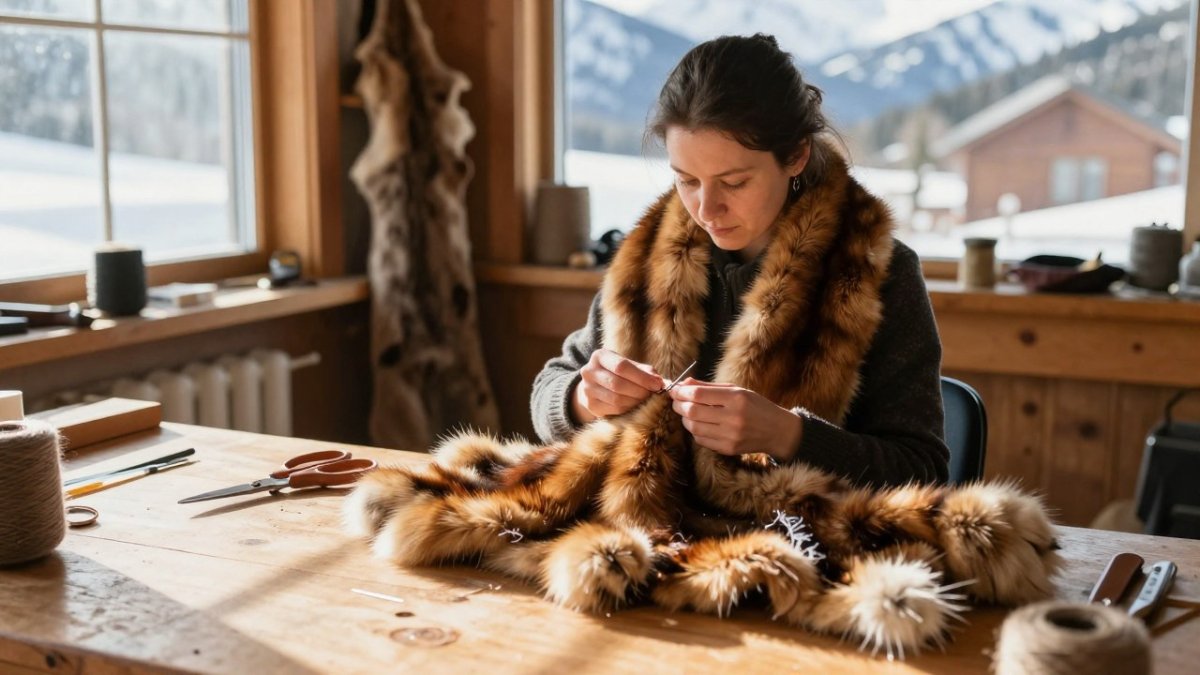
Fur garment repair and restyling is the maintenance layer of circularity, and it is where most owners leave value on the table. A torn seam, a worn lining, or a loose hook is a repair, not a replacement.
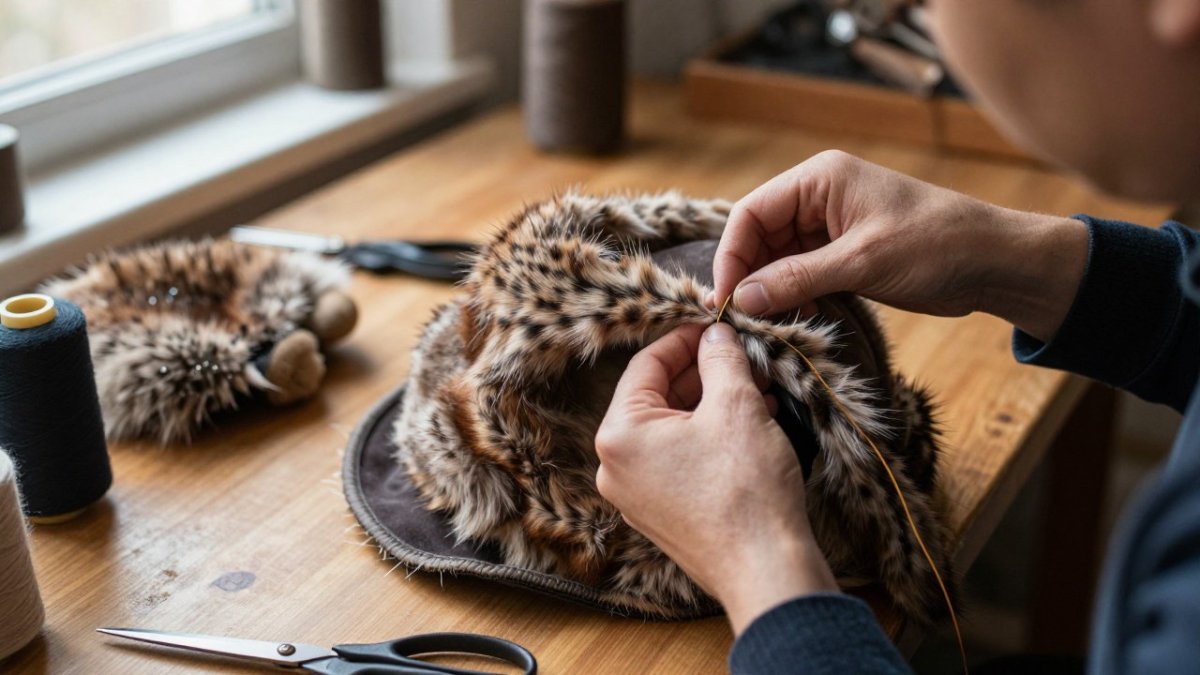
If you are coming from fast fashion, expect the maintenance rhythm to feel unfamiliar at first; it is closer to caring for a leather boot than a polyester jacket.
Fur Recycling and Reuse: Closing the Loop at End of Life
Fur recycling and reuse closes the loop when a garment truly cannot be worn as made. The material can be cut down into accessories, used as trim, or repurposed into home goods such as pillows and throws. Very little needs to be discarded outright, which is the definition of a closed loop in practice.
Repurposing also solves a real problem for heirs. A full-length coat that no one in the family will wear can become several smaller pieces that actually get used, waste reduction without sentiment loss.
Sourcing, Animal Welfare, and Evidence Quality in Sustainability Claims
Evidence quality is the part of this debate that gets skipped, and it matters more than any single claim. A sustainability assertion is only as good as the sourcing behind it: where the pelts came from, how the animals were managed, and whether the operation can document it. Buyers should treat vague claims as unproven and ask for specifics.
Testing a Claim, Not Just Reading It
Most sustainability claims fall into a few categories: renewable material, biodegradable, low-impact processing, traceable supply chain, and humane management. Each can be checked against a different kind of evidence. "Renewable" should come with a description of the management system. "Biodegradable" should come with the conditions under which it was tested.
A useful discipline is to separate what is measured from what is asserted. Measured claims tend to name a method, a scope, and a limit; asserted claims tend to use absolutes. When a seller cannot move from the second to the first, slow down.
Farmed, Wild, and Vintage Fur Are Not the Same Claim
The evidence burden differs by origin. Wild fur raises different questions, trapping methods, bycatch, and population management, documented through wildlife agencies rather than farms. Vintage and recycled fur sidesteps new production entirely, so its sustainability case rests on reuse rather than husbandry. Treating all three as one category is the most common error in this debate, and it is why blanket claims on either side tend to collapse under scrutiny.
Animal Welfare and Biodiversity as Legitimate Questions
Animal welfare and biodiversity concerns are legitimate parts of the conversation, not distractions from it. For a closer look at what to ask, see our guide on identifying ethically sourced fur, and if you want to test a seller's answers, our breakdown of verifying fur supply chain transparency shows what documentation should look like.
Watch out: a certificate is not the same as a standard. Ask what the certificate covers, who issued it, and whether it applies to the pelt or only to the finished garment.
Where the Evidence Is Thin
The broader data-backed case for why artisanal fur is sustainable is covered in our sustainability guide. But it is worth saying plainly where the evidence is thin: lifecycle studies rarely cover the full range of fur types, disposal conditions are hard to model, and welfare standards are not comparable across jurisdictions. A reader who wants to make a good decision is better served by knowing those limits than by being handed a confident verdict.
Choosing a Fur Accessory That Fits a Circular Wardrobe
Choosing well is itself a circular act. A fur accessory that suits your actual climate, wardrobe, and daily use will be worn for years; one bought for a single occasion will not.
Use this checklist before you commit:
- Does the piece suit the temperatures you actually experience, not an imagined climate?
- Can the seller explain where the fur came from and how it was processed?
- Is the construction sound at the seams, lining, and closures?
- Can the piece be repaired or restyled locally if something fails?
- Does it work with at least three outfits you already own?
- Would you still wear it in ten years?
On the last point, our guide on how long real fur hats last gives a realistic picture of care and lifespan.
The hardest part of building a circular wardrobe is not understanding the theory. It is finding pieces made well enough to justify decades of use, and a maker who stands behind the craft. Campbell Fine Furs offers artisanal fur hats, scarves, mittens, and home goods.
Frequently Asked Questions
Is vintage fur more sustainable than buying new fur?
Vintage fur carries no new production footprint, so it avoids the energy and processing tied to a newly made garment. That makes vintage fur sustainability a strong option: the garment already exists, and wearing it keeps a durable item out of the waste stream. The trade-off is condition. Check the lining, seams, and hide flexibility before buying.
Can a natural fur garment be repaired or restyled?
Yes. Fur garment repair and restyling is one of the reasons natural fur fits circular fashion. A furrier can often replace a worn lining, tighten seams, or resize a garment, depending on the piece. Repair keeps the material in use instead of sending it to landfill.
How does natural fur compare with faux fur at the end of its useful life?
The natural fur vs faux fur environmental impact debate often comes down to disposal. Natural fur is a biodegradable material that breaks down over time when exposed to soil, moisture, and microbes. Most faux fur is made from petroleum-based plastics and synthetic fibers, which do not biodegrade and can persist for a long time. Neither option disappears instantly, but natural fur returns to the environment rather than lingering as plastic waste.
Why do some people consider natural fur a circular fashion choice?
Circular fashion keeps materials in use for as long as possible through durability, repair, reuse, and resale. Natural fur fits that model because a quality garment can last for decades, be repaired or restyled, and be resold as vintage. It is also a renewable resource when sourced responsibly, and it biodegrades at end of life. That combination of long lifespan and return to the environment is the core of the circular argument.