 how-to
How to Identify Ethically Sourced Fur: A 2026 Guide
Table of Contents
- Why Ethical Sourcing Matters for Fur Products
- Understanding Fur Products Labeling Act Requirements
- How to Verify Fur Origin and Supply Chain Transparency
- Real Fur vs. Faux Fur: Identifying Material Composition
- Vintage Fur vs. New Fur Ethics: Making the Right Choice
- Key Certifications and Standards to Look For
- Evaluating Responsible Sourcing and Animal Welfare Standards
- Conclusion
- Frequently Asked Questions
Last Updated: September 1, 2026
Why Ethical Sourcing Matters for Fur Products
Consumers increasingly want to know where their fur comes from, how it was produced, and whether it aligns with their values. Buying fur without verifying its sourcing risks unknowingly supporting operations with poor animal welfare standards, unregulated trapping practices, or opaque supply chains. Understanding the markers of ethical sourcing helps you make purchases aligned with your principles while supporting producers who prioritize responsible practices.
At Campbell Fine Furs, we recognize that transparency matters. Our commitment to artisanal craftsmanship extends to understanding and communicating the ethical dimensions of fur sourcing. This guide walks you through the practical steps to identify ethically sourced fur, from reading labels to verifying certifications and assessing supply chain transparency.
Understanding Fur Products Labeling Act Requirements
The Fur Products Labeling Act (FPLA) is the primary federal regulation governing fur product labeling and disclosure in the United States. Enforced by the Federal Trade Commission (FTC), this law requires sellers to disclose specific information about fur content, origin, and processing.
What the FPLA Requires Sellers to Disclose
Under the FTC's Fur Products Labeling Act regulations, sellers must clearly disclose:
- The animal species from which the fur came (using the common name, not scientific terminology)
- Whether the fur is natural, dyed, or bleached
- The country of origin where the fur was processed or manufactured
- Whether the product contains used fur (secondhand) or new fur
The FPLA prohibits deceptive practices like using misleading animal names. If a fur product lacks this information or uses vague language, it likely violates federal requirements, a red flag that the seller may not be prioritizing transparency.
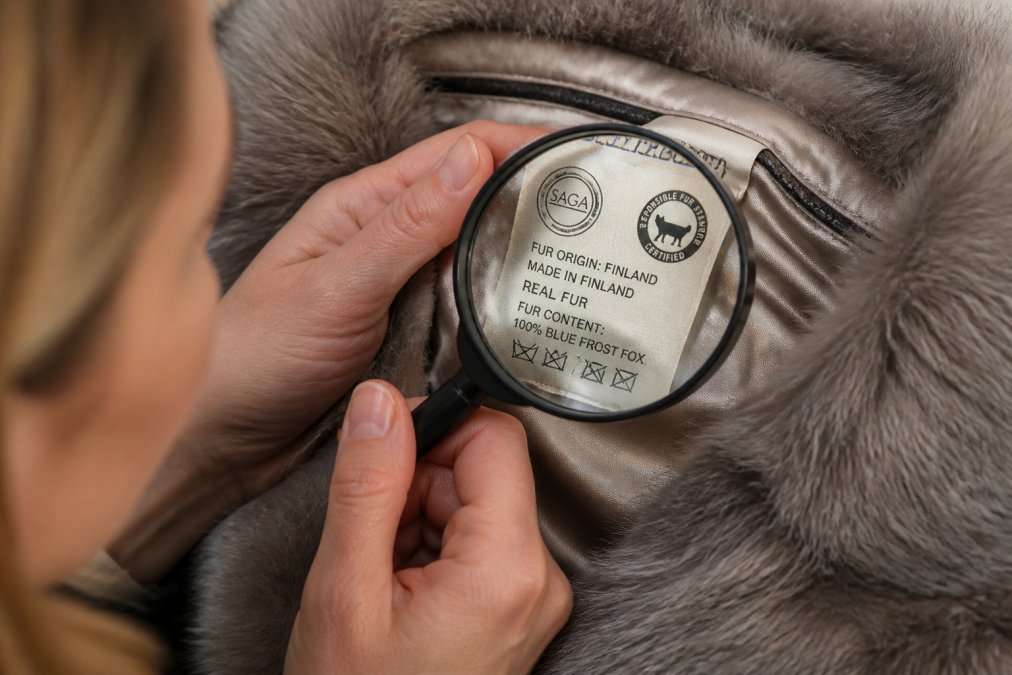
How to Read FTC-Compliant Fur Labels
When examining a fur label, look for these specific elements:
- Animal species: Listed by common name (mink, fox, rabbit, coyote, etc.). Avoid products where this information is missing.
- Processing description: Should state "dyed," "bleached," "natural," or combinations.
- Country of origin: Identifies where the fur was processed, crucial for supply chain verification since different countries have vastly different animal welfare and environmental standards.
- New vs. used designation: If the fur is secondhand or vintage, this should be clearly stated.
- Manufacturer or distributor name: Provides accountability and allows you to research the company's practices.
A well-formatted label reads: "Mink, dyed, Product of China, Made in USA" or "Fox, natural, Product of Canada, New." Vague labels like "fur product" without species designation or origin are both illegal and a sign of questionable sourcing.
How to Verify Fur Origin and Supply Chain Transparency
Reading the label is just the beginning. Truly identifying ethically sourced fur requires investigating the supply chain behind the product.
Traceability Documentation and Origin Certificates
Ethically sourced fur should come with documentation that traces the material back through the supply chain:
- Farm or ranch certificates: For farmed fur (mink, fox, chinchilla), legitimate producers maintain records of animal origin, breeding practices, and welfare conditions.
- Trapper licensing and permits: For wild-caught fur, responsible trappers carry licenses issued by state wildlife agencies requiring adherence to specific humane standards and seasonal restrictions.
- Processing facility records: Legitimate tanneries maintain documentation of the furs they handle, including origin and processing methods.
When you contact a fur retailer, ask for these documents or evidence that they've verified them. If a seller cannot or will not provide this information, that's a significant red flag.
Third-Party Certification Verification
Third-party certifications provide independent verification that fur meets specific ethical and environmental standards. Verify their legitimacy by:
- Checking the certifying organization's official website for a list of certified producers
- Confirming that the certification is current
- Understanding what standards the certification covers (animal welfare, environmental impact, labor practices, etc.)
- Looking for certifications from recognized industry bodies rather than obscure or self-created labels
A certification from an established environmental or animal welfare organization carries more credibility than a vague "ethically sourced" label created by the seller themselves.
Real Fur vs. Faux Fur: Identifying Material Composition
One of the most critical decisions when purchasing fur is whether to choose real fur or synthetic alternatives, each with distinct environmental and ethical implications.
Physical Inspection Techniques
Distinguishing real fur from faux fur requires careful physical examination:
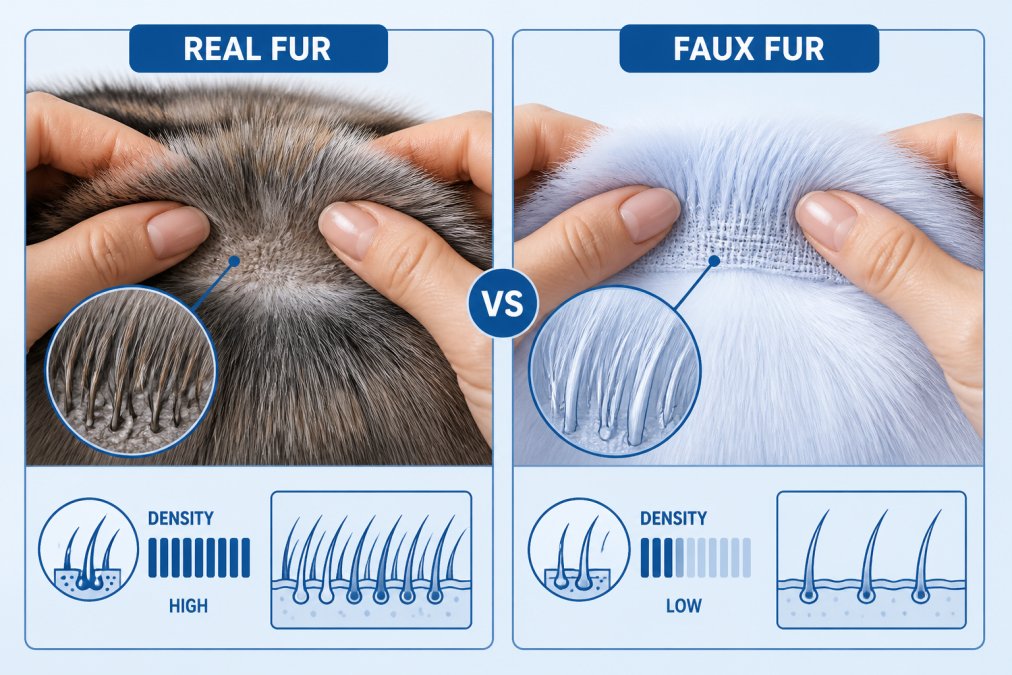
- Density and texture: Real fur feels denser and more substantial with natural variation in texture, while synthetic fur feels more uniform.
- Leather backing: Real fur is attached to a leather or suede backing. Faux fur typically uses a woven or plastic backing. Flip the garment inside-out to check.
- Hair structure: Real fur hairs are individually rooted in skin, creating natural variation. Synthetic fibers are uniform and machine-aligned.
- Burn test (use cautiously): A tiny sample of real fur will singe and smell like burnt hair. Synthetic fur melts and smells like plastic.
- Weight and drape: Real fur is heavier and drapes differently than faux fur, moving with natural fluidity.
These physical markers help you confirm whether a product is actually real fur or misrepresented as such.
Microplastics and Shedding Concerns
Faux fur presents a distinct ethical concern: microplastic shedding. Synthetic fur sheds microplastics during wear and washing, contributing to environmental pollution and entering waterways.
Real fur, being a natural material, biodegrades over time. However, real fur production involves tanning and chemical processing that carries its own environmental footprint. When evaluating ethical sourcing, consider:
- Faux fur shedding: Synthetic fibers shed continuously, particularly with wear and laundering, accumulating in the environment.
- Real fur durability: Quality real fur lasts decades with proper care, reducing the need for replacement and offsetting some environmental impact through extended lifespan.
- Processing impact: Both require processing. Real fur tanning uses chemicals requiring proper waste management; synthetic fur production involves petroleum-based manufacturing.
Real fur that lasts 20+ years may have a lower environmental impact per year of wear than synthetic alternatives replaced every few years.
Vintage Fur vs. New Fur Ethics: Making the Right Choice
One of the most ethically sound choices you can make is purchasing vintage or secondhand fur, which sidesteps many ethical concerns associated with new production.
Environmental and Ethical Advantages of Second-Hand Fur
Buying vintage fur eliminates the primary ethical concern: you're not creating demand for new animal farming or trapping. Additional advantages include:
- Circular economy participation: Extending the life of existing garments reduces overall demand for new production.
- Supply chain transparency: Older fur pieces often come with documented history from estate sales, vintage dealers, or consignment shops.
- Quality and craftsmanship: Vintage fur was often produced by artisanal makers using traditional techniques, demonstrating superior construction compared to modern mass-produced alternatives.
- Unique character: Secondhand fur offers one-of-a-kind pieces with history that new garments cannot replicate.
The ethical case for vintage fur is compelling: you're purchasing an existing product rather than creating new demand for production.
Assessing Quality and Longevity in Used Pieces
When evaluating vintage fur, focus on:
- Seam integrity: Check all seams for strength and proper stitching.
- Leather backing condition: Real fur requires a supple leather backing. Brittle or cracked backing suggests the piece may not last long.
- Hair retention: Gently pull on the fur to ensure hairs don't shed excessively.
- Odor and storage damage: Musty smells or visible mold indicate storage problems that may have damaged the fur.
- Repairs and alterations: Well-executed repairs are fine; poor repairs suggest structural issues.
Quality vintage fur from established makers often outlasts new mass-produced pieces.
Key Certifications and Standards to Look For
Recognizing legitimate certifications helps you quickly identify ethically sourced fur without conducting extensive independent research.
Recognized Ethical Fur Certifications
Several third-party organizations provide fur certifications based on animal welfare, environmental, and labor standards:
- Responsible Fur Standard (RFS): Focuses on animal welfare in farmed fur production, environmental management, and worker safety through regular audits.
- Origin Assured: Emphasizes traceability and supply chain transparency.
- Environmental certifications: Some fur producers achieve certifications for sustainable land management and reduced environmental impact.
- Labor and human rights certifications: Ensure workers in fur processing and manufacturing meet fair labor standards.
Verify certifications independently by visiting the certifying organization's website and checking their certified producer list.
Red Flags: What to Avoid
Certain marketing claims and label practices indicate questionable sourcing:
- Vague terms like "ethically sourced" or "responsibly produced" without third-party verification
- Missing country-of-origin information or labels that obscure where the fur was processed
- Unverifiable certifications from organizations you cannot find online
- Inconsistent labeling across product lines
- Sellers who cannot explain their sourcing practices when asked directly
Reputable producers can articulate their sourcing standards, provide documentation, and explain why they've chosen specific suppliers and practices.
Evaluating Responsible Sourcing and Animal Welfare Standards
Understanding the actual standards that govern fur sourcing helps you make informed decisions.
Regulated Trade Standards and Compliance
Different countries and regions enforce varying standards for fur production:
- Farmed fur regulations: Some countries mandate specific housing standards, veterinary care requirements, and slaughter methods. Others have minimal regulations.
- Wild fur harvesting regulations: In the United States, state wildlife agencies regulate trapping through licensing, seasonal restrictions, and humane trap requirements.
- Processing standards: Tanning and dyeing processes are regulated in some jurisdictions to minimize environmental and worker health impacts.
The U.S. Fish and Wildlife Service oversees regulations for certain protected species and ensures compliance with international agreements on endangered species trade.
Sustainable Fashion and Circular Economy Practices
Ethical sourcing extends beyond animal welfare to encompass broader sustainability principles:
- Durability and longevity: Ethically sourced fur should be constructed to last decades, reducing overall consumption.
- Repairability: Responsible producers design garments that can be repaired and maintained, extending their lifespan.
- End-of-life considerations: Some producers offer take-back programs or guidance on recycling worn fur garments.
- Transparency in processing: Understanding the chemicals and methods used in tanning and dyeing helps assess environmental impact.
Conclusion
Identifying ethically sourced fur requires engagement across multiple dimensions: understanding federal labeling requirements, verifying supply chain transparency, distinguishing real from synthetic materials, and recognizing legitimate certifications.
Campbell Fine Furs approaches sourcing with the same commitment to quality that defines our artisanal craftsmanship. Our fur accessories and home decor pieces are built to last, sourced with attention to supply chain transparency, and designed for consumers who value both authentic materials and responsible practices. When you choose Campbell Fine Furs, you're investing in pieces that combine traditional mountain-craft quality with the ethical standards that modern consumers demand.
Frequently Asked Questions
Q: Can fur be ethically sourced?
A: Yes, fur can be ethically sourced through regulated farming, responsible wild harvesting, or purchasing vintage pieces. Ethical sourcing means animals are raised or harvested according to animal welfare standards, the supply chain is transparent and traceable, and sellers comply with the Fur Products Labeling Act. Look for third-party certifications, clear origin documentation, and compliance with regulated trade standards to verify ethical practices.
Q: How do I verify fur origin and ensure supply chain transparency?
A: Request origin certificates and traceability documentation from the seller showing where the fur was sourced. Verify third-party certifications from recognized bodies. Check that the seller can identify the animal species, country of origin, and farming or harvesting method. Reputable suppliers maintain detailed records and are transparent about their sourcing practices. Avoid sellers who cannot provide this documentation.
Q: Is buying vintage fur ethical?
A: Vintage fur is generally considered a more ethical choice because it extends the garment's lifecycle, reducing demand for new fur production and its environmental footprint. Purchasing second-hand fur prevents waste and supports circular economy principles. However, assess the condition and durability before buying to ensure the piece will last. Vintage fur also avoids the animal welfare concerns associated with current production, making it an attractive option for ethically conscious consumers.
Q: What certifications should I look for in ethical fur?
A: Look for third-party certifications that verify animal welfare standards, sustainable practices, and regulated trade compliance. Check labels for fiber composition, origin country, and seller contact information as required by the Fur Products Labeling Act. Certifications from recognized organizations demonstrate that the fur meets specific ethical and environmental standards. Be wary of vague claims like 'ethically sourced' without supporting documentation or third-party verification.
This article was written using GrandRanker