 Ultimate guide
How to Choose Natural Fur for Winter Camping Warmth
Last Updated: November 16, 2026
Quick Summary
Natural fur insulates through a dense underfur that traps warm air against the body and longer guard hairs that shed wind and moisture, and many furs such as caribou and possum have hollow hair shafts that add warmth without much weight. Wear fur side in for maximum warmth in dry cold and fur side out for wind and snow protection.
- Wear fur side in for dry cold and fur side out for wind and snow protection.
- Roll a fur blanket rather than fold it to avoid creases and flat spots.
- Lay a foam or inflatable pad first, since no pelt blocks ground conduction alone.
- Never dry fur over a stove or campfire because heat damages leather and hair.
- Buy for the coldest, wettest night you realistically expect, then size down.
Table of Contents
- Why Natural Fur Belongs in a Winter Camping Kit
- How Natural Fur Insulates: Hollow Hairs, Underfur, and Guard Hairs
- The Warmest Animal Fur for Clothing and Cold-Weather Bedding
- Natural Fur vs. Faux Fur Warmth: What the Materials Actually Do
- Fur Side In or Out for Warmth: Matching the Wear to the Weather
- Packing a Real Fur Blanket for Camping and Bedding
- Wet Weather, Drying, and Field Care for Fur Gear
- Choosing Fur Gear That Fits How You Camp
- Frequently Asked Questions
Why Natural Fur Belongs in a Winter Camping Kit
Natural fur is a material with a long record in cold climates, and it still earns a place in many cold-weather kits. At Campbell Fine Furs, we build hats, mittens, and blankets for people who spend real hours outdoors, and the case for natural fur for winter camping comes down to how the material behaves when conditions turn bad.
Below, we'll show you exactly how fur insulates, which animal furs are warmest, when to wear fur side in versus fur side out, and how to keep a pelt alive through a wet week in the field.
The short version: fur is not a fashion relic. It is a working insulation layer with a long record in cold climates, and the campers who understand it get more out of it than the ones who treat it as decoration.
How Natural Fur Insulates: Hollow Hairs, Underfur, and Guard Hairs
A fur pelt insulates through two layers working together: a dense underfur that traps a layer of warm air against the body, and longer guard hairs that shed wind and moisture off the surface. That structure is the whole mechanism, and it explains almost every practical behavior you will notice in the field.
Hollow hairs are the key. Many animal furs, including caribou and possum, have hair shafts with air space inside them, which adds insulation without adding much weight. The underfur does the trapping; the guard hairs do the defending.
What most guides miss is that this structure is directional. Flatten the underfur by compressing it under a heavy pack, and you lose loft. That is why a fur blanket works better loosely draped than strapped down tight, and why you should shake a pelt out before bed rather than leave it crushed in a stuff sack.
The Warmest Animal Fur for Clothing and Cold-Weather Bedding
"Warmest" is the wrong question on its own. A pelt that is warmest per ounce is not the same as the warmest per dollar, the warmest when wet, or the warmest for a sleeper who rolls at night. Campers get more from a species-by-species comparison of warmth, weight, durability, and intended use than from a single ranking.
Here is how the common pelts actually sort out for winter camping:
| Pelt | Warmth for weight | Durability | Best camp use | Main trade-off |
|---|---|---|---|---|
| Caribou | Very high, hollow hair shafts add loft without bulk | Moderate; hair is brittle and sheds with hard abrasion | Worn layers in dry cold, sleeping overlays | Bulkier than it looks; hair breaks with rough handling |
| Possum | High for its weight; dense, soft underfur | Moderate | Liners, next-to-skin layers, light blankets | Less wind resistance than long guard-hair pelts |
| Sheepskin | Moderate; wool loft rather than hollow hair | High; forgiving of abuse | Bedding and ground layers where comfort matters | Heavy and bulky to pack |
| Beaver | Moderate warmth, high weather resistance | Very high; dense, tough fur | Outer layers, wind-facing surfaces | Stiff and heavy; not next-to-skin soft |
| Muskrat | Moderate | Moderate | Trim, mittens, light wear | Small pelts; limited coverage per piece |
Natural Fur vs. Faux Fur Warmth: What the Materials Actually Do
Here is the honest comparison:
| Factor | Natural Fur | Faux Fur / Synthetic |
|---|---|---|
| Insulation source | Trapped air in hollow hairs and underfur | Lofted synthetic fibers |
| Moisture behavior | Still insulates when damp, dries gradually | Can mat down and lose loft when wet |
| Breathability | Regulates temperature, vents excess heat | Tends to trap heat and moisture |
| Lifespan | Decades with care | Typically a season or two of hard use |
| Weight for warmth | High warmth-to-weight | Heavier for equivalent warmth |
If you are unsure what you are actually holding, our step-by-step guide to telling real fur from synthetic walks through the tests.
Fur Side In or Out for Warmth: Matching the Wear to the Weather
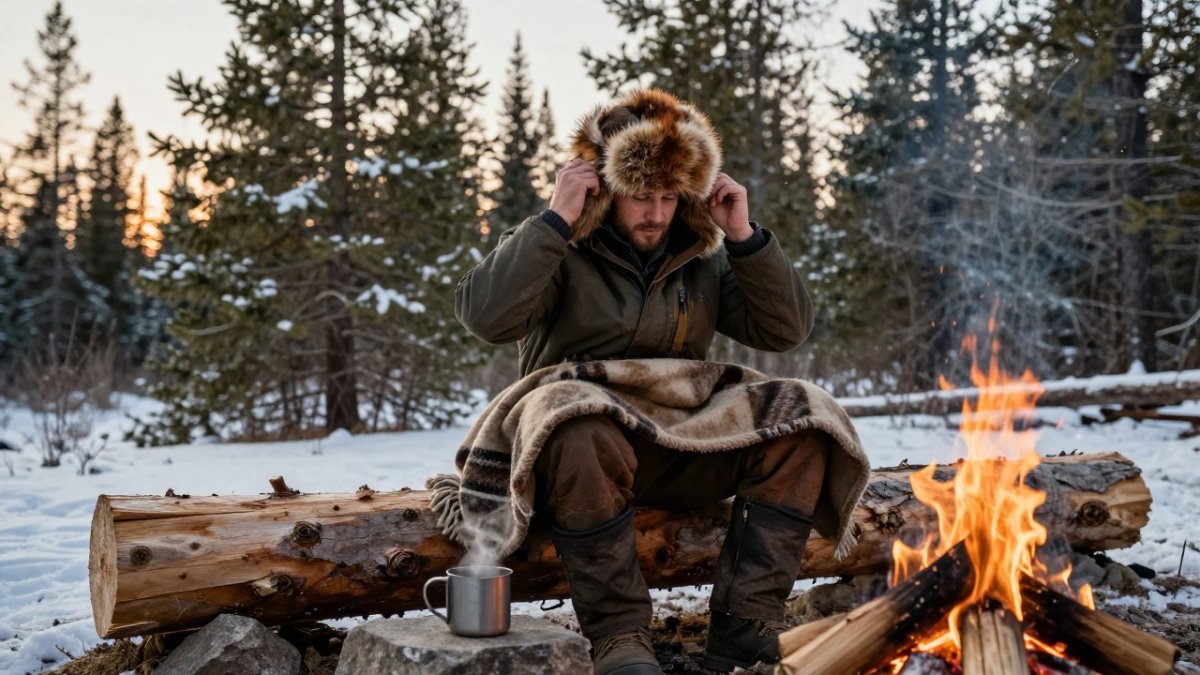
Wear fur side in for maximum warmth in dry cold, and fur side out when you need wind and snow protection on the outside. The hair direction and the exposed surface decide how the garment performs, so match the orientation to the weather rather than to habit.
Watch out: wearing a heavy pelt tight against a sweaty base layer on a long hike will soak the underfur from the inside, and that is far harder to dry in the field than surface snow.
Packing a Real Fur Blanket for Camping and Bedding
How to pack it:
- Roll, do not fold, so you avoid a hard crease in the leather and a permanent flat spot in the underfur.
- Roll fur side inward so the guard hairs are protected from abrasion against pack contents.
- Carry it in a breathable stuff sack or strapped outside the pack, never sealed in plastic.
- Keep it away from stove fuel, sharp tools, and anything that can snag guard hairs.
- Shake it out and air it for a few minutes before bed so the underfur regains loft.
How to set it up at camp:
- Lay a closed-cell foam pad or inflatable pad first, the pad blocks ground conduction, which no pelt can do on its own.
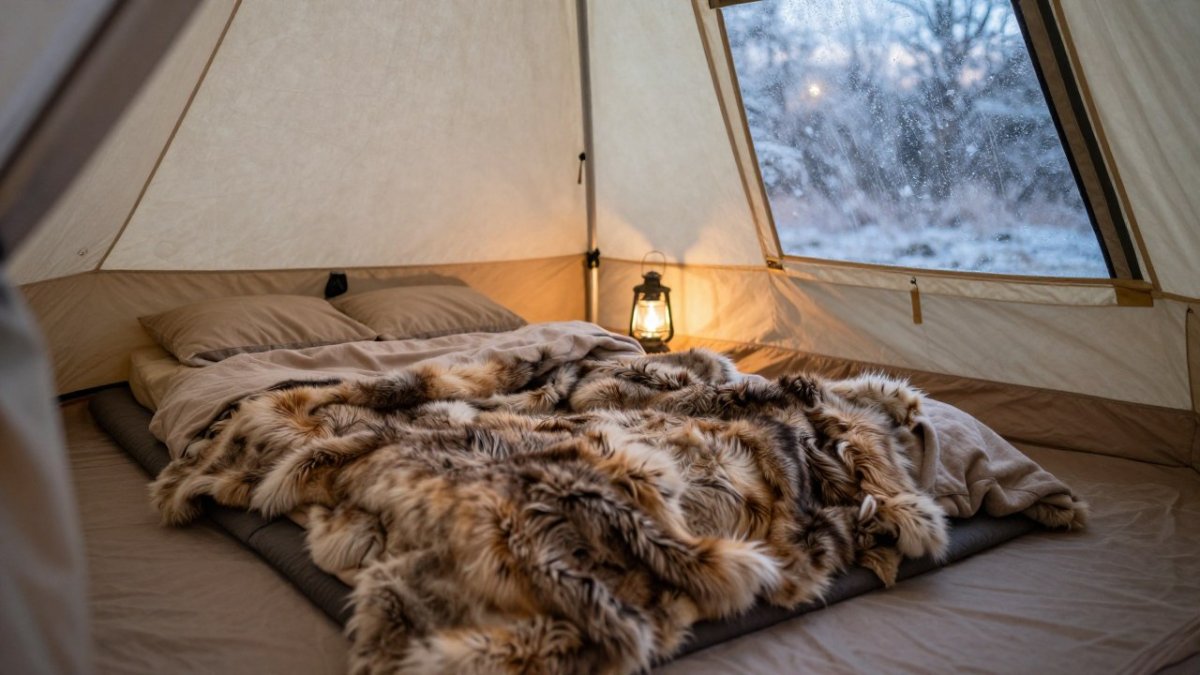
- Place the fur blanket fur side up over the pad. The underfur traps warm air against your body; the guard hairs face out.
- Add a wool blanket on top in deep cold. Wool wicks moisture away from the body and the fur insulates beneath it, so the two layers handle damp better than either alone.
- Keep the pelt loosely draped rather than tucked tight. Compressed underfur loses the air layer that does the insulating.
For sitting and still hunting, the same pelt folds into a lap or ground layer that keeps conduction off a cold log or snow bank, a use most synthetic blankets handle poorly once they are damp. Before choosing one, read our guide to the benefits of rustic fur blankets: warmth, style, longevity.
Wet Weather, Drying, and Field Care for Fur Gear
Field care comes down to three habits:
- Brush or shake out debris each evening so guard hairs stay separated.
- Never dry fur over a stove or campfire; heat damages the leather and the hair. For rain and damp conditions, see our full guide on what happens if real fur gets wet.
- Air it during the day whenever the weather allows, even for an hour.
Choosing Fur Gear That Fits How You Camp
Match the fur to your style of camping, not to a generic "warmest" ranking, because a heavy pelt that overheats you on the move is worse than a lighter piece you actually wear. Car campers can carry bulk; backpackers cannot.
Ask yourself three questions before buying:
- How much do you move? Still campers and sitters need maximum insulation; active hunters and hikers need lighter, breathable pieces.
- How wet is your climate? Damp cold favors gear you can dry and air easily.
- What touches your skin? Soft underfur for next-to-skin wear, tougher pelts for outer layers.
For anyone weighing fur against the rest of their kit, the case for real fur in winter hunting gear makes a useful companion read. And if you are still deciding between a garment and bedding, our guide to genuine fur blanket types, care, and styling covers the options side by side.
A common mistake is buying the thickest pelt available and discovering it is miserable on any hike longer than a mile. Buy for the coldest, wettest night you realistically expect, then size down for everything else.
Cold nights expose weak gear fast, and the difference between a miserable trip and a good one often comes down to one honest insulation layer. Campbell Fine Furs offers fur hats, scarves, mittens, and blankets. To explore the current selection, browse our full range of products.
Frequently Asked Questions
Is natural fur warmer than synthetic insulation for winter camping?
Natural fur insulates by trapping a layer of warm air in its dense underfur, and it has a long record in cold climates. Campbell Fine Furs offers fur hats, scarves, mittens, and blankets; see our product pages for details.
What is the warmest animal fur for clothing and cold-weather gear?
Caribou fur is widely regarded as one of the warmest natural materials because its guard hairs are hollow and trap air efficiently. Arctic fox and coyote offer excellent warmth-to-weight for hats and trim, while beaver and muskrat bring durability and water resistance to mittens and collars. Possum fur blended with wool is another strong performer. The best pick depends on your use: caribou or heavy coyote for extreme cold, beaver for wet brush, and lighter fur for active wear where bulk matters. Match the species to the conditions rather than chasing a single winner.
Should I wear fur with the fur side in or out for warmth?
Fur side in puts the insulating underfur against your body and traps heat most efficiently, which is why traditional parkas were built that way. Fur side out sheds snow and wind better and protects the pelt from abrasion, making it the better choice for outer layers, hood trim, and blankets used on top of bedding. Many experienced campers wear fur side in for the core layer and fur side out on hoods and cuffs. Test both in camp before a cold trip so you know which setup works for your body and conditions.
How do you keep a fur blanket or fur clothing dry while winter camping?
Keep fur out of direct snow contact by layering it above a waterproof ground sheet and below a breathable shell. Shake off snow before it melts, and never dry fur over a direct flame or radiator, which can crack the leather. Air it in a dry, ventilated spot, then brush the hair once dry. For a real fur blanket used as camping insulation, store it in a breathable cotton or canvas sack rather than a sealed plastic bag so trapped moisture can escape. Field care like this extends the life of the pelt for years.