 how-to
Why Real Fur Belongs in Your Winter Hunting Gear
Last Updated: November 2, 2026
Quick Summary
Real fur is animal hide with the hair still attached, and it works as winter hunting gear because it traps a layer of warm air against the body while blocking wind at the surface. The dense underfur holds warmth close to the skin, while the longer guard hairs shed wind and let moisture escape. That balance of warmth, wind resistance, and breathability is hard to copy with synthetics.
- Faux fur is usually synthetic fiber stitched to a fabric backing and insulates far less once temperatures drop.
- Below zero, favor sable, beaver, or a dense rabbit liner; in the teens and twenties, rabbit, mink, and muskrat are plenty.
- Pack a wind-resistant heavy coat in rather than wearing it on the climb to your spot.
- Fur hats and mittens are warmer per ounce than most synthetics, but a heavy fur coat is bulkier to pack.
- Hang wet fur in a cool, airy spot away from direct heat and never store it in plastic.
Table of Contents
- Why Real Fur Outperforms Synthetics in Winter Hunting Conditions
- Warmth, Wind Resistance, and Breathability: How Natural Insulation Works
- Real Fur vs. Faux Fur Warmth: What the Field Actually Shows
- The Warmest Animal Fur to Wear for Cold-Weather Hunts
- Choosing the Best Fur Hats for Hunting and Layering Your Full Outfit
- Weight, Packability, and Mobility Trade-Offs in the Field
- Fur Clothing Care: Drying, Storage, and Field Repairs
- Sourcing Your Winter Fur Gear from Campbell Fine Furs
- Frequently Asked Questions
Why Real Fur Outperforms Synthetics in Winter Hunting Conditions
Real fur is animal hide with the hair still attached, and it works as winter hunting gear because it traps a layer of warm air against the body while blocking wind at the surface. That combination is hard to copy.
Here is the core problem with most synthetic gear. It insulates well when you are dry and moving.
Real fur behaves differently. The dense underfur holds warmth close to the skin. The longer guard hairs shed wind and let moisture escape. Nature solved this problem long before anyone invented a synthetic fill.
Below, we break down how real fur compares with faux fur and synthetics, which animal furs handle cold best, and how to care for fur gear so it lasts for seasons.
Warmth, Wind Resistance, and Breathability: How Natural Insulation Works
Natural insulation works on three fronts at once: warmth, wind resistance, and breathability. Fur traps air in its dense undercoat, the outer hairs break the wind, and the hide underneath lets moisture vapor pass through. That balance is why fur stays comfortable through stop-and-go hunting.
Synthetics tend to win on one front and lose on another. A windproof shell blocks the breeze but traps sweat. A breathable fleece vents well but lets cold air straight through.
Fur can do both jobs with one material. A few practical points:
- Warmth: dense underfur holds body heat even when you are stationary
- Wind resistance: guard hairs form a natural barrier at the surface
- Breathability: natural fibers let moisture vapor escape so you stay drier
- Temperature regulation: fur moderates temperature instead of swinging hot and cold
That last point matters on a hunt. You hike in, sweat a little, then sit still. Gear that cannot manage moisture leaves you clammy and cold. Fur handles that transition better than most synthetic fills.
Real Fur vs. Faux Fur Warmth: What the Field Actually Shows
Real fur vs. faux fur warmth is not a close contest in the field. Real fur has a dense, layered structure that traps air and sheds wind. Faux fur is usually synthetic fiber stitched to a fabric backing, and it insulates far less once temperatures drop.
The difference shows up in three places:
- Density. Real fur packs a thick undercoat under longer guard hairs. Faux fur mimics the look but not the layered structure.
- Wind. Synthetic fibers let cold air push through. Real fur blocks it at the surface.
- Moisture. Faux fur backing traps sweat. Real fur and its hide let vapor pass.
There is also the longevity question.
One honest caveat: faux fur wins on price and on ease of cleaning. If you want a fashion accent for mild weather, it does the job. For serious cold and real physical exertion, it falls short.
The Warmest Animal Fur to Wear for Cold-Weather Hunts
The warmest animal fur for cold-weather hunts depends on the conditions you face, not on a single ranking. For a deeper look, see our guide to the best fur hats for extreme cold. Some furs are built for deep, dry cold. Others handle wet snow and freeze-thaw cycles better. Match the fur to your climate and your hunting style, not the other way around.
Here is how the common options compare:
| Fur Type | Warmth | Best For | Notes |
|---|---|---|---|
| Rabbit fur | High for its weight | Hats, liners, mild-to-moderate cold | Soft, light, affordable |
| Mink | High | Dress hats, trim, moderate cold | Dense and sleek, less bulky |
| Sable | Very high | Extreme cold, premium hats | Fine, dense, very warm |
| Chinchilla | Very high | Lightweight warmth | Extremely soft, delicate |
| Beaver | High, very durable | Wet snow, brush, hard use | Dense underfur, tough guard hairs |
| Coyote | High, wind-shedding | Open country, wind, active hunts | Long guard hairs, rugged |
| Muskrat | Moderate to high | Wet conditions, liners | Naturally water-resistant |
How to Match Fur to Your Hunting Conditions
Use the conditions you actually hunt in, not the coldest place you have ever read about. A simple decision path:
- Temperature. Below zero, favor sable, beaver, or a dense rabbit liner. In the teens and twenties, rabbit, mink, and muskrat are plenty.
- Wind. Open country and ridge tops call for long guard hairs, coyote and beaver shed wind best. Timber and brush hunts are less demanding.
- Moisture. Wet snow and freezing rain favor beaver and muskrat. Dry cold lets you use softer, lighter furs.
- Activity level. If you cover miles, choose a hat and mittens in rabbit or mink. If you sit on a stand, a heavier beaver or coyote hat earns its place.
- Terrain. Brush and thorny cover punish delicate furs. Beaver and coyote take abrasion; chinchilla does not.
A common pattern is that hunters overbuy warmth for the walk in and underbuy it for the sit. Fur lets you split the difference: a lighter hat for the hike, a heavier one in the pack for the stand.
Watch out: pairing a very warm fur hat with a thin synthetic neck gaiter can create a sweat trap at the hairline. Match the hat's warmth to the layer below it, or you will be damp before you reach your spot.
Choosing the Best Fur Hats for Hunting and Layering Your Full Outfit
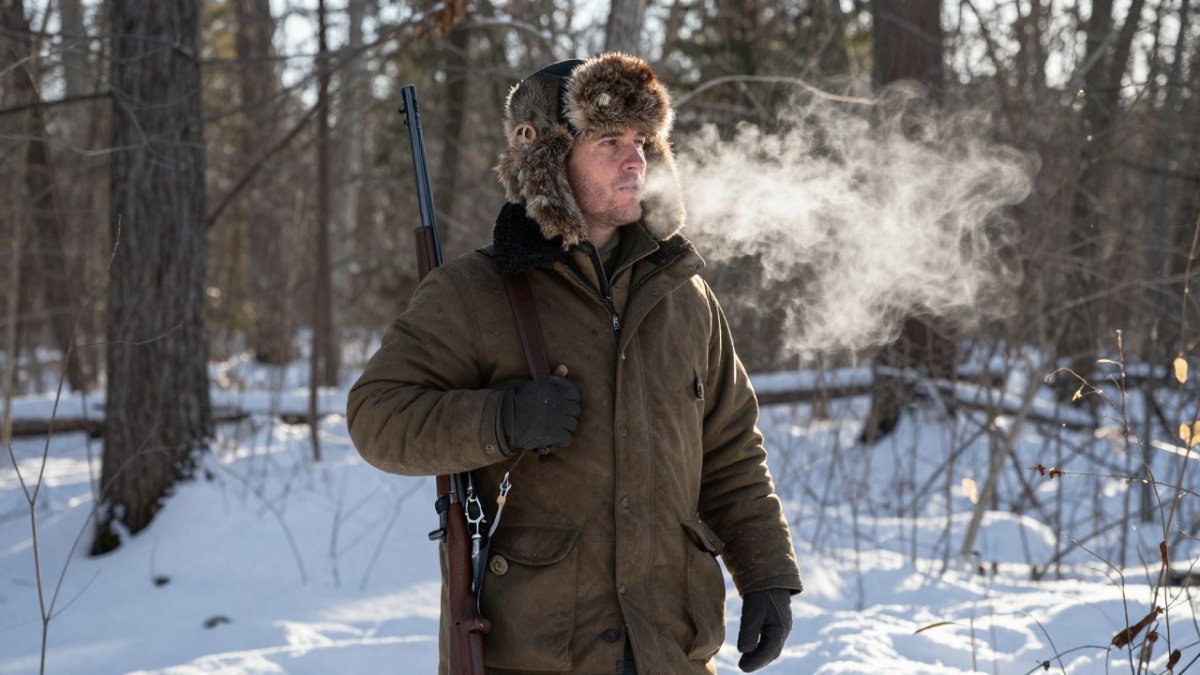
The best fur hats for hunting balance warmth with the ability to hear and see clearly. A hat that covers the ears keeps you warm, but it should not muffle sound or block your vision. Fit and layering matter as much as the fur itself.
A Step-by-Step Layering System for Winter Hunts
Build your outfit in layers so you can adjust as you move.
Step 1, Base layer (next to skin). Merino wool or a moisture-wicking synthetic. This layer moves sweat off your skin.
Step 2, Mid layer (insulation). Wool or fleece. Add or remove this layer based on how hard you are working.
Step 3, Active outer layer (movement). A breathable softshell or fleece-lined jacket for the hike in.
Step 4, Stationary outer layer (the sit). A wind-resistant heavy coat that goes on once you are at your spot.
Step 5, Head. A fur hat that covers the ears. For more on winter hunting headwear for extreme cold, see our dedicated guide.
Step 6, Hands. Fur mittens that keep fingers warm when you are still. Mittens beat gloves for stationary warmth because fingers share heat.
Step 7, Neck and face. A fur or wool scarf or gaiter seals the gap between hat and collar.
Hat Fit and Field Function
A hunting fur hat should cover the ears without sliding over the eyes. Check three things before you buy:
- Hearing. Ear flaps should not press flat against the ear canal. You need to pick up sound.
- Vision. The brim or front should clear your brow when you shoulder a rifle or draw a bow.
- Fit. Snug enough to stay on in wind, loose enough to wear over a thin liner.
A common mistake is buying a great hat but skipping the hands and neck. Cold hands end a hunt fast. Pair your hat with a proper pair of mittens for hunting.
Watch out: wearing a sealed, unvented shell over a fur hat traps moisture at the crown and can soak the fur from the inside. Vent the shell or choose a breathable outer layer.
Weight, Packability, and Mobility Trade-Offs in the Field
Weight and packability are where real fur asks you to make a trade-off. Fur hats and mittens are warmer per ounce than most synthetics, but a heavy fur coat is bulkier to pack than a compressible synthetic jacket.
Think about how you hunt. If you cover miles on foot, favor a fur hat and mittens over a full fur coat. They give you the most warmth for the least weight and keep your mobility intact.
If you sit in a blind or on a stand, a heavier fur garment earns its place. Stationary warmth is where fur shines, because it keeps insulating when you are not generating body heat.
A few practical rules:
- Choose fur hats and mittens for active hunts
- Reserve heavier fur outerwear for stationary setups
- Pack a light synthetic shell as a backup for wet weather
- Keep fur away from direct contact with wet gear in your pack
Fur Clothing Care: Drying, Storage, and Field Repairs
Fur clothing care comes down to three habits: dry it right, store it right, and fix small problems before they grow. Real fur is durable, but it needs a little attention to stay that way for years.
Drying. Shake off snow and loose moisture, then hang fur in a cool, airy spot away from direct heat. Learn more about what happens if real fur gets wet.
Storage. Store fur on a wide, padded hanger in a breathable garment bag. Keep it away from plastic, which traps moisture. Store it somewhere cool and dry, and keep it clear of moths.
Field repairs. A loose stitch or a small tear is easy to catch early. Carry a basic sewing kit and fix seams before they spread. For anything major, take the piece to a furrier rather than improvising.
Watch out: storing fur in a sealed plastic bag traps moisture and can lead to shedding and a musty smell. Use a breathable bag every time.
Sourcing Your Winter Fur Gear from Campbell Fine Furs
Sourcing real fur gear comes down to knowing where the fur came from and how the piece was made. At Campbell Fine Furs, we focus on high-quality, artisanal fur accessories built to last, and we are glad to answer sourcing questions directly.
Our line includes winter accessories such as:
- Fur hats that cover the ears and hold warmth on a stand
- Fur mittens that keep hands warm when you are still
- Scarves and accessories to round out your layers
- Home goods like blankets and pillows for the cabin
We also serve trappers with Western lures and baits. If you have questions about a specific piece, reach out and ask. You can also browse the shop to see our real fur winter hunting gear.
Frequently Asked Questions
What is the warmest animal fur to wear for winter hunting?
The right fur depends on your climate, how active you are, and whether you deal with wet snow or dry cold.
Does fake fur keep you warm in cold weather?
Faux fur can trap some warmth, but the synthetic fibers mat and lose loft faster than natural fur, especially when wet. Natural fur and faux fur differ in how they handle insulation and moisture, and the right choice depends on how you plan to use the garment.
How should you care for fur hunting accessories?
Keep fur away from direct heat while it dries, and store it in a breathable bag rather than sealed plastic.
Is real fur practical for hunting hats and mittens?
Fur can suit many cold-weather needs when matched to the conditions, and proper drying matters after exposure to moisture.
Cold weather punishes gear that only works when you are moving. If you want headwear and handwear that keep performing when you stop and sit still, real fur is the answer. Campbell Fine Furs offers artisanal fur hats, mittens, and accessories built for real winter, plus Western lures and baits for trappers. Browse our fur hats and mittens, ask us about sourcing, and gear up for the cold. Get started with Campbell Fine Furs and stay warm through every season in the field.