 how-to
What Happens If Real Fur Gets Wet: Care Guide
Table of Contents
- What Happens If Real Fur Gets Wet: The Basics
- Does Rain Ruin a Fur Coat? What Water Actually Does to Fur Fibers
- How to Dry a Wet Fur Coat Safely: Step-by-Step
- How to Care for a Real Fur Coat: Prevention and Daily Habits
- How to Prevent Fur Shedding After Water Exposure
- When to See a Professional Furrier
- Conclusion: Protecting Your Fur Garment from Water Damage
- Frequently Asked Questions
Last Updated: October 9, 2026
What Happens If Real Fur Gets Wet: The Basics
Real fur getting wet is not an emergency, but it demands a calm, correct response. Natural fur sheds light moisture, and a garment caught in a drizzle usually dries on its own.
At Campbell Fine Furs, the answer comes down to one thing: how deep the water went. Surface wetting on the guard hairs is minor; a soaked hide is a different job.
How Natural Fur Repels Water
Natural fur resists water through its structure, not a coating.
The underfur is the soft, thick layer that holds warmth. It sits beneath the guard hairs and stays dry in most light rain, the same design that keeps animals warm in wet, cold conditions.
Furriers call this natural water repellency. It works well, but prolonged rain or a full dunking eventually pushes water past the guard hairs and into the hide.
Light Rain vs. Heavy Soaking: Why the Difference Matters
Light rain and heavy soaking call for different responses. Light rain leaves the surface damp; a heavy soaking means water has reached the leather hide, where real damage begins.
Here is how to tell them apart:
- Light rain: The coat feels damp on top. The hairs still separate when you run your fingers through them.
- Moderate wetting: The coat feels wet through, but the hide still feels firm.
- Heavy soaking: The coat is saturated, the hide feels soft or spongy, and water may drip from the hem.
The first two are manageable at home. The third needs fast action and, often, a professional.
Does Rain Ruin a Fur Coat? What Water Actually Does to Fur Fibers
Rain does not ruin a fur coat by itself. What ruins it is water reaching the leather hide, followed by heat or rough handling during drying.
When fur fibers get wet, they swell slightly and the natural oils that keep them supple can wash away.
The real risk shows up in the leather hide. Leather is skin, and skin reacts badly to water and heat together.
Effects of Moisture on the Leather Hide
Moisture softens the leather hide and loosens the tanning oils that keep it flexible. When water soaks in, the hide swells; when it dries too fast, it shrinks.
Leather shrinkage is the main danger. A shrinking hide pulls the garment out of shape: seams pucker, the fit tightens, and fur fibers clump where the hide has drawn in.
Direct heat makes this worse. That is why every fur care guide says the same thing: air-dry, never heat-dry.
Signs of Water Damage: Stiffness, Brittleness, and Loss of Shape
Water damage shows up in stages, and catching it early saves the garment. Watch for:
- Stiffness: The hide feels boardy or hard instead of soft and flexible.
- Brittleness: Hairs snap or shed when you brush them gently.
- Loss of shape: Shoulders, sleeves, or the hem no longer hang straight.
If you see stiffness or brittleness, stop handling the coat and call a furrier. These signs mean the hide is drying out, and professional conditioning can still save it.
How to Dry a Wet Fur Coat Safely: Step-by-Step
Drying a wet fur coat safely means removing excess water gently and letting air do the rest.
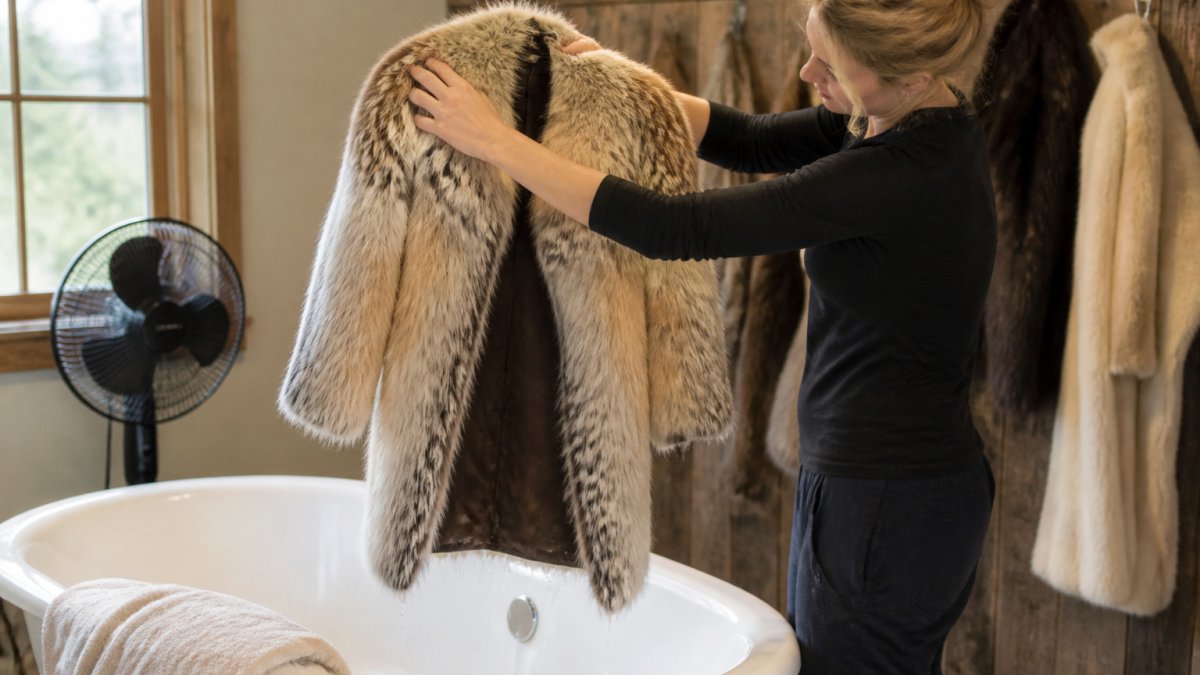
Before you start, match your response to how wet the garment actually is, the step most care guides skip, and the one that matters most.
- Mist or light drizzle: The surface feels damp but the hairs still separate. Shake once, hang on a broad padded hanger in a cool room, and let it air-dry. No towels needed.
- Rain wetting: The coat feels wet through but the hide still feels firm and cool, not spongy. Blot with towels, then air-dry with a fan on low. Check the shoulders and hem at 12 and 24 hours.
- Fully soaked: Water drips from the hem, the hide feels soft or spongy, and the coat feels heavy. Do not hang it. Lay it flat on dry towels in a cool room, change the towels as they soak, and call a furrier the same day.
Once you know your category, follow these steps in order:
- Give it a firm shake. Hold the coat by the shoulders and shake once or twice to drop loose water. Do not wring or twist it.
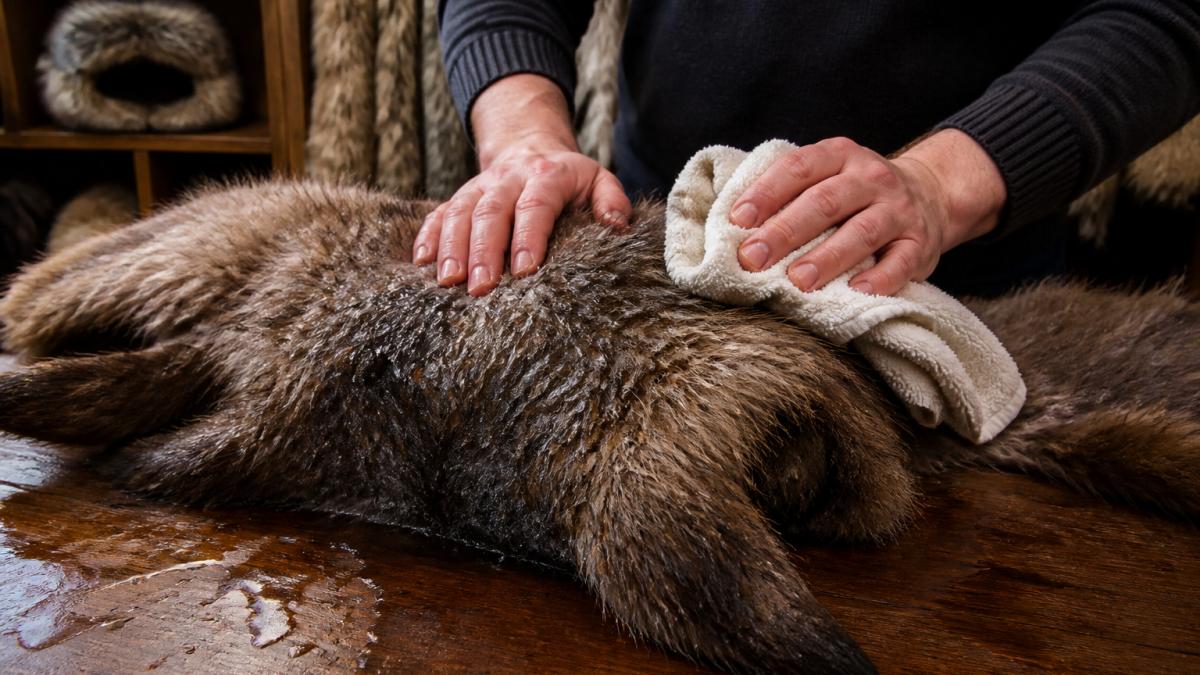
- Blot, do not rub. Lay the coat flat on a clean, dry towel and press another towel over the surface. Rubbing pushes water deeper into the hide.
- Hang it on a broad, padded hanger, unless the hide is soaked. A wide hanger supports the shoulders and prevents seam stretch; wire hangers leave marks and pull shoulders out of line. A soaked coat should stay flat.
- Choose a cool, airy room. Open a window or run a fan on low, pointed near but not at the coat. Direct airflow on one spot can cause uneven shrinkage.
- Keep it away from heat and sun. No blow dryer, radiator, direct sunlight, or heated drying rack. Heat causes leather shrinkage.
- Let it air-dry for 24 to 48 hours. Check the hide at the shoulders and hem, the last places to dry. A dry hide feels firm and flexible, not cool or tacky.
- Brush only when fully dry. Use a soft brush in the direction of the hair once the coat is completely dry. Brushing damp fur stretches and snaps fibers.
Drying Timeline and Warning Signs
A realistic timeline tells you whether the coat is drying normally or heading for trouble.
- 0 to 6 hours: Surface water evaporates. The coat should feel progressively lighter.
- 6 to 24 hours: The underfur and hide begin to dry. The hide should start to feel firm again at the shoulders.
- 24 to 48 hours: Final drying at the hem and cuffs. The coat should smell neutral and feel soft.
Watch for these warning signs:
- Stiffness: The hide feels boardy or hard instead of soft and flexible.
- Brittleness: Hairs snap or shed when you brush them gently.
- Loss of shape: Shoulders, sleeves, or the hem no longer hang straight.
If you see stiffness, brittleness, or a musty odor, stop handling the coat and call a furrier. These signs mean the hide is drying out or moisture is trapped, and professional conditioning can still save the garment if you act early.
What to Do If the Leather Hide Is Soaked
A soaked hide needs professional attention, not a home fix. If the leather feels spongy, cold, or soft when you press it, water has reached the hide, stop drying it at home.
Lay the coat flat on dry towels in a cool room and change the towels as they soak up moisture.
Call a furrier as soon as you can. A professional has the conditioning oils and controlled drying equipment to restore the hide before it stiffens.
How to Care for a Real Fur Coat: Prevention and Daily Habits
Caring for a real fur coat comes down to keeping it dry, cool, and clean between wears. Most water damage is preventable with a few quick habits.
- Check the forecast before wearing fur in wet weather.
- Carry a lightweight cover or umbrella for sudden rain.
- Hang the coat to air out after every wear, even in dry weather.
For anyone wondering how to care for a real fur coat over many seasons, the answer is consistency. Small habits beat occasional deep cleaning every time.
How Fur Type and Garment Construction Change Water Resistance
Not all real fur behaves the same way in rain. Water resistance and drying behavior vary by fur type, garment age, lining, and hide condition.
- Dense, long guard hairs (such as fox or coyote): The overlapping guard hairs shed light rain well, but the thick underfur holds moisture once it gets past the surface. These coats take longer to dry and are more prone to matting.
- Short, tight furs (such as mink or rabbit): Less bulk to soak, but the hide is closer to the surface, so water reaches the leather faster in a steady rain. Rabbit in particular has a thinner hide that stiffens quickly if soaked.
- Curly or wavy furs (such as lamb or karakul): The texture traps water in the crimps, and the curl pattern can flatten or mat if the coat dries without air movement.
Garment construction matters just as much. A full lining holds moisture against the hide longer than an unlined piece.
If you are unsure how your coat will handle rain, a furrier can tell you in a minute by feeling the hide and checking the fur type.
Travel Planning and Storage for Wet Weather
Travel is where most fur garments get into trouble. A coat packed in a car trunk or tight suitcase has no air movement, so moisture stays trapped.
Plan ahead with these steps:
- Pack fur in a breathable garment bag, not a plastic one.
- If rain is likely at your destination, bring a backup outer layer.
- Never leave a fur coat in a hot car, wet or dry.
Storage matters just as much at home. A cool, dark closet with air circulation keeps fur in good condition through the off-season. Avoid damp basements, and use a breathable cloth bag that protects against dust without trapping moisture the way plastic does.
Real Fur vs. Faux Fur: Do Not Use the Same Care Advice
One of the most common mistakes is applying synthetic-fabric care to a natural fur garment. Faux fur is usually acrylic, modacrylic, or polyester fibers on a fabric backing.
Real fur cannot. The leather hide is skin, and it reacts to water and heat the way skin does. Machine washing, machine drying, and most synthetic-fabric spot cleaners strip oils from a real hide and cause shrinkage, stiffness, or brittleness.
How to Prevent Fur Shedding After Water Exposure
Fur shedding after water exposure happens when wet fibers are handled roughly or dried with heat. The fix is patience: air-dry fully, then brush gently.
Hair shed during drying is usually loose hair already ready to fall. The bigger concern is breakage, where wet fibers snap and leave a thin patch, which is why we tell customers to keep their hands off a wet coat.
Once the coat is completely dry, brush it lightly in the direction of the hair with a soft brush or fur comb.
When to See a Professional Furrier
See a professional furrier any time the leather hide gets soaked, the coat stiffens, or shedding continues after drying. That is where home care stops and expert care starts.
Bring the coat in for these situations:
- The hide feels spongy, soft, or cold to the touch.
- The coat has dried stiff or lost its shape.
- Hairs snap or shed in patches.
A furrier can recondition the hide, restore volume, and reshape the garment. For older coats, this is also a good time to discuss remodeling, where a furrier rebuilds a dated coat into a new style using the same fur.
Conclusion: Protecting Your Fur Garment from Water Damage
Water does not have to mean the end of a good fur garment. Knowing what happens if real fur gets wet, and acting quickly when the hide soaks through, saves most coats from lasting damage.
Campbell Fine Furs offers high-quality, artisanal fur accessories, including fur hats, scarves, and mittens made for cold-weather wear. Our pieces are designed for real conditions, and we are glad to talk through care questions before and after you buy.
Frequently Asked Questions
Does rain ruin a real fur coat?
Light rain typically won't ruin a real fur coat because natural oils in the guard hairs and underfur provide some water repellency. However, heavy soaking can penetrate the leather hide, causing stiffness, shrinkage, and brittleness if not dried properly. The key is how quickly you respond: shake off excess water, air-dry at room temperature with good air circulation, and avoid direct heat or grooming while wet. If the hide becomes soaked, a professional furrier should assess the damage.
What should you do if real fur gets wet?
Give the garment a firm shake to remove excess water, then hang it on a broad wooden hanger in a room with good air circulation. Use a fan on low speed to speed drying, but never place it near a radiator, blow dryer, or direct sunlight. Let it air-dry completely before brushing or combing. If the leather hide feels soaked through, contact a professional furrier rather than attempting home remedies.
Can you wear a real fur coat in the snow?
Yes, you can wear a real fur coat in snow. Snow is frozen and doesn't penetrate fur fibers the way liquid rain does. When you come inside, shake off any snow before it melts, then hang the coat to air-dry at room temperature. Avoid brushing while the fur is still damp, as this can cause matting and clumping. Proper care for a real fur coat includes letting it dry fully before storage.
How can you tell if a fur garment has been damaged by water?
Signs of water damage include stiffness in the leather hide, brittleness, loss of shape, matting or clumping of fur fibers, and lingering odor. If the coat feels stiff or the fur no longer has its original volume after drying, the hide may have shrunk. A professional furrier can assess whether cleaning, remodeling, or conditioning can restore the garment. Early intervention improves the chances of saving the coat.
A wet fur coat is a test of patience more than skill. If you would rather not risk it, the team at Campbell Fine Furs can point you toward the right care steps for your garment. Our fur hats, scarves, and mittens are crafted for warmth and everyday wear, and our Western lures and baits are made with Andy Weiser's formulas for outdoor enthusiasts. Get started with Campbell Fine Furs and keep your fur looking its best for years.