 blog
blog
Genuine Fur Blankets: Types, Care, and Styling Guide
Table of Contents
- Why Genuine Fur Blankets Outperform Synthetic Alternatives
- Types of Fur Used in Genuine Fur Blankets
- How to Clean Real Fur Blankets Without Damaging Them
- Luxury Faux Fur Bedding for Rustic Bedrooms
- Genuine Fur Throw Styling Tips for Every Room
- How to Spot Authentic Fur and Verify Ethical Sourcing
- Conclusion
- Frequently Asked Questions
Last Updated: October 1, 2026
Why Genuine Fur Blankets Outperform Synthetic Alternatives
Walk into any home goods store and you'll find a wall of polyester throws labeled "faux fur." They look soft under fluorescent light. Then you get them home, and within a season they mat, pill, and shed fibers across your couch. Genuine fur blankets behave differently, and the reason comes down to biology, not marketing.
Types of Fur Used in Genuine Fur Blankets
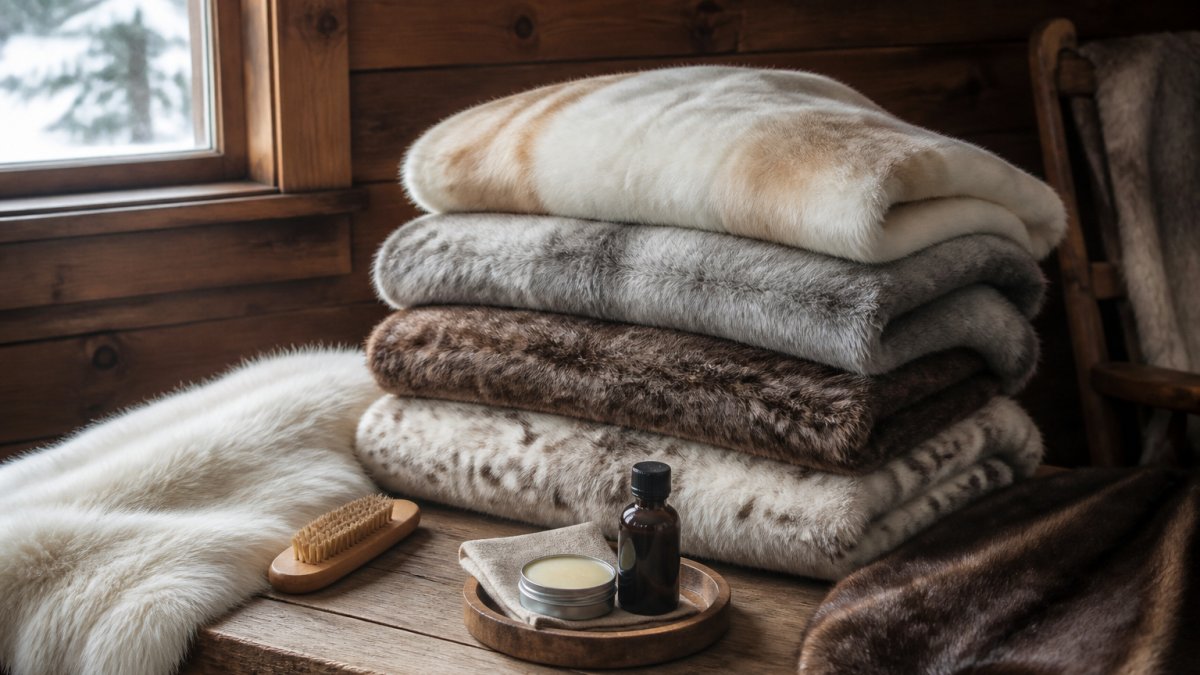
The four furs most common in quality blankets are sheared beaver, coyote, Toscana sheepskin, and rabbit. Each has distinct thermal properties, texture, and price positioning. Here's how they compare:
| Fur Type | Texture | Warmth | Best For |
|---|---|---|---|
| Sheared beaver | Dense, velvety | Very high | Heirloom throws, cold bedrooms |
| Coyote | Long, flowing guard hair | High | Rustic decor, statement pieces |
| Toscana sheepskin | Curly, wavy | Medium-high | Luxury bedding accents |
| Rabbit | Silky, lightweight | Medium | Layering, budget-friendly throws |
Sheared Beaver and Coyote Fur
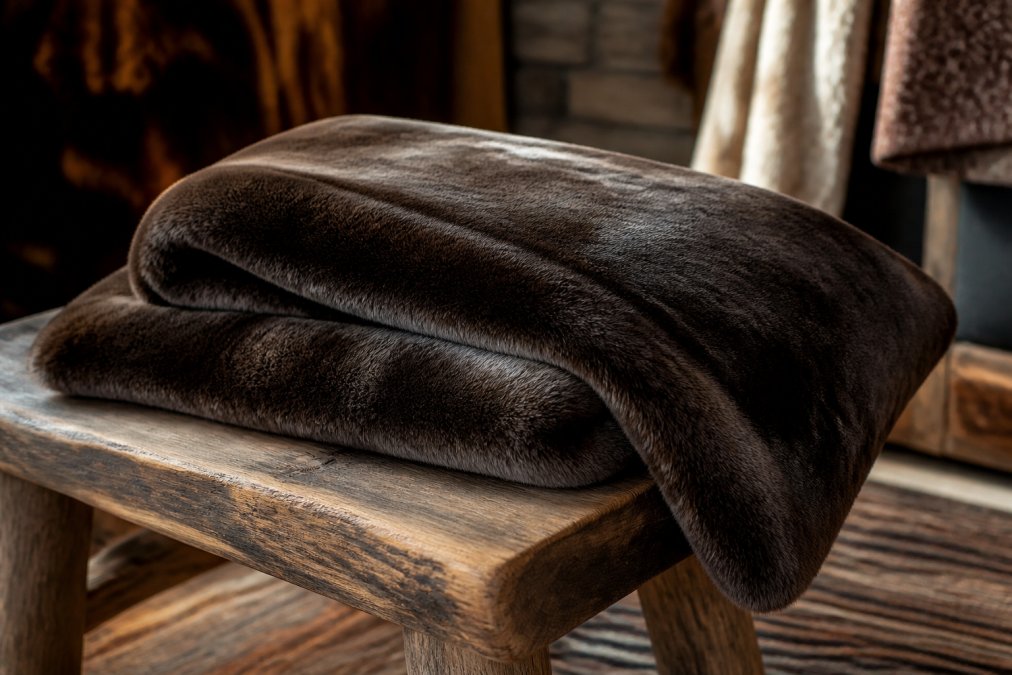
Sheared beaver is the workhorse of luxury fur bedding. The long guard hairs are trimmed away, leaving a dense underfur that feels like crushed velvet. It resists matting better than almost any other natural fiber, which matters if the blanket lives on a bed rather than a display rack.
Toscana Sheepskin and Rabbit Fur
Toscana sheepskin comes from a specific breed raised for its distinctive curly fleece. The result is a blanket with visible loft and a wavy, almost cloud-like surface. It's a favorite for rustic bedroom styling because the texture catches light and adds depth to a plain duvet.
How to Clean Real Fur Blankets Without Damaging Them
Most fur damage happens during cleaning, not during use. The leather backing is skin, and skin reacts to water the way a leather boot does: it swells, then stiffens and cracks as it dries. Harsh detergents strip the natural oils that keep hair supple, and heat shrinks the hide permanently. Understanding that mechanism is what separates a blanket that lasts decades from one that mats in a single season.
A Realistic Care Schedule
- Weekly: Shake the blanket outdoors to release dust and loose hair. A quick shake beats a vacuum, which can pull hairs from the leather.
- Monthly: Brush the nap with a soft-bristled brush in the direction of the hair. This lifts dust, separates hairs that have matted together, and redistributes natural oils.
- Seasonally: Inspect seams and the leather backing for stiffness, cracking, or separation. Address small issues before they spread.
- Annually: Have the blanket professionally cleaned by a furrier, ideally before it goes into warm-weather storage.
Spot-Cleaning Without Ruining the Hide
For small marks, use a barely damp cloth with a mild, pH-neutral soap. Work gently in the direction of the hair, never scrubbing in circles, which tangles the nap. Blot, don't rub, and let the area air-dry away from direct heat, sunlight, or a radiator. A hair dryer is the fastest way to stiffen a leather backing.
Why a Furrier Is the Only Safe Full Clean
A furrier cleans the leather and the hair separately, using solvents and equipment designed for hide. That separation is the whole point: water-based cleaning soaks the leather, and once it dries stiff, the blanket never drapes the same way again. This is not a DIY project, and it is not a dry-cleaner project either, most dry cleaners handle garments, not fur-on-hide bedding.
Storage That Prevents Matting and Shedding
- Store in a breathable cotton bag or a clean cotton pillowcase. Never plastic, plastic traps moisture and invites mildew.
- Keep the blanket away from radiators, damp basements, and direct sunlight, all of which degrade both hair and leather.
- Fold loosely rather than compressing the blanket into a tight stack. Constant pressure in the same spot flattens the nap.
- If you store it for the off-season, add a cedar block or lavender sachet rather than mothballs, which leave an odor that clings to fur.
What to Tell Your Furrier
When you drop off a blanket, mention how it is used (bed versus display), any spots you have already treated, and how it has been stored. A furrier can adjust the cleaning method based on that history, and can flag early signs of leather fatigue before they become tears.
Luxury Faux Fur Bedding for Rustic Bedrooms
Real fur isn't the only option for a rustic bedroom, and it isn't always the right one. Luxury faux fur bedding has a place, particularly in homes with pets, young children, or a tighter budget. Modern high-pile synthetics can look convincing from across a room.
Genuine Fur Throw Styling Tips for Every Room
A fur throw is one of the few home decor items that works in almost any room, provided you match the fur to the setting. Drape a coyote throw over the arm of a leather sofa for a lodge feel. Fold a sheared beaver blanket at the foot of a bed for a quiet layer of texture. Toscana sheepskin reads well on a reading chair, where the curly pile softens a hard frame.
How to Spot Authentic Fur and Verify Ethical Sourcing
Authenticity is where most buyers get burned, and it is the question we hear most. Two separate problems get tangled together here: telling real fur from high-quality faux, and telling responsibly sourced fur from fur of unknown origin. They need different methods.
Step 1: Check the Backing
A genuine fur blanket has a leather backing you can see and feel at the seams. Faux fur is stitched to a woven fabric base, usually a knit or polyester mesh. Turn the blanket over and look at the edge. If the reverse side looks like fabric, it is faux. If it looks and feels like suede or hide, it is genuine.
Step 2: Examine the Hair
Real fur hairs taper and vary in length, thickness, and color. Synthetic fibers are uniform, often with a slight plastic sheen under bright light. Run your fingers against the nap: genuine fur has a natural resistance and springs back, while synthetics tend to lie flat or clump.
Step 3: The Burn Test
Pull one hair free and burn it over a sink. Real fur smells like burnt hair and crumbles to ash. Synthetic fibers melt into a hard bead and smell like plastic. This test is destructive, so only do it on a loose hair or a hidden area.
Step 4: Ask Sourcing Questions
Useful questions to ask:
- Which species is this, and where was it sourced?
Comparing Fur Types on Authenticity and Durability
Different furs behave differently over time, and knowing the trade-offs helps you judge whether a blanket is worth its asking price.
| Fur Type | Texture | Warmth | Durability | Best For |
|---|---|---|---|---|
| Sheared beaver | Dense, velvety | Very high | Excellent, resists matting | Heirloom throws, cold bedrooms |
| Coyote | Long, flowing guard hair | High | Good, sheds more in year one | Rustic decor, statement pieces |
| Toscana sheepskin | Curly, wavy | Medium-high | Good, holds loft well | Luxury bedding accents |
| Rabbit | Silky, lightweight | Medium | Fair, wears faster | Layering, budget-friendly throws |
Red Flags to Watch For
- A price far below what the fur type normally commands.
- No species named, only "genuine fur" or "natural fur."
- Photos that show only the front of the blanket, never the backing.
- A seller who cannot answer basic questions about care or origin.
Conclusion
The hardest part of buying a fur blanket isn't finding one. It's telling a real one from a convincing fake, and knowing how to keep it in good condition once it's yours. Get the material right, clean it correctly, and a quality fur blanket can be a lasting addition to your home.
Frequently Asked Questions
What fur makes the best blanket?
Sheared beaver is widely considered the best choice for genuine fur blankets because its dense underfur provides excellent insulation and a velvety texture that resists matting. Coyote fur offers a rugged, long-haired look with strong durability. Toscana sheepskin delivers a soft, wavy appearance ideal for decorative throws. Rabbit fur is the most affordable option but sheds more over time. The right pick depends on whether you prioritize warmth, durability, or visual character in your home.
How long do genuine fur blankets last?
A well-maintained genuine fur blanket can last several decades. Sheared beaver and coyote fur are among the most durable options because their dense fibers resist shedding and matting. Longevity depends heavily on proper storage: keep the blanket away from direct sunlight, humidity, and heat sources. Brush the fur periodically and have it professionally cleaned every few years. With that care, a quality fur throw becomes an investment piece that outlasts most synthetic alternatives.
How do you properly clean and maintain a genuine fur blanket?
Shake your genuine fur blanket outdoors regularly to remove dust. For light soil, spot-clean with a damp cloth and mild soap, working in the direction of the fur. Never machine wash or submerge the blanket in water. For deep cleaning, take it to a professional furrier who has the right solvents and equipment. Store the blanket in a breathable cotton bag, never plastic, and keep it in a cool, dry place away from direct sunlight to prevent drying and cracking.
Is real fur still legal?
Yes, genuine fur blankets are legal to buy and own in the United States. Several states and cities have restricted the sale of new fur products, so availability varies by location. If you are ordering online, check that the seller ships to your state. Sellers can confirm which products are available in your area.