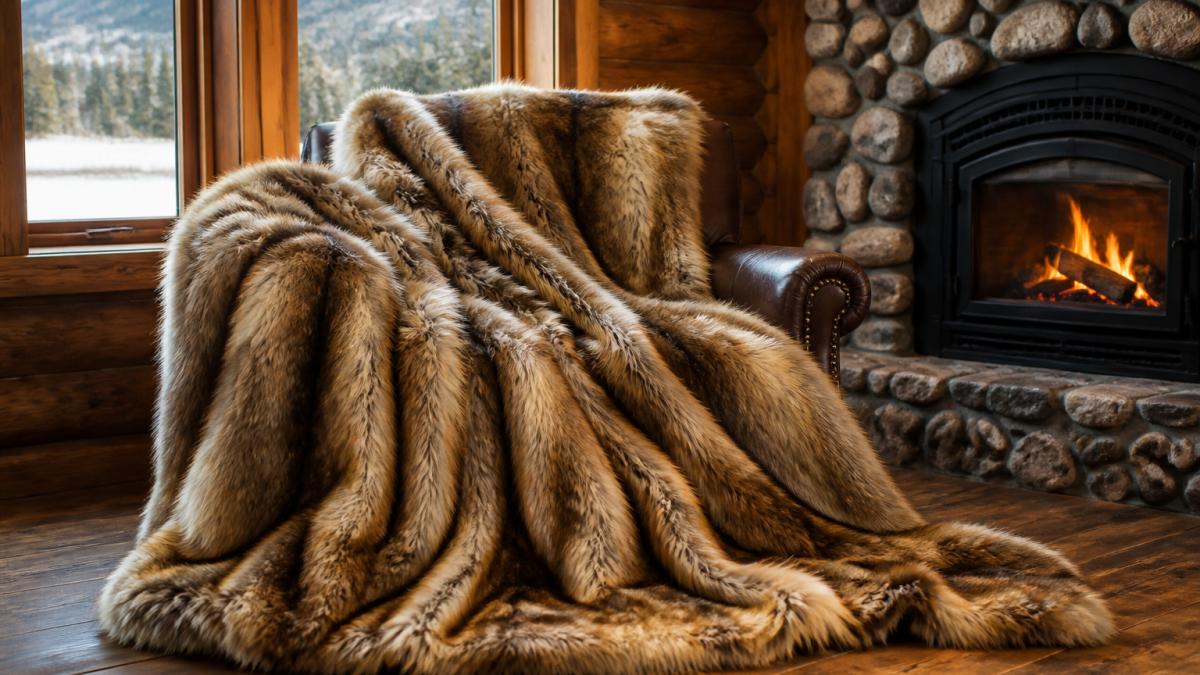
 listicle
Benefits of Rustic Fur Blankets: Warmth, Style, Longevity
Table of Contents
- Why Rustic Fur Blankets Are More Than Just Decor
- 1. Natural Warmth and Insulation for Cold Nights
- 2. Softness, Texture, and Breathability That Prevent Overheating
- 3. Rustic Fur Blankets as Statement Home Decor
- 6. Natural vs. Faux Fur: Sourcing, Allergies, and Household Fit
- Conclusion: Choosing a Rustic Fur Blanket That Lasts
- Frequently Asked Questions
Last Updated: October 5, 2026
Why Rustic Fur Blankets Are More Than Just Decor
A rustic fur blanket is a full-pelt or pieced natural fur covering used as a throw, bed covering, or decorative accent, valued for warmth, texture, and long-term durability. That shift makes sense once you understand what real fur does that synthetic materials can't.
Most buyers assume a fur throw is purely a style choice. It isn't. The same fiber structure that gives natural fur its appearance also traps air for insulation, resists matting, and holds up for decades with basic care.
1. Natural Warmth and Insulation for Cold Nights
Natural fur insulates better than most blanket materials because each hair shaft traps a layer of air against your body while the dense underfur blocks drafts.
The warmth-to-weight ratio sets fur apart. A wool comforter has to be heavy to hold heat.
If you live somewhere with mild winters, a lighter fur throw still works as a shoulder covering on cool evenings without overheating you the way a heavy quilt can.
2. Softness, Texture, and Breathability That Prevent Overheating
Fur feels soft because the individual hairs have a natural taper and flexibility that synthetic fibers can't fully copy. Run your hand across a quality pelt and you'll notice the pile moves and recovers rather than flattening.
Breathability is the benefit most people overlook. Fur fibers allow moisture vapor to pass through while still holding warmth, so you stay comfortable instead of clammy.
- Softness: natural taper gives a smooth hand-feel that improves with grooming
- Texture: density and pile depth vary by species and pelt size
- Breathability: moisture vapor passes through, reducing overheating
- Temperature regulation: warm without the clammy feel of synthetics
The practical result: you can use a fur blanket in fall and spring, not just deep winter.
3. Rustic Fur Blankets as Statement Home Decor
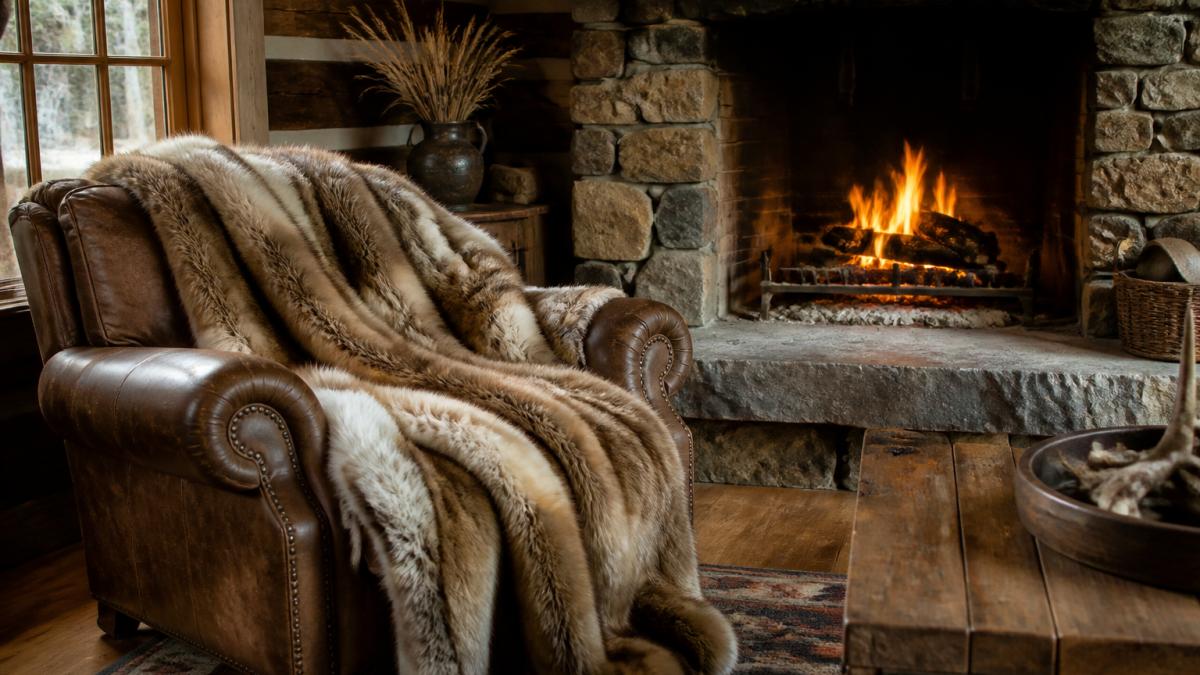
A rustic fur blanket works as a decorative accent because it adds texture, warmth, and a natural focal point that flat textiles can't match.
- Spot-clean spills immediately with a damp cloth
- Schedule professional cleaning every 1-2 years
- Store in a breathable bag, away from sunlight and moisture
- Shake out and air the blanket between seasons
6. Natural vs. Faux Fur: Sourcing, Allergies, and Household Fit
Natural fur and faux fur differ mainly in sourcing, lifespan, and how they behave in a home with allergies or shedding concerns. Neither is universally better; the right choice depends on your household. This section covers what most guides skip: how to read the labels, who each material suits, and what to ask before you buy.
What "Rustic Fur" Actually Means on a Label
The term "rustic fur" is a style description, not a material standard. It can refer to real fur, faux fur, or a blend of rustic styling with synthetic pile. To know what you are buying, read the material label and the country-of-origin disclosure.
- Real fur: labeled by species (for example, cowhide, sheepskin, or other permitted species) and must carry a fur origin disclosure under federal labeling rules.
- Faux fur: labeled as acrylic, polyester, or modacrylic. The backing is usually a woven fabric, not leather.
- Blended or pieced: may combine real fur with fabric backing or trim. The label should list each component.
How to Tell Natural From Synthetic in Person
Hold the blanket up to a light source. Natural fur shows an irregular, layered structure with a visible leather backing. Faux fur shows a uniform, machine-set pile on a woven fabric base. That single test tells you more than most product descriptions. You can also part the pile at the base: natural fur emerges from hide, while faux fur is stitched into fabric.
Sourcing and Animal-Welfare Considerations
Natural fur comes from animals and, when responsibly sourced, is a byproduct of regulated industries. If ethical sourcing matters to you, ask the seller directly about where their pelts come from and how they are tanned. A straight answer with specifics is a good sign. Vague marketing language is not. Look for sellers who can name the tannery, describe the tanning method, and explain how they handle byproduct sourcing.
Allergies, Shedding, and Household Suitability
- Animal-fur allergies: If anyone in the home reacts to animal dander, faux fur is the safer choice. Natural fur can carry dander even after tanning.
- Synthetic-fiber sensitivities: Some people react to acrylic or polyester pile. Natural fur may suit them better.
- Pets and children: Natural fur sheds minimally when well-made, but loose hairs can be a concern around infants. Faux fur sheds synthetic fibers, which can also be inhaled or ingested.
- Shedding: All fur sheds a little, but excessive shedding usually points to poor tanning or low hair density rather than the material itself. Well-made natural fur sheds minimally with regular grooming.
A Quick Decision Guide
| If your priority is... | Consider... | Because... |
|---|---|---|
| Lowest entry cost | Faux fur | Lower upfront price, no sourcing questions |
| Longest lifespan | Natural fur | Holds pile for decades with care |
| No animal products | Faux fur | Synthetic materials only |
| Natural materials | Natural fur | Byproduct sourcing, biodegradable hide |
| Allergy-friendly | Depends on the allergy | Match material to the specific sensitivity |
Conclusion: Choosing a Rustic Fur Blanket That Lasts
The benefits of rustic fur blankets come down to warmth without weight, breathability that prevents overheating, texture that anchors a room, and durability measured in decades rather than seasons. The catch is that not every blanket delivers those benefits.
If you want a fur blanket built to hold up, Campbell Fine Furs offers artisanal fur accessories and home decor crafted with the same care we put into every piece.
U.S. Fish and Wildlife Service guidance on fur products and trade
Federal Trade Commission guidance on textile and fur labeling
Smithsonian Institution resources on natural fiber and fur materials
Frequently Asked Questions
How long do rustic fur blankets last?
A well-made natural fur blanket can last 20 to 30 years or more with proper care, while quality faux fur typically lasts 5 to 10 years before the pile mats or sheds. Durability depends on the fur type, the quality of the backing, and how you store and groom it. Full-pelt blankets with dense, intact fur fibers hold up best, especially when kept away from direct sunlight and humidity.
How do you care for a fur blanket?
Shake your fur blanket outdoors regularly to remove dust, and brush the pile with a soft-bristle brush to keep fibers from matting. Spot-clean spills with a damp cloth and mild soap, then air-dry away from heat. For deep cleaning, take natural fur to a professional furrier. Store your blanket in a breathable cotton bag, never plastic, and keep it away from moths and direct sunlight during the off-season.
Can a fur blanket work in a rustic bedroom?
Yes. A fur throw or full-pelt blanket layered over a quilt or comforter adds texture and warmth that fits log cabins, Western-style homes, and modern rustic interiors. Faux fur bedding for rustic bedrooms offers the same visual impact at a lower cost and is easier to clean. Drape it across the foot of the bed or over a bench for a decorative accent that doubles as extra warmth on cold nights.
Are fur blankets warm enough for winter?
Natural fur traps air between individual fibers, creating insulation that keeps you warm without the bulk of heavy synthetic blankets. That warmth-to-weight ratio is why fur throws work well on cold nights. Breathability matters too: natural fur wicks moisture and lets air circulate, so you stay warm without overheating the way you might under a thick polyester comforter. Layering a fur blanket over a lighter cover gives you adjustable warmth.