 listicle
Buy Handcrafted Fur Mittens Online: 2026 Buying Guide
Table of Contents
- Why Handcrafted Fur Mittens Beat Mass-Produced Gloves
- What to Look for When You Buy Handcrafted Fur Mittens Online
- Top Picks: Handcrafted Fur Mittens Worth Your Money
- How to Clean Fur Mittens Without Damaging Them
- Warmest Winter Mittens for Extreme Cold: What Actually Works
- Sizing, Care, and Custom Orders: What to Know Before You Buy
- Final Verdict: Where to Buy Handcrafted Fur Mittens Online
- Frequently Asked Questions
Last Updated: September 4, 2026
When the temperature drops below zero, a pair of handcrafted fur mittens is the difference between misery and comfort. Mass-produced gloves often deliver clammy, inadequate insulation that fails within a season. This guide from Campbell Fine Furs breaks down what to look for when you buy handcrafted fur mittens online, covering materials, construction, and care so you get a pair that lasts decades.
The gap between a cheap glove and a quality fur mitten comes down to materials, construction, and the skill of the artisan.
Why Handcrafted Fur Mittens Beat Mass-Produced Gloves
The core advantage of handcrafted fur mittens is simple: they use natural materials that actually regulate temperature. Fur traps air in its dense underfur, creating an insulating layer that synthetic fills struggle to match. Real fur also breathes, which means your hands stay warm without soaking in sweat during high-output activities.
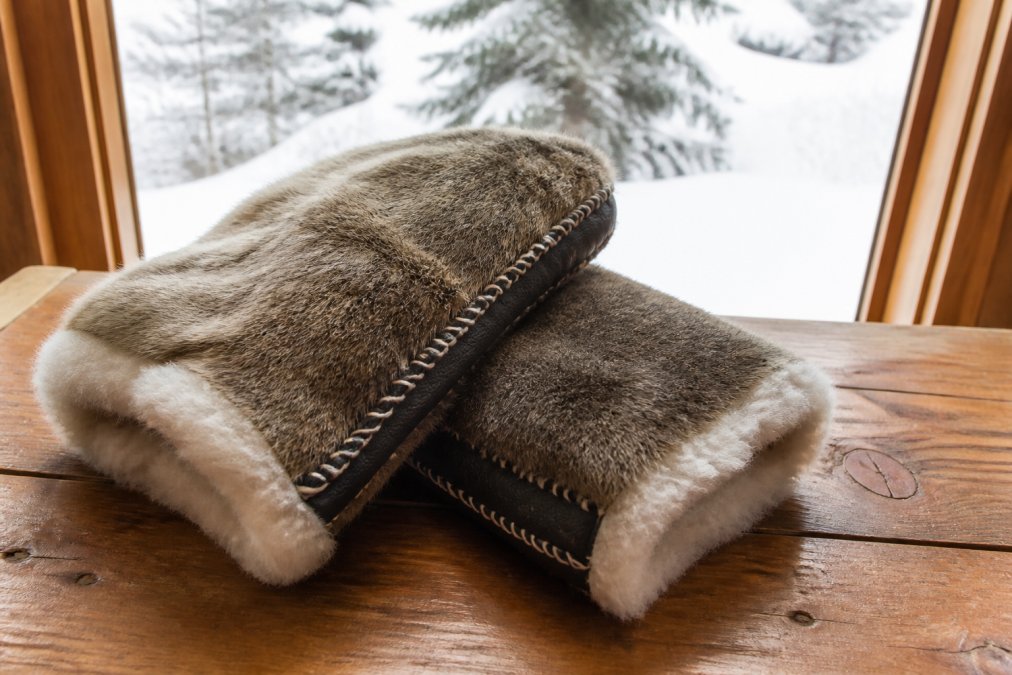
Mass-produced gloves rely on synthetic insulation that compresses and loses thermal retention after repeated washing. A handcrafted pair uses full hides that maintain structure and loft for years, with gauntlet cuffs that trap warmth and hand-stitched seams that outlast glued or machine-stitched construction.
What to Look for When You Buy Handcrafted Fur Mittens Online
When buying handcrafted fur mittens online, you cannot inspect the pelt in person, so ask the right questions first. Start with hide quality: ask whether the fur is prime winter pelts, which have denser underfur and longer guard hairs than summer pelts. A reputable seller will tell you the species and season.
Key quality markers to verify with any seller:
- Tanning method: ask if the hide is bark-tanned or chemically tanned, as this affects durability and how the leather feels against your skin
- Stitching: look for hand-stitched seams and ask about the thread type, since cotton rots while synthetic or waxed threads last
- Lining: confirm whether the interior is sheepskin, shearling, or simply unlined fur, which changes the warmth profile
- Cuff construction: a gauntlet style cuff with a leather or knit extension keeps snow and wind out better than a short cuff
- Return policy: because sizing varies by artisan, a seller who does not accept returns on fit is a risk
Genuine Fur vs. Faux Fur: Performance Compared
Genuine fur outperforms faux fur in nearly every metric for extreme cold. Real fur has a natural water-resistant outer layer, breathability, and superior thermal retention per ounce. Faux fur is petroleum-based, does not breathe, and traps moisture against the skin, accelerating heat loss.
The most important difference is longevity. A quality genuine fur mitten can last decades; faux fur mats, sheds, and loses loft within a few seasons. For occasional city wear, faux fur is acceptable. For snowmobiling, ice fishing, or extended outdoor exposure, genuine fur is the only sensible choice.
Sheepskin Lining vs. Full Fur Construction
Sheepskin-lined mittens use fur outside with a shearling or fleece interior, comfortable against bare skin. Full fur construction uses fur on both sides, maximizing warmth but often requiring a liner glove because fur against bare skin can feel itchy.
For most users, sheepskin lining is the better choice: it provides fur's warmth with fleece comfort and is easier to clean. Full fur construction excels in extreme cold where maximum insulation matters more than comfort.
Top Picks: Handcrafted Fur Mittens Worth Your Money
We've broken down the online marketplace by seller type, what each excels at, and the questions to ask.
The Specialist Furrier: For Heirloom Quality and Full Transparency
This category includes established houses like Campbell Fine Furs and other dedicated fur ateliers operating through their own e-commerce sites, offering the most detailed answers about tanning methods, pelt origin, and seasonal harvest, with the highest grade of prime winter pelts and the most rigorous hand-stitching.
- What to ask: Request the specific geographic origin of the fur (e.g., 'northern Canadian trapper' vs. 'farm-raised'). A specialist should be able to tell you if the fur is from a regulated trapper or a fur farm, and they should be transparent about the tanning process (e.g., chromium vs. vegetable tanning).
- The Trade-off: You will pay a premium that reflects the cost of the pelt and the artisan's time. Lead times for custom work can be 4-6 weeks during peak season.
The Independent Artisan on a Marketplace: For Customization and Direct Connection
Platforms like Etsy host thousands of independent furriers, many working alone or in small family workshops. This is where you find true bespoke options, someone who will make a pattern from your exact hand tracing or incorporate a specific vintage fur you own.
- What to ask: Scrutinize their reviews for comments on sizing consistency and seam durability. Ask to see photos of the specific pelt they plan to use for your order, not just a stock photo. Inquire about their return policy for custom items, as these are often final sale.
- The Trade-off: Quality can be more variable than with a specialist house. You must be a more diligent interviewer, but the potential for a truly unique, perfectly-fitting product is higher.
The DIY Tutorial: A Viable Option for the Hands-On Buyer
A growing number of online results are video tutorials for assembling fur mittens from a kit or reclaimed pelts. While not a 'buy' option, it's a competitive alternative. If handy with a sewing machine and awl, sourcing a tanned pelt and pattern from a supplier like Tandy Leather or a local trapper can yield a high-quality product at a fraction of retail cost.
- The Trade-off: This path requires a significant time investment and a learning curve. The risk is ruining an expensive pelt with a poor cut. However, it offers the ultimate level of customization and a deep understanding of the construction.
A Note on Pricing and Value
Prices range from roughly $150 for simple, unlined mittens to over $600 for a pair from a renowned house using premium beaver or coyote with full sheepskin lining. The difference reflects pelt density, construction complexity, and tanning quality. Calculate cost-per-winter: a $500 pair lasting 20 years beats a $150 pair that loses shape in three seasons.
How to Clean Fur Mittens Without Damaging Them
How you clean fur mittens determines whether they last five years or fifty. The rules are simple: never machine wash, never use heat, and never use harsh detergents.
Cleaning steps for fur mittens:
- Shake out snow and debris after each use, and allow them to dry naturally away from direct heat sources
- For light dirt, brush the fur with a soft-bristled brush in the direction of the nap
- For stains, use a damp cloth with a small amount of mild soap, then blot dry; do not rub
- For deep cleaning, take them to a professional furrier; home washing ruins the leather backing
A common mistake is storing fur mittens in plastic bags, which traps moisture and rots the leather. Store them in a breathable cotton bag with cedar blocks to deter moths.
Warmest Winter Mittens for Extreme Cold: What Actually Works
The warmest winter mittens for extreme cold share specific characteristics: dense, prime winter fur with a high guard-hair-to-underfur ratio for wind resistance and insulation, extension past the wrist to seal drafts, and a snug fit without cutting off circulation.
Mittens are inherently warmer than gloves because fingers share body heat. A thin silk or wool liner creates a second air layer that boosts warmth. For snowmobiling or ice fishing, a fur mitten with a gauntlet cuff over a liner glove is standard: the fur breaks wind, the liner manages moisture, and the air between insulates.
Sizing, Care, and Custom Orders: What to Know Before You Buy
Getting fit, maintenance, and ordering right is the difference between a purchase you treasure and one you regret.
A Standardized Temperature Rating Guide for Fur Types
While there is no official industry standard, experienced furriers generally rate fur types based on pelt density and guard hair length. Use this as a practical guide for matching fur to your local winter conditions.
- Mink and Sable (Rating: -10°F to 10°F / -23°C to -12°C): These furs are prized for their lightweight softness and luxurious feel, making them ideal for everyday city wear and commuting. However, their shorter guard hairs and less dense underfur mean they are not the top choice for prolonged, extreme sub-zero exposure.
- Beaver and Coyote (Rating: -20°F to -40°F / -29°C to -40°C): These are the workhorses of extreme cold. Beaver has an incredibly dense underfur that provides exceptional insulation even when wet. Coyote, with its long, thick guard hairs, offers superior wind resistance, making it a top choice for snowmobiling and other high-wind activities.
- Fox and Lynx (Rating: -30°F and below / -34°C and below): The long, silky guard hairs of fox and the dense, soft underfur of lynx create an unmatched air-trapping layer. These are the furs used in high-arctic expedition gear. They are heavier and bulkier than mink, but for stationary activities in severe cold, they are the gold standard.
This rating is a starting point. Overall warmth is also determined by lining, cuff length, and liner gloves. A well-constructed coyote mitten with shearling lining will outperform an unlined mink mitten in any scenario.
Fur-Specific Care: It's Not One-Size-Fits-All
The general rules, no machine washing, no heat, no plastic bags, apply to all fur, but specific maintenance varies by fur type and use.
- For Dense, Water-Resistant Furs (Beaver, Otter): These are more forgiving in wet snow. After use, simply shake off the snow and let them dry at room temperature. To maintain their water resistance, you can occasionally treat the leather side with a specialized leather conditioner, but never apply it to the fur itself.
- For Long-Guard-Haired Furs (Fox, Coyote): These are more prone to matting from ice and snow buildup. After exposure to wet snow, gently comb out any ice crystals with a wide-toothed comb once the fur is completely dry. Never comb wet fur, as this can pull out the guard hairs.
- For Short, Dense Furs (Mink, Muskrat): These are the most delicate. They are less suited for heavy, wet snow and are better for dry, cold conditions. To clean them, use a damp, soft cloth to wipe the fur in the direction of the nap, and avoid any abrasive brushing.
The Custom Order Process: A Step-by-Step Guide
Ordering custom mittens is a collaborative process. Here is what to expect.
- Provide Accurate Measurements: Do not just rely on a glove size. Measure the circumference of your hand at the widest point (across the knuckles, excluding the thumb) and the length from the tip of your middle finger to the base of your palm. Also, measure your wrist circumference for the cuff.
- Specify Your Liner Plan: If you intend to wear a silk or wool liner glove, tell the artisan. They will add 1/4 to 1/2 inch to the pattern to accommodate the extra layer without making the mitten too tight.
- Discuss the Cuff Profile: The cuff is a functional element. Specify if you need a longer gauntlet for snowmobiling (to go over your jacket sleeve) or a shorter, more elegant cuff for city wear. An artisan can also add a leather drawstring to cinch the cuff closed for a perfect seal.
- Confirm the Pelt Selection: A reputable artisan will show you the specific pelt or a photo of it before cutting. This is your chance to approve the fur color, density, and overall quality.
- Understand the Timeline and Returns: Custom work is not returnable unless it is defective. Ensure you have a clear agreement on the timeline (typically 3-6 weeks) and what constitutes a defect (e.g., seam failure, not a fit issue).
Final Verdict: Where to Buy Handcrafted Fur Mittens Online
Buying handcrafted fur mittens online comes down to finding a seller who knows their materials and stands behind their construction. Campbell Fine Furs is a strong option for most buyers, combining artisanal quality with men's and women's styles and a focus on traditional craftsmanship built to last.
The price of quality fur mittens reflects the cost of the pelt and hours of handwork. If a deal looks too good to be true, it is likely machine-made or using low-grade fur that will shed. Invest in a pair from a seller who answers questions about fur origin and construction, care for it properly, and it will serve you for decades.
Frequently Asked Questions
Are handcrafted fur mittens warmer than synthetic gloves?
Yes, for extreme cold. The high-loft structure of genuine fur traps air in a way synthetic fills often cannot match, especially in dry, sub-zero conditions. Handcrafted fur mittens also offer superior breathability, which means your hands stay dry from sweat. Look for options with a sheepskin lining for maximum thermal retention. For wet conditions, a water-resistant shell or treatment is necessary, as fur is less effective when soaked.
How do I determine the right size for fur mittens?
Measure the circumference of your dominant hand around the knuckles, excluding the thumb, and the length from the tip of your middle finger to the base of your palm. Compare these measurements to the seller's size chart. Handcrafted mittens with gauntlet style cuffs should fit snugly but allow full finger movement. When in doubt, size up slightly, since a tight fit restricts circulation and makes your hands colder.
What is the difference between sheep fur-lined and full fur mittens?
Sheep fur-lined mittens use a leather or textile exterior with a sheepskin interior. This design offers excellent insulation, durability, and water resistance, making them ideal for heavy use. Full fur mittens have fur on the exterior, which provides superior wind resistance and a striking, traditional look, but they are less durable against abrasion and require more careful maintenance. Your choice depends on whether you prioritize rugged functionality or maximum cold-weather style.
How do I know if fur mittens are ethically sourced?
Ask the seller directly about their sourcing practices. Reputable artisans and businesses should be able to explain where their materials come from, whether they use fur from regulated trapping or from food-industry byproducts, and how they verify legality. Look for transparency in product descriptions and a willingness to answer questions. True craftsmanship relies on a sustainable supply chain, so a clear answer indicates a quality product.
Are handcrafted fur mittens a good gift for someone who spends time outdoors?
Yes, especially for anyone involved in winter sports like snowmobiling, ice fishing, or hunting. A pair of handcrafted fur mittens is both a practical piece of cold weather gear and a personal, artisanal gift that stands apart from generic accessories. Many makers offer custom-made options, allowing you to choose fur type, cuff design, and sizing for a truly bespoke present that will last for years with proper care.
Choosing the right fur mittens is about understanding materials and construction, not just picking the warmest-looking option. At Campbell Fine Furs, we craft fur accessories with the same attention to detail that has defined our reputation for quality. Explore our collection of handcrafted fur mittens, hats, and scarves, and find winter gear that performs as well as it looks. View our products today and see the difference that genuine craftsmanship makes.
This article was written using GrandRanker
Frequently Asked Questions
Q: Are handcrafted fur mittens warmer than synthetic gloves?
A: Yes, for extreme cold. The high-loft structure of genuine fur traps air in a way synthetic fills often cannot match, especially in dry, sub-zero conditions. Handcrafted fur mittens also offer superior breathability, which means your hands stay dry from sweat. Look for options with a sheepskin lining for maximum thermal retention. For wet conditions, a water-resistant shell or treatment is necessary, as fur is less effective when soaked.
Q: How do I determine the right size for fur mittens?
A: Measure the circumference of your dominant hand around the knuckles, excluding the thumb, and the length from the tip of your middle finger to the base of your palm. Compare these measurements to the seller's size chart. Handcrafted mittens with gauntlet style cuffs should fit snugly but allow full finger movement. When in doubt, size up slightly, since a tight fit restricts circulation and makes your hands colder.
Q: What is the difference between sheep fur-lined and full fur mittens?
A: Sheep fur-lined mittens use a leather or textile exterior with a sheepskin interior. This design offers excellent insulation, durability, and water resistance, making them ideal for heavy use. Full fur mittens have fur on the exterior, which provides superior wind resistance and a striking, traditional look, but they are less durable against abrasion and require more careful maintenance. Your choice depends on whether you prioritize rugged functionality or maximum cold-weather style.
Q: How do I know if fur mittens are ethically sourced?
A: Ask the seller directly about their sourcing practices. Reputable artisans and businesses should be able to explain where their materials come from, whether they use fur from regulated trapping or from food-industry byproducts, and how they verify legality. Look for transparency in product descriptions and a willingness to answer questions. True craftsmanship relies on a sustainable supply chain, so a clear answer indicates a quality product.
Q: Are handcrafted fur mittens a good gift for someone who spends time outdoors?
A: Yes, especially for anyone involved in winter sports like snowmobiling, ice fishing, or hunting. A pair of handcrafted fur mittens is both a practical piece of cold weather gear and a personal, artisanal gift that stands apart from generic accessories. Many makers offer custom-made options, allowing you to choose fur type, cuff design, and sizing for a truly bespoke present that will last for years with proper care.