 blog
Best Natural Fur Accents for Ranch Homes: 2026 Guide
Table of Contents
- Why Natural Fur Accents Belong in Ranch Homes
- Natural Fur vs. Faux Fur: Trade-Offs That Matter
- Fur Throws and Blankets for Sofas, Chairs, and Beds
- Fur Pillows for a Rustic Living Room
- Hide Rugs, Cowhide, and Floor Accents That Anchor a Room
- Room-by-Room Placement and Scale
- Natural Fur Home Decor Care: Keeping Texture and Softness
- Mixing Fur With Leather, Wood, and Neutral Tones
- Frequently Asked Questions
Last Updated: October 20, 2026
Why Natural Fur Accents Belong in Ranch Homes
Natural fur accents are real animal hide and fur pieces, such as throws, pillows, and rugs, used as decorative layers in a room. At Campbell Fine Furs, we see them as the finishing touch that turns a good ranch interior into a great one. A ranch home already speaks the language of the land: wide-plank wood, leather, stone, and honest materials. Fur belongs in that conversation because it is the same kind of material. It carries natural markings, organic texture, and a plush feel that no synthetic can copy exactly. The best natural fur accents for ranch homes work because they look like they were always there, not like they were ordered from a catalog. Below, we break down how to choose, place, and care for each piece so your rooms feel collected rather than decorated.
Natural Fur vs. Faux Fur: Trade-Offs That Matter
Real fur and faux fur each solve a different problem, and the right choice depends on how you live. Most ranch homeowners end up mixing both, but the decision should be made with clear eyes about durability, care, sourcing, and cost. Here is how the two materials actually compare.
Durability and aging. Natural fur is a protein fiber, and like leather it holds its loft and softness for decades when cared for. It can dry out and stiffen if stored badly, but a well-kept hide throw or cowhide rug often outlasts the furniture beneath it. Faux fur is typically acrylic or modacrylic fiber on a knit backing.
Care and cleaning. Real fur is easier to maintain than most people assume: shake it out, air it, vacuum a hide rug gently with a brush attachment, and spot clean with a damp cloth. It should not go in a washing machine. Faux fur is often marketed as machine-washable, but repeated washing accelerates matting and fiber loss.
Sourcing and animal welfare. Natural fur comes from animals raised or trapped for food, fur, or population management, and sourcing transparency varies widely by product. Reputable sellers can tell you the species, the origin, and whether the hide is a byproduct of the food system.
Cost and value. Real fur accents carry a higher upfront price because each piece is a one-of-a-kind natural material. Faux fur is the budget entry point.
Texture and appearance. Faux fur has improved, but it still reads as uniform up close. Natural fur has irregular markings, varied hair length, and a depth that catches light differently across the surface. In a ranch room built on honest materials, that irregularity is the point.
Fur Throws and Blankets for Sofas, Chairs, and Beds
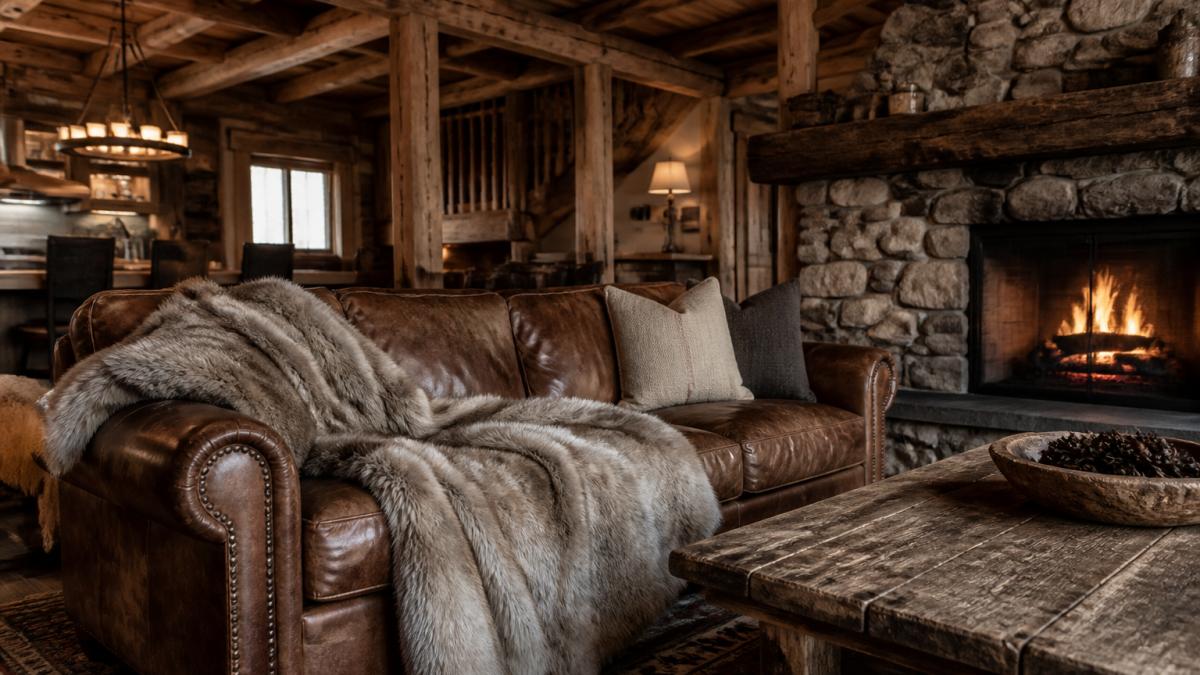
A fur throw is the easiest entry point into natural fur home decor, and it delivers the most warmth per dollar of effort. Drape one over the back of a leather sofa, fold it at the foot of a bed, or toss it across a reading chair by the fireplace. The piece should look like it landed there naturally, not like it was placed with a ruler. Look for a throw with a full, dense pile and a backing that holds its shape. A good fur throw adds cozy texture to a room without changing the furniture around it.
How to Style a Fur Throw Without Overdoing It
Styling a fur throw comes down to restraint. One throw per seating area is usually enough; two competing fur pieces in the same sightline start to look staged. Fold the throw in thirds and lay it across a sofa arm, or let it pool slightly on a chair seat for a relaxed look. Contrast the texture against smooth leather, rough linen, or a woven wool blanket. Keep the color in the neutral family, white, brown, smoky gray, or cream, so the fur reads as texture rather than as a color statement. When in doubt, remove one accessory and let the fur be the statement piece.
Fur Pillows for a Rustic Living Room
Fur pillows are the smallest natural fur accents and the fastest way to warm up a rustic living room. A single fur cushion on a leather club chair, or a pair mixed into a sofa's existing pillow stack, adds softness and a touch of luxury without a big commitment. Choose a fur pillow with a firm insert so it holds its shape on the sofa, and look for a hidden zipper so the cover can be removed for care. Mix one fur pillow with two woven or leather pillows to keep the arrangement from feeling heavy. The goal is contrast: plush texture against flatweave, animal hide against canvas.
Hide Rugs, Cowhide, and Floor Accents That Anchor a Room
A hide rug or cowhide area rug is the floor-level anchor of a ranch room, and it does more visual work than any other fur accent. Natural hide markings mean no two rugs are alike, so the rug becomes a one-of-a-kind piece under a coffee table or at the foot of a bed. Cowhide brings a Western and ranch style note that fits the architecture of these homes. Layer a hide rug over a larger neutral area rug to add depth, or let a single hide stand alone on hardwood. For smaller spaces, a fur pouf or a fur-covered bench adds the same texture in a compact footprint.
| Fur Accent | Best Room | Main Job | Care Level |
|---|---|---|---|
| Fur throw | Living room, bedroom | Warmth and cozy layering | Low, shake and air |
| Fur pillow | Living room, den | Soft contrast on seating | Low, spot clean |
| Hide or cowhide rug | Living room, bedroom | Anchors the floor, adds pattern | Medium, vacuum gently |
| Fur pouf or bench | Entry, bedroom | Texture in small spaces | Low to medium |
Room-by-Room Placement and Scale
Scale decides whether a fur accent looks intentional or accidental. In a large living room with high ceilings, a full hide rug and a generous fur throw hold their own against big furniture. In a smaller den, a single fur pillow and a folded throw are enough. In the bedroom, a fur throw at the foot of the bed and a hide rug beside it create a layered, restful feel. Match the size of the fur piece to the size of the surface beneath it: a small hide on a huge floor looks lost, and an oversized throw swallows a petite chair. Walk the room and note where your eye wants softness, then place one piece there.
Natural Fur Home Decor Care: Keeping Texture and Softness
Natural fur home decor care is simpler than most people expect, but it rewards consistency and a few material-specific habits. The guidance below covers throws, pillows, and hide rugs, since each behaves a little differently.
Everyday care for throws and pillows. Shake throws and pillows outdoors every few weeks to release dust and loose hair. Keep fur out of direct sunlight, which fades natural markings over time. Spot clean with a damp cloth and a drop of mild soap, working from the outside of the stain inward so you do not spread it. Blot, do not rub.
Hide and cowhide rugs. Vacuum a hide rug gently with a brush attachment, working with the direction of the hair, not against it. For spills, blot immediately with a dry cloth, then let the area air-dry away from heat. For tougher stains, a damp cloth with mild soap is usually enough; avoid soaking the hide.
Shedding. Natural fur sheds a little, especially when new or when seasons change. A rubber glove or a damp sponge run with the grain lifts loose hair quickly. Faux fur sheds fibers too, often more over time, so do not assume faux is the low-shed option.
Seasonal storage. Store fur pieces in a breathable cotton bag, never a sealed plastic one, when they are out of season. Keep them in a dry closet away from heat and direct light. Before storing, make sure the piece is completely dry; trapped moisture is the main cause of stiffening and cracking. Cedar blocks nearby can help deter pests without touching the fur directly.
What to avoid. Skip harsh detergents, bleach, fabric softener, and heated drying. Do not brush a hide rug against the grain, and do not store fur in a damp basement or attic. If a piece gets soaked, blot it and dry it flat at room temperature, away from radiators and sun.
Mixing Fur With Leather, Wood, and Neutral Tones
Fur looks best when it is paired with materials that share its natural character. Leather and fur are a classic ranch pairing, and the smooth surface of a leather sofa makes the plush texture of a fur throw stand out. Wood adds warmth that echoes the organic texture of hide. For color, lean on neutral tones, white, brown, smoky gray, and cream, and let the natural markings supply the pattern. If you want a bolder room, add one deep accent color in a woven textile rather than in the fur itself. Layering fur with linen, wool, and canvas keeps a room from feeling like a cabin cliché and lets each material breathe.
Frequently Asked Questions
How do I care for natural fur home decor so it lasts?
Shake fur throws and pillows regularly to release dust, and keep them out of direct sunlight to prevent drying. Spot-clean with a damp cloth and mild soap, then let them air dry away from heat. Store natural fur accents in a breathable cotton bag rather than plastic. For deeper cleaning, a professional fur specialist is the safest route. Proper natural fur home decor care preserves softness, natural markings, and plush texture for years.
What is the difference between real fur and faux fur for ranch decor?
Real natural fur offers organic texture, natural markings, and warmth that faux options imitate but rarely match. Faux fur is animal-free and often more affordable, but it can mat and shed over time. Real fur needs more careful cleaning and storage. For a ranch home, many people mix both: real fur as a statement piece and faux fur where heavy use is expected. Weigh durability, budget, and maintenance before choosing.
How do you style a fur throw in a rustic living room?
Drape a fur throw over the arm or back of a leather sofa, letting it fall naturally rather than folding it flat. Pair it with neutral-toned pillows and wood or iron accents for contrast. One throw per seating area keeps the look intentional. In a rustic living room, place it near the fireplace so warmth and texture work together. Rotate the throw periodically to prevent flattening and uneven wear.
Which fur accents work best for a ranch-style bedroom?
A fur throw at the foot of the bed, a pair of fur pillows, and a hide rug beside the bed frame add warmth without clutter. Stick to neutral tones like white, brown, and smoky gray to match wood and leather. Layer a plush texture over a quilt or wool blanket for contrast. Keep scale in mind: a large throw suits a king bed, while a smaller accent works on a bench or chair.
Building a ranch home that feels warm and collected takes more than furniture; it takes materials with real character. Campbell Fine Furs crafts artisanal fur blankets, pillows, and accessories designed to bring the beauty of the mountains into your home, alongside Western-inspired goods for the outdoors. Browse our full collection to find the fur accent that fits your rooms, and let us help you finish the space you have been building. View All Products to get started.