 how-to
Why Choose Authentic Fur for Bedroom Decor
Table of Contents
- Why Authentic Fur Belongs in the Bedroom
- Authentic Fur vs Faux Fur Home Decor: What Actually Lasts
- Fur Throw Blanket Bedroom Styling: Placement, Layering, and Texture
- Fur Pillows for Rustic Bedroom Character and Comfort
- Mixing Fur With Wood, Stone, and Leather
- How to Care for Fur Home Decor Through the Seasons
- Building a Cozy Rustic Bedroom Without Clutter
- Frequently Asked Questions
Last Updated: October 17, 2026
Why Authentic Fur Belongs in the Bedroom
A bedroom should feel warmer than the rest of the house. That is the whole point of retreating to it. At Campbell Fine Furs, we believe few materials deliver that feeling like real fur, and the reason is simple: authentic fur is natural hide with the hair still attached, which makes it dense, insulating, and soft in a way synthetic imitations cannot copy.
Here is the practical case for it. Real fur traps warmth without feeling heavy. It ages instead of wearing out. And it brings texture to a room that often leans flat and beige.
Below, we will show you exactly how to style it, where to place it, and how to keep it looking good for years.
But first, here is what most guides get wrong: they treat fur as a decorative afterthought. It is not. In a bedroom, it is the piece that ties wood, stone, and leather together.
Authentic Fur vs Faux Fur Home Decor: What Actually Lasts
Authentic fur outlasts faux fur in the bedroom because real hide holds its loft, sheds less over time, and can be cleaned and restored. Synthetic versions look good on day one and flatten within a season or two.
The difference comes down to structure. Real fur grows from a hide. Faux fur is fiber stitched into a backing. That backing is where it fails first.
What most guides miss is the shedding issue. Cheap faux throws shed fibers into the air and onto bedding. Real fur sheds very little when it is properly tanned.
A common mistake is judging both by touch in a store. Squeeze the backing. If it feels stiff or crinkles, it will not drape well on a bed.
- Real fur: breathable, repairable, develops patina
- Faux fur: cheaper upfront, flattens fast, traps lint
- Longevity: real fur can be handed down; faux rarely survives a few winters
That is the honest trade-off. Faux costs less. Real fur earns its place.
Fur Throw Blanket Bedroom Styling: Placement, Layering, and Texture
Fur throw blanket bedroom styling works best when the throw is the last layer, not the first. Start with your sheets and duvet, then drape the fur across the foot of the bed at a slight diagonal.
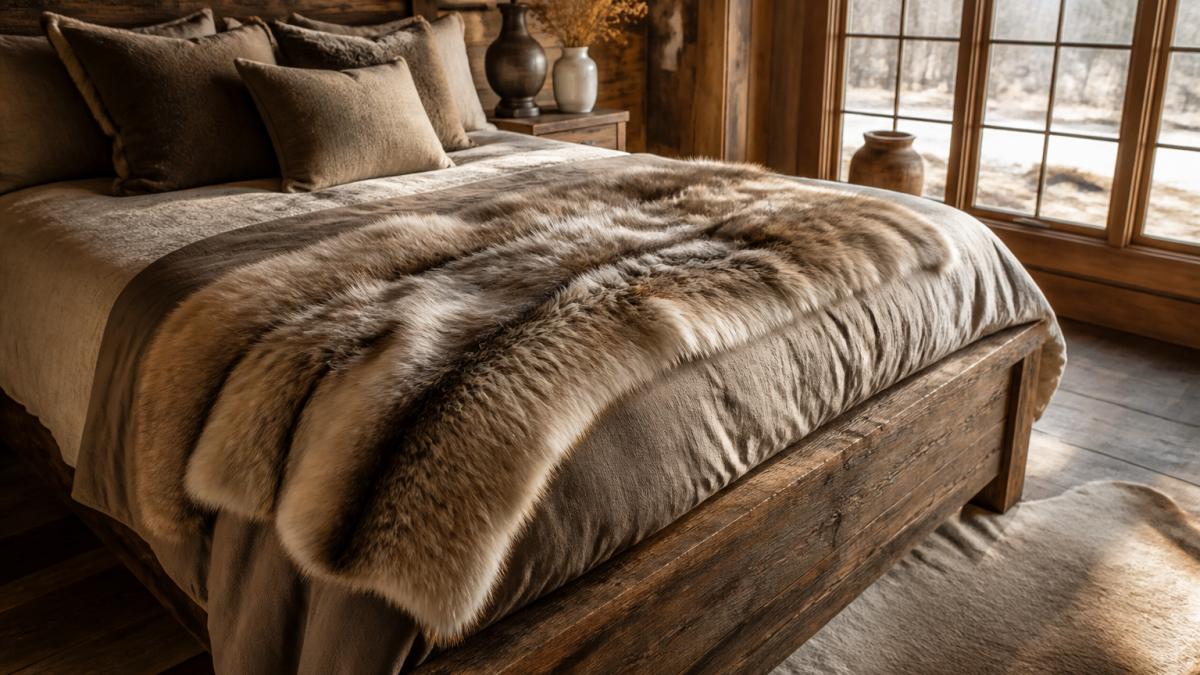
Placement matters more than people think. A throw folded straight across looks like a hotel. A slight diagonal looks lived in.
Try these layering moves:
- Fold the throw in thirds, not halves, for a cleaner line
- Let one corner fall toward the floor for softness
- Pair it with a knit or wool layer underneath for contrast
- Keep the palette warm: cream, camel, deep brown
Texture is the goal. A smooth duvet plus a nubby knit plus a fur throw gives the eye three things to enjoy.
Fur Pillows for Rustic Bedroom Character and Comfort
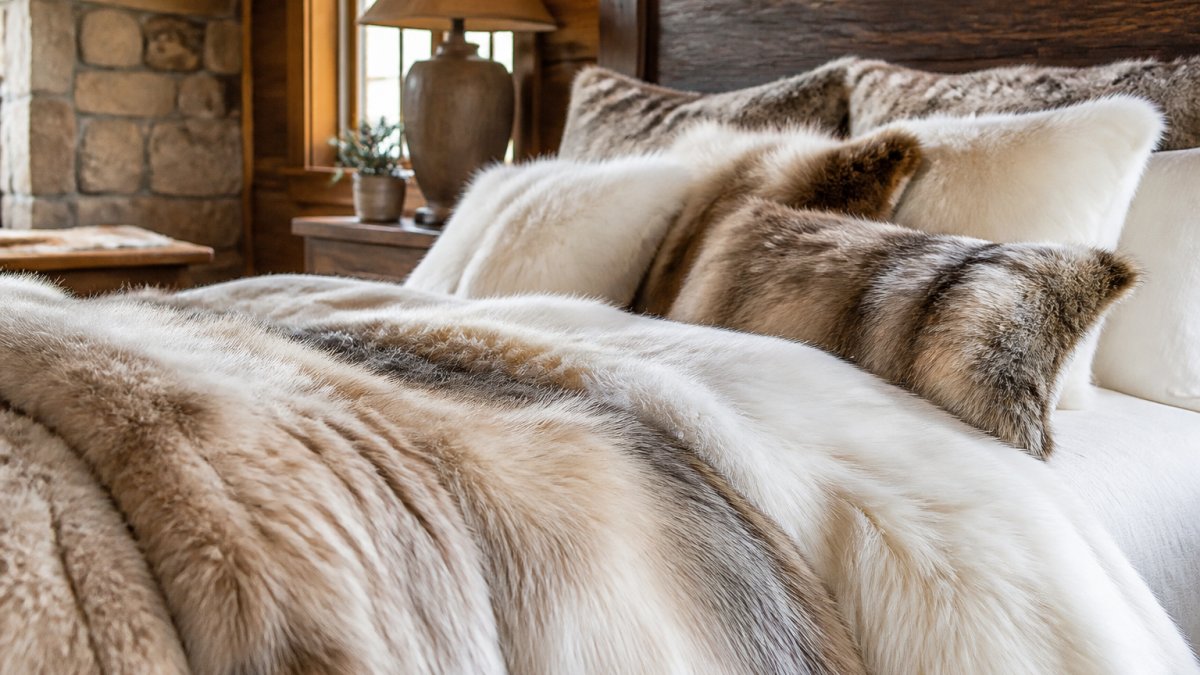
Fur pillows for rustic bedroom settings do two jobs at once: they add character and they make the bed feel finished. One or two is enough. More than that and the bed starts to look like a display.
Mix sizes. A larger fur pillow behind two smaller linen ones creates depth without clutter.
Where should they go? Against the headboard, layered in front of your sleeping pillows. That keeps them decorative and out of your way at night.
A common mistake is buying all fur pillows in the same size and tone. Vary the scale. A single long lumbar pillow in fur, paired with cotton or wool squares, reads more designed than a matched set.
- One fur lumbar for a low-key look
- Two fur squares for a plusher feel
- Fur paired with leather or canvas for contrast
The comfort payoff is real. Fur pillows feel cool in summer and warm in winter.
Mixing Fur With Wood, Stone, and Leather
Fur blends with natural materials because it is one. Wood, stone, and leather all carry texture, and fur softens them without competing. The trick is to match the fur's scale and tone to the material it sits against, not to pile on every texture at once.
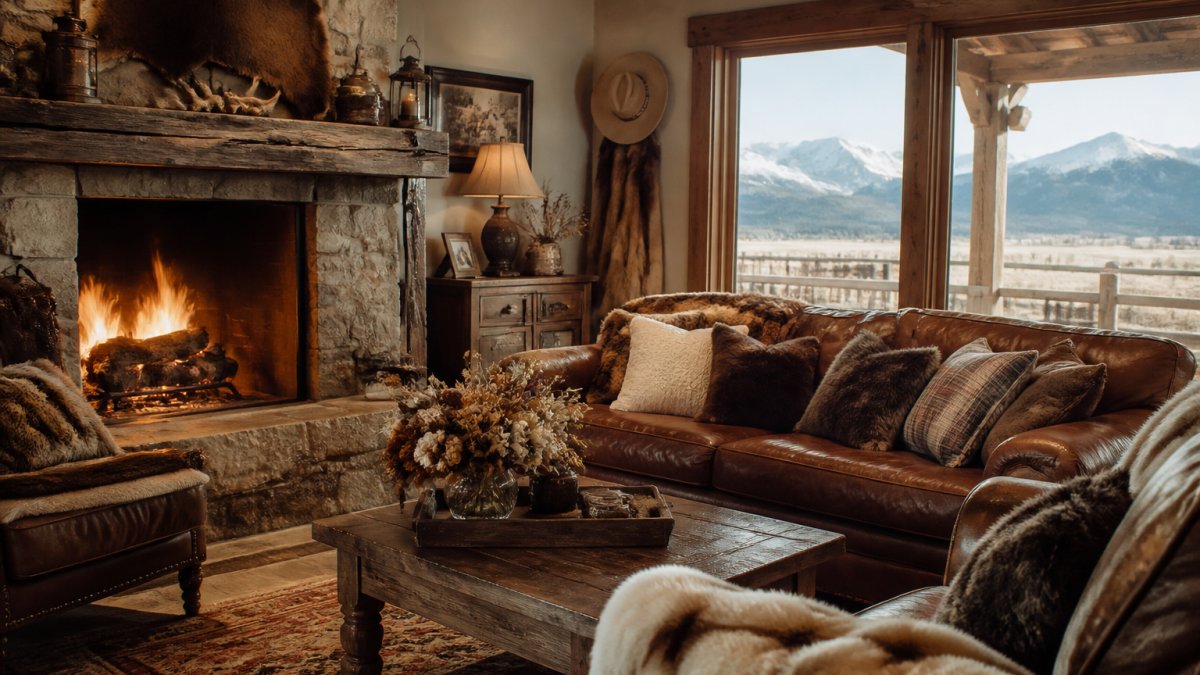
Start with what the room already has. A stone fireplace and exposed beams call for a fur throw and a leather chair. A plain painted room needs more fur to hold its own. In a ranch-style room with a low roofline and long sightlines, keep the fur low and horizontal so it does not interrupt the view line to the windows.
Here is how we would pair them:
- Wood: fur against oak or reclaimed pine warms the grain; choose a throw with a slightly darker tip than the wood so the texture reads
- Stone: a fur throw on a stone bench or hearth softens the hard edge; keep it off damp stone and use a liner if the surface is porous
- Leather: brown leather and natural fur are a classic ranch pairing; a fur pillow on a leather chair adds softness without hiding the leather's patina
- Metal: wrought iron and blackened steel frames benefit from a single fur accent to keep the room from feeling cold
Watch the balance. If every surface is textured, the room gets busy. Keep walls calm and let the materials do the talking. A useful rule is one fur piece per material zone: one on the bed, one on a chair, one on a bench. That keeps contrast alive.
Material care matters here too. Wood and leather prefer moderate humidity, and fur does as well, so a room that suits one usually suits the others. Keep fur away from direct sun that can fade both leather and fur, and rotate throws so one side does not take all the light.
How to Care for Fur Home Decor Through the Seasons
How to care for fur home decor comes down to three habits: shake it out, keep it dry, and store it away from heat and sunlight. Real fur is durable, but it dislikes moisture and direct sun.
Weekly, give throws and pillows a gentle shake outside. Monthly, brush the hair in its natural direction with a soft brush.
Seasonal care is where most people slip. In humid months, air pieces in a dry room. In winter, keep them away from radiators and wood stoves.
- Never machine wash or tumble dry real fur
- Blot spills immediately with a dry cloth
- Store in a breathable cotton bag, not plastic
- Keep away from prolonged direct sunlight
For deeper cleaning, work with a professional fur specialist. They can clean, condition, and restore the hide so it stays supple.
Building a Cozy Rustic Bedroom Without Clutter
Cozy does not mean crowded. The best rustic bedrooms use a few strong pieces and leave space around them. Fur is one of those pieces, so let it breathe. What most guides skip is the order of operations and how to scale the plan to the room you actually have.
Start with a neutral base: warm white or oatmeal bedding, a wood bed frame, simple window treatments. Then add fur as the accent.
Follow this order:
- Choose your base linens in neutral tones
- Add one wood or leather anchor piece
- Layer in a single fur throw
- Add one or two fur pillows
- Stop there and live with it for a week
That last step matters. Living with a room before adding more keeps you from over-decorating.
Small rooms. In a small bedroom, scale down rather than adding more. A single fur throw folded at the foot of the bed and one lumbar pillow is enough. Keep the floor clear and use a light rug so the room does not feel boxed in. Choose a throw sized to the bed, not an oversized one that swallows the frame.
Open plans. In an open plan, use a runner or rug to mark the sleeping zone, then place fur within that zone only. A fur bench at the foot of the bed or a throw on a reading chair defines the area without adding walls. Keep fur out of walkways so it does not become a trip hazard or collect traffic dirt.
Budget tiers. You do not need to do everything at once. A low-cost pass is a single fur pillow or a small throw on an existing chair. A midrange pass adds a fur throw plus a pair of pillows and a wool or knit layer underneath for contrast. A larger update adds a fur bench or ottoman and repeats the texture once across the room so it reads as intentional.
Architecture first. In a ranch-style room with large windows and a low roofline, keep fur low and horizontal so it does not block the view or fight the ceiling line. Let the windows stay clear and place fur where it catches morning light without fading.
We keep our fur home decor simple for this reason. A well-made throw and a pair of pillows do more than a room full of accessories.
Frequently Asked Questions
Is authentic fur or faux fur better for bedroom decor?
Authentic fur lasts decades with proper care, while faux fur mats and sheds within a few seasons. Real fur regulates moisture and holds warmth without synthetic fillers, so it works as both a styling layer and a functional one. Faux options cost less upfront but get replaced more often. For a bedroom you plan to keep long term, authentic fur delivers more value per year and a depth of texture that synthetic fibers cannot copy.
How do you style a fur throw on a bed?
Drape it diagonally across the foot of the bed rather than straight across, so the corner points toward the floor and breaks the rectangle of the mattress. Layer it over a quilt or linen duvet in a neutral tone to let the fur texture stand out. Fold it in thirds for a tailored look, or bunch it loosely for a cabin feel. Rotate the throw every few weeks so the fur wears evenly.
How do you care for a fur blanket or pillow?
Shake fur pieces outdoors after use to release dust, then brush the nap in its natural direction with a soft-bristle brush. Keep them away from direct heat and radiators, which dry out the leather underside. Store blankets in a breathable cotton bag, never plastic. For deeper cleaning, have the piece professionally cleaned rather than washing it at home. Air pillows monthly and spot-clean spills immediately with a damp cloth.
How can you make a rustic bedroom feel cozy without clutter?
Limit yourself to three texture layers per surface: for example, a fur throw, a wool blanket, and linen sheets on the bed. Choose one focal point, such as a stone fireplace or a wood headboard, and keep surrounding walls sparse. Use rugs and runners to define zones in an open floor plan instead of filling corners with furniture. Warm lighting at two or three heights, plus a few natural accents like greenery or cement planters, adds warmth without adding objects.
A cozy bedroom takes restraint and the right materials, and real fur does the heavy lifting on both. If you want pieces that warm the room and last for years, Campbell Fine Furs offers artisanal fur blankets and pillows made to be used, not just displayed. Browse our home decor collection, pair a throw with a set of pillows, and build a bedroom that feels like a retreat. View All Products to get started.