 how-to
How to Style Fur Accessories for Mountain Weddings
Table of Contents
- Step 1: Plan Your Mountain Wedding Outfit Around the Weather
- Step 2: Choose the Right Fur Accessory for Your Role
- Step 3: How to Wear a Fur Scarf With a Dress
- Step 4: Coordinate Winter Wedding Guest Accessories
- Step 5: Style a Fur Wrap for Wedding Guest Looks
- Step 6: Build Outdoor Mountain Wedding Attire That Works
- Step 7: Care for Your Fur Accessories After the Event
- Frequently Asked Questions
Last Updated: October 14, 2026
Step 1: Plan Your Mountain Wedding Outfit Around the Weather
Mountain weddings punish guesswork. At Campbell Fine Furs, we've watched guests shiver through ceremonies because they dressed for the photos instead of the forecast. The fix starts weeks before the event: check the venue's elevation and expected conditions, then build every layer around them.
Cold-weather attire for a mountain wedding works in three layers:
- Base layer: thermal leggings or a thermal top under your outfit
- Middle layer: your dress or suit, plus a hidden sweater if needed
- Outer layer: your fur accessory, which does the visible work
Altitude changes everything. A ceremony at 8,000 feet runs far colder than the town below, and afternoon sun can flip to wind and snow within an hour. If the event includes a gondola ride, a meadow walk, or a chairlift, plan footwear you can actually walk in.
Read the Mountain, Not Just the Forecast
A generic winter forecast tells you the temperature in town. A mountain venue has its own microclimate. Before you pack, look up three things:
- Elevation: temperature drops roughly 3 to 5 degrees Fahrenheit for every 1,000 feet of elevation gain. A venue at 8,000 feet can be 15 to 25 degrees colder than the valley floor.
- Exposure: a ridge-top or meadow ceremony catches wind that a tree-lined lodge deck blocks. Wind strips heat faster than still air at the same temperature.
- Surface: gravel, packed snow, ice, and mud each demand different footwear. A low-heeled insulated boot handles all four; a stiletto handles none.
Match Your Fur Accessory to the Conditions
Your fur piece is your outer layer, so it should match the worst conditions you expect, not the best.
- Calm and dry, 30 to 45 degrees: a fur stole or light wrap adds warmth without bulk and photographs beautifully in low winter light.
- Windy, 20 to 35 degrees: a fur shrug or a wrap you can cross and tuck stays put and blocks wind across the shoulders.
- Snowy or below 20 degrees: a full fur coat or a heavy wrap over a hidden thermal layer is the only combination that keeps you comfortable through a 30-minute outdoor ceremony.
Plan for the Ceremony-to-Reception Shift
Most mountain weddings run a short outdoor ceremony and then move guests indoors. Dress for the outdoor portion first, then shed layers once you're warm. A fur shrug or stole comes off in seconds and still looks styled when you carry it. If you're wearing a full coat, plan where you'll set it down, many lodges have a coat check, but a remote meadow may not.
A Quick Pre-Event Checklist
- Check the venue's elevation and subtract 3 to 5 degrees per 1,000 feet from the valley forecast.
- Confirm whether the ceremony is on grass, gravel, snow, or a deck.
- Pack thermal leggings and a hidden base layer, even if the forecast looks mild.
- Choose footwear you can walk in on uneven ground.
- Bring a breathable bag or hanger for your fur piece so it stays shaped during travel.
Step 2: Choose the Right Fur Accessory for Your Role
Your role decides your fur accessory. A bride needs something light enough to hold through photos and vows. A bridesmaid needs a style that matches the group without competing with the bride. A guest has the most freedom and the widest range of options.
Fur accessories for a winter wedding break into four main types:
- Fur wrap or shawl: drapes over the shoulders, best for strapless and A-line dresses
- Fur stole: narrower, sits across both shoulders, works with almost any neckline
- Fur shrug: covers the shoulders and upper arms, ideal for sleeveless dresses
- Fur coat: full coverage for the coldest venues and the longest outdoor stretches
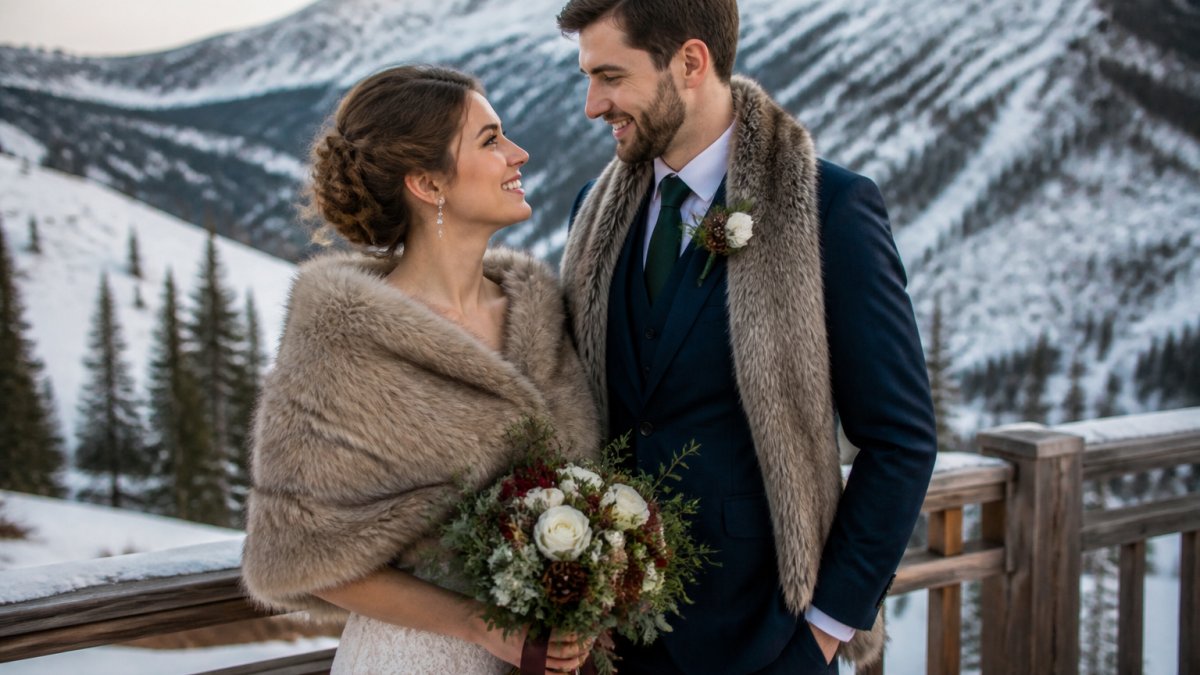
For brides, a stole or wrap keeps hands free for the bouquet. Bridesmaids usually do best with matching stoles in a single color. Guests can go bolder with a shrug or a full coat, especially for a rustic style or forest setting.
Step 3: How to Wear a Fur Scarf With a Dress
How to wear a fur scarf with a dress comes down to three placements. Drape it over both shoulders for a formal look.
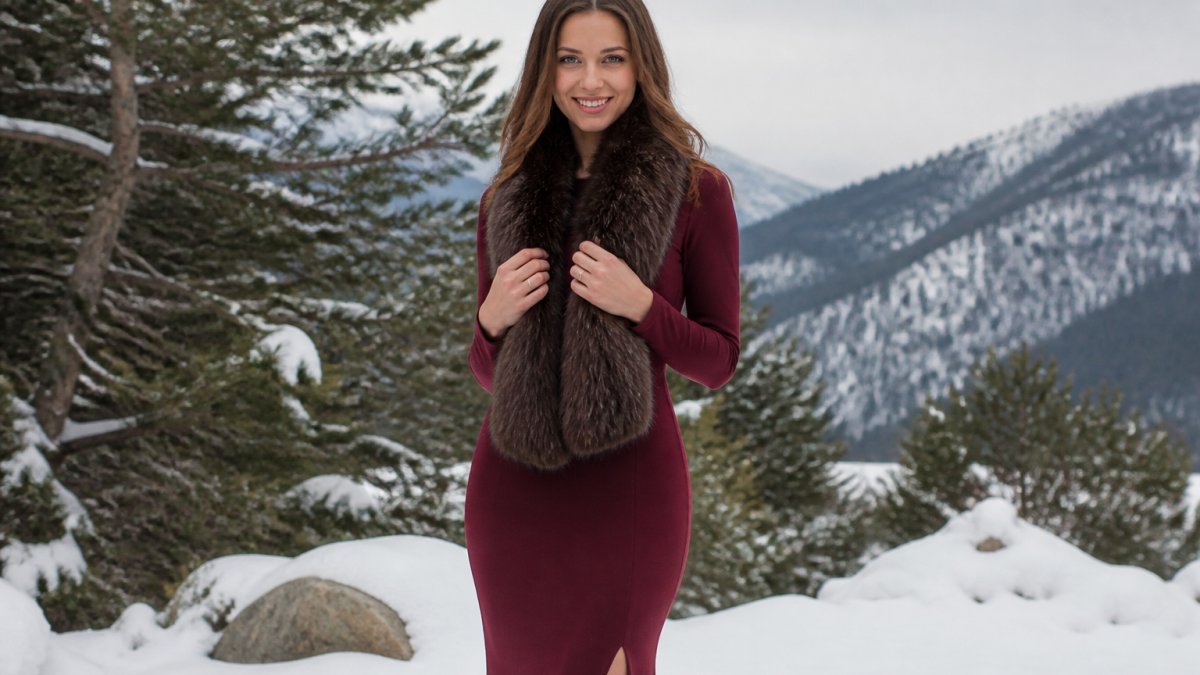
Match the scarf to your dress details. A lace appliqué dress pairs well with a soft, textured fur. A sequin dress calls for a smoother finish so the two don't compete.
Keep the scarf away from your bouquet hand. One shoulder draped, one shoulder bare, reads as intentional and keeps your flowers visible in every photo.
Secure the Scarf So It Stays Put
A scarf that slips ruins photos and forces constant adjusting. Three methods work:
- Hidden pin: a single safety pin through the scarf's inner lining and into the dress's shoulder seam keeps a drape in place without visible hardware.
- Brooch anchor: a decorative brooch at the shoulder or center front adds a focal point and holds the fabric.
- Crossed and tucked: crossing the ends in front and tucking them under the opposite arm creates tension that holds the scarf without pins.
Test each method before the event. Walk, sit, and raise your arms. If the scarf moves more than an inch, adjust the pin or switch to a different placement.
Keep Dress Details Visible
A scarf should frame your dress, not hide it. If your dress has a detailed neckline, keep the scarf below the collarbone or drape it off one shoulder. If your dress has a plain bodice, the scarf can sit higher and carry the visual interest. For a backless or low-back dress, a stole worn across the shoulders is a better choice than a scarf, because it won't cover the back detail.
Adjust for Photos and Temperature
During the ceremony, warmth matters most. After the ceremony, you can loosen the scarf for photos. A common pattern is to wear it wrapped during vows, then drape it open for portraits. If the reception is indoors, remove the scarf entirely and carry it or set it on your chair. A scarf that's been pinned in place can be unpinned and re-draped in seconds.
Quick Fit Check
- Pin or brooch the scarf so it stays in place through walking and sitting.
- Keep detailed necklines and back details visible.
- Loosen or remove the scarf for indoor portions of the event.
- Practice the placement once before the wedding day.
Step 4: Coordinate Winter Wedding Guest Accessories
Winter wedding guest accessories should support the outfit, not fight it. Start with the fur piece, then add gloves, jewelry, and footwear that share its tone.
A simple coordination order:
- Pick your fur wrap, stole, or shrug first
- Match gloves to the fur, not to the dress
- Choose gold jewelry for warm fur tones, silver for cool ones
- Finish with insulated boots or dress boots you can walk in
A fur wrap for a wedding guest works best when it echoes one color already in your outfit. If your dress is deep red, a gray or cream wrap keeps the look balanced.
Gloves matter more than most guests expect. Thin leather gloves look elegant but do little in real cold. Lined gloves or fur-trimmed mittens keep your hands warm through a long outdoor ceremony.
Step 5: Style a Fur Wrap for Wedding Guest Looks
A fur wrap for a wedding guest is the single most flexible piece you can own. It covers bare shoulders, adds warmth without a coat, and photographs well in low winter light.
Three ways to wear it:
- Classic drape: both ends over the shoulders, front open
- Crossed front: ends crossed and tucked, warmer and more formal
- One-shoulder: draped over one shoulder for an asymmetric, modern look
Pair a wrap with an A-line dress for a formal look, or with a sweater dress for a mountain ranch venue. For a forest setting, choose natural tones and let the wrap carry the texture. For a formal indoor reception, a darker wrap over a lighter dress reads as deliberate and polished.
Step 6: Build Outdoor Mountain Wedding Attire That Works
Outdoor mountain wedding attire fails for one reason: people style the top half and ignore the bottom. Your dress and fur get all the attention.
Build from the ground up:
- Feet: insulated boots, broken in before the event
- Legs: thermal leggings under your dress or suit
- Core: a hidden layer under your outfit
- Shoulders: your fur accessory on top
Check the venue's terrain. A mountain ranch with gravel paths, a forest clearing with uneven ground, and a lodge deck all demand different footwear. Heels sink. Flats slip on ice.
For the ceremony itself, many couples plan a short outdoor window and move guests inside for the reception. Dress for the outdoor portion first, then shed layers once you're warm.
Step 7: Care for Your Fur Accessories After the Event
Fur accessories last for decades when you care for them properly. The shedding complaints people bring up usually trace back to storage, not the fur itself.
After the event:
- Brush the fur gently with a soft brush to lift any flattened areas
- Hang it on a wide, padded hanger so it keeps its shape
- Keep it away from direct heat, radiators, and damp basements
- Store it in a breathable cotton bag, never plastic
- Have it cleaned professionally before storing for the season
Never store fur in a plastic garment bag. Plastic traps moisture, and trapped moisture is what causes shedding, matting, and that worn-out look after a season or two.
If you're buying rather than borrowing, ask how the fur was sourced. A maker who can explain their sourcing clearly is a maker worth buying from.
Frequently Asked Questions
Can you wear a fur hat to a wedding?
Yes, a fur hat can work beautifully at a mountain wedding, especially for outdoor ceremonies in cold weather. Choose a sleek, well-fitted style like a fur beret or a small pillbox hat rather than a bulky trapper hat, which reads more casual. Match the hat's color to your other fur accessories or your dress for a coordinated look. If the ceremony is indoors, plan to remove the hat during the formal parts and hold it or set it aside.
What fur accessories work best for an outdoor mountain wedding?
For an outdoor mountain wedding, prioritize warmth without bulk. A fur wrap or stole covers your shoulders and back, while a fur scarf adds neck warmth without hiding your dress. Fur-trimmed gloves, a small fur hat, and a lightweight fur shrug are also practical. Layer these pieces over thermal leggings and insulated boots for the ceremony, then remove the heavier layers for indoor photos and receptions.
How do you match a fur scarf to a formal wedding outfit?
Start by pulling one color from your dress or its details, such as lace appliqué or sequins, and choose a fur scarf in that shade or a neutral like gray, cream, or deep red. For formal looks, drape the scarf loosely over your shoulders or tie it once at the front so it frames your neckline without covering the bodice. Keep jewelry minimal, like small gold earrings, so the fur remains the focal point.
How can you stay warm at a winter wedding without hiding your outfit?
Use hidden layers that don't show: thermal leggings under your dress, a thin cashmere camisole, and insulated boots that you can swap for heels during photos. Add visible warmth with a fur wrap or stole that you can remove indoors, plus gloves and a fur scarf. This way, your dress and its details stay visible while you stay comfortable in cold mountain air.
Mountain weddings ask a lot from your outfit: warmth, mobility, and style in the same look. That's exactly the problem we build for at Campbell Fine Furs. Our fur hats, scarves, stoles, and wraps are made for real cold and real terrain, and our Western-inspired goods bring the same craftsmanship to the rest of your wardrobe. Browse our full range of artisanal fur accessories and find the piece that carries you through the ceremony and every winter after it.