 blog
How to Choose Handcrafted Fur Winter Accessories
Last Updated: October 31, 2026
Quick Summary
Choose handcrafted fur winter accessories by checking fur density, hand-sewn construction, and real measurements rather than one-size stretch panels. Turn pieces inside out to confirm pelt backing over woven mesh, and ask the maker for exact finished measurements and fur origin before you buy.
- Natural fur uses guard hairs plus dense underfur to trap warm air.
- Faux fur typically lasts one to two seasons of heavy use before matting.
- Measure mittens with a light glove on because fur lining adds bulk.
- Brush fur with the grain after wear and store it in a breathable cotton bag.
- Confirm exact finished measurements in writing before a custom piece is cut.
Table of Contents
- Why Handcrafted Fur Winter Accessories Beat Mass-Market Gear
- Real Fur vs. Faux Fur: What Actually Keeps You Warm
- Handcrafted Fur Hats: Trapper Hats, Beanies, and Pom-Pom Styles
- Fur Scarves for Winter: Neck Warmers and Shawls That Stay Put
- Fur Mittens and Fingerless Mittens for Cold-Weather Work
- How to Care for Fur Accessories So They Last for Years
- Sizing, Fit, and Sourcing Questions to Ask Before You Buy
- View the Campbell Fine Furs Collection
- Frequently Asked Questions
Why Handcrafted Fur Winter Accessories Beat Mass-Market Gear
Most winter gear fails at the seams. Mass-market hats and mittens are cut from pieced fur or bonded linings, stitched fast and priced to move. They look warm in a store and feel thin by February. Handcrafted fur winter accessories for sale from a working furrier follow a different process: matched pelts, hand-cut panels, and linings sewn to move with you rather than against you.
The difference shows up in three places:
- Fur density. Craft pieces use fuller pelts with dense underfur, which traps warm air close to the skin.
- Construction. Hand-sewn seams and proper backing reduce shedding and hold shape season after season.
- Fit. Real measurements, not one-size stretch panels, keep cold air from creeping in at the ears and wrists.
If you want the full picture of what separates good gear from good marketing, our handcrafted fur gear for winter buying guide walks through materials, durability, and care in detail.
Real Fur vs. Faux Fur: What Actually Keeps You Warm
Most winter accessory shoppers are really asking one question: will this keep me warm, and for how long? Real fur and faux fur answer that question very differently, and the difference comes down to fiber structure, not marketing language.
Natural fur is a two-layer system. Long guard hairs shed wind and moisture, while a dense underfur traps a layer of still air against the body. That trapped air is the insulation. Faux fur is typically acrylic or polyester pile anchored to a woven backing.
Here is how the two compare across the factors that matter most:
| Factor | Natural Fur | Faux Fur |
|---|---|---|
| Warmth mechanism | Guard hairs plus dense underfur trap air | Synthetic pile insulates until fibers mat |
| Wind resistance | High when full-fur construction is used | Moderate; wind pushes through loose pile |
| Moisture behavior | Sheds light snow; needs air drying if soaked | Absorbs moisture and dries slowly |
| Lifespan | Decades with proper care | A season or two of heavy use |
| Care | Brush, air dry, professional cleaning | Machine wash, but wash cycles accelerate matting |
| Look over time | Ages with character; color holds | Pills, flattens, and can shed fibers |
| Sourcing transparency | Maker can identify fur type and origin | Fiber content usually listed; origin rarely disclosed |
The practical trade-off. Faux fur costs less, suits shoppers who prefer synthetic materials, and works well for mild days, costume wear, or a fashion layer over a technical shell.
Durability and care expectations. A natural fur hat or pair of mittens, brushed after wear and stored cool and dry in the off-season, can last for decades. Faux fur is a consumable: expect one to two seasons of heavy use before the pile flattens at high-friction points like the forehead, cuffs, and pom-pom. If you want the longer-lived option, plan for professional cleaning rather than home washing, water and detergent strip the natural oils that keep fur supple.
Sourcing and ethics. Shoppers arrive at this decision with different values, and that is fine. If transparency matters to you, ask the maker three things: what animal the fur came from, where the pelts were sourced, and whether the piece uses full fur, lined construction, or pieced remnants.
If warmth is your priority, our guide to the warmest fur hats for winter ranks styles by insulation and real-world cold-weather use.
Handcrafted Fur Hats: Trapper Hats, Beanies, and Pom-Pom Styles
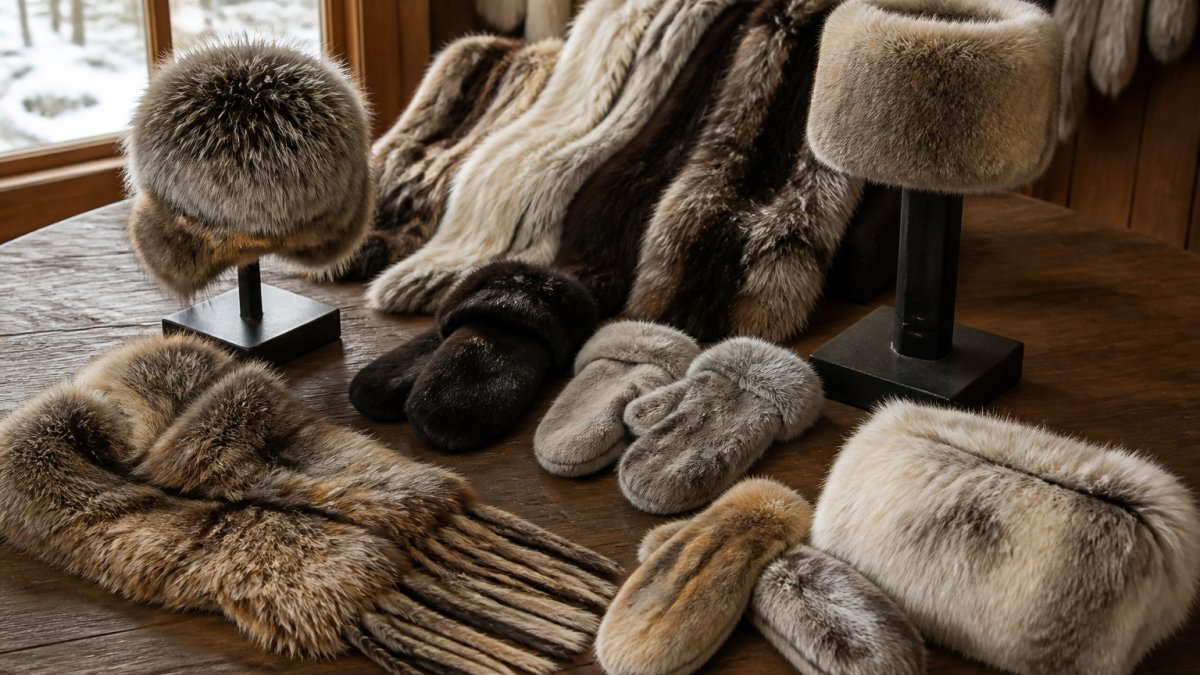
Hats do the heaviest work in any winter kit, and the right shape depends on how much cold you actually face. A trapper hat with ear flaps handles wind and deep cold. A beanie or pom-pom hat suits everyday wear. Headbands and earmuffs cover the in-between days when a full hat feels like overkill.
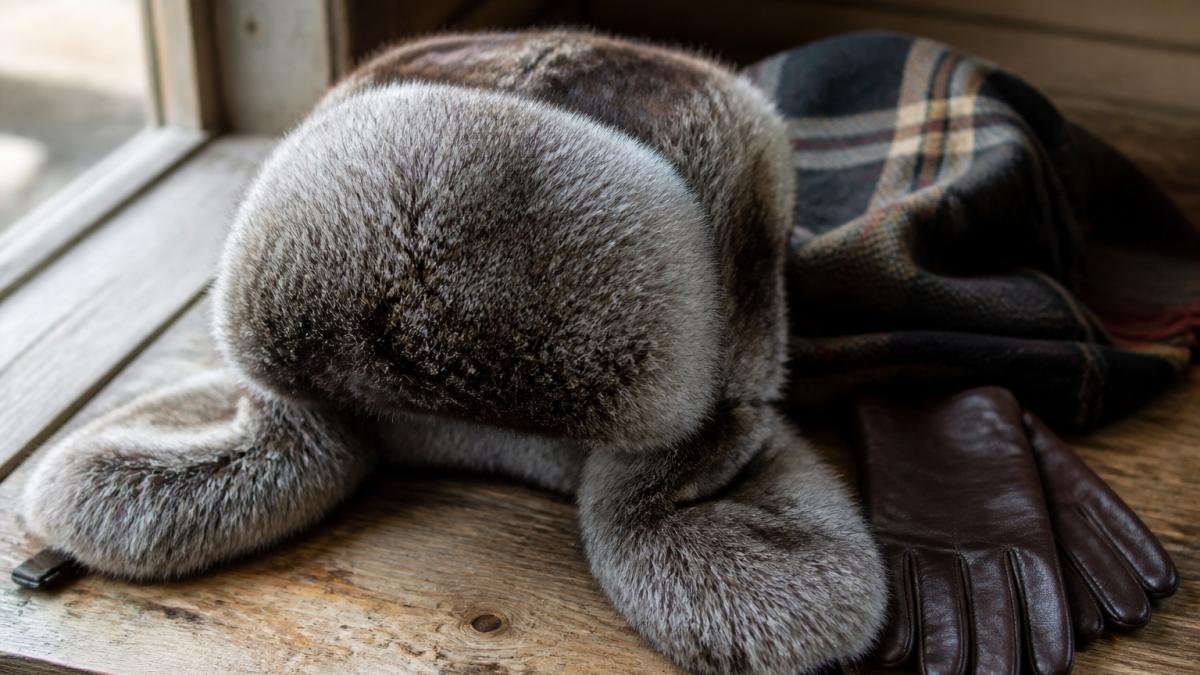
Trapper Hats for Field and Everyday Wear
Watch out: cheap trapper hats often use thin pieced fur on the crown and synthetic trim on the flaps. For a closer look at the options, read our full-fur vs lined beaver trapper hat guide. The flaps are where cold gets in first, so check that material before you buy.
Beanies, Headbands, and Earmuffs for Milder Days
Not every winter day calls for a full trapper.
Fur Scarves for Winter: Neck Warmers and Shawls That Stay Put
A scarf only works if it stays where you put it. Loose woven scarves slip, gap at the collar, and let wind straight down your jacket. Fur scarves for winter solve that with weight and texture: the natural body of the fur grips fabric underneath and holds position. Neck warmers wrap close for active days, while shawls drape wider for dressier winter styling.
Fur Mittens and Fingerless Mittens for Cold-Weather Work
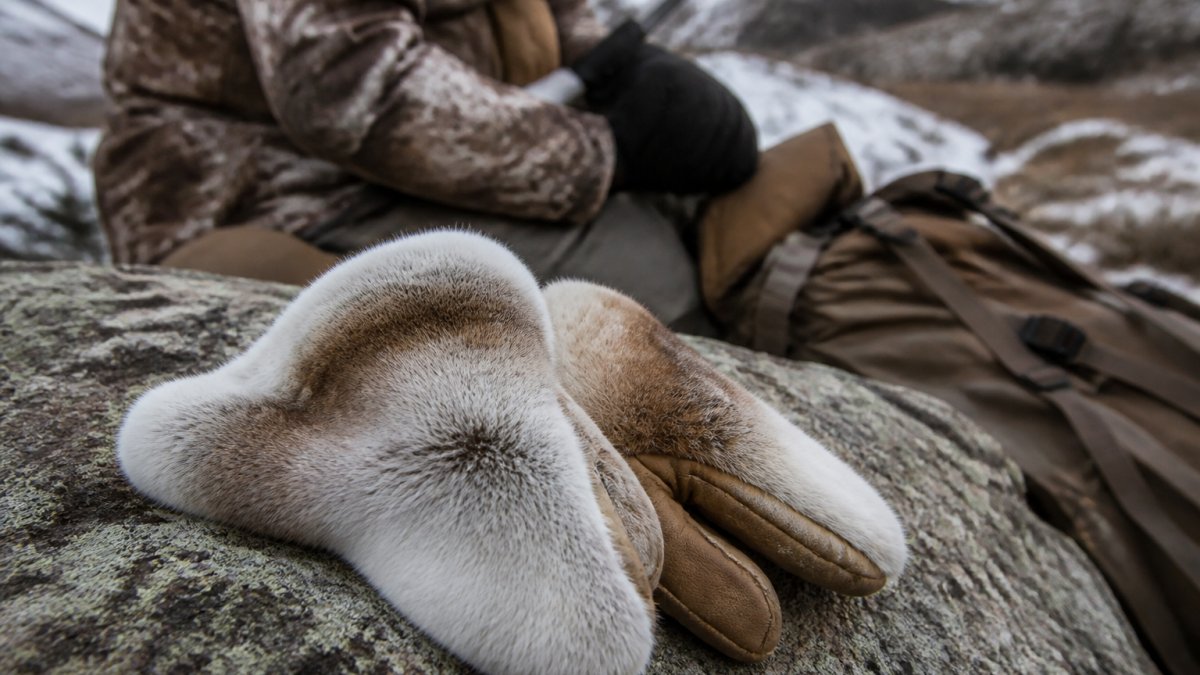
Mittens beat gloves for warmth because fingers share one pocket of air.
A common mistake is buying mittens sized to your bare hand. Fur lining takes up room, so measure with a light glove on, or size up. Our handcrafted fur mittens buying guide covers fur types, sizing, and care in full.
How to Care for Fur Accessories So They Last for Years
Knowing how to care for fur accessories is what separates a piece that lasts decades from one that sheds by spring. The rules are simple: keep fur dry, keep it off direct heat, and give it room to breathe in storage.
Cleaning, Drying, and Off-Season Storage
- Shake, don't scrub. Brush the fur with the grain after wear to lift dust and restore loft.
- Air dry only. If fur gets wet, hang it away from radiators and sunlight. Never use a dryer.
- Store cool and dry. Use a breathable cotton bag, not plastic, and keep pieces away from moths with cedar.
- Skip home washing. Water and detergent strip natural oils, so send soiled pieces to a fur specialist.
For a deeper schedule, our guide on how long real fur hats last maps out seasonal care step by step.
Sizing, Fit, and Sourcing Questions to Ask Before You Buy
Fit is the difference between a fur accessory you reach for every morning and one that sits in a drawer. Because fur has body and the lining takes up room, sizing works differently than it does for knitwear. Here is how to measure, what to expect, and what to ask before you order.
How to Measure for Hats, Headbands, and Earmuffs
- Trapper hats: measure head circumference, then check ear-flap length, flaps should reach the jawline without pulling.
- Beanies and pom-pom hats: a slightly closer fit is fine; the fur's natural give accommodates hair volume.
- Headbands and earmuffs: measure around the head at ear level; the band should sit flat without gaping at the nape.
How to Measure for Scarves, Neck Warmers, and Shawls
Scarf fit is about length and bulk, not circumference. Measure from the base of your neck to your belt line, then add a few inches if you like a tuck-in drape. A neck warmer should wrap close enough to seal the collar gap without bunching under the chin. Shawls drape wider and are sized by shoulder span, measure across the back from shoulder point to shoulder point.
How to Measure for Mittens and Fingerless Mittens
Measure around the widest part of your palm, just below the knuckles, and from the base of your wrist to the tip of your middle finger. Fur lining adds bulk, so measure with a light glove on or add roughly a quarter inch to your bare-hand measurement. Fingerless mittens should cover the palm and wrist fully while leaving the fingertips free to work. A common mistake is ordering mittens sized to the bare hand, they will feel tight across the knuckles once the lining is in place.
Custom Measurements and Made-to-Order Fit
If you fall outside standard sizing, or you are buying a gift without the wearer's measurements, ask about custom sizing. A working furrier can adjust head circumference, ear-flap length, mitten length, and scarf length before cutting. Custom pieces take longer to produce, so order ahead of the cold season. When ordering custom, confirm the finished measurements in writing before the piece is cut.
Sourcing Questions to Ask Before You Buy
Fit and sourcing decide whether a purchase holds up. Ask these before you commit:
- What are the exact finished measurements? Head circumference for hats, palm circumference and length for mittens, and end-to-end length for scarves. Custom measurements beat guessing from a size chart.
- Where did the fur come from? A serious maker can tell you the fur type and how pelts were sourced. Vague answers are a red flag.
- How is it constructed? Ask whether the fur is full, lined, or pieced, and how seams are finished. This tells you more about lifespan than any product photo.
- What is the care routine? Confirm whether the piece needs professional cleaning and how it should be stored in the off-season.
View the Campbell Fine Furs Collection
Buying handcrafted fur is a decision about warmth, longevity, and how a piece is made. The right hat, scarf, or pair of mittens should outlast several mass-market replacements and feel better every season.
Campbell Fine Furs offers a selection of fur accessories and Western-inspired goods, and you can view the current range on our website.
Frequently Asked Questions
What fur accessories are best for winter?
A hat, scarf, and pair of mittens cover the three areas where you lose heat fastest. For deep cold, a fur trapper hat with ear flaps protects the neck and ears in one piece. A fur scarf or neck warmer seals the gap at your collar, and fur mittens keep fingers warmer than gloves because the fingers share heat. Build the set around your coldest expected conditions, then add a lighter headband or fingerless mittens for milder days.
Are handcrafted fur accessories warmer than faux fur?
Natural fur traps air in individual hairs and often includes a dense underfur layer, which is why it holds warmth in dry cold. Faux fur is typically synthetic fiber on a fabric backing, so it insulates less and can mat down with wear. In wet conditions, neither material is ideal on its own, so plan to dry accessories fully after exposure. The bigger practical difference is longevity: quality natural fur can be cleaned and reshaped, while synthetic pile tends to shed and pill.
How should you care for fur hats, scarves, and mittens?
Brush the fur in its natural direction after each wear to lift dust and restore loft. Hang pieces on a broad, padded hanger rather than folding them, and keep them away from radiators and direct sun. For deeper cleaning, spot-treat with a damp cloth and mild soap, then dry away from heat. Store in a breathable cotton bag, never a sealed plastic bin, and add cedar to deter insects. Ask the maker for specific cleaning guidance before you attempt anything more involved.
Can fur accessories be worn in wet winter weather?
Fur handles light snow and brief exposure well, but prolonged rain or slush is hard on both natural and faux fur. If a piece gets wet, shake off the moisture and hang it to dry at room temperature, away from stoves, dryers, and radiators. Heat is what damages the leather or hide underneath. For wet slushy days, a water-resistant outer layer over your fur keeps the accessory dry and extends its life.