 blog
7 Trapping Supplies Professional Hunters Actually Need
Last Updated: October 29, 2026
Quick Summary
Professional trapping supplies are built around the species, terrain, and conditions on your line, not a catalog of every trap ever made. A mixed line needs at least two trap types, one snare kit, one drag, and a stake assortment, then species-specific tools as the line proves out.
- Coil-spring traps are compact and fast, making them a common choice for coyote and fox sets.
- Carry a mix of coil-spring traps in the 1.65 to 1.75 size range for coyote.
- Dog-proof traps are the core tool for raccoon in creek bottoms and timber edges.
- Keep lure bottles sealed, out of direct sun, and labeled by season.
- Confirm current regulations with your state wildlife agency before every season.
Table of Contents
- What Separates Professional Trapping Supplies From Hobbyist Gear
- Traps, Snares, and Snare Kits: Matching the Tool to the Target
- How to Choose Hunting Trapping Bait and Lure
- Trapping Tools and Equipment That Earn Their Place in the Truck
- Predator Trapping Bag Essentials: Packing for a Full Line
- Trap Preparation and Trap Parts: Maintenance Before the Season
- Staying Legal, Humane, and Safe With Trapping Equipment
- Building Your Trapping Supplies Order With Campbell Fine Furs
- Frequently Asked Questions
What Separates Professional Trapping Supplies From Hobbyist Gear
At Campbell Fine Furs, we build our Western lures around that same standard.
Most beginners buy gear by price. Professionals buy by failure point. A trap that freezes shut, a stake that pulls under load, or a lure that loses its appeal in rain costs you an animal and a day.
Association of Fish and Wildlife Agencies on regulated trapping sets the tone for how seriously this gear is treated, and it is worth reading before you build a line.
Traps, Snares, and Snare Kits: Matching the Tool to the Target
Matching the tool to the target is the first decision that separates a productive line from a frustrating one. Traps, snares, and snare kits each solve a different problem, and the target animal decides which one you carry.
What a professional actually needs is a complete kit organized around the species, terrain, and conditions on the line, not a catalog of every trap ever made.
Coil-Spring and Long-Spring Traps
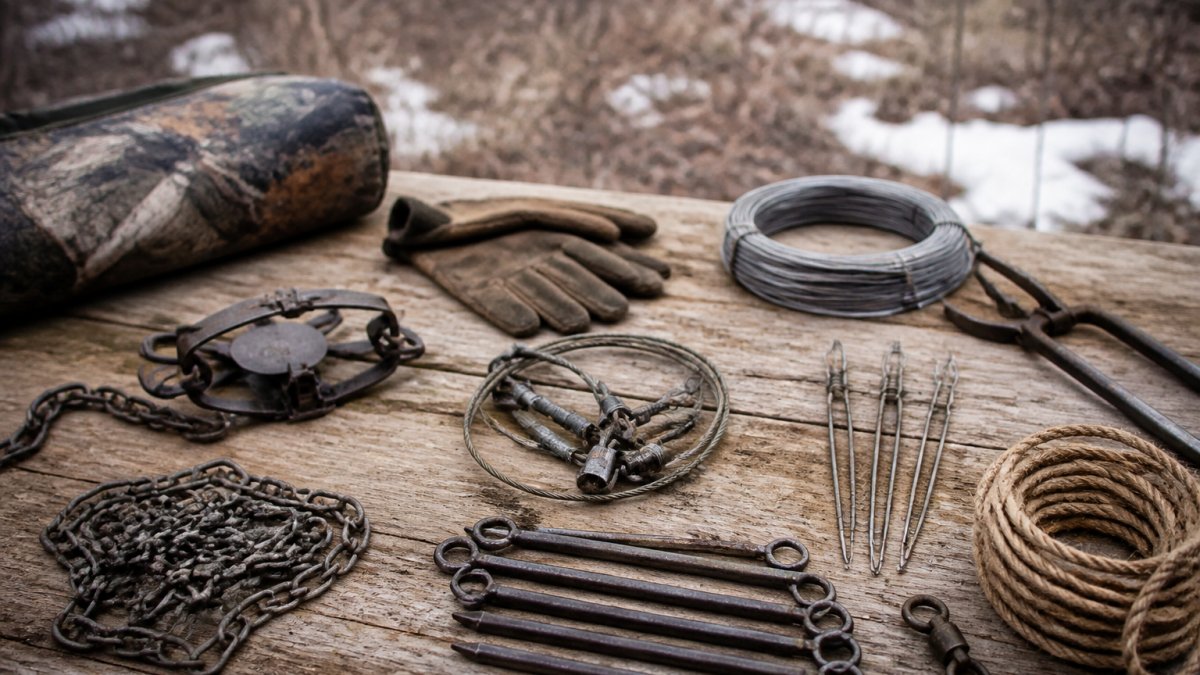
Coil-spring traps are the workhorse of predator trapping: compact, fast, and easy to bed, which makes them a common choice for coyote and fox sets. Long-spring traps trade some speed for a wider jaw spread and a more forgiving pan, and many trappers prefer them on larger targets or in loose soil.
A common mistake is buying one trap style and forcing it onto every species. A mixed line needs at least two trap types.
Body-Grip and Dog-Proof Traps
Body-grip traps are built for quick, decisive catches and are often used in water sets or on trails.
Snare kits round out the toolset. A good snare kit includes cable, locks, swivels, and support wire so you can rebuild or adjust in the field instead of driving home.
Professional Kit Recommendations by Species and Terrain
A professional kit is not a shopping list, it is a system sized to the animal, the ground, and the weather you expect to work in.
Coyote and fox, open farmland and pasture. Carry a mix of coil-spring traps in the 1.65 to 1.75 size range for coyote and smaller coil-springs for fox, plus a snare kit for fence lines and travel corridors.
Raccoon and similar mid-size animals, creek bottoms and timber edges. Dog-proof traps are the core here, backed by body-grip traps for trail and water sets. Carry more anchors than you think you need, coon work means wet ground and lots of sets.
Beaver and otter, water sets. Body-grip traps sized to the target, plus drowning rigs and wire, are the backbone. Water work demands more cable, more stakes, and a way to reach sets without soaking your gear. Keep a separate wet-kit so dry-land tools stay dry.
Mixed line, mixed terrain. The professional answer is two trap types minimum, one snare kit, one drag, and a stake assortment, then add species-specific tools as the line proves out. Buying a complete kit for every species before you have run a line is how trucks get overloaded and budgets get wasted.
| Tool | Best For | Key Advantage | Watch Out For |
|---|---|---|---|
| Coil-spring trap | Coyote, fox | Fast, compact, easy to bed | Needs careful bedding in loose soil |
| Long-spring trap | Larger predators | Wide jaw spread, forgiving pan | Heavier to carry |
| Body-grip trap | Trail and water sets | Quick, decisive catch | Placement must be precise |
| Dog-proof trap | Raccoon | Fewer nontarget catches | Limited to specific species |
| Snare kit | Trails, fences | Lightweight, adjustable | Requires good anchor points |
Bear Traps and Specialty Tools
Bear traps are a specialty item subject to regulation, so confirm current rules with your state wildlife agency before considering one. For most professional lines, the money is better spent on a second trap type and a stocked parts kit.
How to Choose Hunting Trapping Bait and Lure
Choosing bait and lure comes down to species, season, and set location. For coyote-specific guidance, see our best trapping lures for coyotes field guide. Food baits draw animals in; lures pull them to the exact spot you want. Professionals use both, changing the ratio as the season shifts.
If you want the full breakdown, our guide on how to choose hunting trapping bait walks through species, season, and set location in detail.
What most guides miss is storage. Heat and air ruin a good lure faster than anything in the field. Keep bottles sealed, out of direct sun, and labeled by season.
We make our Western lures with Andy Weiser's formulas. Browse our full Weiser Western lures, baits, and urines to stock up.
Trapping Tools and Equipment That Earn Their Place in the Truck
Field tools are where hobbyist kits fall apart. A trowel that bends, gloves that soak through, or flagging that tears in wind will cost you more time than any trap. Professionals carry fewer tools, but each one has a job.
- Trowel: For bedding traps and shaping the set. Get one with a stiff blade.
- Stakes and drags: Anchoring decides whether a catch holds. Carry both.
- Gloves: Scent control and cold hands, in one tool.
- Pack basket or trapping bag: Keeps gear organized and accessible.
- Fluorescent flagging: Marks sets so you find them in snow or dark.
- Ground guards and plastic guards: Protect the set from weather and disturbance.
Scouting and scent control matter as much as the tools themselves. Our guide on improving trap set location efficiency covers the scouting and terrain side.
A common mistake is overloading the truck. If you have not used a tool in two seasons, it is weight, not equipment.
Predator Trapping Bag Essentials: Packing for a Full Line
Predator trapping bag essentials are the items you cannot run a line without: gloves, trowel, stakes, flagging, hand tools, lure, and a way to carry it all. Pack for a full day, not a single set, and pack so you can find things with cold hands.
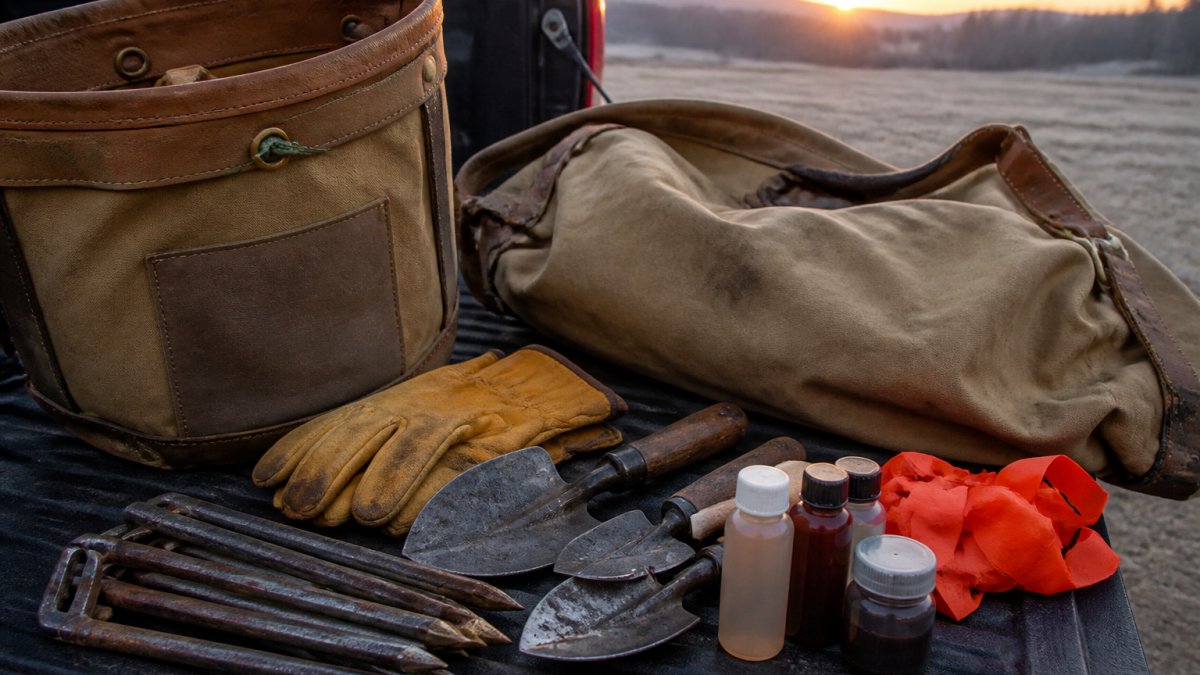
Build the bag in layers. Base layer: gloves, trowel, stakes. Middle: lure, bait, flagging. Top: tools you reach for most. A trapping bag that forces you to dig slows your whole line.
Track makers and animal tracks reading belong in your routine, not your bag. Learn sign before the season so your sets land where animals already travel.
Trap Preparation and Trap Parts: Maintenance Before the Season
Trap preparation decides your season before it starts. Clean, tune, and test every trap, then stock the trap parts you know wear out. Replacement parts are cheaper than a missed catch.
The pre-season checklist:
- Inspect every trap for bent jaws, weak springs, and worn pans
- Clean and re-treat metal to prevent rust
- Test triggers and pan tension by hand
- Replace worn springs, chains, and swivels
- Sort trap parts into a labeled field kit
- Check stakes and drags for cracks or bends
- Confirm snare locks and swivels move freely
Staying Legal, Humane, and Safe With Trapping Equipment
Legal, humane, and safe use is the foundation of professional trapping. Regulations vary by state and change over time, so confirm current rules with your state wildlife agency before every season, checking trap types, set locations, and season dates.
The Pre-Season Regulatory Checklist
Before you set a single trap, confirm each of the following with your state wildlife agency's current regulations, not last season's handbook:
- Season dates and bag limits for each target species on your line
- Approved trap types and size restrictions, some states limit jaw spread, require specific trap styles, or ban certain designs outright
- Setback and placement rules, distance requirements from trails, roads, property lines, and occupied buildings
- Tagging and identification requirements for traps and catches
- Check intervals, how often you are legally required to visit sets, which varies by state and species
- Reporting requirements for certain species or catches
- Land access and permission, written permission where required, and posted-land rules
- Interstate transport rules if you sell or move fur across state lines
Regulations change. A rule that was fine two seasons ago may be restricted now, and enforcement does not accept "the old handbook said so" as a defense.
Humane Dispatch and Best Practice
Humane practice protects the resource and the reputation of everyone who traps. Know the dispatch method approved for your target species and legal in your state before you are standing over a catch.
Check sets at the interval your state requires, and more often in extreme heat or cold. An animal that sits too long is a welfare problem and a legal one.
Nontarget Risk and Safety
Nontarget catches are the professional's constant concern. Reduce them by:
- Setting for the target species with the right trap size and pan tension
- Avoiding set locations where pets, livestock, or people routinely travel
- Using dog-proof and body-grip designs where nontarget risk is high
- Marking sets clearly and keeping a written set log
- Handling every animal with gloves and washing up after
Safety is just as practical. Set traps where people and pets will not stumble into them, mark your sets, and handle animals with gloves. A line that breaks the rules can cost you your license and the reputation of every trapper in your state.
Association of Fish and Wildlife Agencies on regulated trapping and U.S. Fish and Wildlife Service on wildlife management and trapping are reasonable starting points for understanding how regulated trapping fits into broader conservation, but your state agency is the authority for the rules on your line.
Building Your Trapping Supplies Order With Campbell Fine Furs
Building a trapping supplies order starts with the line you plan to run, then works backward to tools, traps, and scent. Buy for the species and terrain in front of you, not for a catalog's bestseller list. Our complete trapping gear guide covers professional-grade supplies to round out your order.
Our focus is the scent side of that order. Western lures made with Andy Weiser's formulas give you a consistent base to build sets around.
For current prices and availability, visit the Campbell Fine Furs website.
Frequently Asked Questions
What supplies do professional trappers carry?
The exact list depends on species, terrain, and the sets you actually run. Check your state wildlife agency's rules before you buy.
How do you choose hunting trapping bait and lure?
Match the bait to the species and the season, and check the product details on the Campbell Fine Furs website.
How should traps be prepared before setting them?
New traps usually arrive with factory oil that needs removing. Degrease with a mild cleaner, rinse, and let them air dry. Dye or wax steel traps if you want rust protection and a quieter set, then work the springs and pan until they move freely. Check every swivel, chain link, and stake for wear, and replace weak parts before the season. Well-prepared traps fire faster and last longer.
What safety gear should trappers bring into the field?
Check your state wildlife agency's rules on trap marking, check intervals, and allowed equipment before you head out.
A full season rewards preparation, not impulse buying. Build your order around the species you target, the terrain you work, and the scent that pulls animals to your set. Campbell Fine Furs offers Western lures and baits made with Andy Weiser's formulas, plus the quality and craftsmanship we bring to every product we sell. Get started with Campbell Fine Furs and build a trapping supplies order that holds up from opening day to the last set.