 blog
How to Choose the Best Fur Mittens for Hunting
Last Updated: October 30, 2026
Quick Summary
The best fur mittens for hunting match fur density and loft to your conditions, seal the cuff over your jacket sleeve, and manage moisture with a removable liner. Size the mitt to fit over that liner, not your bare hand, because a tight fit crushes the fur's warm air layer. Choose a convertible or gauntlet design based on how much trigger access you need.
- Dense underfur traps dead air, while longer guard hairs block wind better.
- Match liner weight to temperature: thin for 25-35°F, mid-weight for 10-25°F, heavy below 10°F.
- A gauntlet cuff overlapping the jacket sleeve often matters more than fur thickness.
- Dry fur mittens at room temperature away from radiators, stoves, and direct sun.
- Never place a hand warmer against bare skin; use the liner as a barrier.
Table of Contents
- Why Fur Mittens Outperform Synthetic Gloves in Cold Weather
- The Warmest Mittens for Hunting: Insulation and Heat Retention
- Hunting Mittens vs. Gloves: Dexterity, Trigger Access, and Warmth
- Fur Gauntlet Mittens: Design, Fit, and Field Performance
- How to Care for Fur Mittens: Drying, Storage, and Longevity
- Choosing the Right Fur Mittens for Your Hunting Conditions
- Finding Your Next Pair of Hunting Mittens
- Frequently Asked Questions
Why Fur Mittens Outperform Synthetic Gloves in Cold Weather
Fur mittens are hand coverings built from animal hide and fur, worn to trap body heat in cold conditions.
Fur is a dense network of hollow hairs that can hold a layer of warm air against the skin and help block wind.
Mittens let fingers share one warm pocket instead of sitting in separate gloved sections.
A tight fit can crush the fur's air layer and reduce warmth.
The Warmest Mittens for Hunting: Insulation and Heat Retention
Warm hunting mittens often combine a fur outer, a palm material, and a liner, with each layer handling a different job. The fur blocks wind and traps heat, the leather adds grip and abrasion resistance, and the liner manages moisture close to the skin. What separates a genuinely warm pair from a merely thick one is how those three layers are matched to each other, and to the fur itself. For a deeper comparison of insulation, fur types, and liners, see our durable fur mittens for outdoor buying guide.
How fur type changes warmth
Not all fur insulates the same way. The variables that matter most are hair density, guard-hair length, and how much loft the underfur holds when compressed.
- Beaver: dense underfur with long guard hairs; excellent wind resistance and very durable, but heavier and bulkier than softer furs. A common choice for late-season stand hunting.
- Otter: dense, water-shedding fur with a natural sheen; historically favored for cold, wet conditions because the guard hairs shed moisture rather than soaking it up.
- Elk or deerskin leather palms: not fur, but the palm material determines grip and abrasion resistance; a leather palm lets you keep a fur back without wearing through the palm on a rifle stock or bow grip.
- Faux fur: consistent density and no animal-derived material, but synthetic fibers generally mat and lose loft faster with sweat and compression, so warmth drops sooner over a long sit.
A common pattern is that denser underfur traps more dead air per ounce, while longer guard hairs block wind better. The best field mitt usually pairs both: dense underfur against the hand and a longer outer layer to break the wind.
The three things that actually drive heat retention
- Fur density and loft. Dead air is the insulation. Anything that crushes the fur, a tight fit, a heavy liner, a wet palm, removes the air layer and the warmth with it.
- Wrist and cuff sealing. A gauntlet cuff that overlaps your jacket sleeve stops warm air from escaping up the arm. That single design choice often matters more than fur thickness alone.
- Moisture management. Sweat is the quiet warmth killer. A removable liner that wicks and can be swapped or dried mid-trip keeps the fur from soaking up perspiration and losing loft.
Matching liner weight to temperature
A common mistake is layering a heavy wool liner inside an already-thick fur mitt. The result is a cramped hand, poor circulation, and colder fingers. Match liner weight to temperature instead:
- Mild cold (roughly 25-35°F): thin merino or synthetic liner, or none if the fur is dense.
- Hard cold (roughly 10-25°F): mid-weight fleece or wool liner.
- Extreme cold (below 10°F) or all-day sits: heavy liner plus a gauntlet cuff, and consider a hand warmer packet between liner and fur, never against bare skin.
Warmth versus dexterity: the trade-off nobody explains
Every layer of warmth costs you feel. A full fur mitt gives the most heat retention but the least trigger feel; a flip-top or convertible design restores finger access for a shot but opens a cold-air path every time the flap is up. The practical rule most experienced hunters follow is to buy for the coldest condition you expect, then use a convertible design or a liner to dial warmth down for milder days, rather than buying a light mitt and hoping a liner closes the gap. Bulk also affects bow handling and other fine tasks, so test any mitt with your actual release aid or rifle stock before the season, not on opening morning.
Hunting Mittens vs. Gloves: Dexterity, Trigger Access, and Warmth
Hunting mittens win on warmth; gloves win on dexterity. The right answer for most hunters is a convertible design that gives you both.
A flip mitt or convertible mitten has a back flap that folds away to free your fingers for a shot, then closes again to restore warmth. This is the practical middle ground for deer hunting and whitetail sits, where you need trigger access for a few seconds and warmth for the other three hours.
Articulated fingers on a convertible mitt help, but the trade-off is real: every opening that lets your fingers out also lets cold air in. Choose based on how much time you spend waiting versus shooting.
Fur Gauntlet Mittens: Design, Fit, and Field Performance
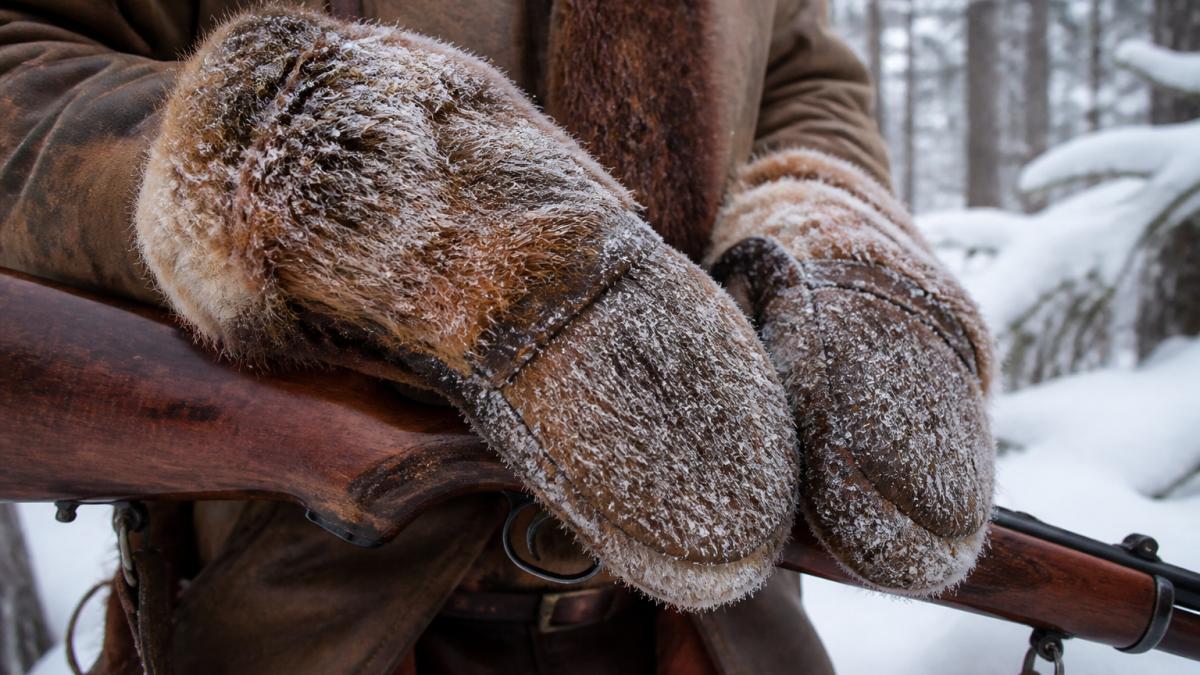
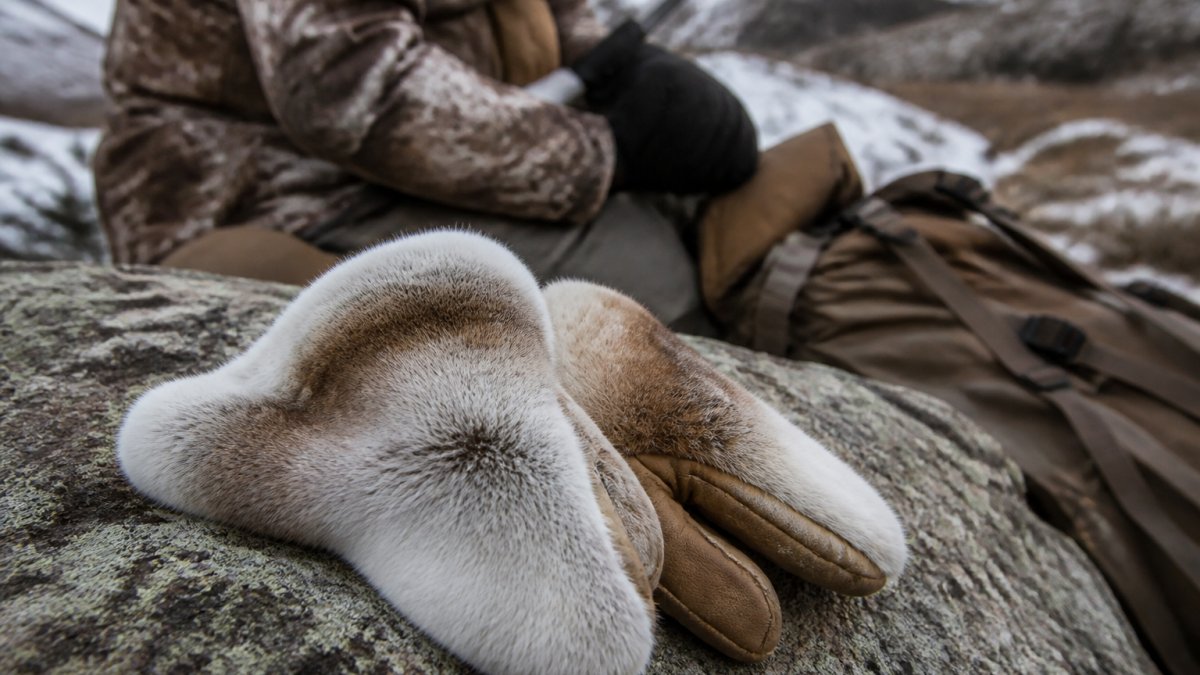
Fit matters more than most buyers expect. The mitt should slide on easily over a liner, leave room to make a loose fist, and still grip the stock without slipping. Too loose and you lose control; too snug and you lose warmth. Field performance comes down to the palm: a leather palm gives you a sure grip on a cold rifle or bow, while an all-fur palm is warmer but slicker. You can see a real gauntlet-style example in our River Otter Fur Gauntlets.
How to Care for Fur Mittens: Drying, Storage, and Longevity
Fur mittens last for years when you dry and store them correctly, and they degrade fast when you do not. The rules are simple, but skipping them is the most common reason a good pair sheds or stiffens after a season or two.
- Shake off snow and loose ice before you go inside.
- Dry at room temperature, away from radiators, stoves, and direct sun.
- Stuff the mitts lightly with plain paper to hold their shape as they dry.
- Brush the fur in its natural direction once fully dry.
- Store in a breathable cotton bag, never a sealed plastic bin.
- Keep away from moths with cedar or a proper repellent.
Never machine wash or tumble dry fur, and never dry it over direct heat. Heat is what turns soft fur brittle. For a full step-by-step routine on drying, storing, and extending the life of your pair, read our guide on how to care for fur mittens.
Choosing the Right Fur Mittens for Your Hunting Conditions
Match the mitt to the conditions, not to the label. A pair built for a deep-winter stand is overkill for early bow season, and a light pair will fail you in a late-season cold snap. The decision comes down to four inputs: temperature, wind, activity level, and how long you sit still. To cover the rest of your cold-weather setup, see our guide to the best fur hats for hunting.
| Condition | Best choice | Why |
|---|---|---|
| Early bow season, active | Light glove or thin convertible mitt | Dexterity and scent control matter most; you generate heat moving |
| Mid-season stand hunting | Convertible fur mitt with liner | Warmth with quick trigger access |
| Late-season extreme cold | Full fur gauntlet mitt | Maximum heat retention and wind block |
| Wet snow and mixed weather | Fur mitt with leather palm | Water resistance where you grip; fur back sheds snow |
| All-day sit, sub-freezing | Gauntlet mitt plus heavy liner | Sealed cuff and layered warmth |
Temperature and activity: the two dials that matter
Active hunters generate heat and need less insulation; stationary hunters need more. A useful way to think about it:
- Moving (still-hunting, walking to stand): your body produces heat, so a lighter mitt or a convertible with the flap open is often enough even in hard cold. Over-insulating here leads to sweat, and sweat is what freezes your hands once you stop.
- Sitting (stand, blind, calling): your hands are the first thing to go. This is where a full fur gauntlet and a heavy liner earn their keep, and where a sealed cuff matters more than fur thickness.
- Transition (walk in, sit, walk out): the convertible design is built for this. Open the flap on the move, close it on the sit.
Sizing and layering: where most cold hands start
Fit problems cause more cold hands than insufficient fur. A few practical rules:
- Measure your hand and size for the liner you will actually wear. A mitt that fits bare will crush the fur once a liner goes in.
- Leave room to make a loose fist. You should be able to curl your fingers without the fur pulling tight across the knuckles.
- Check the cuff overlap. The gauntlet should cover the jacket sleeve opening, not stop at the wrist.
- Test with your release aid or rifle stock. Bulk that feels fine in the store can block a trigger or foul a bowstring.
- Carry a spare liner. A dry liner swap mid-sit restores warmth faster than any single thick liner.
Sourcing and material transparency
On sourcing, ask any maker directly how the fur is obtained and whether they can explain their supply chain. Transparency is the only proof that matters. If you prefer animal-free materials, ask specifically whether a "faux fur" claim is backed by fiber content and construction details, because synthetic pile varies widely in density and loft retention. A maker who can explain where the fur comes from, and how the mitt is built, is usually the same maker who will stand behind it after a season in the field.
Finding Your Next Pair of Hunting Mittens
The best fur mittens for hunting are the ones matched to your conditions, your activity level, and your need for trigger access. Warmth, fit, and care decide whether a pair lasts one season or ten.
Campbell Fine Furs offers a selection of fur accessories and Western-inspired goods.
Get started with Campbell Fine Furs and step into late-season cold with hands that stay warm and ready.
Frequently Asked Questions
What material is best for winter hunting mittens?
Natural fur, particularly beaver or deerskin with a fur lining, can offer good warmth and wind resistance. Look for a leather shell for durability and a removable fur liner for easier care.
Are fur mittens warm enough for late-season hunting?
Fur mittens can be a warm option for late-season hunting, especially when paired with a liner. For extreme cold, choose mittens with thick fur lining and a gauntlet cuff to seal out drafts. Add a wool liner for extra warmth on sub-zero days.
How should hunting mittens fit?
Hunting mittens should fit snugly but allow room for a liner and finger movement. The palm should not be tight, and the cuff should extend over your jacket sleeve. Try them on with your typical hunting layers. A proper fit ensures dexterity for trigger access without compromising warmth or circulation.
How do you care for fur hunting mittens?
Brush fur after each use to remove dirt and snow. Dry mittens at room temperature, away from direct heat. Never machine wash or dry. For deeper cleaning, use a damp cloth on the leather and a fur-specific cleaner. Store in a breathable bag with cedar blocks to deter pests. Regular care extends the life of your fur mittens for many seasons.