 how-to
Keep Fur Home Decor Clean in Dusty Climates
Table of Contents
- Why Dust Settles in Fur Home Decor and What It Does to the Pile
- How to Reduce Dust in the Home Before It Reaches Your Fur
- How to Remove Dust from Natural Fur Without Flattening the Pile
- How to Clean a Fur Throw, Pillow, or Faux Fur Blanket Safely
- How to Store Fur Blankets and Throws Between Seasons
- Pet Fur, Shedding, and Odor: Keeping Fur Decor Fresh in a Busy Home
- A Step-by-Step Cleaning Schedule for Dusty Climates
- Frequently Asked Questions
Last Updated: October 18, 2026
Why Dust Settles in Fur Home Decor and What It Does to the Pile
Dust settles into fur home decor because the pile works like a trap. Each strand carries a slight natural texture, and dust, lint, and pet hair catch on it instead of sliding off.
The damage builds quietly. Dust works down toward the base of the pile, where it acts like grit between the hairs. Every time someone sits on a fur pillow or drags a throw across a bench, that grit rubs the strands against each other.
At Campbell Fine Furs, we build our blankets and pillows from quality pelts, but no fur escapes dust. Below, we break down how to reduce dust in the home, how to remove dust from natural fur safely, and how to clean a fur throw without wrecking the pile.
How to Reduce Dust in the Home Before It Reaches Your Fur
The cheapest way to protect fur is to stop dust at the source. A few changes to how air moves through your home cut the dust that lands on your decor.
Start with the rooms that feed the dust. Entryways, laundry areas, and kitchens push particles into living spaces all day. A mat at every door and a quick sweep of hard floors each morning make a real difference.
Filters, Vents, and the Rooms That Feed the Dust
Air filters and vents are where most dust control succeeds or fails. Replace your HVAC filter on the schedule the manufacturer lists, and check it more often during dry, windy months.
Then walk your home and look at the vents:
- Wipe heating vents and radiators monthly with a damp microfiber cloth
- Vacuum air ducts and return grilles at the start of each dusty season
- Keep air purifiers running in rooms with fur decor
A breathable bag over stored fur also keeps dust off between uses. The U.S. Environmental Protection Agency's indoor air quality guidance explains how filtration and source control work together to lower indoor particles.
How to Remove Dust from Natural Fur Without Flattening the Pile
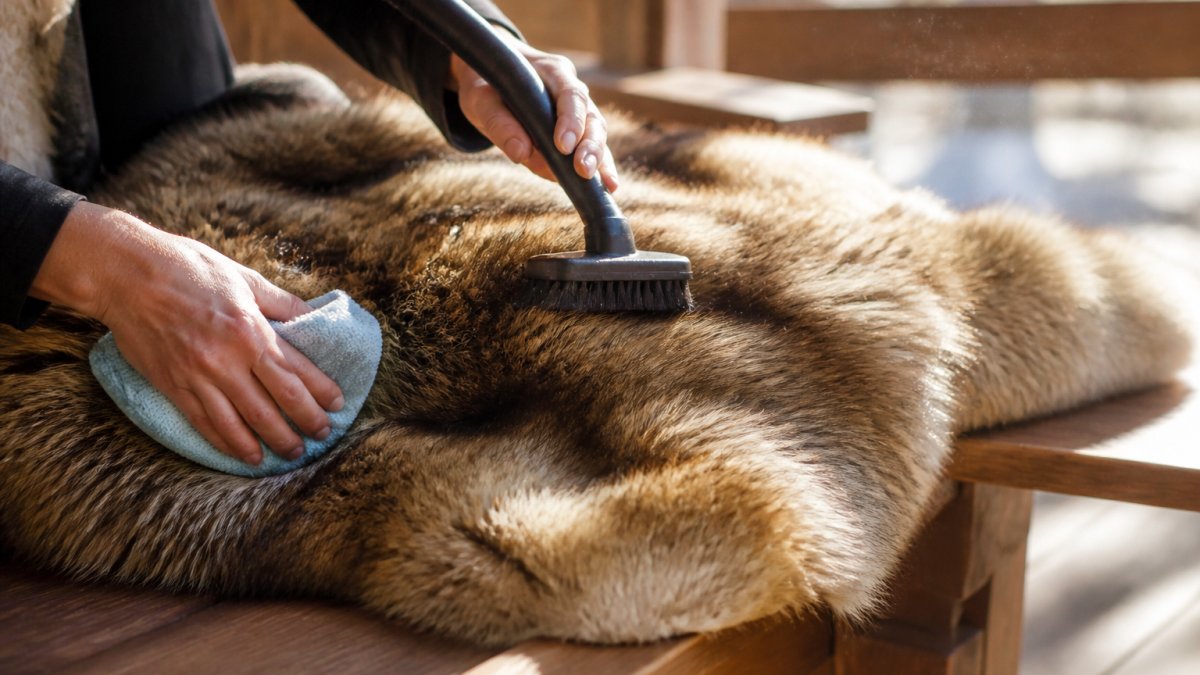
Removing dust from natural fur takes a light touch, not pressure. The goal is to lift particles off the surface and out of the upper pile, not scrub them into the leather base.
Why the Pile Traps Dust and How to Lift It Out
Each fur strand has a natural texture and a slight scale pattern, and the dense underfur near the base acts like a filter. Dust, lint, and pet hair catch on the surface and work downward with foot traffic, sitting, and dragging.
The fix is to lift dust before it migrates. Work in this order:
- Take the piece outside on a dry, low-wind day and shake it gently from the base, not the tips, so dust falls away instead of settling back in.
- Wipe the fur in the direction the hair grows with a dry microfiber cloth, using short strokes and almost no pressure.
- Vacuum on the lowest suction setting with a soft brush attachment held a finger's width above the surface, moving continuously.
- Let the piece air out for an hour before bringing it back inside so any loosened particles settle out.
Never rub against the grain. That roughs up the pile, creates static that attracts more dust, and pushes grit toward the leather.
Matching the Method to the Material
Natural fur and faux fur behave differently, and the same tool can help one and hurt the other.
- Natural fur: spot clean only. Wipe soiled areas with a barely damp cloth, then brush with the grain once dry. Never soak natural fur in water; moisture stiffens the leather base and can cause it to crack.
- Faux fur: check the care label first. Many faux fur throws and pillows are machine washable on cold, gentle cycles, but the pile can mat if agitated. Brush the pile with a soft-bristle brush after air drying to restore loft.
- Fur rugs: vacuum with the brush attachment on low suction, working in the direction of the pile. Spot clean spills immediately and air dry flat, away from direct heat.
Tools That Lift Dust Instead of Grinding It In
The right tools do most of the work. A microfiber cloth traps dust on contact through static and fine fibers. A vacuum brush attachment lifts loose particles without crushing the fur.
Skip anything with stiff teeth, wire brushes, or strong suction. Strong suction pulls the pile flat and can tear hairs from the leather. Keep the vacuum head moving and never rest it in one spot.
How to Clean a Fur Throw, Pillow, or Faux Fur Blanket Safely
Cleaning a fur throw depends on what it is made of.
For natural fur: spot clean only. Wipe soiled areas with a barely damp cloth, then brush with the grain once dry.
For faux fur: check the care label first. Many faux fur throws and pillows are machine washable on cold, gentle cycles.
| Material | Wash Method | Drying | Frequency |
|---|---|---|---|
| Natural fur | Spot clean only | Air dry away from heat | As needed |
| Faux fur, machine washable | Cold, gentle cycle | Air dry flat | Every few months |
| Fur pillows | Surface wipe and vacuum | Air dry | Monthly |
| Fur rugs | Vacuum and spot clean | Air dry | Monthly |
Always read the care label before any wash.
How to Store Fur Blankets and Throws Between Seasons
How to store fur blankets well comes down to three things: clean, dry, and breathable. Store a piece while it is dusty and the dust sets into the pile over the off-season.
Clean and fully air dry the piece first. Then fold it loosely and place it in a breathable cotton bag or a pillowcase.
Keep stored fur in a cool, dark, dry spot. Avoid attics and damp basements.
Pet Fur, Shedding, and Odor: Keeping Fur Decor Fresh in a Busy Home
Pet hair is the fastest way to make fur decor look tired. Shedding coats the pile, and trapped dander holds odor. Homes with pets need a tighter routine, not more effort per cleaning.
- Brush pets outdoors two to three times a week during heavy shedding
- Cover fur pillows and throws when pets are on the furniture
- Vacuum upholstery and pet beds weekly
For odor, air the piece outside on a dry day and wipe surfaces with a cloth. Avoid heavy sprays, which can cling to the pile. The American Kennel Club's guidance on managing shedding notes that regular brushing reduces loose hair before it lands on furniture.
A Step-by-Step Cleaning Schedule for Dusty Climates
A schedule beats guesswork. Dusty climates reward small, frequent passes over big, occasional ones, because dust that sits on the pile gets worked downward with every use. The routine below is built around that principle and adds a room-by-room order so dust does not get pushed from one space into another.
Daily and Weekly Habits
- Daily: quick pass over hard floors in entryways and kitchens with a damp microfiber mop or sweep, and a lint roller touch-up on fur pillows and throws that get daily use.
- Weekly: shake and brush fur pieces (about 10 minutes), vacuum pet beds and upholstery, and wipe high-touch surfaces near fur decor.
- Every two weeks: vacuum fur with the brush attachment on low suction (about 15 minutes), working in the direction of the pile.
Monthly and Seasonal Tasks
| Task | Frequency | Time |
|---|---|---|
| Shake and brush fur pieces | Weekly | 10 minutes |
| Vacuum fur with brush attachment | Every two weeks | 15 minutes |
| Wipe vents, baseboards, and return grilles | Monthly | 20 minutes |
| Replace HVAC filter | Per manufacturer schedule; check more often in dry, windy months | 5 minutes |
| Wash machine-washable covers and pet beds | Every few months | 1 hour |
| Deep clean and inspect stored fur | Seasonally | 30 minutes |
Room-by-Room Order for Dusty Climates
Work from the dustiest rooms toward the cleanest so you are not redistributing particles onto fur decor.
- Entryways and mudrooms: shake mats, sweep or vacuum hard floors, and wipe door thresholds where wind-driven dust collects.
- Kitchens and laundry areas: wipe surfaces and vacuum floors, since these rooms feed lint and particles into living spaces.
- Bedrooms and pet areas: vacuum pet beds, wash covers, and brush pets outdoors before they come back in.
- Living spaces with fur decor: dust and vacuum fur pieces last, after air has had time to settle from cleaning other rooms.
Dusty-Season Adjustments
During dry, windy months or seasonal dust events, increase frequency rather than intensity. Add a midweek shake-and-brush pass, check the HVAC filter every few weeks instead of waiting for the manufacturer interval, and keep windows closed on high-wind days.
The U.S. Department of Energy's guidance on heating and cooling maintenance recommends regular filter changes, which also helps keep dust off your decor. The U.S.
How to Tell Whether the Routine Is Working
A common pattern is to check the fur after each vacuum pass: if the cloth or brush attachment comes away with visible grit after a light pass, the schedule is keeping up; if the pile feels rough or looks dull between cleanings, increase frequency. Also watch the HVAC filter: a filter that loads quickly signals more airborne dust and a need for more frequent surface cleaning.
Frequently Asked Questions
How often should you clean fur home decor in a dusty climate?
In a dusty climate, plan on a light dusting and vacuum pass every one to two weeks, with a deeper clean two to three times a year. High-traffic pieces like fur pillows and throws on a sofa need more frequent attention than a fur rug in a guest room. Watch for visible dust settling into the pile, a dull appearance, or a musty smell. If you notice any of these between scheduled cleanings, do a spot refresh rather than waiting for the next full clean.
Can you vacuum fur pillows or blankets?
Yes, but only with the right attachment. Use a brush or upholstery tool on the lowest suction setting, and work in the direction of the pile. Never press down hard or use a rotating beater bar on natural fur, because it can pull fibers loose and flatten the texture. For faux fur throws and pillows, a soft brush attachment works well too. Vacuuming regularly is one of the most effective ways to keep fur home decor free of dust between deeper cleanings.
How do you remove dust from a natural fur throw without damaging it?
Start by shaking the throw outdoors on a dry, breezy day to release loose dust. Then brush the pile gently with a soft-bristled brush or a microfiber cloth, working in the direction the fur naturally lies. For deeper dust, use a vacuum with a brush attachment on low suction. Avoid water on natural fur unless the care label allows it. Store the throw in a breathable bag when not in use to keep dust from settling back in.
How should you store fur blankets when they are not in use?
Store fur blankets and throws in a cool, dry place away from direct sunlight. Use a breathable cotton bag or a clean pillowcase rather than plastic, which traps moisture and can cause odors or damage. Fold loosely rather than compressing the pile, and avoid stacking heavy items on top. Check stored pieces every few months for dust or pests. Proper storage is one of the simplest ways to keep fur home decor looking fresh season after season.
Dust in a dry climate is relentless, but fur home decor can stay soft and full with a simple routine. The pieces that last are the ones cleaned little and often, stored with care, and handled with a light touch. At Campbell Fine Furs, our artisanal fur blankets and pillows are made to be lived with for years. Browse our collection to find fur home decor built for real homes, then set a schedule that keeps it looking its best.