 how-to
Is It Safe to Brush Real Fur Accessories? A Complete Guide
Table of Contents
- Is It Safe to Brush Real Fur Accessories?
- The Best Brush for Fur Accessories: Tools That Won't Damage the Pelt
- How to Brush Different Fur Accessories: Hats, Scarves, and Mittens
- How to Prevent Fur Shedding Before It Starts
- How to Detangle Matted Fur Without Causing Damage
- How to Store Fur Accessories to Prevent Matting and Shedding
- When to Call a Professional Fur Cleaner
- Conclusion: Brush With Care, Wear With Confidence
- Frequently Asked Questions
Last Updated: October 13, 2026
Is It Safe to Brush Real Fur Accessories?
Yes, it is safe to brush real fur accessories when you use the right tool and a light touch. Brushing is one of the best ways to keep fur hats, scarves, and mittens looking full and clean. But the wrong brush can tear the leather backing and pull out hair you cannot replace.
This guide from Campbell Fine Furs walks through the exact tools and strokes that protect your fur.
Fur is skin first, hair second. The pelt underneath is thin leather. Once it dries out or tears, no brush on earth will fix it. That single fact shapes everything below.
Here is what we will cover: the brushes that work, the ones to avoid, and how to brush hats, scarves, and mittens without wrecking them.
The Best Brush for Fur Accessories: Tools That Won't Damage the Pelt
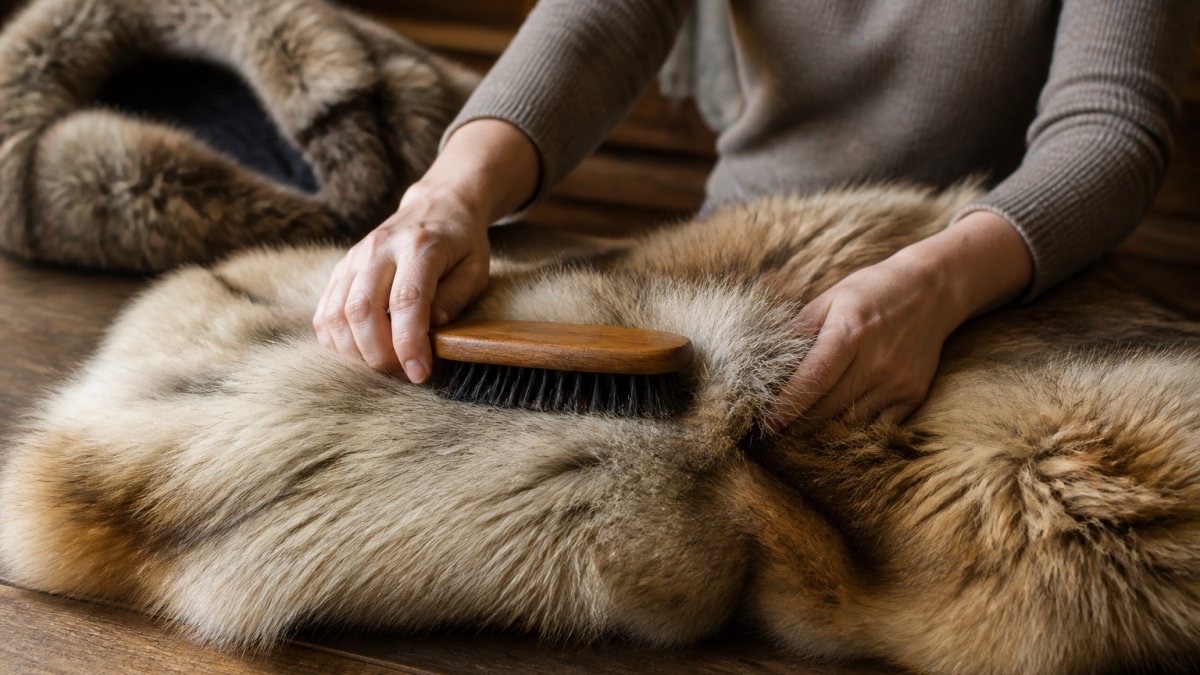
The best brush for fur accessories is a soft-bristle brush with widely spaced teeth. A natural-bristle brush or a wide-tooth comb does the job without snagging. Stiff brushes and fine-tooth combs rip through the underfur and scratch the leather.
Look for three things when you shop:
- Soft bristles. Boar-bristle brushes or baby brushes work well.
- Wide spacing. Teeth or bristles should sit a few millimeters apart.
- No metal tips. Metal pins catch on the guard hairs and pull them loose.
A clean makeup brush also works for spot touch-ups on a fur hat brim. The goal is gentle movement, not deep scrubbing.
Brushes to Avoid
Skip wire slicker brushes, pet deshedding tools, and anything sold for brushing a dog's coat. Those tools are built to grab and remove undercoat. On a fur accessory, that means pulling out the very hair that gives the piece its warmth and shape.
How to Brush Different Fur Accessories: Hats, Scarves, and Mittens
Each fur accessory needs a slightly different approach. A hat has a crown and a brim. A scarf drapes and folds. Mittens bend at the thumb. Match your stroke to the shape.
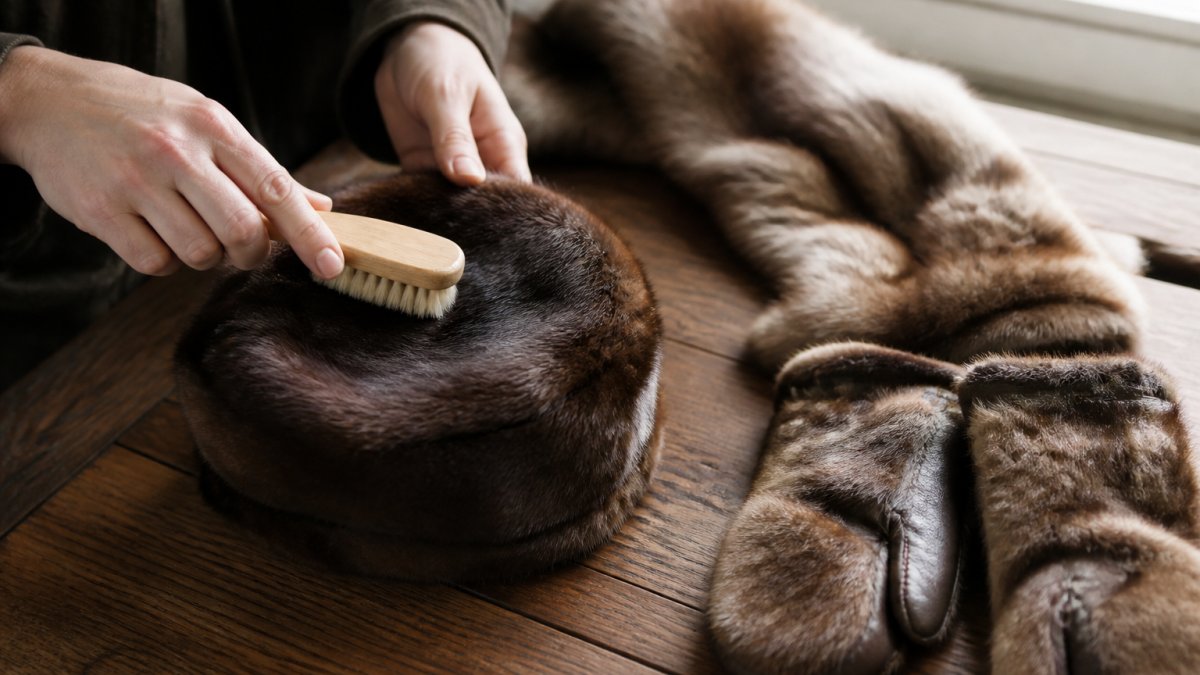
Brushing a Fur Hat
Start at the crown and work outward toward the brim. Use short, light strokes in the direction the hair grows. Never brush against the nap, because that lifts the leather and causes shedding.
Flip the hat over and tap it gently to shake out dust. Do not brush the inside lining unless it is fabric.
Brushing a Fur Scarf
Lay the scarf flat on a clean towel. Brush from the center toward each end. Support the fur with your free hand so the leather does not stretch.
For long-haired fur, brush in small sections. Short strokes beat long sweeps every time.
Brushing Fur Mittens and Gloves
Slide your hand inside the mitten to support it. Brush from the wrist toward the fingertips. Pay attention to the thumb, where fur mats most often.
Turn the mitten inside out only if the lining allows it. Otherwise, brush the outside and spot-clean the rest.
How to Prevent Fur Shedding Before It Starts
Shedding usually starts with dryness, friction, or poor storage. Keep the leather supple and the hair will stay put.
A few habits make the biggest difference:
- Brush before you wear, not after. Loose hairs come out on the brush instead of your coat.
- Keep fur away from heat. Radiators and car heaters dry out the pelt.
- Never store fur in plastic. Plastic traps moisture and cracks the leather.
- Air the piece after wearing. Let it breathe for a few hours before it goes back in the closet.
Fur that sheds in clumps, rather than a few stray hairs, is a sign of a bigger problem. That usually means the leather is failing, not the hair.
How to Detangle Matted Fur Without Causing Damage
Work matted fur loose with your fingers first, then a wide-tooth comb. Never yank a comb through a knot. Pulling tears the hair at the root and leaves a thin spot.
Follow these steps for a matted patch:
- Hold the fur at the base of the knot with two fingers.
- Gently tease the tangle apart with your fingertips.
- Switch to a wide-tooth comb and start at the outer edge of the knot.
- Work inward in small steps, never forcing the comb.
- Stop if the hair starts to stretch or snap.
If the mat is tight and hard, do not fight it. A professional can loosen it with the right tools and steam.
How to Store Fur Accessories to Prevent Matting and Shedding
Store fur on a padded hanger or in a breathable cotton bag. Good storage keeps the shape, blocks dust, and stops matting before it starts. Where you keep fur matters as much as how you brush it.
Use this quick reference to store each piece the right way:
| Accessory | Best Storage Method | Avoid | Check How Often |
|---|---|---|---|
| Fur hat | Stuffed with tissue, in a cotton bag | Stacking under weight | Monthly |
| Fur scarf | Rolled loosely, hung or boxed flat | Tight folding | Monthly |
| Fur mittens | Laid flat, lightly stuffed | Crushing in a pocket | Monthly |
| Fur blanket | Folded with tissue between layers | Plastic bins | Seasonally |
Keep everything in a cool, dark, dry spot. A closet works. A damp basement does not.
When to Call a Professional Fur Cleaner
Call a professional when the fur is soiled, stiff, or badly matted. Home brushing handles everyday upkeep, but deep cleaning needs a specialist. Fur cleaning uses cool solvents and controlled drying that you cannot copy at home.
Reach out to a pro if you notice any of these:
- The leather feels stiff or cracked.
- The fur smells musty or smoky.
- Mats are hard and will not loosen.
- The piece has stains from food, oil, or rain.
- The fur has not been cleaned in several years.
Trying to wash fur at home with water is the fastest way to ruin it. Water shrinks the leather and dulls the shine.
Conclusion: Brush With Care, Wear With Confidence
Brushing real fur accessories is safe when you use a soft brush, follow the nap, and keep the leather dry. The trick is patience, not pressure. Treat the pelt like the fine leather it is and your fur will hold its shape and shine for years.
At Campbell Fine Furs, we offer a premium selection of high-quality, artisanal fur accessories. Our pieces are designed with craftsmanship that keeps them looking sharp season after season.
Get started with Campbell Fine Furs and find fur accessories worth caring for.
Frequently Asked Questions
Is it safe to brush real fur accessories?
Yes, brushing real fur accessories is safe when you use the right tool and technique. Always brush in the direction the fur naturally lies, using a soft-bristle brush or a brush designed specifically for fur. Avoid wire or stiff bristles that can scratch the leather backing or pull out hairs. Regular, gentle brushing removes dust and keeps the fur looking full. If you're unsure, test on a small hidden area first.
What kind of brush should you use on real fur?
The best brush for fur accessories is one with soft, natural bristles, such as a boar-bristle brush or a specialized fur brush. These gently lift dirt without tearing the delicate hairs or the pelt. Avoid slicker brushes, wire brushes, and human hairbrushes with hard plastic nubs. A soft-bristle brush costs little and will last for years if you keep it clean and store it away from moisture.
Can brushing make real fur shed more?
Brushing can increase shedding if you use the wrong tool or too much pressure. Rough brushing pulls out healthy hairs and can break the leather. To prevent fur shedding, brush gently and only when needed, usually after wearing. If your accessory sheds heavily despite careful brushing, it may be a sign of dry leather or poor quality. In that case, stop brushing and consult a professional furrier.
How should you store fur accessories to prevent matting?
Store fur accessories in a cool, dry place away from direct sunlight. Use a breathable cotton bag or a padded hanger for hats and scarves; never seal them in plastic, which traps moisture and can cause the leather to crack. For mittens, stuff them lightly with tissue paper to hold their shape. Proper storage is the best way to prevent matting and keep the fur supple between seasons.