 how-to
How to Care for Fur Pillows: Cleaning & Storage
Table of Contents
- Before You Wash: Identify the Fur Type
- How to Care for Fur Pillows in the Washing Machine
- Hand Washing Method for Delicate Fur Pillows
- How to Dry Fur Pillows Without Heat Damage
- How to Fluff Matted Fur Pillows
- How to Prevent Fur Shedding Between Washes
- How to Store Fur Pillows in Summer
- Common Mistakes That Ruin Fur Pillows
- Frequently Asked Questions
Last Updated: September 6, 2026
Faux fur pillows add warmth and texture to a room, but they collect dust, oils, and odors faster than standard bedding. Proper care comes down to one principle: treat the synthetic fibers gently enough to preserve their soft pile while cleaning thoroughly enough to keep them fresh. This guide from Campbell Fine Furs walks through washing, drying, and restoring techniques that keep plush decor looking its best for years.
Most damage happens during the first wash. Aggressive agitation, hot water, and high heat dryers cause fibers to clump, mat, and shed. Below, we cover the exact machine settings, hand washing steps, and drying methods that protect the pile, plus how to fix matted areas and store pillows during the off-season.
Before You Wash: Identify the Fur Type
Faux fur pillows are made from synthetic fibers like acrylic, polyester, or modacrylic, and the care method depends on the backing material and pile height. Check the sewn-in label for washing instructions and fiber content before doing anything else. Some pillows have a zipper closure that allows you to remove the insert, while others are sewn shut and must be cleaned as a whole unit.
Pillows with a removable insert should have the cover unzipped and washed separately. This prevents the filling from clumping and allows the cover to dry evenly. If the pillow is sewn shut, wash the entire piece on a gentler cycle and expect longer drying times.
Spot cleaning is the safest first step for any fur pillow. For small marks, mix a small amount of pH-neutral soap with cool water, dab the stain with a soft cloth, and rinse by blotting with a damp cloth. Avoid rubbing, which pushes the stain deeper into the fibers and causes matting.
How to Care for Fur Pillows in the Washing Machine
Machine washing is possible for most faux fur pillows, but only with the right settings. The delicate cycle with cold water is the only safe option, as warm water can relax synthetic fibers and cause permanent crimping or distortion.
Place the pillow inside a mesh laundry bag to protect the pile from friction against the drum. Add a mild detergent that is bleach-free and free of fabric softeners. Fabric softener leaves a residue that makes synthetic fibers sticky and accelerates matting, so skip it entirely.
Run the pillow through the rinse cycle twice to ensure all soap residue is removed. Leftover detergent acts as a binding agent, causing the fibers to clump together as they dry. After the cycle finishes, remove the pillow promptly to prevent creases from setting into the damp fabric.
Machine Settings That Protect Synthetic Fibers
The settings you choose determine whether your pillow comes out fluffy or ruined. Use the gentlest cycle available: delicate, hand wash, or wool. Set the water temperature to cold, never exceeding 85°F, and select the lowest spin speed to minimize stress on the fibers.
A second rinse cycle is critical for removing all detergent traces. Even small amounts of residual soap attract dirt and cause the fibers to feel stiff. If your machine has a "no spin" or "drain only" option, use it to remove water without agitating the pillow.
Hand Washing Method for Delicate Fur Pillows
For pillows with delicate backing, loose weaves, or valuable trim, hand washing is the safer alternative. Fill a basin with cool water and add a small amount of mild detergent designed for delicate fabrics. Submerge the pillow and gently press it underwater, avoiding twisting, wringing, or scrubbing the pile.
Let the pillow soak for five to ten minutes, then drain the soapy water and refill the basin with clean cool water. Press the pillow several times to flush out the detergent. Repeat the rinse until the water runs clear, which indicates all soap has been removed.
To remove excess water without wringing, press the pillow between two clean, dry towels. Roll the towel-and-pillow bundle and press gently to absorb moisture. Wringing twists the fibers and breaks the backing, causing permanent damage and shedding.
How to Dry Fur Pillows Without Heat Damage
Air drying is the only safe method for faux fur pillows. Heat from a dryer, even on low, can melt synthetic fibers and cause them to clump into hard, shiny patches. Lay the pillow flat on a drying rack or clean towel in a well-ventilated room, away from direct sunlight and heat sources.
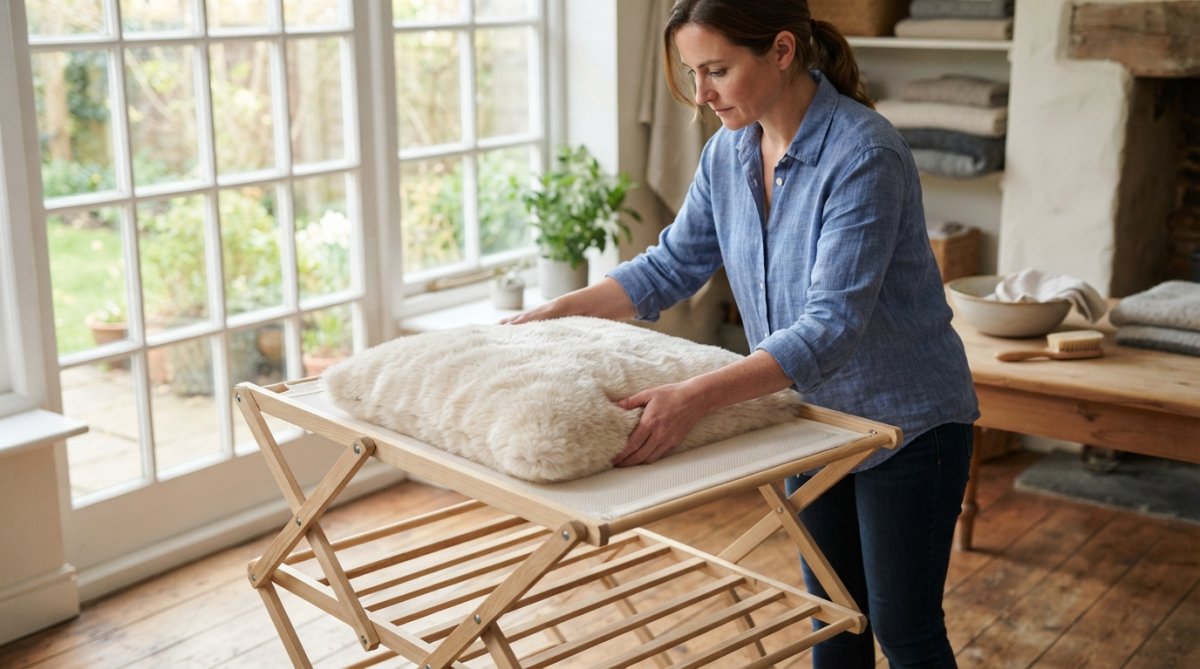
Flip the pillow every few hours to ensure both sides dry evenly. Depending on the thickness of the pile and the filling, complete drying can take 24 to 48 hours. Do not use the pillow until it is fully dry, as trapped moisture leads to mildew and a musty odor.
How to Fluff Matted Fur Pillows
Matted fur isn't just an aesthetic issue, it's a sign that the synthetic fibers have lost their alignment and crimp. When acrylic or polyester fibers get wet, crushed, or rubbed, they cling together in clumps. Simply brushing the surface won't fix it if the matting goes down to the backing. You need to work in layers, starting from the bottom of the pile and moving outward.
Step 1: Identify the Type of Matting
First, feel the matted area. If it's a light surface tangle, you can fix it with a wide-tooth comb. If the fibers are fused into a hard, shiny patch, that's heat damage, no brush will fix that, and you'll need to accept the spot or replace the pillow. If the matting is soft but dense, the fibers are just clumped from moisture and pressure, which is reversible.
Step 2: The Slicker Brush Technique
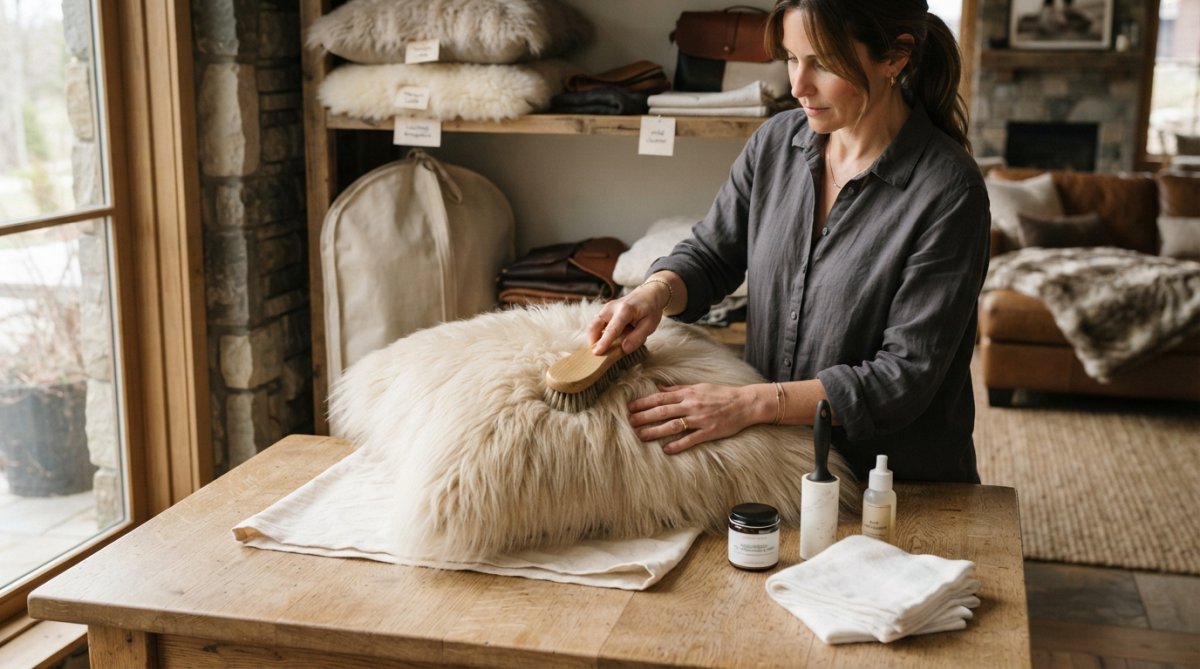
Most guides tell you to brush, but not how. A slicker brush (with fine, bent wire bristles) is the right tool, but you must use it in short, flicking motions, not long, dragging strokes, which pull fibers taut and can snap them at the base. Hold the pillow with one hand to keep the backing taut, and use the other to flick the brush upward and outward from the base of the pile. Work in a grid pattern, covering a 2-inch by 2-inch area at a time.
Step 3: Use Water as a Tool
For stubborn clumps, lightly mist the matted area with cool water from a spray bottle. The water relaxes the synthetic fibers and makes them more pliable. Wait 30 seconds, then brush again with the same flicking motion. This works because polyester and acrylic fibers have a 'memory' of their original crimp, moisture helps them return to that shape without heat.
Step 4: Break Up Clumps in the Filling
If the pillow feels lumpy or flat in spots, the filling inside has shifted or clumped, common after washing. Knead the pillow with your hands like dough, pressing firmly but gently to redistribute the polyester fiberfill. Do this before brushing the surface, so the backing is smooth and even. If the filling stays lumpy, open the zipper (if there is one) and manually pull apart the clumps before fluffing the cover.
Step 5: Finish with a Wide-Tooth Comb
After working through the matted sections with the slicker brush, go over the entire pillow with a wide-tooth comb to align the fibers in one direction. This gives a uniform, groomed appearance and prevents future tangling. Comb in the direction of the pile, usually from the center outward toward the edges.
When to Accept Defeat
If the matting is caused by heat (from a dryer, iron, or hot water), the fibers have partially melted and fused. No amount of brushing will restore them. In that case, your only option is to trim the damaged fibers carefully with small scissors, or replace the pillow cover if it's removable. This is why the drying methods in the previous section are so critical, prevention is the only real cure for heat damage.
How to Prevent Fur Shedding Between Washes
Shedding is the most common complaint with faux fur pillows, and it usually stems from loose fibers that were never fully secured. Regular, gentle brushing removes loose fibers before they end up on your furniture or clothing. Use a slicker brush once a week, brushing in the direction of the pile.
Static electricity is another cause of shedding, as it attracts loose fibers to the surface. To reduce static, lightly mist the pillow with water or run a dryer sheet over the surface between cleanings. Keep the pillow away from dry, heated air, which increases static buildup.
How to prevent fur shedding also means avoiding harsh cleaning methods. Every wash loosens some fibers, so spot clean when possible and reserve full washes for when the pillow is genuinely soiled. Proper storage, covered below, also minimizes friction that causes shedding during the off-season.
How to Store Fur Pillows in Summer
Storing faux fur pillows correctly is about more than just putting them in a closet. The off-season is when pillows get crushed, yellowed, or infested with pests. The two biggest risks, moisture and insects, are preventable with the right preparation and container choices.
Step 1: Deep Clean Before Storage
Never store a pillow that isn't completely clean. Body oils, dead skin cells, and dust mites are food sources for carpet beetles and clothes moths. Even if it looks clean, give it a final brush with a slicker brush to remove loose fibers and surface dust. If it has any odor, treat it before storage, don't wait until fall.
Step 2: Neutralize Odors Without Washing
If the pillow smells musty or has absorbed cooking or pet odors, you don't need a full wash. Sprinkle a thin, even layer of baking soda over the entire surface and let it sit for 2 to 3 hours. Vacuum it off using the upholstery attachment with a brush head, moving in the direction of the pile. For stronger odors, place the pillow in a large plastic trash bag with an open box of baking soda, seal it, and let it sit for 24 hours before vacuuming.
Step 3: Choose the Right Container
The container you use determines whether your pillow survives the summer. Here's what works and what doesn't:
- Breathable cotton storage bags or pillowcases: These are the best option. They allow air circulation, which prevents moisture buildup, while still blocking dust and light. A standard cotton pillowcase works perfectly for a single pillow.
- Cardboard boxes: Acceptable if lined with acid-free tissue paper, but cardboard can absorb moisture from the air and transfer it to the pillow. Only use in a dry closet.
- Plastic bins: Avoid these unless the pillow is completely dry and you live in an arid climate. Plastic traps any residual moisture, which can cause mildew and yellowing of synthetic fibers. If you must use plastic, leave the lid slightly ajar for airflow.
- Vacuum-sealed bags: Never use these for faux fur. The compression crushes the fibers and flattens the pile permanently. The pillow will not recover its fluffiness.
Step 4: Add Pest Deterrents
Carpet beetles and clothes moths are attracted to the dust and oils trapped in fur fibers. To deter them, place a few cedar blocks or cedar chips in the storage bag, but not directly against the fur, as cedar oil can stain synthetic fibers. Alternatively, use a sachet of dried lavender or rosemary. These natural deterrents are effective and won't leave chemical residues. Check the pillow every 4 to 6 weeks during storage to ensure no pests have found their way in.
Step 5: Position and Environment
Store the pillow flat, never folded. Folding creates sharp creases that can permanently break the backing material. If you're short on space, roll the pillow loosely rather than folding it. Place it on a high shelf in a closet that stays cool and dark. Avoid attics, garages, and basements, where temperature swings cause condensation. The ideal storage environment is between 60°F and 75°F with relative humidity below 50%. If your climate is humid, add a small silica gel desiccant pack to the storage bag to absorb excess moisture.
Step 6: Refresh Before Reuse
When you pull the pillow out of storage, it will likely be flat and slightly compressed. Don't panic. Give it a thorough brushing with a slicker brush to lift the fibers, then let it air out in a well-ventilated room for a few hours. If it still smells stale, sprinkle with baking soda, wait 30 minutes, and vacuum. This refreshes the fibers without a full wash, which should only happen once or twice a year.
Common Mistakes That Ruin Fur Pillows
The most destructive mistake is using heat in any form: hot water, a warm dryer, or an iron. Synthetic fibers respond to heat by melting and fusing, creating irreparable hard patches and a shiny, matted appearance. Always use cold water and air drying.
Wringing and twisting the pillow to remove water is another common error. This breaks the backing material and pulls fibers loose, leading to bald spots and excessive shedding. Press the water out with towels instead.
Finally, washing fur pillows too frequently accelerates wear. Each wash loosens fibers and stresses the backing, so clean only when visibly soiled or odorous. For everyday freshness, use a lint roller to remove surface dust and lightly brush the pile. For odors between washes, sprinkle baking soda over the surface, let it sit for 30 minutes, and vacuum it off with a brush attachment.
| Care Task | Best Method | Frequency | Key Precaution |
|---|---|---|---|
| Routine freshening | Lint roller + brushing | Weekly | Brush in direction of pile |
| Spot cleaning | pH-neutral soap + cool water | As needed | Blot, never rub |
| Full wash | Delicate cycle, cold water | 1-2 times per year | Use mesh bag, no fabric softener |
| Drying | Air dry flat | After each wash | No heat, flip regularly |
| Storage | Cotton bag, flat | Seasonal | Cool, dark, breathable container |
Proper care for fur pillows is not complicated, but it requires consistency. The distinction between a plush, inviting pillow and a matted, shedding one comes down to how you handle moisture, heat, and friction. By following the methods outlined here, your faux fur pillows will maintain their soft texture through years of use. For premium fur home decor built to last, explore the collection at Campbell Fine Furs.
Frequently Asked Questions
Can I put a fur pillow in the washing machine?
Yes, if the pillow is faux fur and the care tag permits machine washing. Use a front-loading machine with cold water and a delicate cycle. Place the pillow inside a mesh laundry bag to reduce friction. Skip fabric softener and bleach-free detergent only. Never use a top-loader with a center agitator, as the spinning action can mat the synthetic fibers permanently.
How to make fur pillows fluffy again?
After washing and drying, use a slicker brush or a wide-tooth comb designed for pets. Work in small sections, starting from the base of the fibers and moving outward with gentle strokes. Brush the pillow while it is slightly damp, then again once fully dry. For stubborn matting, lightly mist the area with water before brushing. Avoid pulling hard on tangled fibers, as this pulls them out.
How do I clean a faux fur pillow without washing it?
For spot cleaning, mix a small amount of pH-neutral soap with cold water. Dip a soft cloth into the solution, wring it out thoroughly, and dab the stained area. Blot with a dry towel to remove excess moisture, then allow the pillow to air dry. To remove dust and debris between washes, use a lint roller or vacuum the surface with a brush attachment on low suction.
How should I store fur pillows during the summer?
Clean and fully dry the pillow before storage. Place it in a breathable cotton storage bag, never plastic, which traps moisture and causes mildew. Add a cedar block or lavender sachet to deter pests naturally. Store the pillow flat or slightly propped in a cool, dark, dry closet away from direct sunlight. Check it every few weeks and fluff it to maintain its shape.