 how-to
Why Cheap Fur Accessories Shed and How to Stop It
Last Updated: October 23, 2026
Quick Summary
Cheap fur accessories shed because short fibers are packed into a weak backing that cannot grip them, so fibers work free with every brush, wear, and humidity change. The fix is buying a piece with dense pile and firm anchoring, since a failing backing cannot be rebuilt with care.
- Surface fuzz from cutting dust stops within a week or two; a failing piece keeps losing fiber from the same spots.
- Shake a new accessory over a dark cloth for ten seconds: a small pile of fibers means weak anchoring.
- Brush a new faux fur piece before the first wear to lift loose cutting dust in one session.
- Never tumble dry faux fur, because heat softens the backing and tumbling pulls fibers free.
- Store fur accessories loose and breathable in a cotton bag, never sealed in plastic.
Table of Contents
- Why Do Cheap Fur Accessories Shed? The Real Causes
- Loose Surface Fibers vs. Construction Failure
- How to Stop Faux Fur From Shedding
- How to Clean Faux Fur Without Making It Shed More
- How to Store Fur Accessories to Reduce Shedding
- How to Judge Fur Quality Before You Buy
- When Shedding Means Wear, Damage, or Time to Repair
- Frequently Asked Questions
Why Do Cheap Fur Accessories Shed? The Real Causes
Cheap fur accessories shed because the fibers were cut short and packed into a weak backing during manufacturing.
At Campbell Fine Furs, we hear the same complaint from people who bought a hat or scarf elsewhere and watched it thin out within a season.
Below, we break down the two root causes, show you how to tell normal fuzz from real failure, and give you a care routine that protects the pile.
Cut Fibers and Short Pile: The Manufacturing Shortcut
Most low-cost makers buy fiber in short lengths because short fiber is cheaper by the pound, then shear the pile low so the piece looks tidy on the shelf.
Short fibers have less length to grip inside the backing, and low pile means more of each fiber sits exposed.
Longer, denser pile behaves differently. Each fiber has more room to lock into the base, so it stays put through brushing and wear.
Weak Backing and Poorly Anchored Fibers
The backing decides shedding. On a well-made accessory, fibers are worked deep into a firm, tightly woven base; on a cheap one, they are surface-glued or pushed into a loose knit.
Signs of a weak backing:
- The fabric feels floppy or thin when you pinch it
- You can see the base through the pile in spots
- The underside looks like loose mesh rather than solid cloth
A weak backing cannot grip, so fibers work free from the inside out, and no amount of brushing fixes it.
Loose Surface Fibers vs. Construction Failure
Loose surface fibers are normal; construction failure is not. Surface fuzz stops within a week or two, while a failing piece keeps losing fiber from the same spots.
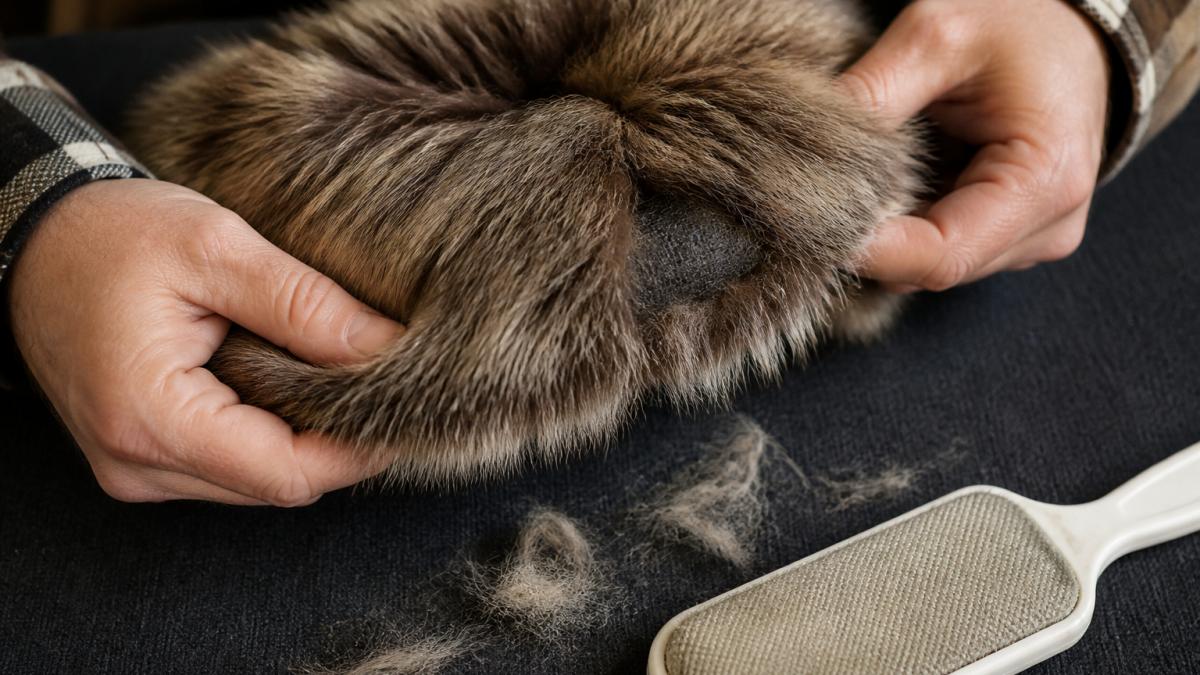
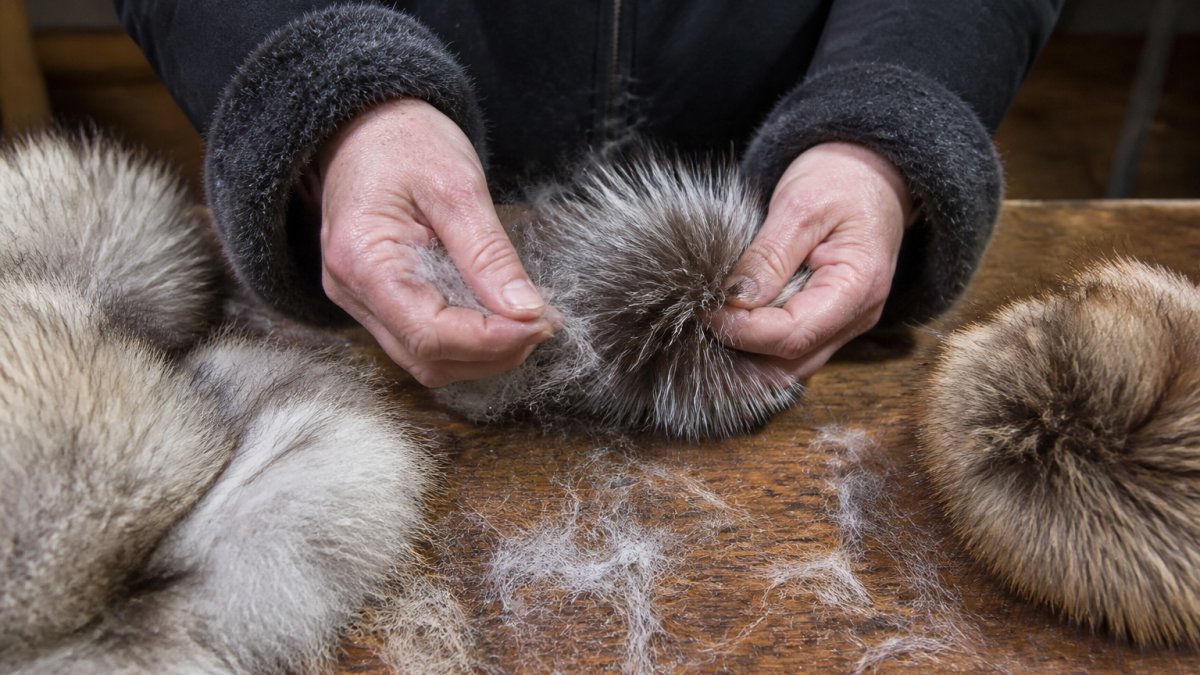
New pieces often carry fiber dust from the cutting floor, that is the fluff you see on day one, not a defect. Construction failure looks different: a bald patch forming, or a seam where the pile has pulled away.
How to Test a New Accessory in the First Week
Try this before you commit to the piece:
- The shake test. Hold it over a dark cloth and shake it firmly for ten seconds. A light dusting is fine. A small pile of fibers is not.
- The tug test. Pinch a few fibers at the center and pull gently. They should resist. If they slide out with no effort, the backing is not holding.
- The rub test. Rub the pile against the grain with your palm. Check your hand. Heavy transfer means weak anchoring.
- The seam check. Run your thumb along every seam. Any gap or exposed base is a weak point.
If a piece fails two or more of these, return it. You will not fix it with care.
How to Stop Faux Fur From Shedding
Start with a wide-tooth comb or soft slicker brush made for faux fur. Work with the grain in short strokes, never scrubbing back and forth.
Then reduce friction. A fur accessory rubbing against a rough coat collar or a canvas strap loses fiber fast.
For a deeper routine, our guide on how to prevent fur shedding covers brushing, storage, and cleaning in more detail.
How to Clean Faux Fur Without Making It Shed More
Most shedding damage happens in the wash: hot water, harsh detergent, and a tumble dryer loosen fibers and warp the backing faster than wearing ever could. The right method depends on the material, so use this guide to decide when to brush, spot-clean, hand-wash, or skip washing entirely.
Match the Method to the Material
Care should follow construction.
- Short-pile faux fur (hats, headbands, trim): These pieces have less fiber length to spare, so every wash cycle costs them. Spot-clean only. Brush with a soft slicker brush after each wear to lift surface dust before it works into the backing.
- Long-pile faux fur (scarves, wraps, statement hats): Longer fibers trap more dust and mat more easily. Brush weekly with a wide-tooth comb, working with the grain in short strokes. Hand-wash only when soiled, no more than once a season.
- Knitted or loose-knit faux fur: The open structure lets water and detergent reach the backing directly, which weakens anchoring. Do not machine wash. Spot-clean with a damp cloth and mild soap, then air dry flat.
When to Brush, Spot-Clean, Hand-Wash, or Skip
Follow this order before reaching for water:
- Brush first. Most surface dullness and light shedding is dust and loose fiber, not dirt. A two-minute brush with the grain often restores the pile without any cleaning.
- Spot-clean second. For small marks, use a damp white cloth with a drop of mild soap. Blot, do not rub. Rinse the cloth and blot again to lift soap residue.
- Hand-wash third. Reserve full washing for pieces that are genuinely soiled or have absorbed odor. Cold water, mild detergent, no wringing.
- Skip the wash when in doubt. If the label is missing and the backing feels loose or stretchy, do not wash. A weak backing will not survive even a gentle cycle.
Hand Washing and Drying Steps That Protect the Pile
- Fill a basin with cold water and a small amount of mild detergent.
- Turn the piece inside out to protect the pile.
- Press it gently through the water. Do not wring or twist.
- Rinse in cold water until the soap is gone.
- Press out water with a towel. Never squeeze.
- Lay flat to dry, then brush with the grain once fully dry.
What to Avoid at Every Stage
- Hot water shrinks and stiffens the backing, which loosens fiber anchoring.
- Harsh detergent or fabric softener coats the fibers and makes them clump and shed.
- Wringing or twisting stretches the base and pulls fibers out in clumps.
If a piece sheds heavily after a single careful wash, the backing was already failing. No cleaning method can rebuild it.
The right cleaning method depends on how the piece is built, so match the approach to the material.
| Material | Care method | Key note |
|---|---|---|
| Short-pile faux fur (hats, headbands, trim) | Spot-clean only | Brush after each wear; every wash costs fiber |
| Long-pile faux fur (scarves, wraps, statement hats) | Brush weekly; hand-wash when soiled | No more than once a season |
| Knitted or loose-knit faux fur | Spot-clean with damp cloth and mild soap | Do not machine wash; air dry flat |
| Faux fur with woven or bonded backing | Gentle cold cycle in mesh bag if label allows | Skip the dryer every time |
| Faux fur trim on garments (cuffs, collars, hoods) | Detach and clean separately; spot-clean if sewn on | Keep the garment out of the wash |
How to Store Fur Accessories to Reduce Shedding
Storage is where a lot of fiber loss quietly happens: a piece crushed under coats or pressed against a rough hanger sheds all season long.
Store fur accessories loose and breathable. Hang hats and scarves on a wide, smooth hook, or lay them flat in a cotton bag.
Keep them away from heat and direct light. A cool, dry closet works best.
For a full seasonal routine, see our guide on how to store fur accessories.
How to Judge Fur Quality Before You Buy
Quality shows up in the details, and you can check most of them in under a minute. Use this inspection framework in-store or on listing images before you commit.
The Five-Point Inspection
Run these checks in order. A piece that fails two or more is likely to shed.
- Pile density. Part the pile with your fingers down to the backing. If you can see the base easily, the piece is thin. Dense pile hides the backing even when parted. On product photos, look for shots that show the pile parted or brushed in different directions, sellers who hide the base are often hiding thin construction.
- Backing firmness. Pinch the base between thumb and forefinger. A firm, tightly woven backing holds fiber. A floppy, stretchy, or thin base does not. If buying online, check whether the listing shows the underside or describes the backing material.
- Seam construction. Run your thumb along every seam. Stitching should be tight and even, with no gaps or exposed base. On photos, zoom in on seams and edges, loose stitching or visible mesh is a red flag.
- Lining and finishing. A quality piece has a smooth lining that protects the backing from friction against your coat or skin. Check that the lining is sewn in, not glued, and that edges are finished rather than raw.
- Shedding test. Shake the piece firmly over a dark cloth for ten seconds. A light dusting of surface fiber is normal. A small pile of fibers means weak anchoring. In-store, also try the tug test: pinch a few fibers at the center and pull gently. They should resist. If they slide out with no effort, walk away.
Reading Product Photos Like an Inspector
Online, the listing images have to do the work. Look for:
- Close-ups of the pile rather than only full-product shots. A seller confident in density will show the texture up close.
- Shots of the underside or lining. If every photo hides the base, assume the worst.
- Seam and edge detail. Zoom in. Clean stitching and finished edges signal care; loose threads and raw edges do not.
Questions to Ask Before You Buy
A maker who expects a piece to last answers these without hesitation:
- What is the backing material, and how are the fibers anchored?
- Is the piece hand-finished or mass-produced?
- What is the care routine, and is there a care label?
If a seller cannot answer these, treat it as a warning sign. Our guide on how to spot high quality fur pelts walks through density, backing quality, and damage signs in more detail.
When Shedding Means Wear, Damage, or Time to Repair
Some shedding is just age: fibers break down over years, and a well-loved piece thins first at stress points, cuffs, brims, and anywhere it rubs.
Watch for these signals that a piece needs attention:
- A bald patch that keeps growing
- Pile pulling away from a seam
- A stiff or cracking backing
A loose seam can often be repaired. If you are unsure which you have, contact us and we will help you sort out whether repair or replacement makes more sense.
Cheap fur keeps shedding because the fibers were never anchored to last. Careful brushing, cold washing, and smart storage slow the loss, but you cannot rebuild a weak base.
At Campbell Fine Furs, we build artisanal fur hats, scarves, and mittens with the deep anchoring and dense pile that resist shedding season after season. Browse our collection and choose a piece made to last. View All Products to find your next fur accessory.
Frequently Asked Questions
Is shedding normal for new faux fur accessories?
A small amount of loose fiber loss in the first few wears is normal, especially on cut-pile faux fur. Those fibers were never fully anchored and come free with friction. What is not normal is steady shedding after two or three weeks, visible thinning at seams, or fiber collecting on your coat and car seat every time you wear the item. If loss continues at the same rate past the first month, treat it as a construction problem, not a settling-in phase.
How do I get my faux fur coat to stop shedding?
Start by brushing the pile gently in one direction with a soft-bristle brush to lift trapped loose fibers, then shake the item outdoors. Wash it sparingly in cold water with a mild detergent, turn it inside out, and never put it in a hot dryer. Line dry away from direct heat, then brush again. Store it on a wide padded hanger with breathing room. These steps reduce friction and fiber breakage, which is what drives most shedding on cheap fur.
Can washing faux fur make it shed more?
Yes, if it is done wrong. Hot water, harsh detergent, and machine agitation break down the backing and loosen fiber anchors, so the item sheds more after each wash. Cold water, a mild detergent, a gentle hand-wash cycle, and air drying protect the backing. Wash only when the item is genuinely soiled, spot clean between washes, and never wring or twist the pile. A fur accessory cleaned this way keeps its fibers anchored far longer.
When should I stop using a fur accessory that is shedding?
Stop wearing it when you see bald patches, exposed backing, split seams, or fiber loss that leaves the surface looking rough and uneven. At that point the pile is failing structurally and further wear spreads the damage. Minor cases can be repaired by a furrier who can reinforce seams or replace lining. If the backing is cracking or the pile is gone in large areas, the item has reached the end of its useful life.