 ultimate-guide
Why Artisanal Fur Accessories Last Longer: 2026 Guide
Table of Contents
- The Material Science Behind Artisanal Fur Longevity
- Signs of Quality Fur Craftsmanship: What to Look For
- How to Prevent Fur Shedding: Maintenance That Matters
- Proper Fur Storage Techniques for Every Climate
- Cost-Per-Wear: The Real Math of Artisanal Fur
- Repairability and Restoration: Extending Garment Longevity
- Artisanal Fur vs. Synthetic Alternatives: Environmental Impact
- Vintage Fur Upcycling and the Case for Ethical Luxury
- Frequently Asked Questions
Last Updated: September 25, 2026
The Material Science Behind Artisanal Fur Longevity
Artisanal fur accessories last longer because their construction works with the natural architecture of fur rather than against it. At Campbell Fine Furs, we've seen how the difference between a piece that survives three decades and one that mats within two seasons comes down to material composition, tanning process, and how the fibers are handled during assembly.
Guard Hair and Underfur: The Natural Architecture
Fur density comes from two distinct fiber types working together. Guard hair forms the outer layer: longer, coarser, and naturally water-resistant. Underfur sits beneath it, dense and soft, trapping air for insulation.
Signs of Quality Fur Craftsmanship: What to Look For
Quality fur craftsmanship shows in three places: the density of the underfur, the alignment of the guard hair, and the stitching at every seam. Run your fingers against the grain. A well-made piece springs back immediately. A cheap one stays flattened.
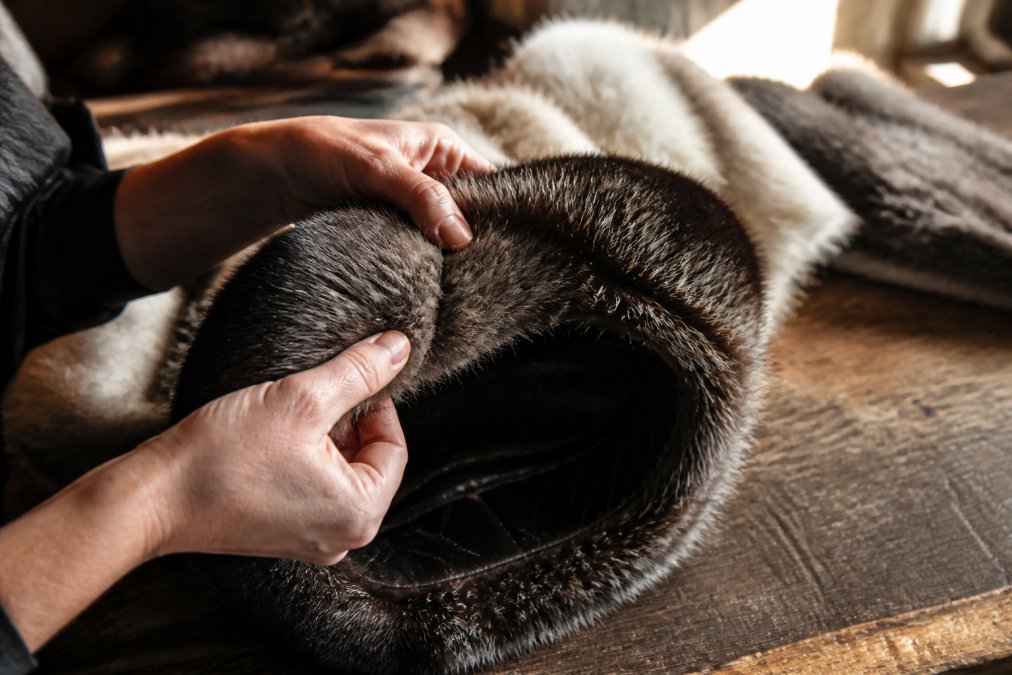
Look for these markers:
- Uniform fur density across the entire panel, not just the front
- Guard hair that lies flat without a synthetic sheen
- Leather backing that flexes without cracking
- Seams reinforced by hand, not machine-glued
- No chemical smell, which signals rushed tanning
How to Prevent Fur Shedding: Maintenance That Matters
For heavier shedding, a professional furrier can recondition the leather. This restores the follicle grip and typically extends the garment's life by years.
Proper Fur Storage Techniques for Every Climate
Storage is the single largest variable in how long an artisanal fur accessory actually lasts. Two identical pieces, worn the same number of times, can diverge by a decade based on where they sit between wears. Most generic advice stops at "keep it cool and dry." That's not enough, because the failure modes are different in every climate.
What Fur Actually Needs
Fur is animal hide and hair. The leather backing needs to retain a small amount of internal moisture to stay supple, while the hair follicles need to stay dry enough that they don't loosen. That's a narrow band. Most practitioners find the sweet spot sits around 45-55% relative humidity and 50-60°F. Above roughly 65% humidity, mold and mildew become the primary threat.
Climate-by-Climate Storage
- Humid climates (Gulf Coast, Southeast, Pacific Northwest): Airflow is the priority. Store in a breathable cotton or muslin garment bag, never plastic. Rotate silica desiccant packets monthly, they saturate faster than most people expect. Keep pieces off exterior walls, which wick moisture inward. A closet with a small circulation fan outperforms a sealed wardrobe.
- Dry climates (Southwest, high plains, mountain West): Dust and desiccation are the threats. Use a breathable bag plus cedar blocks for pest deterrence. Avoid storing near forced-air vents, which strip moisture from the leather. A light conditioning by a furrier every few seasons replaces what the air pulls out.
- Cold climates (Upper Midwest, Northeast): Condensation is the enemy. Let a piece come to room temperature inside its bag before brushing or hanging. Never store fur in an unheated garage or attic, where freeze-thaw cycles stress the leather.
- Warm climates (South, coastal California): Heat accelerates oxidation of the natural oils in the leather. Store in the coolest interior closet available, away from windows and exterior walls. A dedicated fur storage vault, many furriers offer this seasonally, is the most reliable option where summers are long.
Containers, Hangers, and Pressure Points
Never store fur in plastic. Plastic traps moisture against the leather, weakens the backing, and loosens hair follicles. This is the most common cause of premature shedding we see.
Seasonal Rotation
A simple rotation habit extends lifespan measurably. At the end of each season: brush the guard hair in the direction of growth, check seams for loose stitching, air the piece in a shaded, well-ventilated space for a few hours, then bag it. Before the next season, inspect for any sign of pest activity, small holes, fine dust, or a musty smell, and address it before wearing.
Cost-Per-Wear: The Real Math of Artisanal Fur
Cost-per-wear is the price of a garment divided by the number of times you wear it. It's the only honest way to compare a handcrafted fur piece against a synthetic alternative.
| Factor | Artisanal Fur | Synthetic Alternative |
|---|---|---|
| Typical lifespan | 20-30 years with care | 2-4 seasons |
| Repairability | Full restoration possible | Usually discarded |
| Insulation retention | Stable over decades | Degrades with washing |
| Environmental footprint | Biodegradable at end of life | Persistent microplastics |
| Cost-per-wear over 10 years | Low | Higher due to replacement |
Repairability and Restoration: Extending Garment Longevity
Repairability is where artisanal fur separates from synthetics entirely. A torn seam, a worn patch, a collapsed shoulder, a lining that's given out, all of these can be rebuilt by a skilled furrier. Synthetic fibers, once they pill, mat, or break down at the molecular level, cannot be reconstructed. They can only be replaced.
What Restoration Actually Involves
Restoration isn't a single service. It's a set of interventions, and most pieces need two or three of them over a lifetime.
- Leather reconditioning: The leather backing dries out with age and loses its grip on the hair follicles. A furrier applies a conditioning treatment that restores suppleness and follicle adhesion. This is the most common service and the one that most directly prevents shedding.
- Seam repair: Hand-sewn seams can be re-stitched. Glued seams, the hallmark of mass production, cannot be repaired once the adhesive fails, because the glue has already damaged the surrounding leather.
- Fur grafting: When a patch is worn bald, a furrier can graft matching fur into the area. On a well-made piece, the graft blends because the guard hair and underfur are matched by hand.
- Re-lining: Linings wear out faster than fur. Replacing a silk or satin lining is straightforward and restores the piece's structure and drape.
- Reshaping: Collapsed shoulders and crushed cuffs can be re-blocked, especially if the underfur hasn't fully broken down.
Repair or Replace? A Decision Framework
Not every piece is worth restoring. A simple framework:
- Restore if the leather backing is still supple, the underfur is dense across most of the piece, and the damage is localized (a seam, a patch, a lining).
- Restore with caution if shedding is widespread but the leather is intact, reconditioning may help, but results vary.
- Replace if the leather has cracked through at multiple flex points, if the underfur has collapsed across large panels, or if the piece was mass-produced with glued seams. Restoration cost on a low-quality piece rarely pays back.
Finding and Evaluating a Furrier
Restoration quality depends almost entirely on the person doing it. A few signals worth checking:
- Ask whether they hand-sew or use adhesive on repairs. Hand-sewing is the standard for anything meant to last.
- Ask what conditioning products they use and whether they're formulated for the specific leather type. A one-product-fits-all shop is a warning sign.
- Ask to see before-and-after examples of similar work. A furrier with a restoration practice will have them.
- Ask about turnaround and whether they store the piece in climate-controlled conditions while it's in their care.
The Long-Term Math
A piece that goes through two or three restorations over thirty years typically costs far less in total than replacing a synthetic accessory every few seasons. Restoration also preserves something replacement can't: the fit. Leather molds to the wearer over years, so a restored piece sits better than a new one. That's not sentiment, it's the material doing what it was designed to do.
Artisanal Fur vs. Synthetic Alternatives: Environmental Impact
The environmental comparison flips the conventional narrative. Synthetic fur is petroleum-based, and every wash releases microplastics into waterways. National Oceanic and Atmospheric Administration research on microplastic pollution
Vintage Fur Upcycling and the Case for Ethical Luxury
Vintage fur upcycling is the practice of restyling older fur garments into new accessories: hats, mittens, pillows, and scarves. It's one of the most sustainable practices in fashion because it requires no new material production at all.
Frequently Asked Questions
What makes artisanal fur more durable than mass-produced alternatives?
Artisanal fur accessories last longer because the tanning process preserves the natural oils that keep leather pliable and hair intact. Mass-produced fur often skips these slow, hand-finished steps, leading to brittle skins and shedding. The density of guard hair and underfur in quality pelts also provides natural insulation and resistance to crushing pressure. When properly stored and maintained, a well-made artisanal piece can hold its structure for decades, while cheaper alternatives break down after a season or two.
How does proper storage extend the life of fur accessories?
Proper fur storage techniques protect fiber integrity by controlling humidity, temperature, and pressure. Store fur in a cool, dark place with moderate humidity, ideally between 45 and 55 percent. Avoid plastic bags, which trap moisture and cause the leather to dry out or grow mold. Use a breathable cotton or canvas garment bag and hang the item on a padded hanger to prevent crushing pressure on the shoulders. For climates with extreme heat or humidity, a climate-controlled locker or professional cold storage during summer months prevents irreversible damage.
Is real fur considered a sustainable investment piece?
Artisanal fur can be a sustainable investment because of its garment longevity and repairability. A well-cared-for fur accessory may last 30 years or more, and it can be restored, resized, or upcycled into new items. Synthetic alternatives, by contrast, are petroleum-based and shed microplastics with every wash, contributing to environmental footprint. Vintage fur upcycling further extends the material's life, keeping it out of landfills. The cost-per-wear of a durable artisanal piece often ends up lower than repeatedly replacing fast fashion items.
What are the signs of high-quality craftsmanship in fur accessories?
Look for dense, evenly distributed guard hair and a thick underfur layer. The leather backing should feel supple, not stiff or crackly, which indicates a proper tanning process. Check seams for tight, consistent stitching and inspect the lining for hand-finished details. A quality piece will have no bald patches, no excessive shedding when gently shaken, and a natural luster rather than a greasy or dry appearance. Ask about the origin of the pelts and whether the maker uses traditional handcrafted quality methods.
Fur that lasts is fur that's understood. The material science, the storage habits, and the willingness to repair rather than replace all determine whether a piece survives a decade or three. Campbell Fine Furs builds accessories with that lifespan in mind, from handcrafted fur hats and scarves to mittens and home decor designed to be handed down. Browse the full collection and choose a piece made to outlast the trend cycle.