 ultimate-guide
How to Choose Hunting Trapping Bait: A 2026 Guide
Table of Contents
- Trapping Lure vs Bait: What's the Difference and When to Use Each
- How to Choose Trapping Bait by Target Species
- Natural vs. Synthetic Attractants: Scent, Ingredients, and Set Efficiency
- Seasonal Trapping Bait Strategies That Improve Your Catch Rate
- Placement, Wind Direction, and Set Location Techniques
- Bait Preservation, DIY Recipes, and Storage Best Practices
- Legal Trapping Bait Regulations You Need to Know
- Choosing the Right Trapping Bait for Your Next Season
- Frequently Asked Questions
Last Updated: August 26, 2026
Choosing the right trapping bait is one of the most consequential decisions a trapper makes before the season opens. The difference between a productive line and an empty one often comes down to scent selection, species-specific attractants, and placement. At Campbell Fine Furs, we work directly with trappers who rely on proven Western lures and baits. This guide covers how to choose hunting trapping bait from the ground up: what to use, when to use it, and why it works.
Trapping Lure vs Bait: What's the Difference and When to Use Each
Trapping lure is a scent-based attractant designed to draw an animal toward a set through its olfactory instincts, while bait is a physical food or gland substance placed at the trap site to hold the animal long enough to trigger the pan.
Most beginning trappers treat these terms as interchangeable. That's the first mistake. Lures and baits serve different functions in the same set, and understanding which to lead with changes your catch rate significantly.
Call Lures and Curiosity Lures
A call lure mimics territorial or reproductive signals, skunk essence, beaver castor, or musk-based compounds, triggering a predator's instinct to investigate a perceived competitor or mate. A curiosity lure uses novel scents like anise, sweet feed, or fish oil to trigger investigation without triggering fight-or-flight.
Call lures are most effective during breeding seasons on territorial species like coyote, fox, and bobcat. Curiosity lures shine in areas with high trapping pressure, where animals have become conditioned to avoid food-based attractants. Use call lures at flat sets and dirt hole sets targeting predators. Use curiosity lures at colony traps and where non-target species are a concern.
Food Baits and Gland Baits
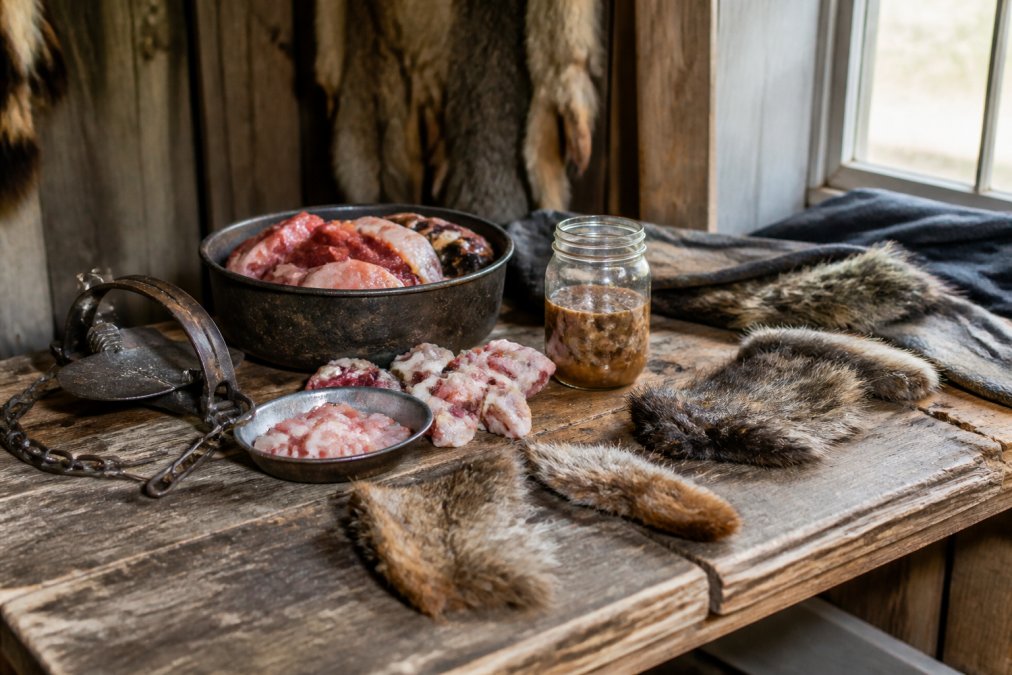
Food bait is any edible attractant: raw meat, fish, beaver carcass, or commercial paste baits. Gland bait uses secretions from the animal's own scent glands to trigger territorial or reproductive responses.
Food baits work year-round but excel in cold weather when metabolic demands drive animals to seek high-calorie sources. Gland baits are most effective during the rut and breeding windows. A well-constructed set often layers both: a food bait at the bait hole to hold attention, and a gland bait or call lure above the trap pan to draw the animal in from a distance.
How to Choose Trapping Bait by Target Species
Selecting trapping bait without knowing your target species is like fishing with the wrong fly. Every furbearer has distinct food preferences, territorial behavior, and olfactory triggers.
Predators: Coyote, Fox, and Bobcat
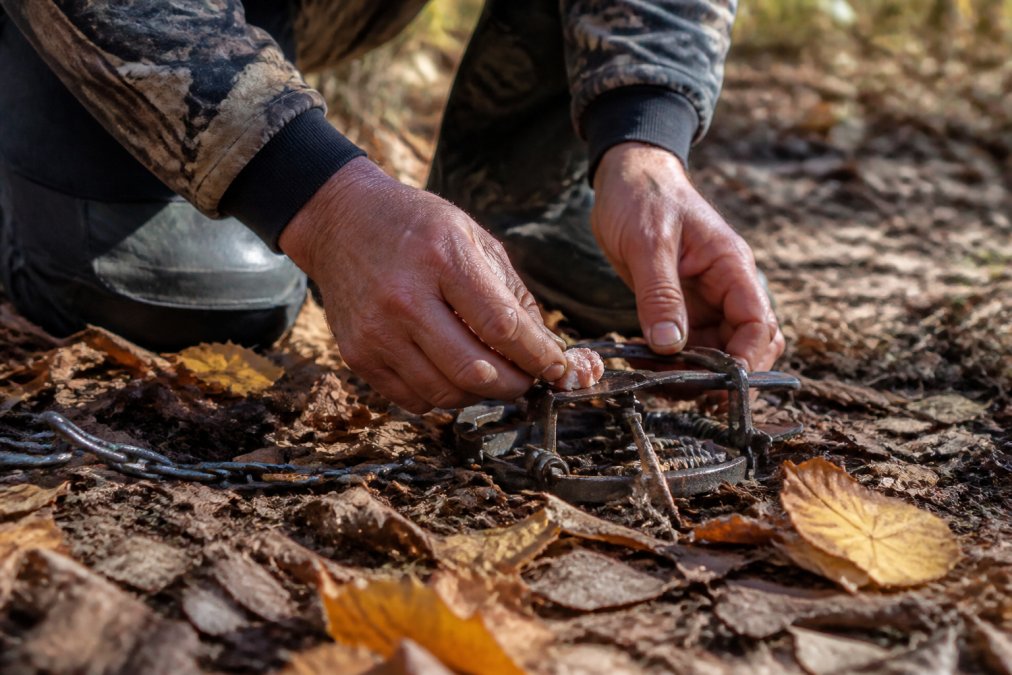
Coyotes respond strongly to gland-based call lures and aged meat baits. Beaver castor is one of the most reliable coyote attractants in the field, triggering territorial curiosity and holding up well in cold conditions. Fox are notoriously trap-shy but highly responsive to curiosity lures with anise or sweet fruit bases. Bobcat sets benefit from feather-and-fur visual attractants paired with a call lure; bobcats are visual hunters and respond to movement as much as scent.
For all three species, the scent trail matters as much as the bait itself. Drag a lure-soaked rag to the set from 10-15 meters out to create an olfactory runway. Always approach and construct your set from downwind, and position the attractant so the target animal approaches into the wind and over the trap pan.
Furbearers: Muskrat, Beaver, and Raccoon
Muskrat sets are straightforward: fresh vegetation (cattail root, apple, carrot) placed at or just below the waterline at active runs and feed beds. Beaver sets use fresh poplar, willow, or aspen cuttings as food bait, with beaver castor as a territorial call lure. Raccoon respond to sweet, oily attractants, fish oil, sardines, and sweet corn are reliable food baits, and anise-based curiosity lures extend your effective range.
Most furbearers are primarily food-motivated rather than territorially triggered. Lead with food bait and use lure as a secondary draw.
Natural vs. Synthetic Attractants: Scent, Ingredients, and Set Efficiency
Natural attractants are derived from actual animal glands, prey species, or plant materials. Synthetic attractants replicate those scent profiles using manufactured compounds. Both work.
Natural ingredients, beaver castor, skunk essence, mink musk, fish oil, carry authentic olfactory signatures that animals recognize without hesitation. They perform better in areas with high trapping pressure. The downside: natural baits degrade faster, especially in warm weather.
Synthetic lures offer consistency and perform across a wider temperature range. Many commercial lures blend natural and synthetic ingredients. For long-line trappers covering many sets per day, synthetic or blended lures often win on practical grounds.
According to the Association of Fish and Wildlife Agencies' trapping best practices guidelines, matching attractant type to target species behavior is one of the most effective ways to improve set efficiency while reducing non-target captures.
Seasonal Trapping Bait Strategies That Improve Your Catch Rate
Trapping bait isn't a set-it-and-forget-it decision. Animal behavior, food availability, and territorial patterns shift across the season, and your bait selection should shift with them.
Cold-Weather and Early-Season Adjustments
Early season sets benefit from curiosity lures and fresh food baits. Animals haven't been pressured yet and are actively feeding to build winter fat reserves. High-calorie food baits, fatty meat, fish oil, beaver carcass, are especially effective in the weeks before hard freeze.
Once temperatures drop below freezing, many paste baits freeze solid and lose their scent throw. Cold-weather trappers switch to oil-based lures that remain liquid at low temperatures, or they use dry bait materials (dried fish, dried meat) that continue releasing scent even when frozen. Gland baits also hold up better in cold conditions than food-based pastes. essential hunting equipment.
Regional Bait Variations Worth Knowing
Regional bait variations are one of the most underappreciated factors in trapping success. In the arid West, where Campbell Fine Furs sources its Western lure formulas, dry conditions mean scent disperses differently than in humid coastal regions. Oil-based lures with a lighter carrier perform better in low humidity. In the Great Lakes region, beaver castor and fish-based baits dominate because of the density of water-associated furbearers. In the Southeast, sweet-based attractants and corn-based food baits are standard for raccoon and opossum.
Local prey availability shapes local animal preferences. When trapping a new region, talk to local trappers before committing to a bait strategy.
Placement, Wind Direction, and Set Location Techniques
The best trapping bait in the world fails at a bad set location. Set location is the multiplier that determines whether your attractant reaches the right animal or just feeds the wrong one.
Productive set locations share consistent characteristics: natural funnels (fence crossings, creek bends, trail junctions), evidence of recent animal activity (tracks, scat, hair, digging), and protection from weather that would degrade your bait quickly.
Wind direction governs everything at a dirt hole or flat set targeting predators. Place your bait hole and lure application so the scent plume travels downwind into open country. The target animal should be able to scent your set from 30-50 meters away and follow the scent trail directly over the trap pan.
For water sets targeting beaver and muskrat, current direction replaces wind direction. Place bait and castor mounds upstream of your trap so scent carries downstream to traveling animals.
Bait Preservation, DIY Recipes, and Storage Best Practices
Bait that degrades before the season ends is wasted money and wasted effort. Proper storage is non-negotiable for trappers running multiple seasons.
Preservation basics:
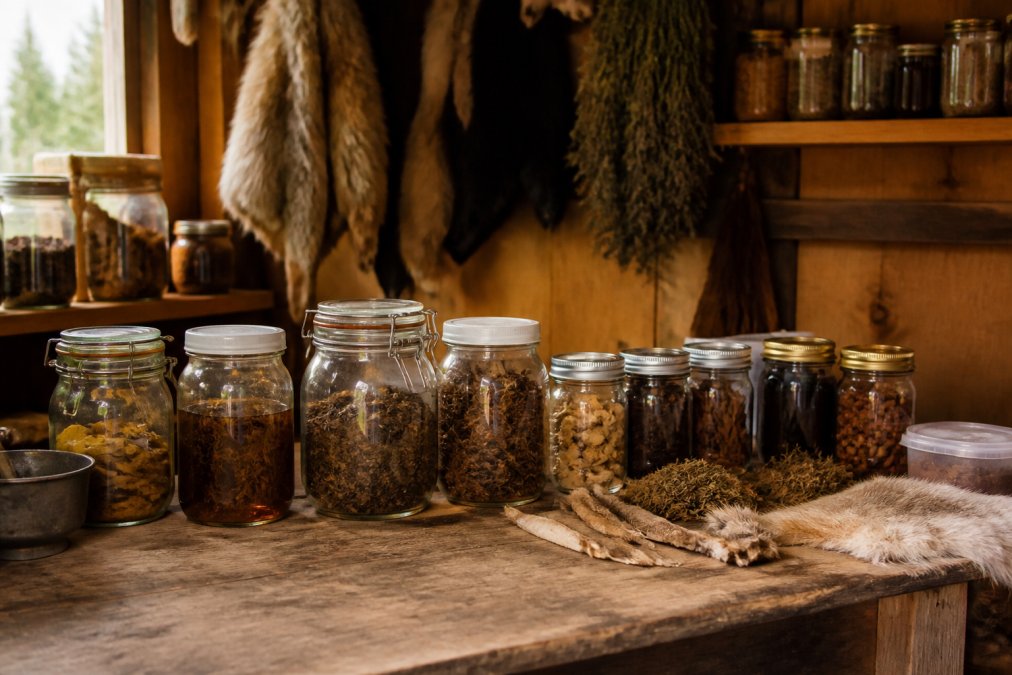
- Store oil-based lures in glass jars with tight-fitting lids.
- Keep paste baits refrigerated or frozen between seasons. Most hold 2-3 years when properly sealed.
- Natural gland materials (beaver castor, mink musk) should be frozen if not used within a season.
- Label everything with the date of preparation.
DIY bait recipes worth trying:
Basic fish oil bait: Blend oily fish (sardines, herring, or sucker) with glycerin at roughly a 3:1 ratio. Let ferment in a sealed jar for 2-3 weeks before use.
Castor mound paste: Combine dried and powdered beaver castor with glycerin and a small amount of willow or poplar oil. Apply to a mud mound at beaver sets to simulate territorial marking.
Curiosity blend: Mix anise oil, fish oil, and a small amount of sweet fruit extract (apple or cherry). Apply to a cotton backing above the trap pan. Works across many species and is especially effective where trapping pressure is high.
Legal Trapping Bait Regulations You Need to Know
Trapping regulations in the United States are governed at the state level, with additional federal oversight for migratory species and federally protected animals. Before you run a line, you need to understand what's legal in your state.
Most states regulate trap types, set locations, and check intervals rather than bait composition directly. However, some states restrict the use of live bait, certain animal parts, or baits that attract non-target species in sensitive areas.
The U.S. Fish and Wildlife Service's state trapping regulations directory links to each state's current trapping rules and season dates. Check your state's regulations annually.
Ethical trapping practice goes beyond legal compliance. Using appropriately sized traps, checking sets within the legal interval, and minimizing non-target captures are standards the trapping community holds itself to. Avoiding non-target species starts with bait selection: species-specific attractants reduce the risk of capturing animals you weren't targeting.
| Bait/Lure Type | Best Target Species | Season | Notes |
|---|---|---|---|
| Beaver castor | Coyote, beaver | Fall/winter | Holds well in cold; territorial trigger |
| Fish oil paste | Raccoon, mink, muskrat | Year-round | Degrades faster in heat |
| Anise curiosity lure | Fox, raccoon, bobcat | All seasons | Effective under pressure |
| Gland bait (mink musk) | Mink, weasel, otter | Early season | Best near water sets |
| Dried meat/fish | Predators, furbearers | Cold weather | Scent-active even when frozen |
| Sweet fruit extract | Raccoon, opossum | Early/late season | Regional; less effective in arid West |
Choosing the Right Trapping Bait for Your Next Season
The most common mistake trappers make is treating bait selection as an afterthought. They invest in quality traps, scout locations carefully, and then grab whatever bait is on the shelf.
How to choose hunting trapping bait correctly comes down to four decisions made in sequence: identify your target species, match the attractant to that animal's primary behavioral driver (food, territory, or curiosity), select a formulation that holds up in your regional climate, and position it so the scent trail leads directly over the trap pan.
For trappers running Western lines, the lure formulas developed by Andy Weiser and carried by Campbell Fine Furs are built specifically for the species and conditions of the mountain West. The formulations account for regional prey availability, climate, and the territorial behavior of Western predators.
The trapping bait decision is ultimately a system decision. Lure type, bait placement, set location, and wind direction all interact. Get one element wrong and the others don't compensate. Get all four right and your catch rate reflects it.
As documented in the Association of Fish and Wildlife Agencies' best management practices for trapping, species-appropriate bait selection is one of the highest-use variables a trapper controls.
Running a productive trap line starts with choosing the right trapping bait for your target species, your region, and your season. Campbell Fine Furs carries Western lures made with Andy Weiser's proven formulas, designed for the species and conditions serious trappers actually face in the field. View All Products and find the attractants built for your next season.
Frequently Asked Questions
Q: What is the best bait for trapping?
A: There is no single best trapping bait because effectiveness depends on the target species, season, and set location. Beaver castor works well for beaver and muskrat sets. Fish oil and meat-based food baits attract raccoon and mink. Gland lures with skunk essence or territorial scents draw predators like coyote and fox. Matching the bait to the animal's feeding behavior and the time of year consistently outperforms any one-size-fits-all approach.
Q: How do you choose between lures, urine, and food-based baits?
A: Lures trigger curiosity or territorial instincts through olfactory signals, making them effective at the trap pan even when food is scarce. Urine marks territory and draws predators investigating a rival's presence. Food baits appeal directly to a hungry animal's metabolic drive and work best during cold months when furbearers are actively feeding. Most experienced trappers combine a food bait at the bait hole with a call lure placed a few inches away to address both instincts at once.
Q: What attracts coyotes to a trap?
A: Coyotes respond strongly to territorial attractants like coyote urine and gland lures, which signal a rival animal in the area. Curiosity lures containing skunk essence, anise, or beaver castor also pull coyotes in. At food sets, using fresh meat or fish oil near the trap pan adds a secondary draw. Wind direction matters most at coyote sets, place the scent trail so it carries downwind toward travel corridors the animal already uses.
Q: What are the legal considerations for using bait in trapping?
A: Trapping regulations vary by state and are enforced by each state's fish and wildlife agency. Most states restrict which species you can target, the types of traps allowed, and how close sets can be placed to water, roads, or dwellings. Some states prohibit specific attractants near certain protected areas. Always verify your state's current trapping regulations before the trapping season opens, and check whether a trapping license or furbearer permit is required in your area.
Q: How does seasonal weather affect bait selection?
A: Cold temperatures slow scent dispersal, so strong-smelling food baits and concentrated call lures perform better in winter than lighter curiosity lures. During early trapping season when temperatures are warmer, lighter lures carry further and can be used at greater distances from the set. Wet conditions wash away scent trails faster, requiring more frequent bait replenishment. Seasonal bait rotation, switching from gland lures in fall to heavy food baits in deep winter, keeps sets productive across changing conditions.
Q: Can I make my own trapping bait at home?
A: DIY trapping baits are common among experienced trappers. Basic recipes use fish oil, rendered animal fat, or beaver castor as a base, combined with natural ingredients like anise, musk, or fermented meat. The key is proper preservation: most homemade baits require airtight containers and refrigeration or freezing between seasons to prevent spoilage. Formulas developed by experienced trappers, like those used in Western lures, often outperform improvised recipes because the scent ratios have been field-tested across multiple trapping seasons.
This article was written using GrandRanker