 how-to
Signs of Moth Damage on Fur Pillows and What to Do Next
Last Updated: November 8, 2026
Quick Summary
The first signs of moth damage on a fur pillow are loose hairs in the seams, small bald patches, and a gritty frass that collects under the cushion. Check the seams before panicking over a single shed hair, because the earliest clue is usually debris, not a hole.
- Inspect a fur pillow in daylight, brushing the hair backward and tracing every seam and the piping.
- A careful inspection pass takes about ten minutes per pillow and catches damage before it reaches the hide.
- In fur, larvae eat hair at the base and leave grazed, stubbled patches rather than clean holes.
- Isolate an uncertain pillow in a breathable cotton bag and recheck it in two to three weeks.
- Store fur pillows in a breathable cotton bag, not plastic, so moisture can escape.
Table of Contents
- What Are the First Signs of Clothes Moths on a Fur Pillow
- How to Inspect a Fur Pillow for Moth Damage
- How to Identify Moth Holes in Clothes and Fur
- Telling Moth Damage Apart from Shedding, Wear, and Age
- Checking the Filling and Fabric Cover for Hidden Damage
- How to Get Rid of Clothes Moths Around Fur Pillows
- Fur Pillow Care and Storage to Prevent Repeat Damage
- Choosing a Fur Pillow That Holds Up to Daily Life
- Frequently Asked Questions
What Are the First Signs of Clothes Moths on a Fur Pillow
The first signs of clothes moths on a fur pillow are loose hairs in the seams, small bald patches, and a gritty dust that collects under the cushion.
Fur pillows sit in a bad spot. They are warm, dark, and rarely moved, which is exactly what clothes moth larvae want.
Here is what shows up first:
- Fine webbing in the crease where the fur meets the fabric backing
- Loose hairs that brush off in small clumps
- Bald patches the size of a thumbnail near seams and corners
- Gritty frass that looks like fine sand or coffee grounds
- A musty smell that gets stronger when the pillow warms up
One shed hair means nothing. A cluster of loose hairs plus grit in the same spot means larvae are feeding. That combination is the signal to act.
How to Inspect a Fur Pillow for Moth Damage
Inspect a fur pillow in good daylight, working from the outside in: brush the hair backward, check every seam and the piping, then press the cover to feel the filling.
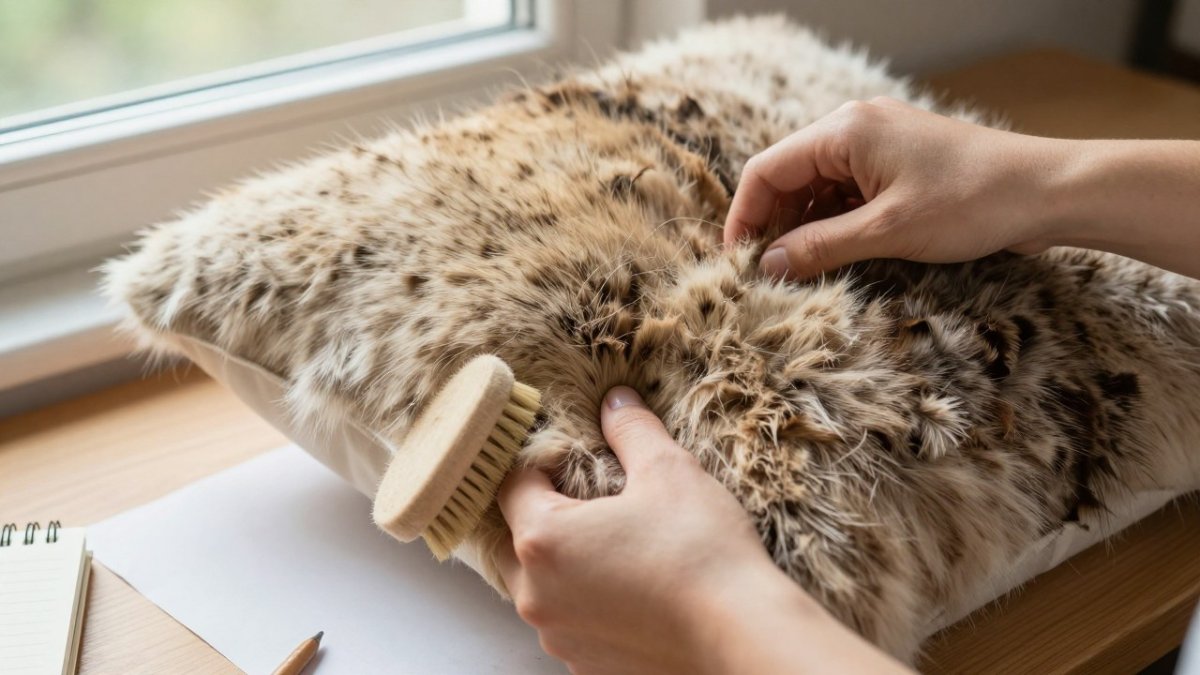
Set the pillow on a table near a window. Daylight shows thinning and grazed patches better than lamp light, and it makes frass easier to see against the fur.
Work through these steps in order:
- Brush the hair backward with your fingers or a soft brush, working in small sections from the center outward. Look for short, clipped hairs, stubbled patches, and bare spots near the seams.
- Trace every seam and the piping with a fingertip. Larvae settle where the fur meets the backing and where piping creates a dark crease. Pay special attention to corners, where fur is folded and rarely disturbed.
- Shake the pillow over a sheet of white paper. Frass looks like fine sand or coffee grounds; larval cases look like tiny grain husks. White paper makes both obvious.
- Press the cover gently with both palms. A healthy pillow springs back evenly. Soft, hollow, or lumpy spots suggest the filling has been eaten or has clumped from moisture.
- Smell the pillow near the seams and the underside. A musty, sour odor that strengthens when the pillow warms up points to larvae waste.
- Flip the pillow and repeat on the back panel and underside. Most people check only the top; larvae work the underside and seams first, where light never reaches.
- Check the zipper and any removable cover. Unzip a washable cover and inspect the inner lining for webbing, cases, and thin spots.
A common mistake is checking only the visible face.
Printable inspection checklist. Copy this list and tick each item as you go:
- Hair brushed backward on the top face
- Hair brushed backward on the underside
- Every seam and the piping traced
- Corners checked for folded, grazed fur
- White-paper shake test completed
- Cover pressed for hollow or lumpy spots
- Smell test at seams and underside
- Zipper and inner lining checked (if removable)
- Date and result noted for the next check
Reading what you find. An isolated loose hair or a single small bald spot near a seam is a low-urgency finding: isolate the pillow, clean the area, and recheck in two to three weeks. Expanding bald areas, exposed hide, visible larvae or cases, or widespread frass are high-urgency findings: bag the pillow, move it away from other fur and wool items, and treat the storage area before returning it. If the pillow is valuable or the hide is fragile, do not apply heat, harsh chemicals, or home remedies; isolate it and consult a fur care professional before attempting treatment.
Watch out: never cut into a sealed pillow to inspect the filling.
How to Identify Moth Holes in Clothes and Fur
Moth holes in clothes and fur look different, and that difference matters. In fabric, larvae cut clean, irregular holes. In fur, they eat the hair at the base and leave a grazed, stubbled patch rather than a hole.
On a wool sweater, you see a small round gap with a frayed edge. On a fur pillow, you see a patch where the hairs are shorter than the rest, like a bad haircut.
Watch for these signs:
- Irregular holes in the cotton or linen cover, often near a seam
- Grazed fibers where the hair is clipped short but not gone
- Silken webbing or small tubes stuck to the backing
- Larval cases that look like tiny grain husks
- Discoloration where waste has stained the fabric
The University of Minnesota Extension guide to clothes moths is a solid reference for telling larvae apart from other textile pests.
Telling Moth Damage Apart from Shedding, Wear, and Age
Not every bald patch is moth damage.
Here is how to sort it out:
| Sign | Moth Damage | Normal Shedding | Wear and Age |
|---|---|---|---|
| Hair loss pattern | Patchy, concentrated near seams and corners | Even, all over the surface | Worn areas only, such as the face and edges |
| Hair ends | Clipped, stubbled, like a bad haircut | Full length | Crushed, matted, or split |
| Debris | Frass, webbing, larval cases | Loose hairs only | Dust and lint |
| Hide | Exposed in spots, sometimes with a ragged edge | Covered | Cracked, dry, or stiff |
| Smell | Musty, sour, stronger when warm | Neutral | Old and dusty |
| Timing | Appears suddenly, spreads over weeks | Gradual, steady | Gradual, tied to age and handling |
Visual cues to compare side by side. Hold a suspected patch next to an undamaged area of the same pillow.
When you are not sure. A single ambiguous patch is not a reason to treat the whole pillow.
A cheap fur pillow sheds because the hairs were never properly secured to the hide during tanning. If you want the full explanation, our guide on why cheap fur accessories shed breaks down the difference.
Age damage looks different again. Older hide dries out, cracks, and lets go of hair in sheets. Moths leave a ragged, grazed edge.
Severity and urgency guide. Use this to decide how fast to act:
- Low urgency: one or two loose hairs, a single thumbnail-sized bald spot near a seam, no frass. Isolate, clean, and recheck in two to three weeks.
- Moderate urgency: several bald patches, light frass on white paper, no visible larvae. Bag the pillow, clean the storage area, and recheck weekly.
- High urgency: expanding bald areas, exposed hide, visible larvae or cases, widespread frass, or a strong musty smell. Isolate the pillow from other fur and wool items immediately and treat the storage area before returning it.
Watch out: do not apply heat, harsh chemicals, or home remedies to a valuable or delicate fur pillow based on an uncertain diagnosis.
Checking the Filling and Fabric Cover for Hidden Damage
The filling and the cover hide damage that the surface fur never shows.
Press the pillow flat with both hands. A healthy pillow springs back. A pillow with eaten filling feels lumpy, hollow, or flat in one spot.
Check these areas:
- The cotton or linen cover for thin spots and small holes near the zipper
- The inner lining for webbing and larval cases
- The filling for clumps, dust, and a sour smell when you squeeze it
- The corners where filling packs tight and larvae settle
Homes with dust and dry air make this worse. Our article on keeping fur home decor clean in dusty climates covers the cleaning routine that suits fur decor in those conditions.
Watch out: never open a filled pillow to inspect the stuffing unless the cover has a zipper. Cutting into a sealed pillow releases feathers and makes the mess worse.
How to Get Rid of Clothes Moths Around Fur Pillows
Getting rid of clothes moths means breaking the life cycle, not just killing the moths you can see.
Start with these steps:
- Bag the pillow in a sealed plastic bag and move it outside while you clean.
- Vacuum the room, including under furniture and along baseboards.
- Wash or dry-clean the cover according to its care label.
- Brush the fur outdoors to remove eggs, larvae, and debris.
- Clean the storage area with a vacuum and wipe down shelves.
- Recheck in two to three weeks for new activity.
For a full step-by-step plan, see our guide on how to stop moth damage in stored fur. It walks through the same process we use on damaged pieces.
The EPA guidance on moth control products is worth reading before you buy any treatment. Follow the label exactly, and keep treated items away from children and pets.
Fur Pillow Care and Storage to Prevent Repeat Damage
Prevention comes down to three things: clean fur, dry air, and a sealed container. Moths attack dirty, damp, undisturbed fur, so a pillow that gets brushed and aired regularly stays out of reach.
A practical storage routine:
- Brush before storing. Loose hairs and skin flakes attract larvae.
- Store in a breathable cotton bag, not plastic, so moisture can escape.
- Keep the room dry. Damp air invites pests and damages hide.
- Rotate and air the pillow every few months.
- Add cedar nearby as a mild deterrent, not a cure.
Our guide on storing fur accessories has the full seven-step method. Follow it and a cleaned pillow stays clean.
Choosing a Fur Pillow That Holds Up to Daily Life
A well-made fur pillow resists damage better than a cheap one, and the difference shows up in the hide. Good tanning keeps hairs anchored, so the pillow sheds less and survives handling, sunlight, and the occasional vacuum.
When you shop, check these points:
- Full, even hair with no thin spots on the seams
- Supple hide that bends without cracking
- Strong stitching along every edge
- A removable, washable cover for easier care
Our article on why artisanal fur accessories last longer explains what separates a durable piece from a short-lived one.
Browse the collection and pick a pillow that fits your space.
Moth damage is easier to stop early, and a careful inspection today saves a pillow tomorrow.
Frequently Asked Questions
What does moth damage look like on a fur pillow?
Look for thinning areas where the hair has been grazed down to the hide, loose hairs that come away in tufts, and exposed hide or bald patches. Small irregular holes may appear in the fabric cover, and you might see silken webbing, tiny larval cases, or dark fecal pellets near the seams. Damage often starts in hidden areas such as the back panel or the underside, so check the whole pillow rather than just the front.
How can you tell moth holes from regular wear?
Regular wear tends to be even and follows friction points, such as where the pillow rests against a chair. Moth damage is irregular, clusters in hidden or folded areas, and comes with supporting evidence: grazed fibers, loose hairs, webbing, or pellets. If the hole has clean edges and no debris, it is more likely abrasion. If the edges look chewed and the surrounding hair is thin, suspect larvae and inspect the rest of the item.
Should you wash a fur pillow if you suspect moth damage?
Do not machine wash or submerge a fur pillow. Water can stiffen the hide and mat the hair, and it will not remove larvae hidden in seams or filling. Instead, brush the fur gently, vacuum the surface with a brush attachment on low suction, and isolate the pillow in a breathable cotton bag. For valuable or delicate pieces, have a fur specialist assess the item before you try any treatment.
How long does it take for moths to damage fur?
Larvae feed continuously once they hatch, so visible thinning can appear within weeks in warm, undisturbed storage. The damage is cumulative: a pillow stored in a closet for a season may show grazed patches and loose hairs by the time you take it out. Regular inspection every few months catches the problem before the hide is exposed, which is the point where repair becomes difficult.