 how-to
7 Steps to Stop Moth Damage in Stored Fur
Last Updated: November 1, 2026
Quick Summary
Stop moth damage in stored fur by cleaning and drying each item before storage, then keeping it in a cool, dark, dry space inside a breathable cotton or linen bag. Check it regularly with traps and visual inspections, since larvae rather than adult moths are the ones that eat the fur.
- Brush, air, and fully dry every fur item before it goes into storage.
- Aim for roughly 45-55% humidity and a cool, dark storage space.
- Use a cotton or linen garment bag rather than plastic for long-term storage.
- Place sticky traps in storage and check them every few weeks.
- Call a qualified furrier if damage reaches the leather or the infestation returns.
Table of Contents
- Why Stored Fur Attracts Clothes Moths
- Step 1: Clean Fur Before Storage
- Step 2: Choose the Right Storage Space and Container
- How to Store a Fur Coat at Home
- Using Scent Deterrents and Traps on Fur: What Works
- Signs of Moth Damage on Fur
- How to Get Rid of Clothes Moths and Respond to Damage
- Building an Inspection Schedule for Your Stored Fur
- Frequently Asked Questions
Moth damage in stored fur is slow to start and fast to spread, which is why many owners only notice it after a hole has already appeared. This guide explains how to protect your fur before the off-season, not after. Most of the work happens before the fur goes into storage, and it takes less time than most people expect.
Why Stored Fur Attracts Clothes Moths
Clothes moths are drawn to natural fibers, and fur is a natural fiber. The moths that do the damage are not the large flying ones you see near a porch light.
A closed closet or storage bin is often exactly that place. Dark corners, dust, and still air give larvae the quiet they need.
A common mistake is assuming a fur item is safe just because it is sealed away.
Step 1: Clean Fur Before Storage
Clean every fur item before it goes into storage. Dirt, sweat, and skin oils attract pests, and they also age the leather base of the fur.
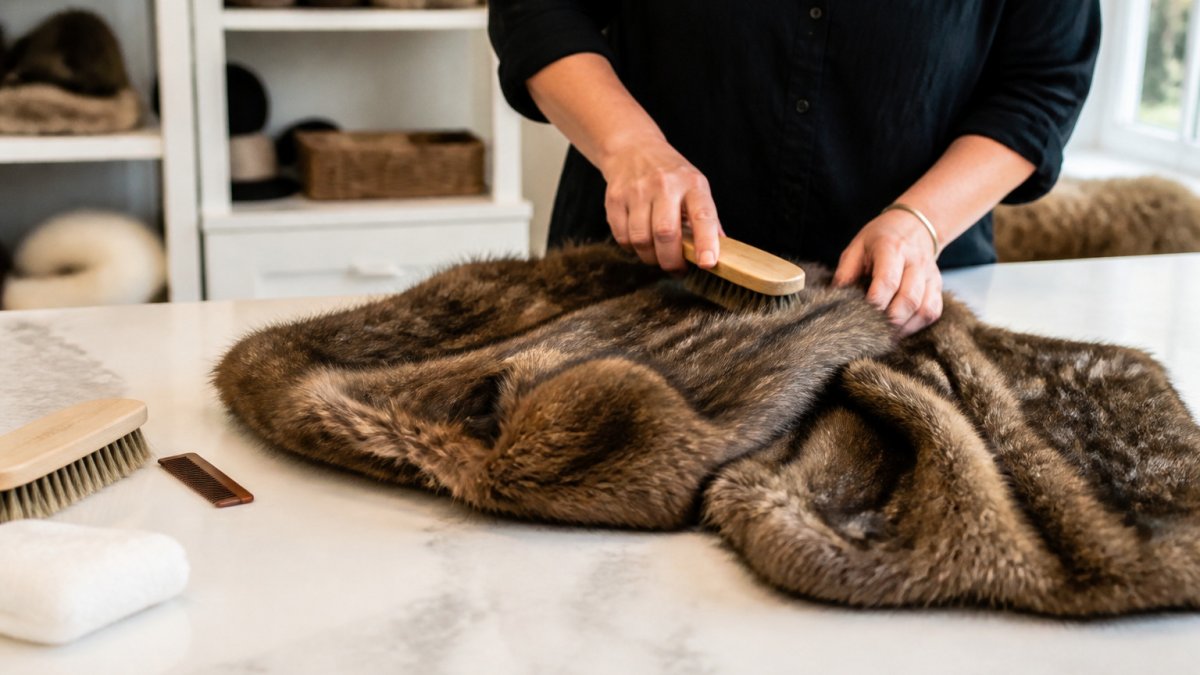
- Brush the fur gently with a soft brush, working in the direction of the grain; whether brushing real fur is safe walks through when brushing helps and when it can cause damage.
- Check the seams, cuffs, and lining for crumbs, lint, or small webbing
- Use a cleaner made for fur, not a general laundry product; proper care steps for real fur mittens show how to apply it to smaller accessories.
Watch out: Do not store fur that still smells of smoke, sweat, or moisture. Trapped odors and dampness give moths and mildew a reason to stay.
Step 2: Choose the Right Storage Space and Container
Fur has different storage needs than wool or cotton, and the space you choose matters as much as the bag you put the garment in. The goal is a stable, dark, dry environment with gentle airflow, because fur is a skin with hair attached, and both the leather and the hair react to heat, moisture, and pressure.
Target conditions for home fur storage
Aim for a space that stays cool and consistent rather than one that swings between extremes. Most fur-care practitioners look for the following range:
- Temperature: roughly 45-55°F is the professional benchmark for long-term fur storage; at home, a cool interior closet that stays below about 70°F is a reasonable compromise.
- Relative humidity: about 45-55% is the working target. Below 40% the leather can dry and crack; above 60% invites mildew and gives moth larvae a friendlier environment.
- Light: dark. Ultraviolet light oxidizes fur over time, turning whites yellow and dulling darker pelts, so avoid windows and direct sun.
A cheap hygrometer and thermometer from a hardware store will tell you more about a closet than guesswork will. Check them at the same time you check your moth traps.
Spaces to avoid
Garages, attics, basements, and unheated sheds are the usual offenders. They swing in temperature, take on damp, or bake in summer. A cedar chest or a closet on an interior wall of the home is a better bet. Do not store fur against an exterior wall that sweats in winter, and do not store it in a bathroom or laundry room where humidity spikes.
Breathable covers versus sealed containers
Breathable is the default for fur. A cotton or linen garment bag lets the leather breathe while keeping dust and insects off the surface.
Sealed containers and vacuum bags are where general clothing advice and fur advice part ways. Vacuum compression can crush the hair shaft and put uneven stress on the leather base, and an airtight bin with no airflow holds any moisture the garment carries in.
Professional cold storage versus home storage
Professional fur storage is not just a bigger closet. Professional storage facilities generally use temperature- and humidity-controlled environments, and many fur-care guides recommend it for high-value pieces. Home storage can work well for shorter periods or for less delicate items, but it puts more of the monitoring burden on you. If you are storing a coat for a full off-season, compare the cost and risk of home storage against a professional vault before you decide.
Container checklist
- Space is cool, dark, and stable in temperature
- Humidity is roughly 45-55%, checked with a hygrometer
- Fur is in a cotton or linen garment bag, not plastic
The table below summarises the container options covered in this section so you can compare them quickly.
| Option | Best for | Key difference |
|---|---|---|
| Cotton or linen garment bag | Long-term fur storage | Breathable; keeps dust and insects off |
| Plastic garment bag | Short-term dry-cleaner use only | Traps moisture; not recommended for fur |
| Sealed container or vacuum bag | Only if garment guidance allows | Can trap moisture or stress the hair and leather |
| Professional cold storage | High-value or delicate pieces | Temperature- and humidity-controlled environment |
How to Store a Fur Coat at Home
Hang the coat on a wide, padded hanger so the shoulders keep their shape. Leave space between garments so air can move.
Keep the coat away from direct sunlight, heaters, and damp walls. If you have a cedar-lined closet, place the coat near it, but do not rely on cedar alone to keep moths away.
Here is a simple home storage checklist:
- Coat is clean and fully dry
- Coat sits on a padded hanger
- Coat is inside a cotton or linen garment bag
Using Scent Deterrents and Traps on Fur: What Works
Many people try cedar blocks, lavender sachets, cloves, or dried orange peel to repel moths. These can give a pleasant smell and may discourage some adult moths, but the evidence that they stop an established infestation is limited.
Sticky moth traps are useful for monitoring. Place a few in the storage area and check them every few weeks.
Be careful with mothballs. They are strong chemicals and should not be placed directly on or against fur.
Signs of Moth Damage on Fur
Early damage is often small and easy to miss. Look for these signs:
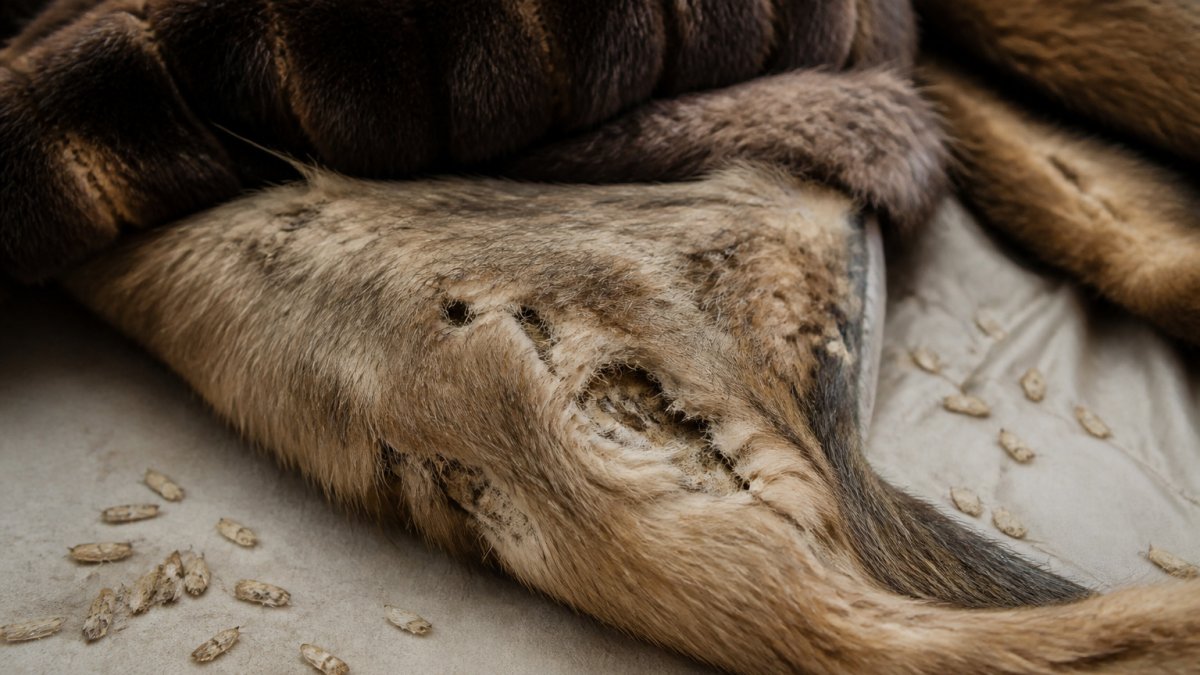
- Bald or thin patches, especially near seams, collars, and cuffs
- Small holes or fine, irregular cuts in the leather base
- Fine webbing or silky tubes in folds and under lining
Check your fur at least twice a season. Turn the item inside out and look closely at the lining and seams, since larvae often hide there.
How to Get Rid of Clothes Moths and Respond to Damage
Most guides stop at "clean it and freeze it." That advice is incomplete for fur, because the damaging stage is the larva, not the adult moth, and the response depends on whether you are dealing with a few larvae on one garment or an active infestation in the storage space. Work through the steps below in order.
Step 1: Confirm what you are dealing with
Before you treat anything, identify the life stage. Clothes moth adults are small, silvery-tan, and weak fliers that avoid light; the larvae are the cream-colored caterpillars that actually eat keratin. Look for webbing, silky tubes, and grain-like droppings in seams, under collars, and along the lining. If you only see adult moths in a trap, you have activity but not necessarily damage on the fur itself.
Step 2: Isolate the affected item
Remove the fur from the storage area and put it in a breathable bag away from other natural-fiber items. Do not shake it out indoors, because that spreads larvae and eggs. Take it outside to brush gently along the grain, then bag it and set it aside while you treat the space.
Step 3: Treat the storage space, not just the garment
Moths rarely live only on the fur. Vacuum shelves, drawer runners, corners, and the closet floor, then empty the vacuum canister outside. Wipe hard surfaces with a damp cloth and let them dry fully. Wash or dry-clean any nearby wool, silk, or other natural-fiber items that were stored alongside the fur, since eggs and larvae may have moved onto them.
Step 4: Understand what freezing does and does not do
Freezing is a legitimate tool, but it is often described too loosely. Cold treatment is generally used to kill eggs and larvae, not to repair damage, and its effectiveness depends on reaching a low enough temperature for long enough. Home freezers vary, and a fur garment is bulky, so the center of the item may not reach the target temperature as quickly as a thin wool sweater would.
Step 5: Decide when to call a professional
Call a qualified furrier if any of the following is true:
- The damage reaches the leather base, not just the hair
- Holes, bald patches, or a musty smell persist after cleaning
- The infestation keeps returning after two rounds of cleaning and monitoring
A furrier can assess whether the leather is still sound and whether the piece should go into professional storage rather than back into the closet.
Step 6: Recheck on a schedule
Larvae can survive in small numbers, so repeat the inspection over the next several weeks. Check traps, look for new webbing or droppings, and smell the storage area. If activity continues, treat the space again and consider moving the fur to a different location or into professional storage until the problem is resolved.
Building an Inspection Schedule for Your Stored Fur
Prevention works best when it becomes routine. A simple schedule keeps problems small.
- Before storage: clean, dry, and inspect every fur item
- Every 4 to 6 weeks: check traps, look for webbing or droppings, and smell the area
- Mid-season: take each fur item out, brush it, and inspect the lining and seams
Write the dates in a notebook or calendar. A written record makes it easier to notice patterns, such as a particular corner that always shows activity.
If you are unsure whether a garment can be cleaned at home, consult a qualified furrier before you start.
Frequently Asked Questions
How do you prevent moths from damaging fur?
Clean the fur first, since moths are drawn to body oils, food residue and sweat. Store it in a sealed container or breathable garment bag in a cool, dry, dark space, and check it regularly. Cedar and lavender can support the routine, but they are not a substitute for sealing and cleaning.
Should fur be cleaned before it is stored?
Yes. Clothes moth larvae feed on keratin, the protein in hair and fur, and they are attracted to natural residues left on the garment. Brush the fur thoroughly, let it air out in a shaded spot, and have it cleaned by a professional furrier if it is heavily soiled. Store it only after it is fully dry, because moisture can encourage mold and damage the leather base.
How can you tell if moths have damaged fur?
Look for thinning patches, clumps of loose hair, small holes in the leather side, and fine silky webbing or tiny droppings in folds and seams. Adult moths are rarely the problem; the larvae cause the damage. Check the inside of the garment, the pockets and the hanging loop, since those areas are often missed. If you find any of these signs, isolate the piece and contact a furrier before doing anything else.
What should you do if you find moths in stored fur?
Remove the affected piece from storage and place it in a sealed bag away from other garments. Brush it outdoors, then have it inspected and professionally cleaned, as larvae may be hard to see. Vacuum the storage area, drawers and shelves, and wash or clean any nearby textiles. Monitor the space with sticky traps for several weeks. A furrier can assess whether the damage can be repaired.