 How-to
7 Ways to Protect Fur from Snow and Sleet
Last Updated: November 18, 2026
Quick Summary
To protect fur from snow and sleet, brush the coat before heading out so snow slides off, apply a light fur-safe barrier to the fur tips, and cover high-contact areas like the chest and belly with a water-resistant coat. After the walk, shake off loose snow and air-dry at room temperature, away from radiators and direct heat.
- Wet snow and freezing rain demand immediate attention, while dry snow gives you a few extra minutes.
- Trim long fur on the legs, paws, and underside with blunt-tipped scissors to reduce snow buildup.
- Never put a fur coat in a dryer or near a heater, since the leather can shrink and stiffen permanently.
- Warm ice clumps with your hands or a damp cloth, and brush only after the ice is fully melted.
- Set up a drip mat and drying spot by the door, because most fur damage happens in the first hour indoors.
Table of Contents
- Why Snow and Sleet Damage Fur (and What to Do First)
- How to Protect Fur from Snow and Sleet Before You Head Out
- How to Dry a Fur Coat After Snow
- How to Remove Ice Clumps Without Hurting the Fur
- How to Care for a Fur Coat in Winter
- How to Protect Fur from Snow and Sleet Indoors
- When to Call a Veterinarian or a Fur Specialist
- Choosing Fur Accessories Built for Winter Weather
- Frequently Asked Questions
Why Snow and Sleet Damage Fur (and What to Do First)
Snow and sleet damage fur by melting into the coat, where trapped moisture swells the leather backing and mats the hair fibers together.
Here is the core problem. Fur is skin and hair, not fabric. Wet fur left alone will dry into stiff, matted patches.
So what should you do first? Get the fur dry and get the ice off, in that order.
Snow, Sleet, Freezing Rain, and Wet Snow: How Each Affects Fur
Not all winter precipitation behaves the same way on a coat, and the difference matters.
- Dry snow brushes off easily. Low risk, as long as you shake it out before it melts.
- Wet snow is the worst offender. It clings, melts on contact with body heat, and soaks straight into the undercoat.
- Sleet arrives as ice pellets. It bounces off at first, then melts into the fur and refreezes into hard clumps.
- Freezing rain coats every surface, including fur tips, in a thin glaze of ice. Never let this one sit.
The practical takeaway: wet snow and freezing rain demand immediate attention, while dry snow gives you a few extra minutes.
How to Protect Fur from Snow and Sleet Before You Head Out
The best protection starts before the door opens.
Here is the pre-outing routine we recommend:
- Brush the coat first. A quick pass with a stiff-bristled brush lifts loose hair and smooths the nap so snow slides off instead of catching. Work in the direction the fur grows, and pay extra attention to the legs, belly, and tail, where clumps form first.
- Apply a light barrier to the fur tips. Some owners apply a thin layer of a fur-safe protectant to help sleet bead up rather than soak in. Test any product on a hidden patch first, and use only products labeled for pet or fur use. Never use household sprays, cooking oils, or human hair products; a dog that licks its coat will ingest whatever you put on it.
- Cover the high-contact areas. A coat, bodysuit, or raincoat over the body protects the chest, belly, and hindquarters, which take the most splash. Look for a water-resistant shell with a snug fit at the wrists and hem so snow cannot pack inside.
- Protect the paws. Paw pads crack fast on ice and salt. A paw protectant or a set of booties can help with this. Booties can also help keep ice balls from forming between the toes.
- Trim long fur on the legs, paws, and underside. Shorter fur near the ground tends to collect less snow buildup. Use blunt-tipped scissors and take off only what drags on the ground.
That last step is the one most people skip. It is also the one that saves the most cleanup time.
Sleet deserves its own note. Because sleet arrives as ice pellets that melt on contact with body heat, it soaks deeper than dry snow.
Watch out: a coat that is too tight restricts movement and rubs the fur, while one that is too loose lets snow pack in at the neck and hem.
Breed and Coat Type: Matching Protection to the Fur in Front of You
Long-haired dogs and thick-coated animals need different handling than short-coated ones.
Curly coats are the trickiest.
Body area matters too. The legs, paws, under the tail, and belly fur are the four spots where snow clumps form first. Check those before anything else.
Here is the pre-outing routine that keeps snow and sleet off the fur in the first place.
| Step | What to do | Why it helps |
|---|---|---|
| 1 | Brush the coat first | Snow slides off instead of catching |
| 2 | Apply a light fur-safe barrier to fur tips | Helps sleet bead up rather than soak in |
| 3 | Cover high-contact areas with a coat or bodysuit | Protects chest, belly, and hindquarters |
| 4 | Protect the paws | Prevents cracked pads and ice balls between toes |
| 5 | Trim long fur on legs, paws, and underside | Shorter fur near the ground collects less snow |
How to Dry a Fur Coat After Snow
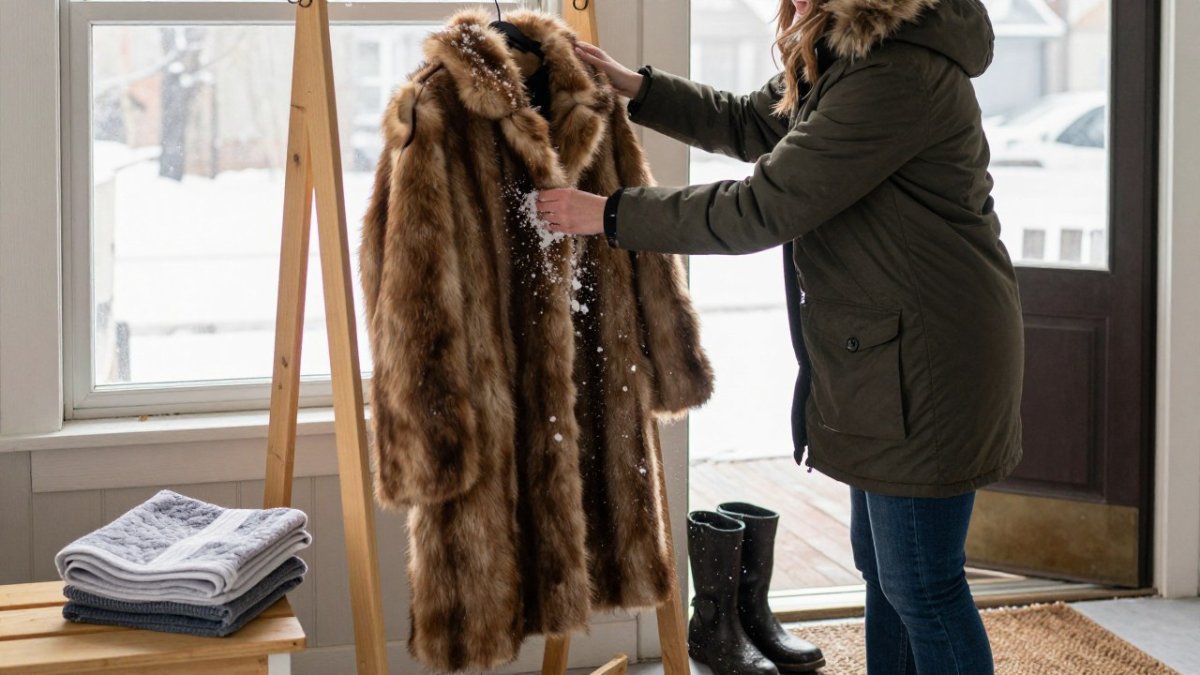
Drying a fur coat after snow means removing loose snow and moisture without applying direct heat. Heat is the enemy here. It dries the leather too fast and leaves it brittle.
Follow these steps:
- Shake off loose snow outdoors before you step inside. This keeps your floors dry and stops the melt from soaking deeper.
- Hang the coat on a wide, padded hanger so air reaches the whole garment.
- Blot, don't rub. Press a dry towel into wet patches. Rubbing pushes moisture into the leather.
- Air-dry at room temperature, away from radiators, fireplaces, and direct sunlight.
- Brush once fully dry to restore the nap and separate any matted fibers.
Watch out: never put a fur coat in a dryer or near a heater to speed things up. If your fur got properly soaked, our guide on what happens if real fur gets wet walks through the deeper recovery steps.
How to Remove Ice Clumps Without Hurting the Fur
Ice clumps come off safely with warm hands and patience, never with force.
Work through it like this:
- Warm the clump with your hands for a minute or two. Body heat loosens the ice bond without shocking the skin.
- Use a warm, damp cloth to soften stubborn clumps. Wring it out so it is damp, not dripping. Never use hot water; it can burn skin and damage the leather backing on a garment.
- Separate the fur gently with your fingers, working from the tip down to the base. Do not pull upward against the grain.
- Brush only after the ice is fully melted. Brushing frozen fur snaps the fibers. Use a soft slicker or pin brush, not a fine-toothed comb, which catches on knots.
- Dry the area completely before the animal goes back outside. Refreezing wet fur is how mats set.
If a clump will not release after a few minutes of warming, stop.
Watch out: avoid chipping at ice with a comb, scissors, or your fingernails, since a tool can slip and cut the fur or the skin underneath.
If brushing is part of your routine, our complete guide on whether it is safe to brush real fur accessories covers the right tools and timing.
How to Care for a Fur Coat in Winter
Winter care for a fur coat comes down to three habits: brush often, dry fully, and store correctly between wears. Fur that stays clean and dry lasts for decades.
A few rules we pass along to every customer:
- Brush after each wear to lift snow residue and keep the nap smooth.
- Hang fur on a padded hanger with breathing room on both sides.
- Keep fur away from radiators, vents, and direct sunlight.
- Never store fur in a plastic bag. It traps moisture and invites mildew.
- Rotate heavy wear with lighter accessories so one piece is not soaked daily.
For longer breaks between wears, see our guide to storing fur accessories.
How to Protect Fur from Snow and Sleet Indoors
Indoor protection matters as much as outdoor prep. Most fur damage happens in the first hour after coming inside, when melting snow sits unnoticed.
Set up a simple entry routine:
- A drip mat by the door catches meltwater before it reaches the fur.
- A dedicated drying spot with airflow keeps coats from sitting in a damp pile.
- A soft brush kept nearby makes post-walk cleanup a habit, not a chore.
- Keep indoor humidity moderate. Very dry air pulls moisture from leather.
This routine takes two minutes and prevents most of the matting and stiffness people blame on the weather.
When to Call a Veterinarian or a Fur Specialist
Call a veterinarian if the animal shows signs of cold injury: shivering that will not stop, pale or gray paw pads, limping, or skin that looks waxy and cold. Frostbite on paws and ears needs professional care, not home treatment.
Call a fur specialist for the garment itself when you see stiff leather, a sour odor that will not lift, or matting that brushing cannot fix. Our guide on how to tell if your fur needs professional cleaning lists the warning signs in detail.
Choosing Fur Accessories Built for Winter Weather
The right accessory does half the protecting for you. When you are shopping for winter fur, look for pieces built for real cold, not just looks.
What to check before you buy:
- Dense, tight fur that is less likely to catch snow.
- Full coverage around the ears, neck, and wrists, where cold hits first.
- Secure closures so a hat or scarf stays put in wind.
- Quality leather backing, which holds up to repeated wet-and-dry cycles.
Our handcrafted fur accessories include hats, scarves, and mittens made from high-quality fur. Quality leather backing and careful stitching matter most when choosing winter fur.
Winter will test every piece of fur you own, and the ones that survive are the ones cared for before, during, and after each storm.
Frequently Asked Questions
Will my fur coat get ruined in the rain or sleet?
A short walk through sleet or light rain will not ruin a well-made fur coat, but soaking it through can. Sleet and freezing rain carry moisture that settles deep in the fur and, if left to dry in a warm room, can stiffen the leather backing and dull the hair. Shake off what you can as soon as you get inside, blot the surface with a dry towel, and hang the coat on a broad wooden hanger away from radiators and direct sunlight. If the coat is soaked through, consider having it looked at by a fur specialist rather than drying it yourself.
What should you do if snow gets on a fur coat?
Brush off loose snow before it melts. Hold the coat by the shoulders and shake it gently, then use a soft brush in the direction of the hair to lift any remaining flakes. Never rub snow into the fur, and never use a hair dryer or space heater to speed drying, because heat dries out the leather and makes the hair brittle. Let the coat air-dry at room temperature, then hang it in a breathable cloth bag once it is completely dry.
Can you brush fur while it is wet?
Wait until the fur is dry before brushing. Wet hair stretches and breaks more easily, and brushing a damp coat can pull out tufts you would rather keep. Once the coat is fully dry, brush with a soft-bristled brush or a fur comb in the natural direction of the hair, working in small sections. If you notice matting after a wet outing, do not tug at it. A fur specialist may be able to help with detangling.
How should you store fur after wearing it in winter weather?
Let the coat dry completely first, then hang it on a broad wooden hanger inside a breathable cloth garment bag. Keep it away from plastic covers, which trap moisture, and away from heat sources and direct sunlight. For long-term storage through spring and summer, a climate-controlled fur storage vault protects the pelt from humidity, insects, and heat. If you wear the coat regularly through winter, air it out for a few hours after each outing before putting it back in the closet.