 How-to
How to Tell If Your Fur Needs Professional Cleaning
Last Updated: November 13, 2026
Quick Summary
Knowing how to tell if your fur needs professional cleaning starts with your hands, not your eyes: run your fingers through the fur and check the lining, shoulders, and leather underside at seams. Two or more warning signs together, such as dull appearance, matting, a musty lining smell, visible stains, or grit and stickiness, mean it is time to book a cleaning.
- Light surface dust, slight oil darkening, a faint storage smell, and minor shedding are routine maintenance, not cleaning signals.
- Stiff cracking leather, bald patches, heavy shedding with matting, mildew odor, and damp areas mean stop handling and call a furrier.
- Never brush, stretch, or spot-clean a Tier 3 coat, since handling can crack the hide or spread mildew.
- Air a musty coat in a dry, airy room for a day or two, and never spray perfume or fabric freshener on it.
- Ask whether a cleaner does fur in-house or sends it out, since most standard dry cleaners cannot clean real fur.
Table of Contents
- Start With a Hands-On Inspection of Your Fur Garment
- The Warning Signs: When Fur Cleaning Is Overdue
- How to Clean a Fur Coat That Smells
- How Often to Clean a Fur Coat
- How to Clean a Fur Coat From a Thrift Store
- Can Dry Cleaners Clean Real Fur?
- What to Do Before Your Furrier Appointment
- Book a Professional Assessment for Your Fur
- Frequently Asked Questions
Start With a Hands-On Inspection of Your Fur Garment
Knowing how to tell if your fur needs professional cleaning starts with your hands, not your eyes. Run your fingers through the fur before you panic about a spot or a smell.
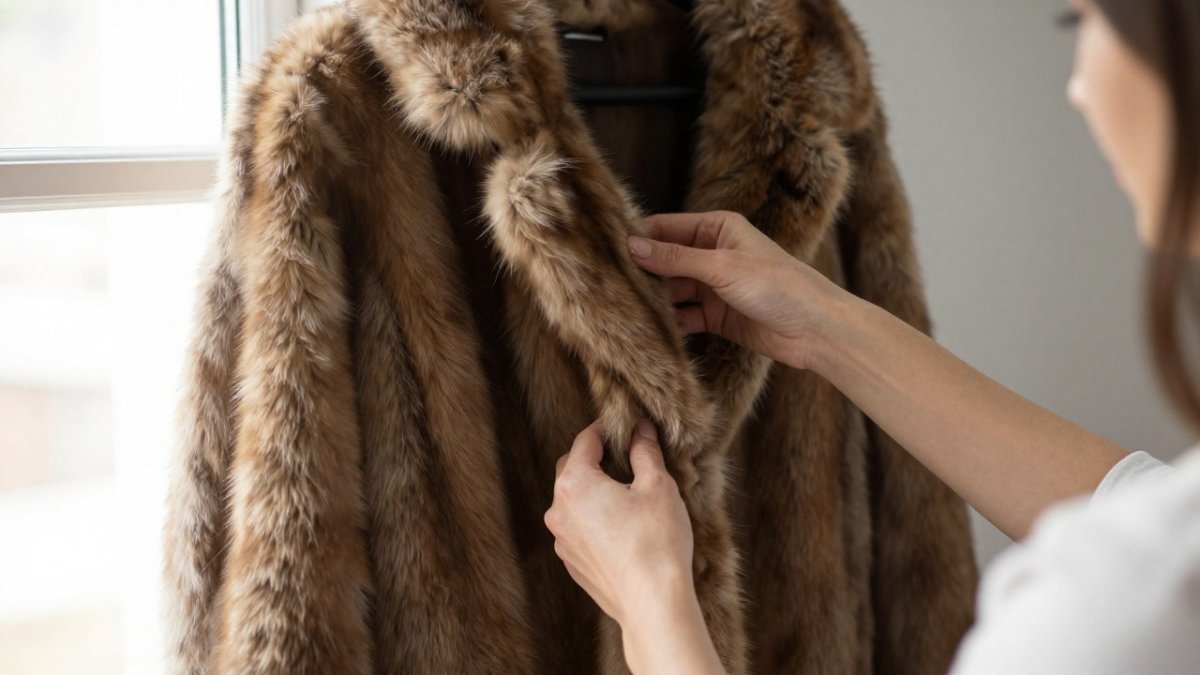
Fur is skin and hair. It holds natural oils that keep the hair supple and the leather underneath flexible. Those oils shift over time. They collect dust. They react to humidity and heat.
The Step-by-Step At-Home Check
Work through this in good daylight. Set the garment flat or hang it where you can see the whole thing.
- Smell the lining and the shoulders, not just the outside
- Run your fingers against the nap to see the underfur
- Look for bald patches, especially at cuffs and the collar
- Check the leather underside at seams and armpits for stiffness
- Hold it up to a window and look for dull or matted areas
- Test a hidden corner with a clean white cloth for transfer stains
- Feel for grit or stickiness in the fur
If two or more items on that list raise a flag, keep reading. One flag on its own usually means normal wear.
Reading the Results: Dirt vs. Natural Oils vs. Age
Here is where most people misjudge their fur. Dirt sits on the surface and comes off with a soft brush. Natural oils darken the fur slightly and give it weight. Age shows as a general thinning and a drier feel in the leather, not as a stain.
A common mistake is scrubbing a dark patch that is just oil. You spread it. Another is mistaking a damp, stiff patch for dirt when it is water damage. If you suspect moisture got in, read what happens if real fur gets wet before you do anything else.
The Warning Signs: When Fur Cleaning Is Overdue
Use the framework below to sort what you are seeing into three tiers: routine maintenance, schedule a cleaning, and stop handling it and call a furrier.
Tier 1: Routine Maintenance
These signals are normal and do not require professional cleaning on their own:
- Light surface dust that brushes off the nap with a soft brush
- Slight oil darkening at the collar or cuffs from skin contact
- A faint storage smell that fades after a day or two of airing in a dry room
- Minor shedding of a few hairs when you stroke the coat
Address these with brushing, airing, and proper storage between wears.
Tier 2: Schedule a Professional Cleaning
These signals mean the coat is due for its regular professional cleaning cycle:
- Dull appearance across the whole garment where the natural sheen has gone flat
- Matting in areas of friction such as underarms, the collar, and where a bag strap rests
- A musty smell in the lining that persists after two days of airing
- Visible stains that have darkened the hair and do not lift with a soft brush
- Grit or stickiness in the fur when you run your fingers against the nap
Two or more of these together is a clear signal to book a cleaning.
Tier 3: Stop Handling and Get Professional Assessment
These signals point to damage that can worsen with handling and should be assessed promptly:
- Stiff leather at the underside that cracks when you gently flex it
- Bald patches at cuffs, collar, or seams
- Heavy shedding that leaves hair on your hands after a light stroke, especially paired with matting
- A strong, persistent odor that smells of mildew rather than dust
- Any area that feels damp or shows water staining
Watch out: do not brush, stretch, or spot-clean a Tier 3 coat. Handling stiff leather or damp fur can crack the hide or spread mildew, turning a cleaning job into a restoration.
Distinguishing Dirt, Oils, and Age
The same dull patch can mean three different things. Dirt sits on the surface and brushes away. Natural oils darken the fur slightly and give it weight, and they spread if you scrub them. Age shows as general thinning and a drier feel in the leather rather than a localized stain. If a dark patch is uniform and near skin-contact points, suspect oil. If it is patchy and near hems or cuffs, suspect dirt. If the whole coat feels dry and thin, suspect age and ask about conditioning, not just cleaning.
Why Matting and Shedding Together Matter
Matting alone is usually friction. Shedding alone is usually normal. Together, especially in stored garments, they often point to moth activity. If you spot either, our guide on how to stop moth damage in stored fur explains how to check and contain it before it spreads.
The article sorts warning signs into three tiers, from normal wear to damage that needs a furrier right away.
| Tier | Signals | What to do |
|---|---|---|
| Tier 1: Routine maintenance | Light surface dust, slight oil darkening, faint storage smell, minor shedding | Brush, air, and store properly between wears |
| Tier 2: Schedule a professional cleaning | Dull appearance, matting at friction points, musty lining smell, visible stains, grit or stickiness | Book a cleaning when two or more appear together |
| Tier 3: Stop handling and get assessment | Stiff cracking leather, bald patches, heavy shedding with matting, mildew odor, damp areas | Do not brush, stretch, or spot-clean; call a furrier |
How to Clean a Fur Coat That Smells
A musty smell usually comes from storage, not from the fur itself. Start by hanging the coat in a dry, airy room away from sunlight. Let it breathe for a day or two. Do not spray perfume or fabric freshener on it. Those add to the problem.
If the smell lingers, the lining likely holds moisture or mildew. That is a job for a professional furrier, not a home fix. Avoid putting a fur coat in a washing machine, since water and heat can damage the leather underside.
How Often to Clean a Fur Coat
Storage between wears affects how often a coat needs cleaning. Our guide on how to store fur accessories covers the steps that keep a coat out of the cleaning cycle longer.
How to Clean a Fur Coat From a Thrift Store
A thrift-store fur needs a professional assessment before it touches your closet. You do not know how it was stored or what it picked up. First, confirm it is real fur. Our step-by-step guide to telling real fur from synthetic walks you through the checks.
Vintage fur often has dry leather and old oils. Those need a furrier's eye. A cheap find can be a great coat, but only after a proper cleaning and conditioning.
Can Dry Cleaners Clean Real Fur?
Most standard dry cleaners cannot clean real fur. Fur needs specialized equipment and knowledge that a typical dry cleaning shop does not have. The solvents and heat used on wool and silk can damage fur leather.
Ask one question before you hand over a coat: do you clean fur in-house, or do you send it out? A shop that sends it out is fine. A shop that runs it through standard dry cleaning is not. Look for a professional furrier with fur-specific cleaning and glazing.
What to Do Before Your Furrier Appointment
Most guides tell you to empty the pockets and show up. The useful part is what to do in the hours or days before the appointment, especially if the coat is wet, stained, or smelly, and what to ask so you understand the work and the cost before you commit.
Safe Interim Steps by Situation
If there is a spill or stain: blot gently with a clean, dry white cloth. Do not rub, and do not apply water, soap, or household cleaners.
If there is a strong odor: air the coat in a dry, ventilated room for a day or two.
If you suspect pests: isolate the coat from other garments, check the storage bag and closet for larvae or casings, and bring it in promptly.
Watch out: never put a fur coat in a washing machine or a standard dryer, and never attempt home dry cleaning kits.
What to Bring and Note
- Note every spot, smell, and location you noticed, and when it appeared
- Empty pockets and remove pins, jewelry, and detachable accessories
- Bring the storage bag or box if you have one, since it can reveal storage conditions
- Photograph any stains or bald patches before the appointment in case the assessment changes them
Questions to Ask Before You Commit
Ask these before you hand over the coat:
- Do you clean fur in-house, or do you send it out?
- What does the cleaning involve for this garment, including conditioning and glazing?
- What is the estimated cost, and what factors drive it?
- What is the turnaround time?
- What should I do if the coat gets wet or stained again between cleanings?
Cost depends on the garment, the fur type, the lining, and the work needed, so ask for a quote up front rather than assuming a flat rate. A shop that cannot explain what the cleaning involves is a shop to walk away from.
Book a Professional Assessment for Your Fur
A furrier can assess a coat's condition far more reliably than guessing at home. If your coat shows odor, matting, or stiff leather, stop handling it and get it looked at.
Campbell Fine Furs offers artisanal fur accessories and Western-inspired goods, including fur hats, scarves, and mittens. Visit the Campbell Fine Furs home page to get started. Browse our current selection to find pieces that suit your needs.
A coat that smells or mats will not fix itself, and home cleaning usually makes it worse. Let a professional assess the fur before you spend money on a fix that does not work.
Frequently Asked Questions
How much does professional fur cleaning cost?
Professional fur cleaning costs vary by garment length, fur type, and the amount of work needed, so there is no single flat rate. Ask your furrier for an itemized quote before work begins so you know what is included. Request a written estimate that covers the work to be done before you agree to it.
Can you clean a fur coat at home without dry cleaning?
Home cleaning should stay limited to surface care. You can shake out loose dirt, brush the nap in its natural direction, and air the garment in a cool, dry space. Never submerge fur in water, put it in a washing machine, or apply heat, because moisture can stiffen the leather underside and damage the hide. For odor, stains, or matting, professional fur cleaning is the safe route. A furrier has the specialized equipment and knowledge needed for fur care.
What causes real fur to feel stiff or look dull?
Stiffness usually points to moisture damage or dried-out natural oils in the leather underside, while dullness comes from accumulated dirt, smoke, or body oils coating the hair shafts. Both are signs that the fur needs professional cleaning and conditioning. Left alone, stiff leather can crack and dull fur can shed more easily. A furrier can assess and care for the garment.
Should vintage fur be professionally cleaned before wearing?
Yes. Vintage fur often carries decades of dust, storage odor, and dried oils that are not visible at first glance. Professional cleaning can remove that buildup, and a furrier can check the garment before you wear it. Have any vintage piece assessed before wearing it, especially if it came from an estate sale or thrift store where storage conditions are unknown.