 how-to
7 Maintenance Tips for Keeping Faux Fur Throws Soft
Last Updated: November 4, 2026
Quick Summary
Keeping faux fur throws soft means washing them in cold water with a mild, bleach-free detergent, air drying flat, and brushing the pile regularly. Skip fabric softener and high dryer heat, which coat or melt synthetic fibers and make them clump. Weekly shaking and rotating where the throw sits also prevent matting.
- Wash faux fur in cold water on a delicate cycle with mild, bleach-free detergent and a low spin.
- Air dry flat or over a wide bar out of direct sun; if using a dryer, choose low or air-fluff with two or three dryer balls.
- Detangle mats by hand first, then use a wide-tooth comb and a soft-pin slicker brush in short, light strokes.
- Shake the throw weekly and rotate its spot to lift dust and reduce friction matting.
- Store clean and dry in a breathable cotton bag, never a sealed plastic bin, and refold creases periodically.
Table of Contents
- Why Faux Fur Throws Lose Their Softness
- How to Wash Polyester Faux Fur Blanket Without Ruining the Pile
- How to Fix Matted Faux Fur and Restore Softness
- Best Tools for Brushing Faux Fur Without Causing Damage
- Spot Cleaning and Everyday Care for Faux Fur Throws
- What to Avoid: Fabric Softener, Heat, and Other Softness Killers
- Long-Term Storage and Heat Damage Repair
- Choosing a Faux Fur Throw That Stays Soft
- Frequently Asked Questions
Why Faux Fur Throws Lose Their Softness
A faux fur throw that feels silky on day one can turn stiff and scratchy within a season. That decline is not random.
Keeping faux fur throws soft is a common question for owners. The good news: softness is a maintenance habit, not a lucky purchase.
Synthetic fibers are plastic strands woven onto a backing. Every wash, every tumble in a hot dryer, and every splash of fabric softener pushes those strands apart.
The biggest mistake? Treating a faux fur throw like a cotton blanket. It isn't. It needs a gentler routine, and the routine below takes minutes, not hours.
How to Wash Polyester Faux Fur Blanket Without Ruining the Pile
Wash a polyester faux fur blanket in cold water on a delicate cycle, use a mild bleach-free detergent, and skip the rinse-heavy settings. That short answer covers most of it. The details below decide whether the pile survives.
Hand Wash vs. Machine Wash: Which Is Safer?
Hand washing is safest for any faux fur throw with a delicate backing. Fill a tub with cold water, add a small amount of mild detergent, and press the blanket gently.
Machine washing works if your washer has a delicate cycle. Use cold water, a low spin speed, and a mesh laundry bag if the throw fits.
For a fuller walkthrough of hand-cleaning a fur blanket at home, our guide on how to clean a real fur blanket at home safely covers the gentle methods step by step.
One rule holds for both methods: no bleach, ever. Bleach-free detergent protects both color and fiber.
Drying Techniques That Prevent Fiber Clumping
Air dry is the default. Lay the throw flat on a clean towel or hang it over a wide bar, out of direct sun. Air circulation does the work without heat damage.
If you must use a dryer, choose tumble dry low or the air-fluff setting only. Add two or three dryer balls to separate the fibers as they dry. Stop the cycle while the throw is slightly damp, then finish flat.
Heat is the enemy here. High dryer heat melts and fuses synthetic fibers, and fused fibers never fluff back.
Here is the wash-and-dry routine that keeps the pile intact.
| Step | What to do | Note |
|---|---|---|
| Water temperature | Cold water only | Applies to hand and machine washing |
| Detergent | Mild, bleach-free detergent | No bleach, ever |
| Hand washing | Press gently in tub, never wring or twist | Safest for delicate backing |
| Machine washing | Delicate cycle, low spin, mesh laundry bag | Gentle agitation is the goal |
| Drying | Air dry flat or over a wide bar, out of direct sun | Default method |
| Dryer use | Tumble dry low or air-fluff only, add two or three dryer balls | Stop while slightly damp, finish flat |
| Heat | Avoid high dryer heat | Melts and fuses synthetic fibers |
How to Fix Matted Faux Fur and Restore Softness
Matted faux fur is fixable in most cases. The key is detangling dry fibers first, then loosening clumps with gentle heat-free methods.
Start with your fingers. Gently pull apart fiber clumps, working from the edges inward. Then use a wide-tooth comb or a slicker brush in short strokes.
For deeper matting, a light mist of cold water can help relax the fibers before brushing.
Our detailed guide on how to care for fur pillows walks through cleaning, drying, and fluffing techniques that restore softness after matting. The same methods work on throws.
Patience matters more than pressure. Rushing the detangling step is how fibers get permanently stretched.
Best Tools for Brushing Faux Fur Without Causing Damage
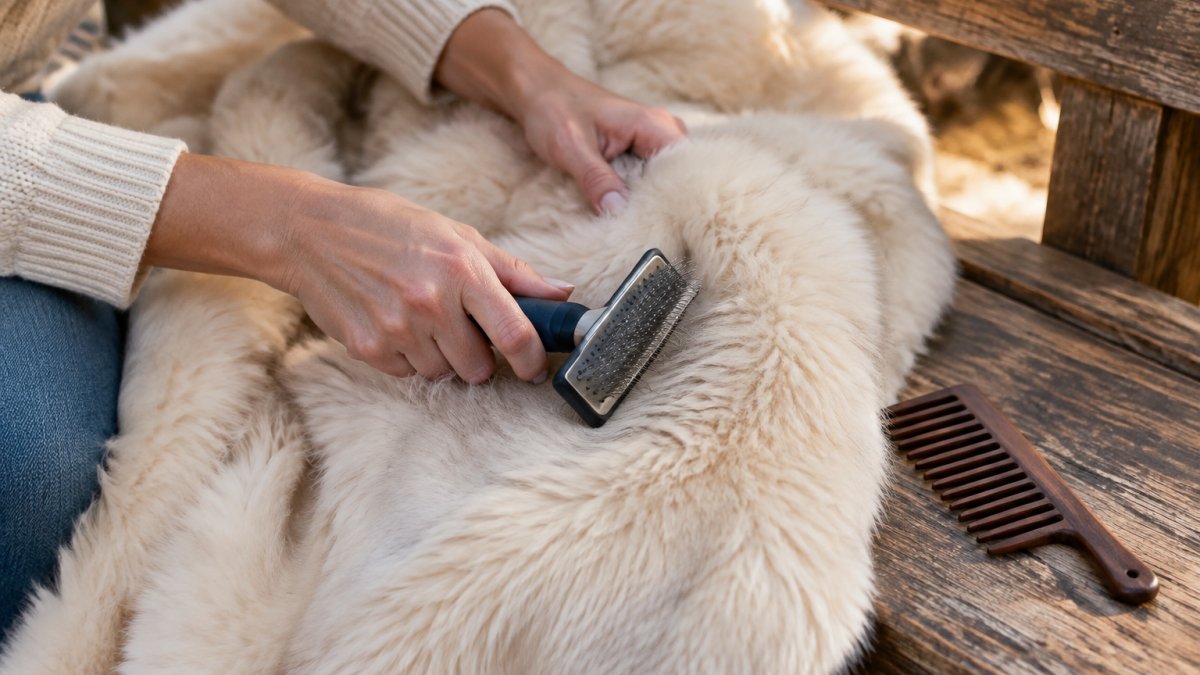
The right tools make brushing safe: a slicker brush with soft wire pins, a wide-tooth comb, and a fabric shaver for pilling. Skip stiff pet brushes and anything with sharp metal teeth. The details below explain why each tool works and how to tell a safe one from a damaging one.
Slicker Brush: What to Look For
A slicker brush is the workhorse for faux fur. The pins should be fine-gauge wire with rounded, protected tips, and they should flex when you press them against your palm. Stiff pins with blunt or sharp ends catch the fiber and pull it out of the backing instead of lifting it.
Pin density matters too. A medium-density slicker separates fibers without dragging; a very dense brush grabs too much pile at once and creates new tangles.
Wide-Tooth Comb: The Detangling Step
Use a wide-tooth comb before the slicker on any throw that has started to mat. The comb's job is to open clumps, not to finish the pile. Teeth should be smooth, seamless plastic or polished metal with no mold seams, because a seam acts like a tiny saw on synthetic fiber.
Work from the edges of a clump inward, not from the middle out. Combing from the center stretches the fibers that are still anchored and is a common cause of permanent pile distortion.
Fabric Shaver: For Pilling Only
A fabric shaver removes pilling and surface fiber clumps. Use it on a low setting and keep it moving so you don't gouge one spot. Hold the fabric taut behind the shaver head; loose fabric gets pulled into the blade and cut below the surface, which leaves a visible bald patch.
Watch out: a fabric shaver is not a detangler. Running it over a matted patch cuts the clump off at the surface rather than separating the fibers, and the patch will look sheared.
What to Skip
Stiff pet brushes, wire slickers with exposed pin ends, and anything with sharp metal teeth all damage synthetic pile. So do bristle brushes stiff enough to scratch your skin.
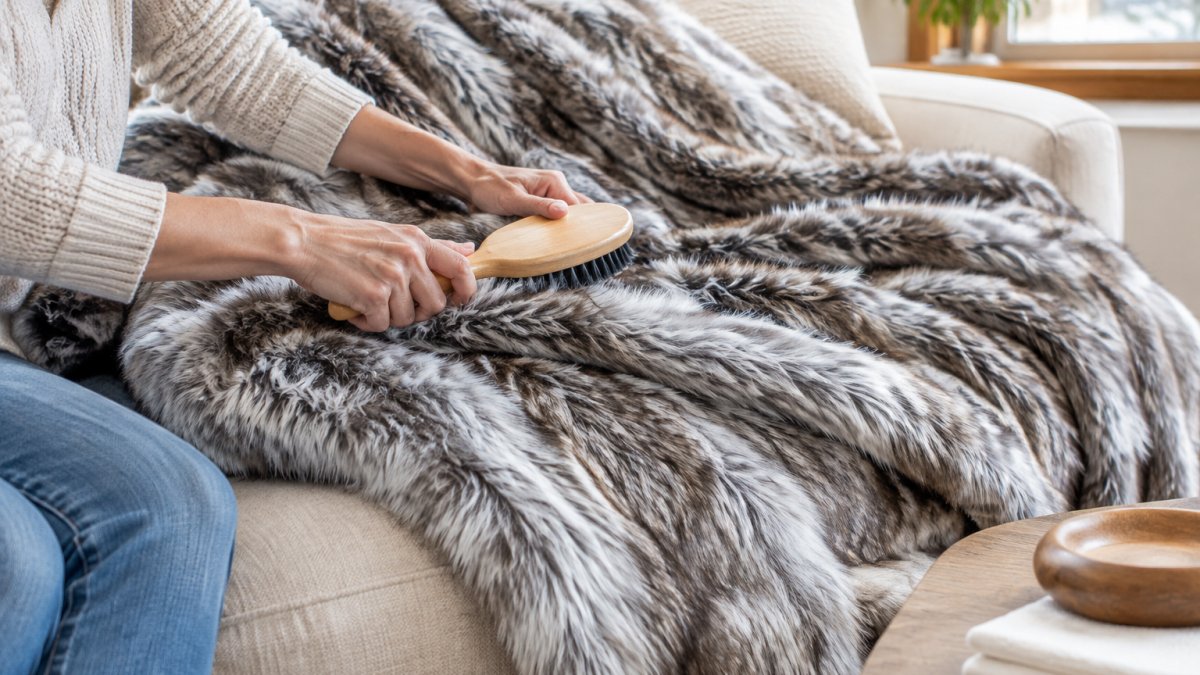
Brush in one direction, with light strokes. Short passes beat long drags. Work in sections, and stop as soon as the pile lifts.
For a deeper look at which grooming tools are safe, read our guide on whether it is safe to brush real fur accessories. The tool rules carry over to synthetic pile, though faux fur tolerates a slightly firmer slicker than genuine fur does.
Spot Cleaning and Everyday Care for Faux Fur Throws
Spot treatment beats full washing for everyday messes. Blot spills with a clean cloth, then dab with a little cold water and mild detergent. Let it air dry.
Shake the throw out weekly. This lifts dust and keeps the pile from packing down. A quick brush after shaking keeps the fibers separated.
Rotate where the throw sits on the sofa or bed. Friction against one spot is what causes matting and shedding over time.
Keep pets off when you can. Claws snag synthetic fibers, and snags turn into pulls fast.
What to Avoid: Fabric Softener, Heat, and Other Softness Killers
Fabric softener is the number one softness killer for faux fur. It coats synthetic fibers, weighs them down, and makes them clump. Skip it completely, along with dryer sheets.
Other habits to avoid:
- High heat in the washer or dryer
- Bleach and harsh stain removers
- Wringing or twisting the throw
- Hanging a wet throw by one corner
- Storing it in a sealed plastic bag
Watch out: storing a faux fur throw in a plastic bin traps moisture and can cause mildew and fiber clumping. Use a breathable cotton bag instead.
Static electricity also builds up in dry indoor air. A light spritz of water before brushing helps settle it without any product.
Long-Term Storage and Heat Damage Repair
Storage and heat exposure are two common causes of damage to faux fur throws, so this section covers both.
Off-Season Storage That Prevents Permanent Matting
Store faux fur throws clean, dry, and loose. Fold gently, place in a breathable cotton bag, and keep it away from direct sunlight and heat sources.
Never store a throw folded on the same crease for months.
Hang options work for shorter throws: drape over a wide, padded hanger or a quilt rack so the weight is distributed.
Watch out: a sealed plastic bin traps moisture.
Check stored throws every few months. A quick shake and air-out prevents flat spots and keeps air circulation moving through the fibers.
Heat Damage Triage: What Can and Cannot Be Saved
Heat damage shows up as fused, crunchy patches, usually from a hot dryer, an iron, or a radiator.
First, identify the damage type. A shiny, stiff patch with a plastic smell is melt damage.
For melt damage, do not brush hard. Brushing fused fibers breaks them off and leaves a bald spot.
For compression damage, a light mist of cold water followed by gentle brushing usually restores most of the loft.
Prevention is the real fix.
Our guide on genuine fur blankets: types, care, and styling covers storage and long-term care habits that protect any fur throw, real or faux.
Choosing a Faux Fur Throw That Stays Soft
The best faux fur throws share three traits: a dense, tightly anchored pile, a soft flexible backing, and fibers that spring back when you press them. Test all three in the store or check the product details online.
Run your hand against the grain. If fibers shed onto your palm right away, expect shedding later. Press the pile flat and watch how fast it recovers.
Material-specific care matters too. Higher-quality synthetic pile tolerates gentle washing better and resists matting longer.
If you're comparing options for a rustic room, our guide on the best fur blankets for rustic decor breaks down faux versus real fur, styling, and what to look for in a throw that lasts.
Keeping a faux fur throw soft comes down to a simple habit: cold water, mild detergent, air drying, and regular brushing.
Campbell Fine Furs offers artisanal fur blankets and pillows designed to bring warmth and character to your home, alongside our handcrafted fur hats, scarves, and mittens.
Frequently Asked Questions
How often should you wash a faux fur throw?
Wash faux fur throws only when necessary, typically every few months or after visible soiling. Frequent washing breaks down synthetic fibers and strips away softness. Between washes, spot clean with a damp cloth and mild detergent. For daily use, airing the throw outdoors for a few hours helps refresh it without water. Always check the care label, as some throws are dry-clean only.
Can faux fur blankets go in the dryer?
Most faux fur blankets can go in the dryer on a low tumble setting, but high heat will melt synthetic fibers and cause permanent clumping. Use dryer balls to separate the pile and improve air circulation. Remove the throw while slightly damp and let it air dry completely. If the care label says air dry only, hang it over a drying rack away from direct heat.
Why does my faux fur blanket feel rough after washing?
Roughness after washing usually comes from detergent residue, hot water, or improper drying. Use a mild, bleach-free detergent and a cold water wash on a delicate cycle. Skip fabric softener, which coats fibers and reduces softness. Rinse thoroughly with an extra rinse cycle. During drying, avoid high heat and brush the pile gently once dry to separate clumped fibers.
Can I use fabric softener on faux fur throws?
No, fabric softener should not be used on faux fur throws. It leaves a waxy residue that coats synthetic fibers, making them stiff and less soft over time. Instead, use dryer balls during a low tumble dry to fluff the pile. A gentle brushing with a slicker brush after drying restores softness naturally without chemical coatings.