 how-to
How to Clean a Real Fur Blanket at Home Safely
Table of Contents
- Real Fur vs. Faux Fur: Why the Difference Matters
- What You'll Need Before You Start
- Step-by-Step: How to Clean a Real Fur Blanket at Home Safely
- How to Prevent Fur Shedding
- Best Tools for Grooming Real Fur
- How to Store Real Fur Blankets
- Common Mistakes to Avoid
- Frequently Asked Questions
Last Updated: September 29, 2026
Real Fur vs. Faux Fur: Why the Difference Matters
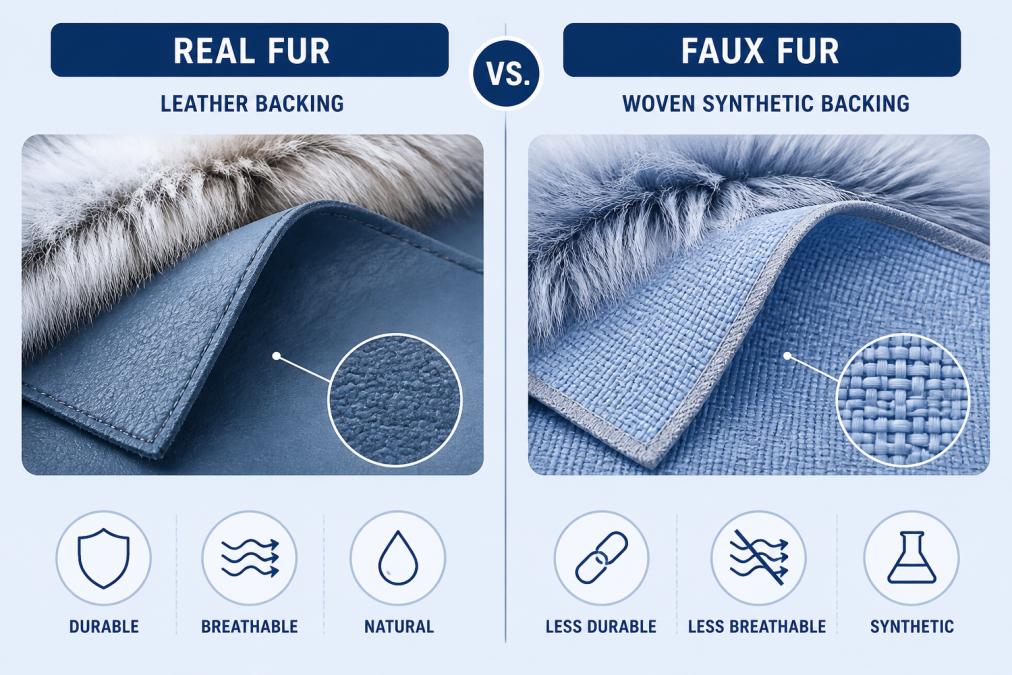
Learning how to clean a real fur blanket at home safely starts with knowing what you own. Real fur is a natural pelt: animal hide with hair still attached. Faux fur is synthetic fiber, usually acrylic, modacrylic, or polyester, stitched onto a woven fabric backing. They look similar on a couch. They behave nothing alike in water.
That difference changes everything about cleaning.
The Mechanism: Leather vs. Woven Backing
A real fur blanket is a piece of tanned leather with hair still rooted in it. The leather layer, the dermis, is a protein matrix held together by collagen fibers. Those fibers are kept supple by oils and fats introduced during tanning. When the pelt gets soaked in hot water or washed with a strong alkaline soap, two things happen at once: the oils emulsify and rinse away, and the collagen fibers begin to cross-link as they dry. The result is a stiff, shrunk, sometimes cracked hide that no amount of brushing will soften again.
Faux fur has none of that. Its backing is a woven synthetic fabric, and its "hair" is extruded plastic filament. Hot water might melt or frizz the filament, but there is no protein to denature and no oil to strip. That is why a faux fur throw survives a gentle machine cycle and a real fur blanket does not.
What This Means for Water, Heat, and Soap
- Water: Real fur can tolerate brief, cool, controlled contact. Prolonged soaking drives oils out of the leather. Faux fur can be fully submerged without structural risk.
- Heat: Above roughly lukewarm, heat accelerates oil loss and collagen cross-linking in real leather. On faux fur, heat mainly risks melting or crimping the synthetic filament.
- Soap: Alkaline detergents (most dish soaps, most laundry powders) saponify the natural oils in a pelt. A pH-neutral cleanser formulated for wool or leather keeps the hide closer to its natural state. Faux fur is far less picky, though harsh detergents can still dull the sheen.
- Agitation: The tumbling and twisting of a washing machine pulls hair from a real pelt at the root and stresses seams. On faux fur, agitation mostly causes matting and pilling.
How to Tell Which One You Have
If you are not certain, a few quick checks settle it:
- Look at the back. Real fur has a leather or suede side, often visible at seams or under the lining. Faux fur has a woven fabric grid, sometimes with a visible knit pattern.
- Pull one hair. Roll a single fiber between your fingers. Real fur tapers and has a fine, irregular tip. Synthetic filament is uniform in width and often has a slight plastic sheen under strong light.
- Test with a flame (carefully, outdoors). A single shed hair from real fur smells like burnt hair and crumbles to ash. A synthetic fiber melts into a hard bead and smells like burning plastic. Do this only on a loose hair you have already pulled free, never on the blanket itself.
- Check the label and the price history. Real fur blankets are typically sold as a named pelt (mink, fox, rabbit, coyote, beaver, cashmere goat). Faux is usually labeled "faux," "faux fur," or "polyester."
This guide covers the real thing. Every step below protects the pelt, keeps the hair soft, and avoids the mistakes that ruin blankets.
What You'll Need Before You Start
Gather your supplies first. A rushed setup leads to harsh scrubbing, and harsh scrubbing breaks fur fibers.
Essential Supplies
- A pH-neutral soap or gentle detergent made for wool and leather
- Two clean white towels
- A soft-bristle brush or wide-tooth comb
- A spray bottle of cool water
- White vinegar for deodorizing
- A lint roller or soft rubber brush for debris
Skip fabric softener entirely. It coats the hair and makes it clump.
Pre-Cleaning Preparation
Shake the blanket outside to release loose dirt. Check the lining and seams for tears, since water can widen small rips. Test your soap on a hidden corner first, then wait ten minutes and check for color change.
Step-by-Step: How to Clean a Real Fur Blanket at Home Safely
Here is the full method, from spot treatment to final brush-out. Work slowly. Rushing any step is how blankets get damaged.
Spot Cleaning and Stain Removal
Blot fresh spills with a dry towel right away. Mix a few drops of pH-neutral soap with cool water, then dab the stain with a cloth. Never rub, because rubbing pushes the stain deeper into the leather.
For grease, sprinkle cornstarch on the spot, let it sit, then brush it away. For odors, a light mist of diluted white vinegar works well. Air drying handles the rest.
Hand Washing the Blanket
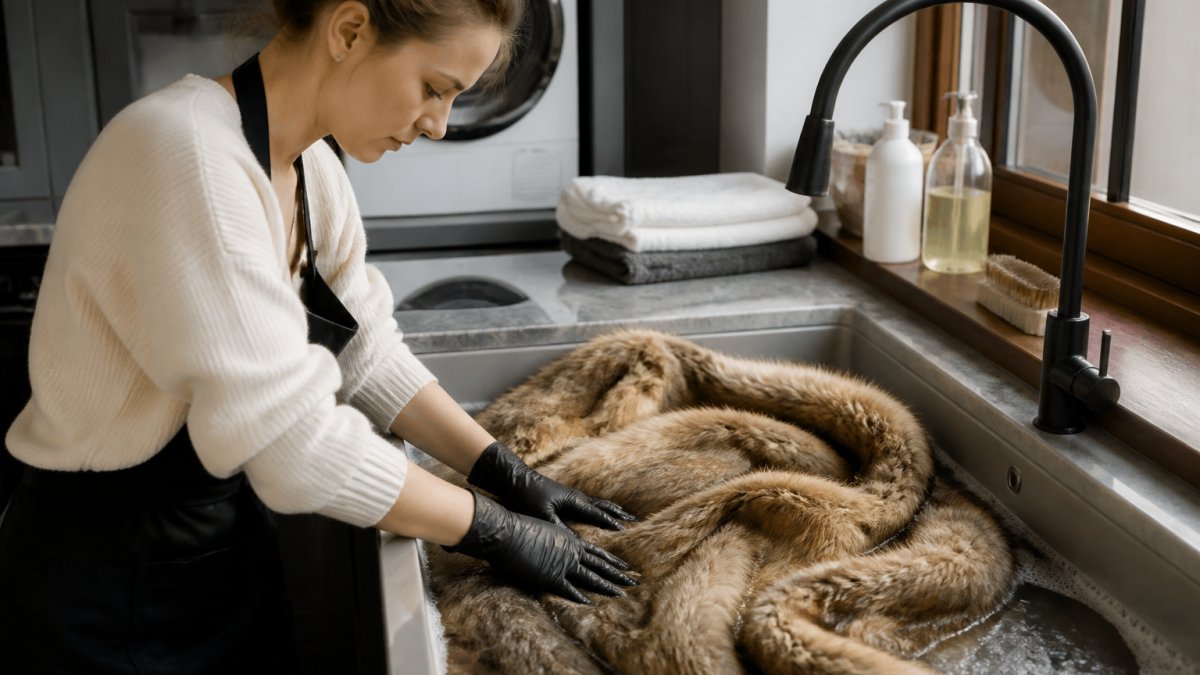
Fill a bathtub with cool water and a small amount of gentle detergent. Submerge the blanket and press it down gently with your palms. Let it soak for ten to fifteen minutes.
Then rinse with cool water until it runs clear. Do not wring or twist the blanket. Squeeze water out in sections, pressing the fur between your hands.
Drying and Restoring the Fur
Lay the blanket flat on a dry towel, fur side up. Roll a second towel over it and press to soak up extra moisture. Air dry away from direct sun and radiators, since heat damage stiffens the leather.
Once mostly dry, brush the fur with slow strokes in its natural direction. This lifts matting and restores the loft. Never use a tumble dryer, even on low.
| Step | Method | Time |
|---|---|---|
| Spot treatment | Dab with soap and cool water | 5 minutes |
| Hand wash | Soak in cool water, gentle detergent | 15 minutes |
| Rinse | Cool water until clear | 5 minutes |
| Air dry | Flat, away from heat | 12-24 hours |
| Brush out | Soft brush, natural direction | 10 minutes |
How to Prevent Fur Shedding
Shedding usually comes from dry leather, not from the fur itself. When the hide loses moisture, hair releases at the root.
Brush your blanket every few weeks with a soft-bristle brush. Store it somewhere with steady humidity, not a dry attic. A light mist of cool water before brushing helps too.
A common mistake is over-washing.
Best Tools for Grooming Real Fur
The right tools make grooming quick and safe. You do not need much.
- Soft-bristle brush: Lifts dust and separates clumped hair.
- Wide-tooth comb: Works through light matting without pulling.
- Rubber brush: Pulls pet hair and lint off the surface.
- Lint roller: Fast touch-ups between deeper grooming sessions.
How to Store Real Fur Blankets
Store fur where air can move around it. Fold the blanket loosely and place it in a breathable cotton bag, never a sealed plastic bin. Plastic traps moisture, which leads to mildew and fiber clumping.
Common Mistakes to Avoid
Most damage comes from a short list of errors. Watch for these.
- Hot water: Shrinks and stiffens the leather.
- Fabric softener: Coats the hair and causes clumping.
- Wringing: Twists the pelt and breaks the backing.
- Tumble drying: Heat damage ruins the fur beyond repair.
- Machine washing: The agitator tears seams and mats the hair.
- Direct sunlight: Fades color and dries out the leather.
Frequently Asked Questions
Can I put a real fur blanket in the washing machine?
No. Washing machines damage the leather pelt that holds the fur. Agitation and heat cause the hide to shrink, stiffen, and crack, while the fibers mat and shed. Always hand wash with cool water and a pH-neutral soap, or take the blanket to a professional furrier. If you must use a machine, only use a delicate cycle for synthetic faux fur, never for real animal fur.
How do I prevent fur shedding after cleaning?
Shedding happens when the pelt dries out or the fibers are damaged. After washing, dry the blanket flat away from direct heat, then brush gently with a fur comb to lift the pile. Regular grooming with the best tools for grooming real fur, such as a soft-bristle brush, removes loose hairs and keeps the undercoat healthy. Store the blanket in a breathable cotton bag to avoid moisture buildup.
What is the safest way to remove dust from a real fur blanket?
Shake the blanket outdoors to dislodge loose dust. For a deeper clean, use a vacuum with a brush attachment on the lowest suction setting, holding the nozzle slightly above the surface. Avoid pressing down, which can pull fibers. For spot treatment, wipe with a cloth dampened with cool water and a drop of pH-neutral soap, then air dry. Never use household detergents or fabric softener.
How do I store a real fur blanket during the off-season?
Clean the blanket before storing, then place it in a breathable cotton or muslin bag. Hang it in a cool, dark closet away from direct sunlight and heat sources. Avoid plastic bags, which trap moisture and cause mildew. For extra protection, add cedar blocks or lavender sachets to deter moths. Check the blanket every few months and re-brush gently to maintain the fur's loft and prevent matting.
A real fur blanket rewards careful handling, and the payoff is a piece that lasts for decades. Campbell Fine Furs crafts fur blankets, hats, scarves, and mittens built to hold up season after season. Our pieces use quality pelts and traditional construction, so they handle gentle home care well. When you want fur that lasts, start with something made to be kept. Get started with Campbell Fine Furs and bring home a blanket worth caring for.