 how-to
How to Style Fur Scarves With Western Wear
Table of Contents
- Why Fur Scarves Belong in a Western Wardrobe
- How to Wear a Cowboy Scarf: Knots and Wrapping Styles
- How to Style a Scarf With a Western Dress
- Western Winter Outfit Ideas That Showcase Fur
- How to Care for a Fur Scarf So It Lasts for Years
- Matching Fur Scarves to Paisley Prints, Hats, and Fringe
- Frequently Asked Questions
Last Updated: October 8, 2026
Why Fur Scarves Belong in a Western Wardrobe
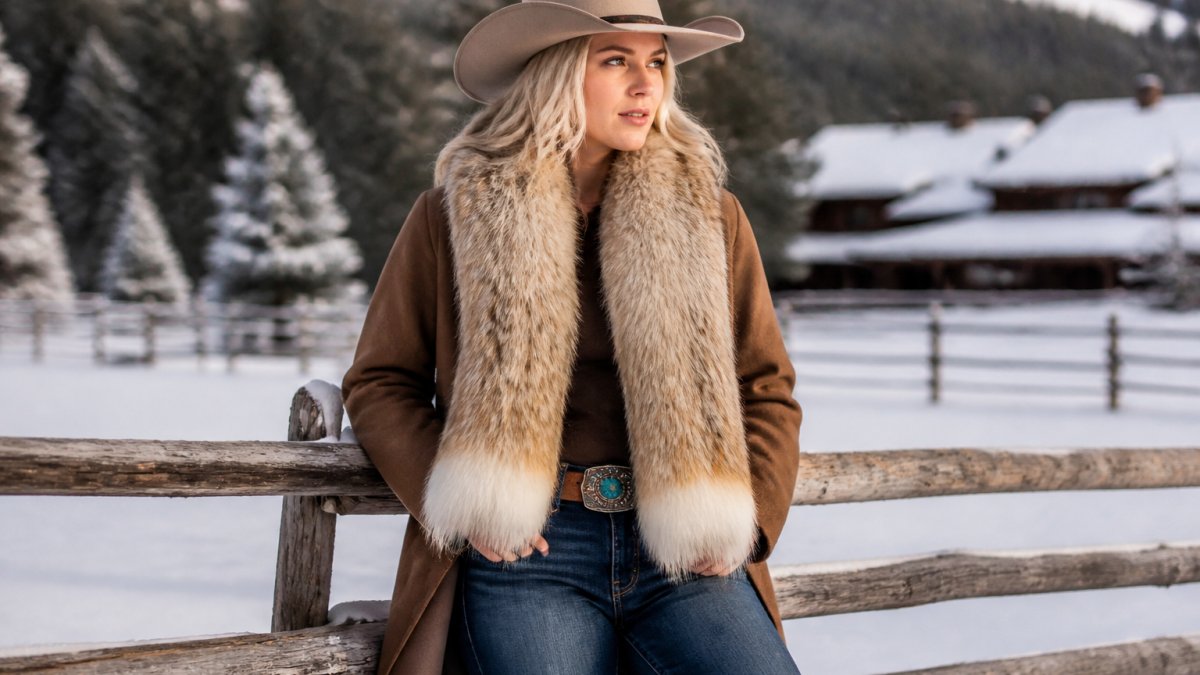
Fur scarves are the fastest way to make Western wear look finished instead of costumed. At Campbell Fine Furs, we build fur accessories for people who want that mountain-lodge feel without giving up a rugged look.
The wild rag has been part of cowboy dress for generations. Silk and cotton versions still work for roping and riding. A fur scarf does something different: it brings softness and weight to a Western wardrobe that leans hard on denim and leather.
Here is what matters most before you buy or wear one:
- Warmth without bulk. Fur traps heat close to the neck, so you can skip a heavy coat collar.
- Instant texture. Denim and leather are flat materials. Fur gives the eye somewhere to rest.
- Color and flair. A deep brown or gray fur scarf breaks up an all-black or all-blue outfit.
How to Wear a Cowboy Scarf: Knots and Wrapping Styles
Most styling guides stop at "tie it loosely." Fur behaves differently from silk or cotton, so the knot you choose should depend on the shape of the scarf, not just the outfit.
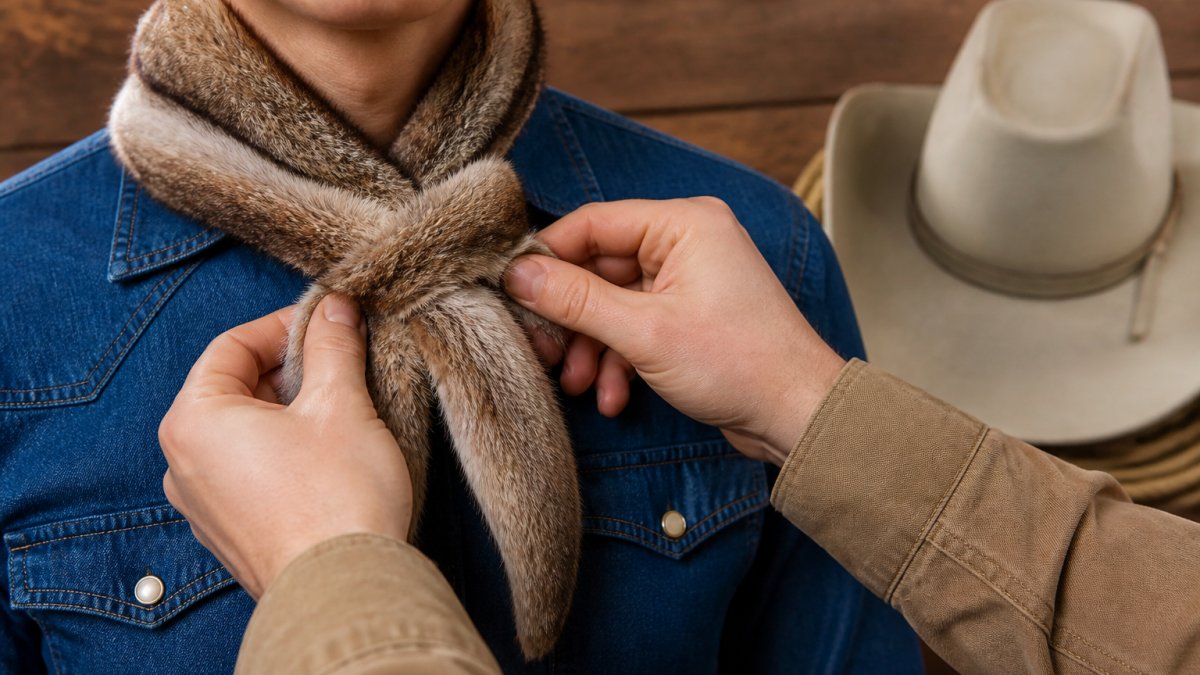
First, Identify Your Scarf Shape
- Square (roughly 30 to 36 inches). Folds into a triangle for a wild rag knot or a bandana-style drape.
- Long rectangle or stole (roughly 60 to 70 inches). Wraps once or twice and hangs; best for loop knots.
- Short collar or neck wrap (roughly 20 to 24 inches). Sits close to the throat; usually closes with a hook, snap, or hidden loop.
Match the knot to the shape. A square scarf forced into a long loop looks lumpy, and a stole tied into a square knot bunches at the throat.
The Simple Loop and Slide (Best for Long Stoles)
- Fold the stole in half lengthwise so it becomes a long strip.
- Drape it around your neck with the folded loop on one side and the two loose ends on the other.
- Pull both loose ends through the loop.
- Slide the knot down until it rests just below the collarbone.
- Fan the two tails so they lie flat against your chest.
This works over a heavy coat or a buttoned shirt because the knot sits low and does not compete with a collar.
The Classic Wild Rag Knot (Best for Squares)
- Fold the square into a triangle.
- Bring the two long ends behind your neck and cross them.
- Pull the ends forward over the shoulders.
- Tie a square knot over the point of the triangle.
- Tuck the point under the knot for a clean finish, or leave it out for a looser look.
This gives more coverage than the loop and reads bolder against a denim or leather jacket.
The Shoulder Drape (Best for Short Collars and Dressy Looks)
- Open the collar or wrap so the widest part sits at the back of your neck.
- Bring the two ends forward and let them rest on your collarbones.
- Close the hidden hook, snap, or loop at the front.
- Adjust so the fur sits flat, not twisted.
Use this when the outfit already has detail at the neck, such as a lace collar or a beaded yoke.
The Half-Wrap (Best for Cold Wind)
- Drape a long stole around your neck so one end hangs lower than the other.
- Take the longer end and wrap it once around your neck, crossing over the shorter end.
- Tuck the wrapped end under itself at the side of your neck.
- Let the shorter end hang free in front.
This keeps the throat covered without a tight knot, which matters when the temperature drops and you still want the scarf to look styled rather than bundled.
Quick Reference by Scarf Shape
| Scarf Shape | Best Knot | Why |
|---|---|---|
| Square, 30-36 in | Classic wild rag knot | Uses the triangle; sits flat over a jacket |
| Long stole, 60-70 in | Simple loop and slide | Hangs without bunching |
| Short collar, 20-24 in | Shoulder drape | Shows the fur without a knot |
| Any long shape | Half-wrap | Covers the throat in wind |
How to Style a Scarf With a Western Dress
A fur scarf turns a plain Western dress into a winter outfit in about ten seconds. The trick is to match the scarf's scale to the dress. A long dress with a full skirt can handle a large square scarf.
Try these pairings:
- Denim dress + gray fur scarf. The cool tone keeps the look casual.
- Leather dress + brown fur scarf. Warm brown against black leather reads sharp and modern.
- Prairie dress + cream fur scarf. Soft neutrals feel cozy and old-fashioned in a good way.
Drape the scarf over your shoulders instead of knotting it if the dress already has a lot of detail at the neck.
Western Winter Outfit Ideas That Showcase Fur
Cold-weather Western style comes down to layering, and a fur scarf is the layer people notice. Build the outfit from the outside in, then let the scarf do the talking.
- Ranch day. Wool coat, dark denim, leather boots, and a fur scarf in a natural brown.
- Rodeo night. Fringed jacket, fitted jeans, and a fur neck wrap for warmth between events.
- Dinner in town. Cashmere sweater, tailored trousers, and a slim fur scarf as the outfit accent.
How to Care for a Fur Scarf So It Lasts for Years
Fur lasts for decades when you store it right and keep it dry. The two enemies are moisture and heat. Both dry out the leather and make the fur shed. What most guides skip is what to do in snow, rain, and the off-season, the three situations where fur scarves actually get damaged.
The Weekly Routine
- Brush the fur with a soft brush after each wear to lift dust. Brush in the direction the fur naturally lies, not against it.
- Hang the scarf on a wide, padded hanger so the shape holds. Wire hangers leave shoulder marks on stoles.
- Store it in a breathable cotton bag, never a plastic one. Plastic traps moisture and can cause mildew.
What to Do in Snow and Rain
Fur handles cold dry air well. Wet is the problem. If your scarf gets caught in snow or rain:
- Shake off loose moisture immediately. Do not rub, rubbing pushes water into the leather.
- Hang the scarf in a cool, well-ventilated room away from heat. Never use a hair dryer or a radiator.
- Let it dry completely before brushing. Brushing damp fur can stretch the leather.
- Once dry, brush gently to restore the nap.
A common pattern is to keep a faux-fur or wool scarf for wet days and save the real fur for dry cold. That way the piece you invested in stays out of the weather it handles worst.
Off-Season Storage
When winter ends, most people hang a fur scarf in a closet and forget it. That is when moths and humidity do their damage.
- Clean the scarf before storing it. Food oils and skin oils attract pests.
- Use a breathable cotton garment bag, not a vacuum-sealed one.
- Store in a cool, dark closet. A cedar chest works if the scarf is inside a cotton bag first.
Faux Fur Care
Faux fur scarves need different handling. They are usually acrylic or modacrylic, which means they can melt under heat and mat under friction.
- Hand wash in cold water with a gentle detergent, or spot clean with a damp cloth.
- Never put faux fur in a dryer. Air dry flat on a towel.
- Brush with a wide-tooth comb, not a fine brush, to keep the fibers from clumping.
When to Repair vs. Replace
A fur scarf that sheds after one season was usually stored wrong, not made wrong. Cheap pieces shed because the fur was cut short and glued rather than sewn.
The US Fish and Wildlife Service guidance on fur products explains the rules that apply to fur sales and labeling in this country, which is useful if you ever resell a piece.
Matching Fur Scarves to Paisley Prints, Hats, and Fringe
Fur works with bold prints as long as you pick one loud element and let the rest stay quiet.
| Outfit Element | Best Fur Match | Why It Works |
|---|---|---|
| Paisley wild rag | Solid brown or gray fur | Print stays the focus |
| Felt cowboy hat | Matching fur tone | Ties the look together |
| Fringe jacket | Slim fur stole | Two textures, not two volumes |
| Denim and leather | Cream or charcoal fur | Soft contrast against hard fabric |
Hats and collars need room. A fur scarf that sits too high will push a cowboy hat up and look cramped.
Fringe and fur can share an outfit, but balance the volume. A fringed jacket with a thin fur scarf looks layered.
Warm-weather wearers and animal-friendly shoppers have options too.
Frequently Asked Questions
How do you keep a fur scarf from overpowering a Western outfit?
Balance is key. Choose a scarf that is proportionate to your frame, and keep the rest of your outfit simple. If the fur scarf is large or very fluffy, pair it with a fitted top and streamlined jeans rather than a bulky sweater. Let the scarf be the statement piece, and avoid piling on too many other accessories like oversized earrings or a busy print. Neutral colors in the rest of your outfit also help the fur stand out without competing.
What should you wear with a fur scarf and cowboy boots?
Start with a base of jeans or a Western dress in a solid color like black, navy, or brown. Add a fitted long-sleeve shirt or a lightweight sweater. The fur scarf goes over the top, and cowboy boots finish the look. For a cohesive outfit, match the scarf's undertone to your boots, for example a brown fur scarf with brown leather boots. A felt or fur hat can tie it all together without looking cluttered.
Are scarves in style for 2026?
Yes, scarves remain a staple in Western fashion for 2026. Fur and faux-fur scarves are particularly popular for adding texture and warmth to winter outfits. The key is styling them with intention, whether you choose a classic wild rag knot or a simple drape. Neutral tones and natural textures are trending, so a well-made fur scarf fits right in with current Western wear.
How do you tie a cowboy scarf?
A common method is the Wild Rag knot. Fold a large square scarf into a triangle, then roll it from the point to the long edge until you have a band. Wrap it around your neck with the ends in front, cross them, and bring them up and through the loop around your neck. Pull gently to tighten. For a fur scarf, use a loose loop and slide method to avoid crushing the fur.
Fur scarves can feel like a big purchase, and the wrong one shows up in how it wears after a season or two. Campbell Fine Furs makes artisanal fur scarves, hats, and mittens built to hold their shape and warmth for years. Our pieces come in natural tones that pair with denim, leather, and wool, and our team can help you find the right size and weight for your climate. Get started with Campbell Fine Furs and find a fur scarf that earns its place in your Western wardrobe.