 listicle
Is Eco-Friendly Faux Fur Home Decor Actually Sustainable?
Last Updated: October 26, 2026
Quick Summary
Eco friendly faux fur is a synthetic or recycled-fiber textile produced, dyed, and finished with a lower environmental burden than conventional faux fur. Look for recycled feedstock, low-impact dyeing, and durable pile density, and ask for a recycled content percentage plus a named third-party certification before trusting any green claim.
- Recycled faux fur fabric uses post-consumer or post-industrial plastic as feedstock, reducing demand for virgin material.
- A claim without a recycled percentage and a named certifying body is marketing, not evidence.
- Standard accent throws run about 50 by 60 inches; larger throws run 60 by 80 inches.
- Wash faux fur cold on a gentle cycle, skip fabric softener, and air-dry flat away from heat.
- Store faux fur folded loosely in a breathable cotton bag, never a sealed plastic bin.
Table of Contents
- Why Eco-Friendly Faux Fur Is Showing Up in So Many Homes
- What Makes Faux Fur Eco-Friendly, and What Doesn't
- Faux Fur Throw Blanket Styling Ideas for Every Room
- Layering Soft Furnishings: Pillows, Throws, and Textured Accents
- Neutral Palettes and Calming Colors That Work With Faux Fur
- How to Wash a Faux Fur Blanket Without Ruining the Pile
- Seasonal Styling: Winter Decor That Carries Into Spring
- Choosing Faux Fur Accents for Your Home at Campbell Fine Furs
- Frequently Asked Questions
Why Eco-Friendly Faux Fur Is Showing Up in So Many Homes
Eco friendly faux fur home decor has moved from niche styling blogs into mainstream living rooms: people want the look of fur without the upkeep or ethical questions, and eco friendly faux fur delivers it.
The tension most guides skip: faux fur is usually made from synthetic fibers, and synthetic fibers usually come from petroleum, a trade-off worth understanding before you drape it over your sofa.
The good news: material innovation has changed the category. Recycled faux fur fabric now exists and performs better than early versions that shed and matted.
What Makes Faux Fur Eco-Friendly, and What Doesn't
Faux fur is eco-friendly when its fibers come from recycled sources, its dyes are low-impact, and the piece is built to last years.
Eco-friendly faux fur is a textile made from synthetic or recycled fibers that is produced, dyed, and finished with a lower environmental burden than conventional faux fur.
What pushes a faux fur item toward genuinely lower impact:
- Recycled feedstock. Fibers spun from post-consumer plastic reduce demand for new petroleum-based material.
- Lower-impact dyeing. Solution-dyeing and low-water processes cut water and chemical use.
- Durability. The greenest blanket is the one you don't replace; backing quality and pile density matter more than the fiber label.
What doesn't: a "natural" sounding name on a petroleum-based fiber, vague unverified claims, and low pile density that guarantees premature shedding.
Recycled Faux Fur Fabric and Lower-Impact Material Options
Recycled faux fur fabric is the strongest lower-impact option right now. It uses post-consumer or post-industrial plastic as feedstock, diverting waste and reducing virgin material demand.
Beyond recycled polyester, several materials show up in eco-conscious soft furnishings:
- Recycled polyester (rPET): the most common recycled faux fur base; durable and dyeable.
- Bamboo-derived viscose: soft and breathable, though the fiber's sustainability depends heavily on how the pulp is processed.
- Linen and jute: natural fabrics used in backing, rugs, and accent layers rather than the pile itself.
A common mistake is assuming "natural" always beats "synthetic." A natural fiber produced with heavy chemical processing can carry a higher burden than a well-made recycled synthetic. Judge the whole supply chain, not the fiber name.
How to Verify Green Claims Before You Buy
Verify a green claim by asking for specifics: what percentage is recycled, who certified it, and what the certification covers.
Use this checklist before you buy any eco-friendly faux fur piece:
- Does the listing state a recycled content percentage, not just "recycled"?
- Is there a named third-party certification, such as a recycled-content verification or a textile safety standard?
- Does the brand explain its dyeing process or water use?
Watch out: "eco-friendly" and "sustainable" are not legally defined textile terms in most retail contexts, so a label alone proves nothing.
For a deeper look at how genuine fur types compare on longevity and care, our genuine fur blankets guide covers the trade-offs side by side.
Faux Fur Throw Blanket Styling Ideas for Every Room
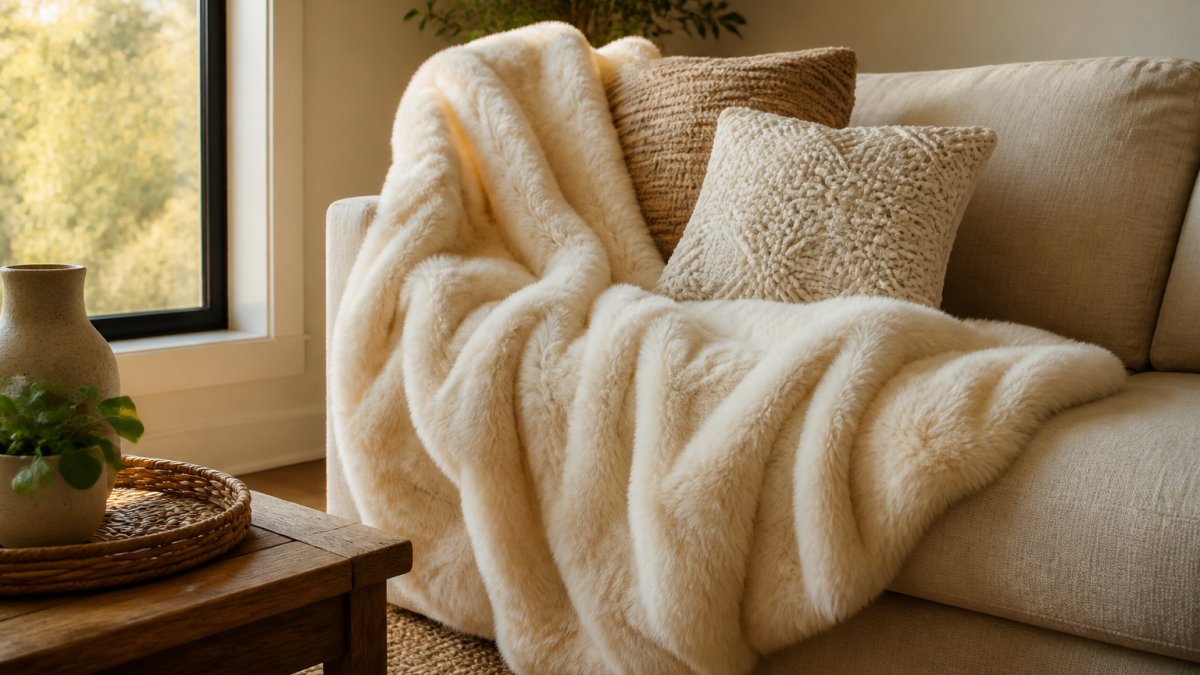
Faux fur throw blanket styling ideas work best when the throw is a texture layer, not the centerpiece. One well-placed throw adds warmth and depth; three competing ones make a room feel cluttered.
Start With Size and Pile, Not Color
Most sofa throws fall in a narrow range: roughly 50 by 60 inches for a standard accent throw, and 60 by 80 inches for a larger throw that covers a lap or folds across a bed. A throw shorter than about 50 inches looks skimpy on a full-size sofa.
Pile height changes how a throw reads in a room:
- Low pile (under half an inch): tailored and modern; best for small rooms and tight seating.
- Medium pile (half an inch to an inch): the most versatile; works on sofa arms, benches, and bed ends.
- Long pile (over an inch): plush and dramatic; best as a single statement layer.
A practical rule: the smaller the room, the lower the pile.
Room-by-Room Placement With Buying Notes
- Living room: drape over the sofa arm or back, folded in thirds so the pile shows. Choose a medium-pile 50-by-60-inch throw for a standard sofa; go to 60 by 80 inches for a sectional or deep-seat couch. One throw per seating group is usually enough.
- Bedroom: fold across the foot of the bed for a hotel-style layer. A 60-by-80-inch throw covers the foot of a queen or king; a 50-by-60-inch throw suits a twin or full. Match the backing to the bedding so it doesn't slide.
- Reading nook: pair a throw with an ottoman and a textured cushion. A smaller 50-by-60-inch throw keeps a chair from looking swamped.
Quantity and Color Guidance
The rule we follow: one faux fur piece per visual zone.
For color, cream, ivory, or warm taupe is the most flexible purchase because it layers over light and dark upholstery.
For more styling directions, our guide to fur accessories for rustic homes covers throws, pillows, and decorative accents together.
Size and pile height decide how a faux fur throw reads in a room, so match both to the space before choosing a color.
| Pile height | Best for | Note |
|---|---|---|
| Low pile (under half an inch) | Small rooms and tight seating | Tailored and modern |
| Medium pile (half an inch to an inch) | Sofa arms, benches, bed ends | Most versatile |
| Long pile (over an inch) | A single statement layer | Plush and dramatic |
| 50 by 60 inches | Standard sofa, twin or full bed, reading chair | Standard accent throw |
| 60 by 80 inches | Sectional, deep-seat couch, queen or king bed | Larger throw |
Layering Soft Furnishings: Pillows, Throws, and Textured Accents
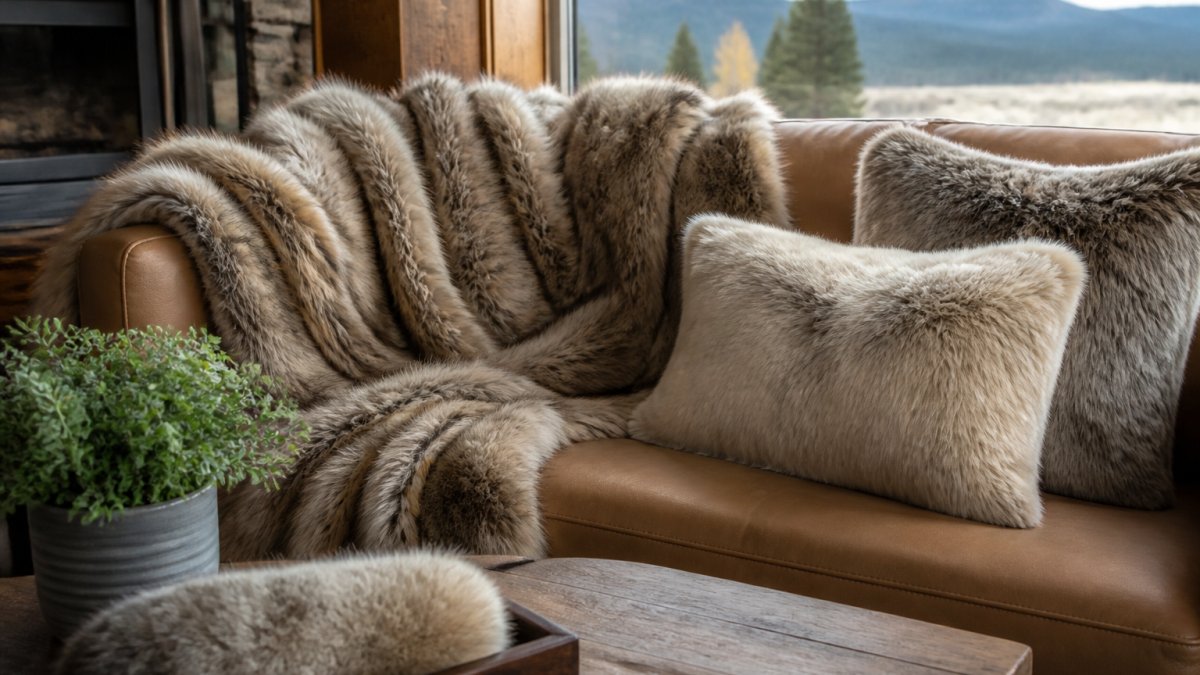
Layering soft furnishings means combining three to four textures at different scales so the eye reads depth instead of flatness. Faux fur is the high-contrast layer that makes the rest feel intentional.
A layering formula that holds up in practice:
- Base: linen or cotton upholstery in a neutral tone.
- Middle: a woven or nubby pillow in jute, rattan tone, or boucle.
- Top: one faux fur pillow or a folded throw.
Vary the scale, not just the material. A large faux fur pillow next to two small smooth ones reads better than three same-size pillows in three fabrics. Mixing pile heights creates the layered look without adding color.
We'd also add one vintage or artisanal accent, a carved wood tray or a hand-thrown bowl, to keep the room from feeling showroom-flat. Our mountain aesthetic decor guide goes deeper on layering natural materials for a cozy retreat.
Neutral Palettes and Calming Colors That Work With Faux Fur
Neutral palettes work with faux fur because the texture carries the visual interest, so color can stay quiet. Earthy tones, warm grays, and soft creams let the pile read as luxurious without shouting.
Colors that pair reliably with faux fur:
- Cream and ivory: the safest choice; brightens a room and shows pile detail.
- Warm taupe and greige: adds depth without competing with wood tones.
- Soft charcoal: grounds a light room and hides everyday wear.
Faux fur in a bright, saturated color can look theatrical rather than calming.
Lighting matters too. A warm lamp near a cream faux fur throw brings out the sheen in the pile; harsh overhead light flattens it.
How to Wash a Faux Fur Blanket Without Ruining the Pile
Wash a faux fur blanket by hand or on a gentle cycle in cold water with a mild detergent, then air-dry flat away from direct heat. Heat and agitation ruin the pile, not water. But washing is only part of keeping a piece out of the landfill, the bigger win is reducing shedding, repairing small damage, and planning for end of life.
The Wash Method
The full method we'd use:
- Shake the blanket outdoors to release loose fibers.
- Check the care label; if it says dry clean only, follow it.
- Wash cold on a gentle cycle, or hand-wash in a tub, using a mild detergent.
- Skip fabric softener, which coats and mats synthetic fibers.
- Rinse thoroughly, then press water out gently. Never wring.
- Air-dry flat or line-dry away from radiators and direct sun.
- Brush the pile with a soft brush once dry to restore loft.
Watch out: machine drying on any heat setting can melt or crimp synthetic fibers permanently. If you must use a dryer, choose the no-heat air-fluff setting only.
Reducing Shedding Before and After Washing
Shedding is the most common complaint about faux fur, usually worse in the first few weeks and during washing. A few habits cut it down:
- Shake outdoors before washing. Loose fibers released in the wash end up in the drain or on other laundry.
- Wash faux fur separately from lint-attracting fabrics, and use a mesh laundry bag for smaller pieces.
- Skip the dryer. Tumble agitation is the single biggest shedding trigger.
A piece that sheds heavily after several washes is usually a low-pile-density product; that is a buying signal as much as a care problem.
Repairing Small Damage
Most faux fur damage is repairable, extending the piece's life and keeping it out of the waste stream:
- Matting: brush the pile with a soft brush, then mist lightly with water and brush again. Avoid heat.
- Small pulls or snags: trim the snag rather than pulling it, then brush the area to blend.
- Seam splits: a simple hand stitch with matching thread closes most seam openings.
Storage Between Seasons
Store faux fur clean and dry, folded loosely in a breathable cotton bag rather than a sealed plastic bin, plastic traps moisture and causes musty odors. Keep pieces out of direct sunlight, which fades dyed fibers, and avoid heavy weight on the pile.
End of Life: Disposal and Textile Recycling
Faux fur is a synthetic textile, and most curbside recycling programs do not accept it. Options to consider:
- Textile recycling programs. Many municipalities and retailers run textile collection for worn clothing and household textiles; check local guidelines.
- Donation. A clean, intact throw or pillow can often be donated rather than discarded.
- Repurposing. Worn faux fur can be cut down for pet bedding, craft projects, or small accent pieces.
For a full step-by-step on caring for textured blankets, our guide on how to clean a real fur blanket at home safely covers the gentle methods and tools that protect pile and backing.
Seasonal Styling: Winter Decor That Carries Into Spring
Winter decor built around faux fur can carry into spring if you swap the surrounding layers instead of the fur itself.
How we'd transition a room:
- Winter: faux fur throw, dark wool pillows, warm amber lighting, heavier drapes.
- Early spring: keep the fur, swap wool for linen, lighten the palette, add a jute rug.
- Late spring: move the fur to a reading chair or bedroom bench and bring in lighter cottons.
The trick is treating faux fur as a year-round texture rather than a seasonal prop.
Seasonal styling also gives you a reason to rotate pieces instead of buying new ones, which is the most sustainable move in the category.
Choosing Faux Fur Accents for Your Home at Campbell Fine Furs
Choosing faux fur accents comes down to three questions: what texture the room is missing, how the piece will be cleaned, and whether the material claims hold up to scrutiny. Get those right and the styling follows.
At Campbell Fine Furs, we come at this from the other side of the aisle.
If you're weighing faux against real, our guide to the best fur blankets for rustic decor compares the two directly, with styling and care notes for each.
What we'd tell anyone furnishing a rustic or Western-style room: buy fewer pieces, buy better ones, and learn to care for them.
Furnishing a room with texture that lasts takes more than a trend purchase.
Frequently Asked Questions
Is faux fur an eco-friendly choice for home decor?
It can be, but it depends on the material. Most faux fur is made from synthetic fibers like acrylic and polyester, which come from petroleum and shed microplastics when washed. Eco friendly faux fur options use recycled faux fur fabric, often made from recycled plastic bottles, and are dyed with lower-impact processes. Ask the seller what the pile and backing are made from, and whether any recycled content is certified, before you assume a throw or pillow is the greener choice.
What is sustainable faux fur made from?
Sustainable faux fur typically uses recycled polyester or recycled acrylic for the pile, sometimes blended with natural fibers like cotton or linen for the backing. Some makers use plant-based fibers, though these are less common and often less durable. The backing matters as much as the pile: a recycled pile on a virgin plastic backing still has a higher environmental impact. Look for specific material percentages rather than vague 'eco' labels.
Does faux fur shed microplastics when washed?
Synthetic faux fur can shed microfibers during washing, and those fibers travel through wastewater systems. You can reduce shedding by washing less often, using a front-loading machine on a gentle cycle, and washing in a microfiber-catching laundry bag. Air drying instead of machine drying also cuts fiber loss. If microplastic shedding is a concern, choose a recycled faux fur fabric and spot-clean between washes to extend the time between full washes.
How do I wash and care for faux fur home accessories?
Check the care label first, since pile length and backing vary. Most faux fur blankets and pillows can be machine washed cold on a gentle cycle with mild detergent, then air dried away from direct heat. Brush the pile with a soft brush once dry to restore texture. For how to wash a faux fur blanket without matting, avoid hot water and fabric softener, which can clump the fibers. Spot-clean small marks between washes to make each wash last longer.