 ultimate-guide
Mountain Aesthetic Home Decor Tips for a Cozy Retreat
Table of Contents
- What the Mountain Aesthetic Really Means (and What It Is Not)
- Start With Natural Materials: Wood, Stone, and Wool
- Modern Mountain Interior Design Ideas for Open-Concept Living
- Best Fur Blankets for Rustic Decor: What to Look For
- How to Style Fur Throws on Sofas (and Everywhere Else)
- Mountain-Inspired Wall Art and Decor That Tells a Story
- Budget-Friendly and Sustainable Mountain Aesthetic Hacks
- Conclusion
- Frequently Asked Questions
Last Updated: September 12, 2026
What the Mountain Aesthetic Really Means (and What It Is Not)
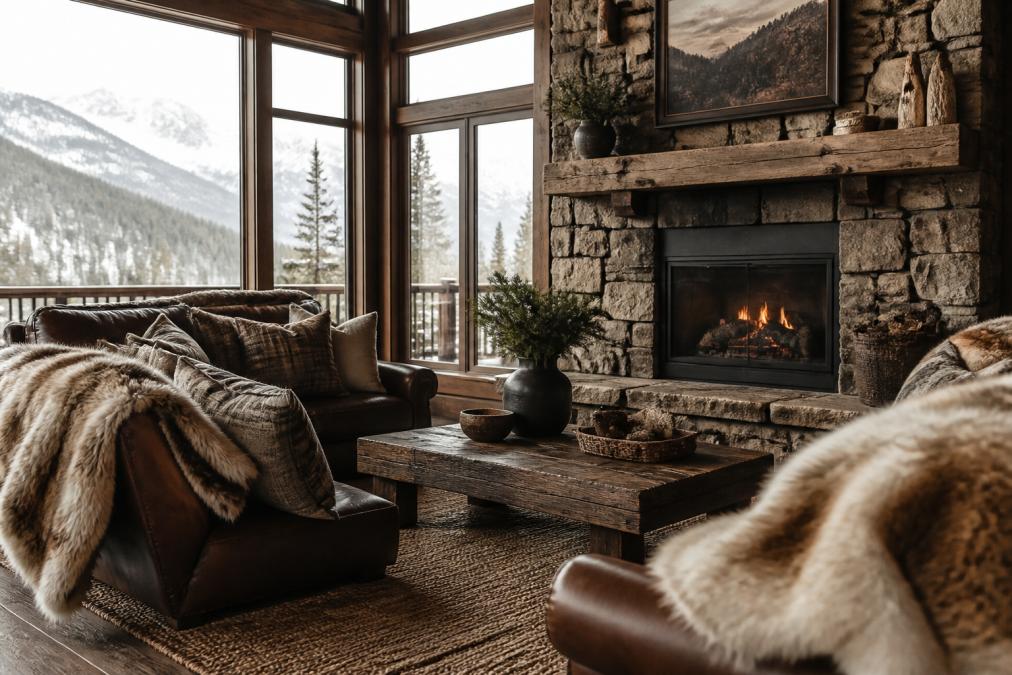
The mountain aesthetic is a design approach that brings the textures, colors, and calm of high-altitude landscapes indoors through natural materials, earth-toned palettes, and layered warmth. This guide from Campbell Fine Furs explores how to build that look without turning your home into a themed lodge.
It is not a cabin cliché. The mountain aesthetic home decor tips that actually work lean on restraint: a few grounding materials, a neutral palette, and soft furnishings that earn their place.
Rustic vs. Refined: Finding Your Balance
Most rooms fail here because everything is rustic at once. Rough-hewn wood, faux antlers, plaid everything. The result reads as a costume rather than a home.
The fix is contrast. Pair one rugged element, like a live-edge shelf or exposed beams, with something clean: a linen sofa, a frameless window, a smooth stone counter. Mountain chic lives in that tension between rugged textures and refined lines.
A common mistake is treating "rustic" and "refined" as opposites. They are not. They are partners. The American Society of Interior Designers has long noted that material contrast is what gives a space depth.
Start With Natural Materials: Wood, Stone, and Wool
Natural materials do the heavy lifting in any mountain-inspired room. Wood, stone, and wool carry texture, warmth, and a sense of place that no paint color can replicate.
Wood grain should stay visible. Skip the high-gloss finishes and choose matte or oiled surfaces that show the grain. Stone works best as an anchor: a stone fireplace, a hearth, a kitchen backsplash. Wool and fur add the softness that keeps hard surfaces from feeling cold.
Earth-Toned Color Palettes That Ground a Room
Earth-toned palettes pull directly from the landscape: warm browns, muted greens, oatmeal, charcoal, and stone gray. These shades are grounding materials, and they let your natural textures lead.
Keep the neutral palette consistent across walls, floors, and large furniture, then introduce one deeper accent. A single dark green or rust cushion reads intentional. Five of them read chaotic.
Modern Mountain Interior Design Ideas for Open-Concept Living
Open-concept living is where the modern mountain look either shines or collapses. With no walls to break up the space, you need architectural features and material changes to do that work instead.
An open floor plan benefits from a clear visual anchor. That is usually the stone fireplace, but it can also be a large rug, a change in flooring, or a set of barn doors separating a den. Built-in cabinetry along one wall adds storage without adding clutter.
Maximizing Natural Light With Large Windows
Large windows are non-negotiable in this style. The mountain aesthetic depends on daylight moving across natural surfaces, and no amount of warm lighting fully replaces it.
Frameless windows and slim profiles let the mountain landscape act as the artwork. Where privacy matters, use sheer linen rather than heavy drapes. A sunroom or a reading nook by a window is one of the simplest ways to bring indoor-outdoor living into a smaller footprint.
Best Fur Blankets for Rustic Decor: What to Look For
The best fur blankets for rustic decor balance three things: density, backing, and honest material. A blanket that sheds or mats within a season is not a bargain, no matter what it cost.
Look at the fur itself first. Dense, full pile holds its shape and drapes properly over a sofa arm. Sparse pile looks thin from across the room and flattens fast.
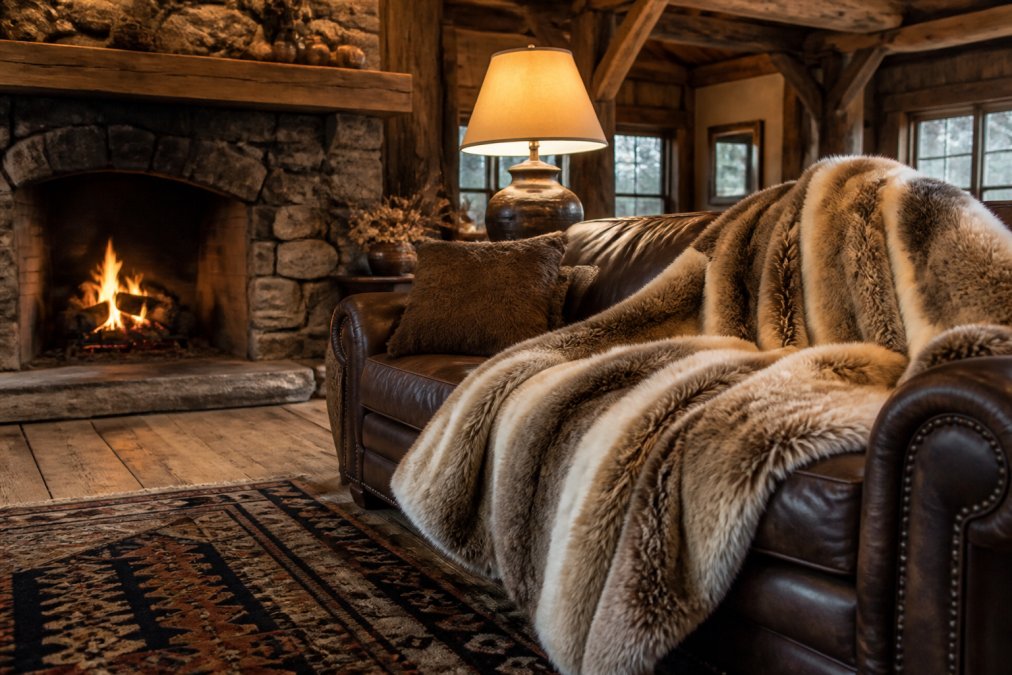
Then check the backing. A quality backing keeps the fur from stretching and prevents shedding onto upholstery. If the backing feels stiff or papery, the blanket will not survive regular use.
Finally, ask about sourcing. Anyone selling fur should be able to explain where it comes from and how it was handled. If a seller dodges that question, walk away.
How to Style Fur Throws on Sofas (and Everywhere Else)
How to style fur throws on sofas comes down to one rule: drape, do not spread. A fur throw laid flat across a whole sofa looks like a bedspread. Folded and draped over one arm or one corner, it looks deliberate.
Try these placements:
- Over one arm of a leather sofa, folded lengthwise
- Across the foot of a bed, layered over a quilt
- Draped over the back of a reading chair
- Folded in a basket beside the fireplace
- Over a bench at the end of a bed
Cozy Textile Layering: Pillows, Throws, and Rugs
Textile layering is what makes a room feel like a cozy retreat rather than a showroom. The formula is simple: three textures, three scales.
Combine a smooth base (linen or cotton), a mid-texture (wool or knit), and a high-texture accent (fur or sheepskin). Vary the scale too: a large wool rug, medium pillows, a small fur accent. Soft furnishings should feel collected over time, not bought in one trip.
Mountain-Inspired Wall Art and Decor That Tells a Story
Wall decor in this style works best when it tells a story rather than filling space. A single large piece beats six small ones every time.
Consider a mountain landscape print, a vintage topo map, a set of snowshoes, or a framed trail map from a place you have actually been. Scenic liners and landscape photography both work. What matters is that the piece has a reason to be there.
Ambient lighting finishes the room. A warm-toned lamp or two, placed low, does more for the mood than a bright overhead fixture. Warm lighting at eye level makes wood grain and fur read richer.
Budget-Friendly and Sustainable Mountain Aesthetic Hacks
You do not need a renovation budget to get this look. The mountain aesthetic home decor tips that follow are built around three levers: rearranging what you own, sourcing secondhand, and choosing materials that age well instead of wearing out.
Rearrange Before You Buy
Start with what you already own. Three moves change a room more than most people expect:
- Pull furniture away from the walls to open the floor plan and let light move across surfaces.
- Swap bright throw pillows for earth-toned covers, a $15 slipcover does the work of a new sofa.
- Move a lamp from a high shelf to a side table so warm light lands at eye level, where it flatters wood grain and wool.
If a room still feels flat, the problem is usually scale, not color. One oversized wool rug or one large landscape print will do more than five small accessories.
Source Secondhand and Reclaimed
Secondhand is where the budget and sustainability angles meet. Solid wood furniture from estate sales, Facebook Marketplace, and Habitat for Humanity ReStore locations is often better built than new flat-pack pieces, and the patina reads as authentic mountain character rather than a finish applied at a factory.
What to look for:
- Solid wood over veneer. Check the underside and back panel. If you see particleboard, keep looking.
- Oiled or waxed finishes over high-gloss lacquer. Matte surfaces show grain and can be refreshed with a coat of furniture wax.
- Wool over synthetic blends. A vintage wool blanket or rug can be cleaned and reused for decades.
Reclaimed barn wood, salvaged beams, and old floorboards work as shelving, mantel wraps, or headboard panels. A local lumber yard or architectural salvage shop is usually cheaper than a specialty retailer and lets you pick the grain in person.
Buy Fewer, Better Pieces
The U.S. Environmental Protection Agency notes that furniture and furnishings make up a significant share of household waste, which is a good argument for buying pieces you will keep. The practical version of that advice:
- Choose one anchor piece per room, a sofa, a bed frame, a dining table, and spend there.
- Fill the rest with textiles and lighting, which are cheaper to replace as your taste shifts.
- Repair before replacing. Reupholstering a good sofa costs less than a comparable new one and keeps the frame out of a landfill.
Low-Cost Material Swaps
| Instead of | Try | Why it works |
|---|---|---|
| New faux-fur throw | Vintage wool or sheepskin from a thrift store | Real texture, often under $30 |
| Framed art print | A trail map, topo map, or your own landscape photo | Personal story, near-zero cost |
| New stone coffee table | A reclaimed wood crate or stump side table | Adds the rugged note without the price |
| Designer lamp | A warm-bulb table lamp on a dimmer | Lighting shifts the whole room |
Conclusion
Building a mountain aesthetic that lasts takes restraint, good materials, and a willingness to edit. The rooms that work are the ones where every texture has a reason to be there.
At Campbell Fine Furs, we make artisanal fur blankets and pillows designed to be the grounding layer in exactly this kind of space. Our home decor pieces bring genuine mountain warmth to a sofa, a bed, or a reading chair, and our fur accessories carry the same craftsmanship into everyday wear.
View All Products and find the piece that finishes the room.
Frequently Asked Questions
What defines the mountain aesthetic in home decor?
The mountain aesthetic combines natural materials like wood, stone, and fur with earth-toned colors and warm lighting. It draws from cabin and lodge traditions but can be refined with clean lines and minimalist touches. Key elements include exposed beams, stone fireplaces, and cozy textiles. The goal is a grounded, welcoming space that feels connected to the outdoors, whether you live in a high-altitude retreat or a suburban home.
How do you balance rustic and modern elements in mountain decor?
Mix rugged textures with clean silhouettes. Pair a rough-hewn wood coffee table with a sleek modern sofa, or set a stone fireplace against smooth white walls. Limit rustic pieces to two or three focal points per room and let modern items provide contrast. This balance keeps the space from feeling like a themed cabin and makes it livable year-round. Neutral palettes and frameless windows also help bridge the two styles.
How can I incorporate fur blankets into a rustic living room?
Drape a fur blanket over the arm of a leather sofa or fold it at the foot of a bed for a layered look. Choose blankets with a neutral, earth-toned palette to blend with wood and stone. For a cozy retreat feel, place one near a stone fireplace or on a reading chair. Rotate them seasonally and store properly to maintain softness. Campbell Fine Furs offers artisanal options designed for both warmth and style.
What are the best color palettes for a mountain-inspired home?
Earth-toned palettes work best: warm browns, deep greens, muted grays, and soft creams. These colors echo the mountain landscape and pair naturally with wood grain and stone. Add contrast with charcoal or navy accents. Avoid bright, saturated colors that fight the natural materials. A neutral base with layered textures creates a calm, grounding atmosphere that feels cohesive across open floor plans and small spaces alike.