 How-to
Can You Really Prevent Trap Theft in the Field?
Last Updated: November 12, 2026
Quick Summary
You can reduce trap theft by anchoring every trap with chain or cable to a driven earth anchor, locking each connection, and tagging traps with your name and contact info. Set traps away from roads and trails, camouflage shiny gear, and vary your check times so thieves cannot learn your schedule.
- Anchor to the trap frame or a welded point, never the pan or spring.
- Score each site low, medium, or high risk on access, visibility, foot traffic, and prior theft.
- A cage trap left unanchored is the easiest theft on most lines.
- Report a stolen trap to your state wildlife agency and local law enforcement.
- Do not confront a suspected thief; report it and let the agencies handle it.
Table of Contents
- Why Trap Theft Happens and Who Is at Risk
- How to Secure Traps in the Field with Anchors, Chains, and Locks
- How to Mark Traps for Identification and Recovery
- Camouflage and Discreet Placement: Making Trap Sets Less Obvious
- Trapping on Public Land Precautions
- Monitoring and Evidence: Trail Cameras, Check Schedules, and Location Records
- What to Do When a Trap Is Stolen
- Building Your Trap Security Plan Before the Season Starts
- Frequently Asked Questions
Why Trap Theft Happens and Who Is at Risk
Trap theft is the loss of a legally set trap, or the animal in it, to someone who does not own the set. It happens most on ground the public can reach: road-adjacent lines, leased ground with multiple users, and public land near parking areas. Trappers often lose gear they cannot easily replace.
The risk climbs for a few reasons:
- Easy access. A set visible from a truck window invites a second look.
- Recognizable gear. Untagged traps are hard to trace back to an owner.
- Predictable check times. A thief who learns your schedule knows when a set sits full and unguarded.
- High resale and scrap value. Fur, cable, and hardware all move quickly.
New trappers on shared ground carry the most risk. They often set close to access points and skip marking. Both habits make a set an easy target.
How to Secure Traps in the Field with Anchors, Chains, and Locks
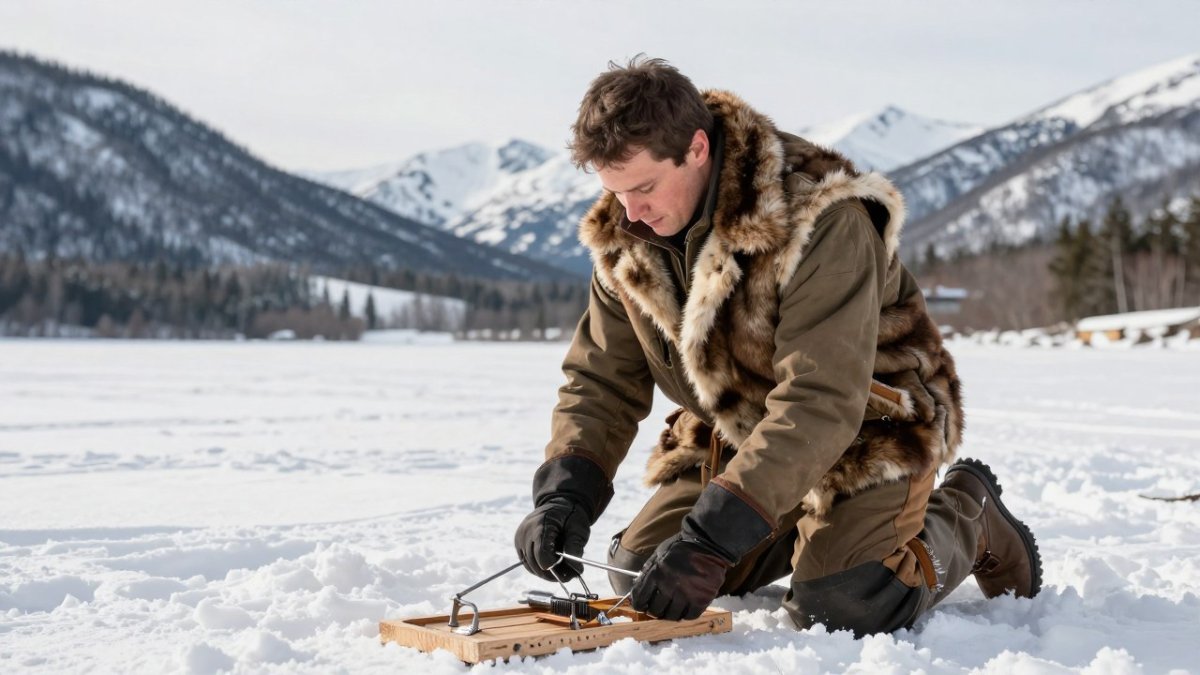
Securing a trap means anchoring it so it cannot be carried off, then locking every connection point a thief could open. The goal is simple: make the set slow and noisy to remove.
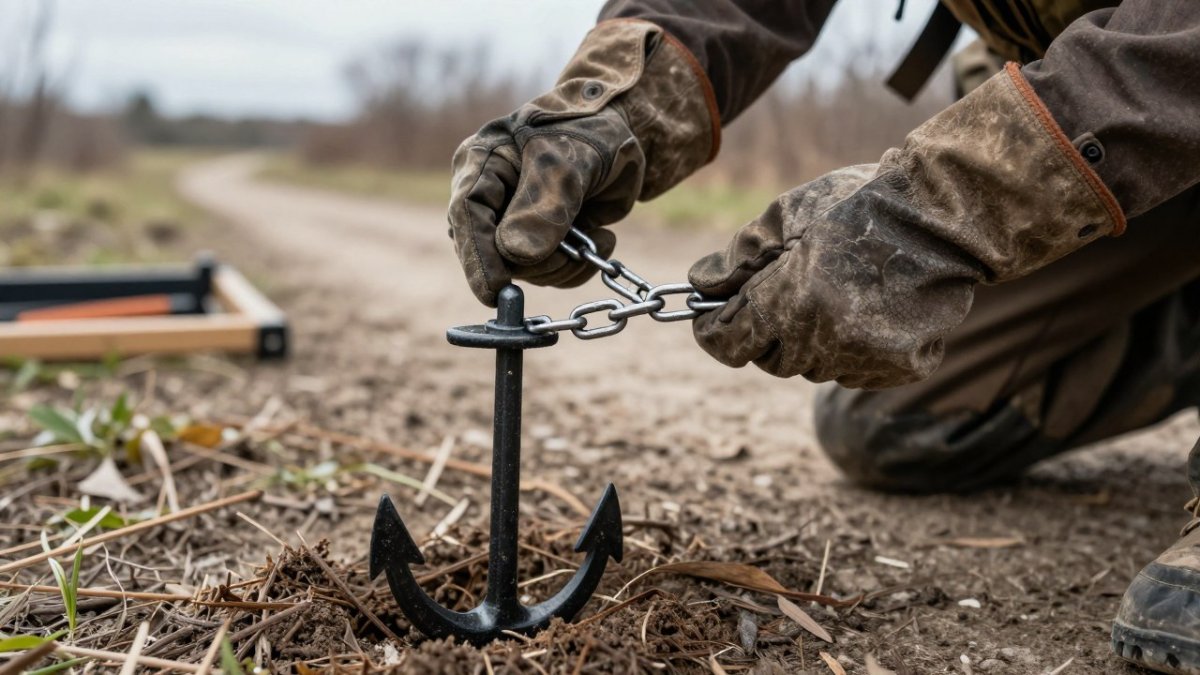
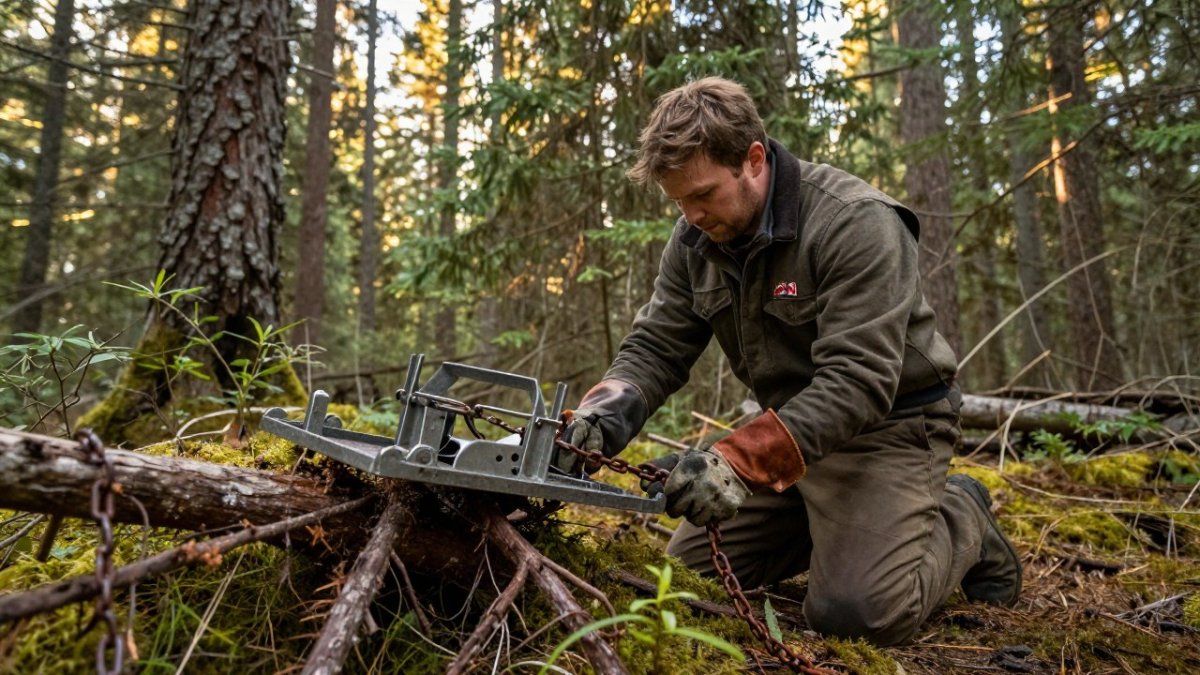
Start with the anchor. Drive a sturdy earth anchor or stake deep enough that a hard pull does not work it loose. On soft ground, use a longer stake or a drag with extra weight.
Here is the order we recommend for each set:
- Drive the anchor at an angle, not straight down.
- Attach chain or cable to the trap frame, not the pan or spring.
- Add a swivel so the chain does not bind.
- Close every link with a lock or security fastener.
- Test the set with a firm pull before you walk away.
Watch out: a chain attached to thin trap mesh will tear free under a hard yank. Anchor to the frame or a welded attachment point every time.
A good supply list makes this faster. Our guide to the trapping supplies professional hunters actually need covers the anchors, chain, and locks worth carrying.
How to Mark Traps for Identification and Recovery
Marking a trap means attaching your name and contact information so a found trap can be traced to you. Requirements vary by state, so check your state wildlife agency's rules before the season opens.
A simple tag does two jobs. It shows a would-be thief the set is traceable, and it helps an honest finder return your gear. Use stamped metal tags or durable plastic that will not fade in sun and wet.
What to put on each tag:
- Your full name
- A phone number you actually answer
- Your trapping license or ID number if your state requires it
- A short set ID you can match to your records
Mark every trap, not just the expensive ones. A cheap trap with a tag is still a deterrent. An expensive trap without one is a gift.
Camouflage and Discreet Placement: Making Trap Sets Less Obvious
Camouflage means blending the set into its surroundings so a passerby does not notice it. Discreet placement means choosing spots away from sightlines, trails, and roads. Together they do more to prevent trap theft than any lock.
Start with placement. Set back from the road, out of view from a parked truck, and off worn footpaths. Natural pinch points and cover work well.
Then dull the gear. New traps shine. Dye and wax them, or let them weather, so they stop catching light. Bed the trap into the ground or cover it with local debris. Keep the area around the set looking untouched.
For a deeper walkthrough of these techniques, see our field guide to DIY trap camouflage and scent control.
Trapping on Public Land Precautions
Public land raises the stakes because anyone can walk your line, and the rules that govern it vary by agency and unit.
Start with a simple site assessment before you set. Walk the approach from the nearest road, parking area, or trail and ask four questions:
- Access: How far is the set from the closest vehicle pull-off, gate, or trailhead? Sets within sight of a parking area carry the highest risk.
- Visibility: Can the set be seen from a road, trail, or camp? If yes, it is a candidate for camouflage or relocation.
- Foot traffic: Is this a route hunters, hikers, or other trappers use regularly? Shared ground means more eyes and more hands.
- Prior theft: Has gear gone missing on this line or nearby before? Past loss is the strongest predictor of future loss.
Score each site low, medium, or high on those four factors. A low-risk site, far from access, screened from view, light traffic, no history of loss, can be secured with a tagged trap and a solid anchor. A high-risk site warrants the full package: anchor, chain or cable, lock, camouflage, and a trail camera covering the approach. This tiered approach keeps you from over-building easy sets and under-building the ones that actually get hit.
Follow the land agency's rules for where and how you can set. Stay off closed areas and respect buffer zones around trails and campsites.
Keep your locations private. Do not post set photos with landmarks, and do not share exact spots on social media or forums. Loose talk is how most public-land sets get found. When you talk with other trappers, share techniques, not coordinates.
Placing sets efficiently on shared ground takes practice. Our article on improving trap set location efficiency covers how to pick spots that stay out of sight.
Monitoring and Evidence: Trail Cameras, Check Schedules, and Location Records
Monitoring means watching your sets between checks and keeping records that help if something goes missing. Three habits carry most of the weight: regular checks, trail cameras, and written location records.
Check traps on a steady schedule, and vary the times when you can. A predictable pattern is easy to learn. Regular checks also mean a full trap spends less time sitting.
Trail cameras and camera traps near a set can show who has been through. Place them to cover the approach, not just the trap. Keep them discreet and check them on the same rounds.
Record every set location. A simple notebook or phone note with GPS pins, set IDs, and dates does two things. It helps you find your gear, and it gives you a record if you need to report a theft.
| Record | What to Log | Why It Matters |
|---|---|---|
| Set ID and tag number | Matches trap to owner | Speeds recovery |
| GPS pin and landmark | Exact location | Proves the set was yours |
| Set date and gear used | Trap type and hardware | Supports a report |
| Check log | Dates and times | Shows a regular pattern |
| Photo of the set | Gear and placement | Evidence if stolen |
What to Do When a Trap Is Stolen
Report a stolen trap to your state wildlife agency and local law enforcement as soon as you confirm it is gone. Then document everything before you reset the area.
Work through these steps in order:
- Photograph the empty set, the anchor, and the ground around it.
- Note the date, time, and what was taken.
- Pull your records: set ID, tag number, GPS pin, and gear details.
- Report to law enforcement and your state wildlife agency.
- Check trail camera footage for the window before the loss.
- Tell nearby trappers so they can watch their own lines.
Do not confront a suspected thief. Report it and let the agencies handle it. If you need replacement gear, you can read our story to see who we are and how we help trappers get back in the field.
Building Your Trap Security Plan Before the Season Starts
A trap security plan is a written routine that covers marking, anchoring, placement, checks, and records before you set a single trap.
Match security hardware to the trap. A cage trap, a foothold trap, and a powered trap fail differently under a thief's hands, so the attachment method should differ too:
- Cage traps are bulky and easy to grab, so anchor them at the frame with chain or cable and a lock, and stake the frame so it cannot be tipped and emptied. A cage left unanchored is the easiest theft on most lines.
- Foothold traps are small and pocketable, so chain them to a driven earth anchor or a drag with extra weight, and close the chain connection with a security fastener. Anchor to the frame or a welded attachment point, never to the pan or spring.
- Powered traps carry the highest replacement cost, so treat them like cage traps: anchor the body, lock the connection, and consider a cable rated for the load rather than light wire.
Compare the hardware trade-offs. Chains resist cutting and pulling but add weight and rattle. Heavy cable is lighter and quieter but can be cut with the right tool.
Work through this checklist before the season:
- Confirm your state's tagging and marking rules
- Order tags, locks, chain, cable, and anchors sized to each trap type
- Dye and wax new traps
- Map your line and score each site low, medium, or high risk
- Set a check schedule and vary the times
- Test trail cameras and batteries
- Start a location record for every set
- Save agency and law enforcement contacts
A reliable gear setup makes the plan easier to follow. Our guide to reliable trapping gear for hunters covers what to assemble before opening day.
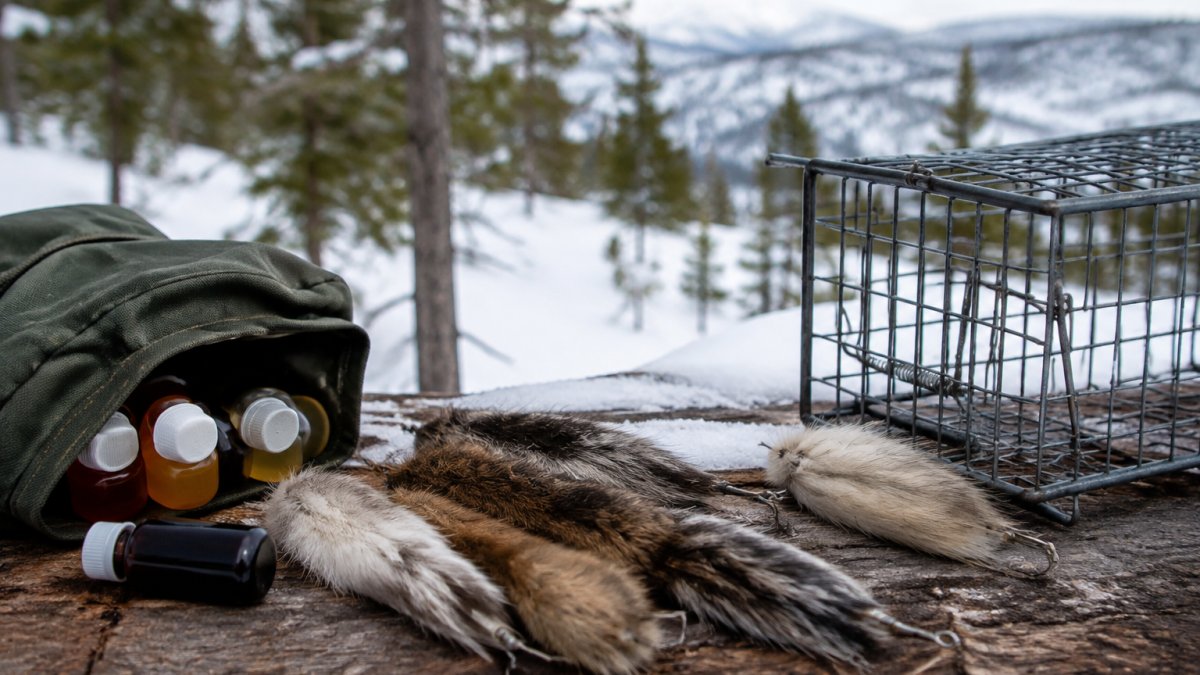
Trap theft is a real risk on any line, but a plan built on marking, anchoring, and good records cuts your exposure. At Campbell Fine Furs, we make Western lures and baits from Andy Weiser's formulas, and we build artisanal fur accessories for cold mornings in the field.
Frequently Asked Questions
What are some effective techniques for preventing theft?
Label every trap with your name and contact information, anchor it with heavy chain and a quality lock, and camouflage the set so it blends into the surroundings. Keep your set locations private and record them in a notebook or phone app only you can access. Checking traps on an irregular schedule and using trail cameras near high-risk sets adds another layer of deterrence. No single method stops a determined thief, but stacking several makes your gear a harder target than the next trapper's.
How can trail cameras help deter trap theft?
Trail cameras placed near trap sets can capture faces, vehicle descriptions, and timestamps if someone tampers with your gear. The visible presence of a camera alone deters some casual thieves. Check the camera when you run your trap line and back up footage to your phone or cloud storage so it is not lost if the camera is taken too.
What should you do if a trap is stolen or goes missing?
Report the theft to your state wildlife agency and local law enforcement as soon as you confirm a trap is gone. Provide your trap tag number, a description of the trap, and the location where it was set. Check your location records and trail camera footage for evidence. Post a notice in local trapper forums or groups in case another trapper finds it. If you trap on public land, notify the land management agency as well. Quick reporting improves the chance of recovery and creates a record if the theft is part of a pattern.
What precautions should you take when trapping on public land?
Check your state's trapping regulations before setting anything on public land. Requirements such as trap tags, set-back distances, and trap-type restrictions vary, so confirm them with your state's agency. Keep a written record of each set location and check traps at least as often as your state requires. Use locks and anchors on every trap, and avoid leaving visible gear or scents that draw attention. Public land is shared space, so courtesy toward other users and clear labeling reduce both theft and conflict.