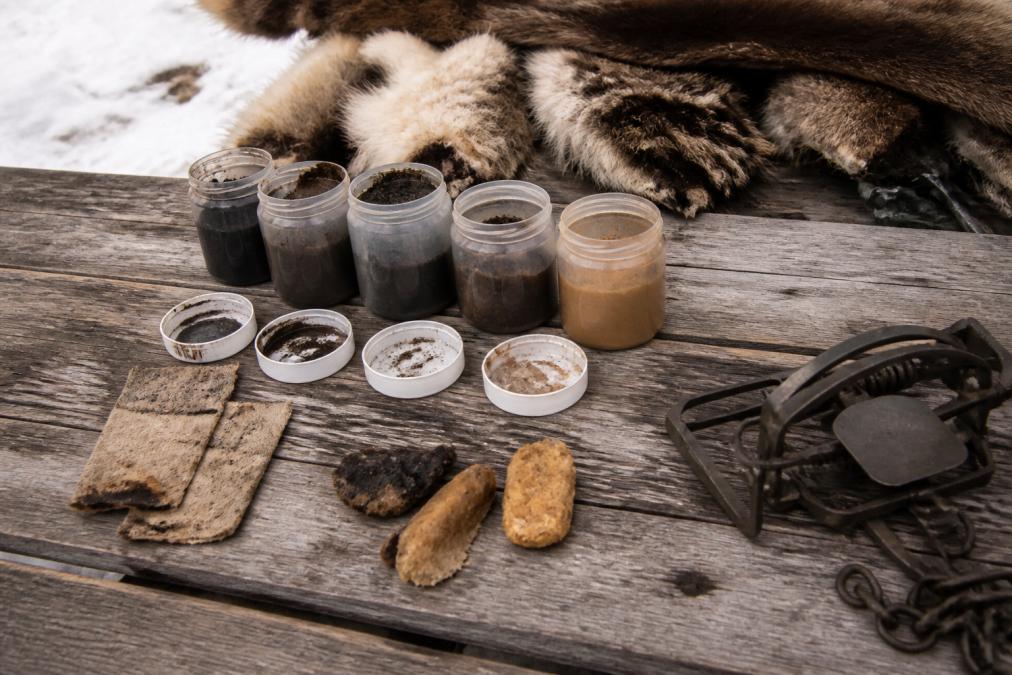
 how-to
Trapping Lure Effectiveness for Beginners: 2026 Guide
Table of Contents
- What You'll Need Before You Start
- How to Choose Hunting Trapping Bait
- Best Trapping Lures for Beginners
- Trapping Scent Control Tips
- Step-by-Step: Using Lures at Your Trap Sets
- How to Test and Improve Trapping Lure Effectiveness
- Storing Lures and Managing Shelf Life
- Legal and Regulatory Compliance for Trappers
- Frequently Asked Questions
Last Updated: September 14, 2026
What You'll Need Before You Start
Trapping lure effectiveness for beginners comes down to three things: the right lure for your target species, clean handling, and a set that forces the animal to commit.
At Campbell Fine Furs, we sell Western lures built on Andy Weiser's formulas, and the questions we field most often are about basics, not secrets.
Before you set a single trap, gather:
- Lure and bait matched to your target species
- Trap or snare legal for that species in your state
- Disposable gloves to keep human scent off gear
- A kneeling pad or stool so you are not crouching in frozen ground
- A trowel and sifting screen for a clean dirt hole set
- A catch pole and release tools if you plan to release non-target animals
Check your state wildlife agency's current trapping regulations and season dates before you go. Season windows and legal methods vary widely, and a set that is legal one county over may not be legal where you trap.
How to Choose Hunting Trapping Bait
Match the bait to what the animal actually eats, not to what smells strongest to you. A coyote responds to meat and gland scents; a marten wants something sweet and fishy. Choosing hunting trapping bait is a species question first.
Work through this order:
- Identify your target species and its natural diet in your area.
- Pick a base: meat, fish, fruit, or gland-based.
- Add a call lure if you want the animal to travel to the set from a distance.
- Test one variable at a time so you know what actually worked.
A common mistake is buying five lures at once and using them all season without tracking results. Run one lure for several sets, note what you catch, then change one thing.
Best Trapping Lures for Beginners
The best trapping lures for beginners are simple, single-note products: a straight gland lure, a fish-based bait, and one long call lure.
Three categories cover most situations:
- Gland and urine lures for canines and cats, used as a curiosity or territorial trigger
- Food-based baits for omnivores and mustelids, used to hold an animal at the set
- Long call lures with high volatility, used to pull animals in from a distance
Buy a single proven formula per category rather than a sampler pack. You will learn more from one lure used consistently than from six used randomly.
Trapping Scent Control Tips
Scent control is the difference between a set that gets worked and one that gets avoided. The tips that matter most are about your hands, your boots, and your storage, not exotic cover scents.
- Wear disposable gloves every time you handle lure bottles or trap hardware
- Store lures in a separate container from fuel, food, and anything with a strong household smell
- Keep your boots off the set itself; approach from the side and kneel on a pad
- Avoid strong cologne, scented detergent, and tobacco smoke on your outer layers
- Do not over-apply lure. More scent is not better scent
Scent masking products do not fix sloppy handling. Clean gloves and clean storage do more than any bottle of cover scent.
Step-by-Step: Using Lures at Your Trap Sets
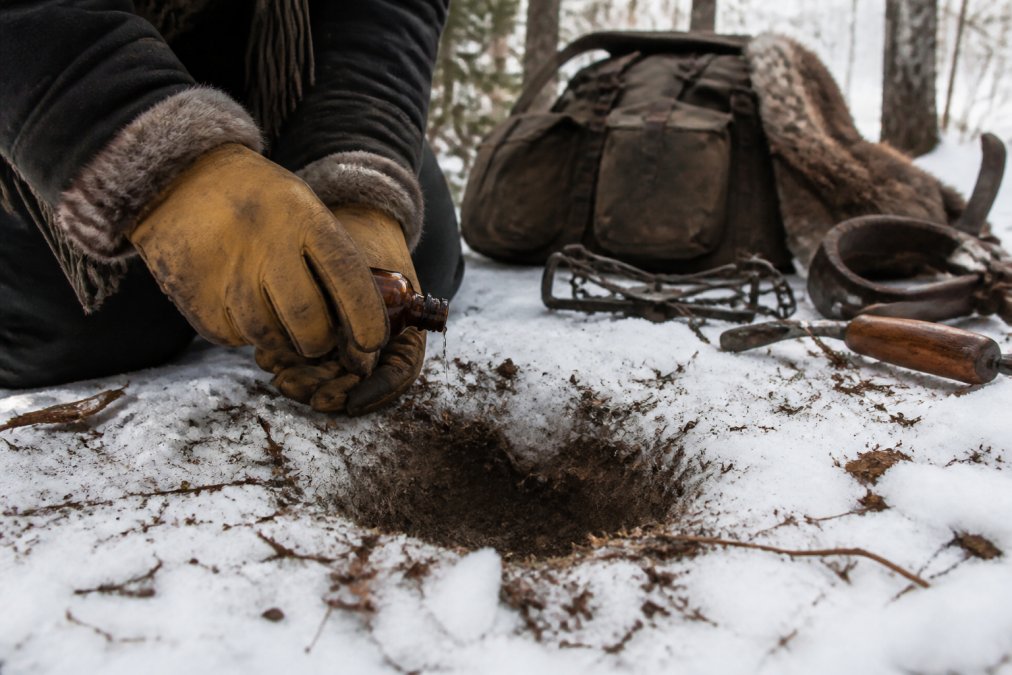
Applying lure correctly takes about two minutes per set once you have a routine. The goal is a small, precise scent point that guides the animal's nose to the trap.
- Put on clean gloves before touching lure or trap.
- Clear the set area of debris, then dig your dirt hole at a slight downward angle.
- Bed the trap so the pan sits level and the trigger is set light.
- Apply a few drops of lure on a small piece of wool, cotton, or a twig above the hole, not down inside it.
- Add bait at the back of the hole if your target species responds to food.
- Check the set from a distance the next day without walking up to it.
How to Test and Improve Trapping Lure Effectiveness
Most beginners blame the lure when a set goes cold, but a lure is rarely the whole problem. Trapping lure effectiveness improves when you treat every empty set as a diagnostic question and change one variable at a time.
Read the sign before you touch the lure
Walk the set from a distance first. What you see on the ground tells you more than any label:
- No tracks, no disturbance. The animal never found the set. The problem is attraction, not the set itself. Move the set closer to a travelway, a fence line, a culvert, or a field edge, or add a long call lure to pull animals in from farther out.
- Tracks approach but stop short. The animal smelled something and refused. This is usually human scent, over-application, or a lure that reads as wrong for the species. Re-glove, cut the application to a few drops, and consider a different scent category.
- Tracks circle the set and leave. The scent point is in the wrong place. The animal is working the smell but not committing its feet to the pan. Move the scent point above and slightly behind the trap so the animal has to step onto the pan to reach it.
- Set worked, trap fired, nothing caught. This is a bedding or pan-tension problem, not a lure problem. Re-bed the trap, lighten the trigger, and check that the pan sits level with the surrounding soil.
- Set dug up, trap undisturbed. The animal is reaching the bait without stepping on the pan. Move the bait deeper into the hole or shift the trap so the approach path crosses the pan.
Change one variable at a time
If you change the lure, the set location, and the application amount in the same visit, you learn nothing. Pick one variable, change it, and give the set at least three to five nights before you judge the result. Experienced trappers often run a set a full week before changing anything, because weather and animal movement shift night to night.
Keep a simple log for every set:
| What You Track | Why It Matters | What to Change If It Fails |
|---|---|---|
| Set type | Shows which sets work on your ground | Switch from flat set to dirt hole |
| Lure used | Tells you which formula produces | Rotate to a different scent category |
| Application amount | Catches over-application | Cut to a few drops |
| Weather at set time | Explains washed-out or frozen lure | Re-lure after heavy rain or a hard freeze |
| Catch or track evidence | Confirms the set is being worked | Move the set 10-15 feet |
| Days since last re-lure | Tells you when potency faded | Re-lure on a schedule, not on a hunch |
The order to troubleshoot in
Work from the cheapest fix to the most disruptive:
- Re-glove and re-approach. Human scent is the most common cause of a refused set, and fixing it costs nothing.
- Cut the application. Over-application is the second most common cause. A few drops is plenty at a dirt hole set.
- Re-lure with the same product. If the set was worked early in the week and went cold, the lure may have faded. Refresh before you replace.
- Change the scent category. Move from a food-based bait to a gland lure, or the reverse, depending on species.
- Move the set. Placement beats product. A well-placed set with a mediocre lure will out-produce a poorly placed set with a premium one.
- Change the lure. This is the last variable to change, not the first.
Storing Lures and Managing Shelf Life
Lure quality degrades with heat, light, and contamination. Store bottles upright in a cool, dark place, sealed when not in use.
A few storage habits that protect potency:
- Keep lures out of direct sun and out of a hot truck cab
- Wipe the bottle threads before resealing so caps do not stick or leak
- Never dip a used applicator back into the bottle
- Label each bottle with the date you opened it
- Check for separation or off-smell before the season starts
If a lure has separated, most gland and oil-based formulas can be shaken back into suspension. If it smells rancid or has visible growth, retire it. A spoiled lure can repel animals and contaminate anything stored beside it.
Legal and Regulatory Compliance for Trappers
Trapping is regulated at the state level. The rules that matter most to a beginner are season dates, legal methods, trap types, tagging and reporting requirements, and restrictions on what you may use as bait or scent. Compliance is not optional, and it is not the same in every state.
The rule categories that actually affect your lure and bait
Most beginners check season dates and stop there. The rules that get people cited often involve the attractant itself:
- Species-specific bait restrictions. Some states prohibit baiting certain species, or restrict bait to a specific list during a specific season. A food-based bait that is legal for one species may be illegal for another in the same state.
- Scent and gland lure rules. A few states restrict or prohibit the use of gland lures, urine, or commercial scents during certain seasons, particularly where those scents could attract protected species.
- Carcass and meat handling rules. If you use meat or fish as bait, some states require that it be removed from the set at the end of the season, and some restrict the use of road-killed or uninspected meat.
- Setback and distance rules. Minimum distances from trails, roads, occupied buildings, livestock, and property lines vary by state and sometimes by county. These rules apply to the set, not just the trap.
- Tagging and check intervals. Most states require a specific check interval, commonly 24 hours, sometimes longer for certain set types, and require tags on traps or snares with your name and license number.
- Trapper education and licensing. Several states require a trapper education course before you can buy a license, and some require it before you can trap at all.
How to verify your setup before opening day
Before your season opens, work through this list:
- Read your state wildlife agency's current trapping regulations for the species you intend to target.
- Confirm legal trap sizes, jaw types, and cable restraints for that species.
- Check whether your state requires trapper education or a license, and complete it early, courses fill up before season.
- Note any setback rules near trails, roads, or occupied buildings on the ground you plan to trap.
- Confirm tagging, check intervals, and reporting requirements.
- Confirm whether your intended bait or scent is restricted for that species or season.
The Association of Fish and Wildlife Agencies publishes guidance that many state agencies build their rules around. When in doubt, call your regional wildlife office directly. A five-minute call beats a citation, and the person on the phone can tell you about local restrictions that never make it into the printed summary.
Ethical practice is part of compliance
Ethical practice goes hand in hand with legal practice: check sets daily, release non-target animals quickly and humanely, pull your sets when the season closes, and leave the ground as you found it. A trapper who follows the letter of the law but leaves a messy set or a stressed non-target animal reflects on every trapper in the state. The public grants trappers a narrow privilege, renewed by how trappers behave on the ground.
Frequently Asked Questions
What are the most effective lures for beginner trappers?
For beginners, long call lures and simple food-based baits work best because they attract a range of furbearers without requiring advanced knowledge. Long call lure is especially effective for coyote, fox, and bobcat. Start with a quality commercial lure made from natural ingredients like anise oil or valerian oil, and pair it with a dirt hole set. Avoid mixing many scents at once, as this can confuse animals and reduce trapping lure effectiveness.
Why am I not catching anything with lures?
If your sets are not producing, check these common issues: old or degraded lure, contaminated gloves, poor trap placement, or too much human scent. Refresh your lure every 5-7 days, especially after rain. Make sure your trap trigger is set lightly enough for the target species. Also verify that you are targeting the right furbearers for the season and location. Sometimes switching from a food-based bait to a gland-based lure makes the difference.
How often should you refresh trapping lures in the field?
Refresh your lure every 5 to 7 days in dry conditions, and after every rain or heavy dew. Volatile compounds in the lure evaporate over time, reducing potency. In warm weather, reapply more often because heat speeds evaporation. You can also add a few drops of a preservative like 100 proof vodka to extend the life of homemade baits. Always wear clean gloves when refreshing to avoid leaving human scent.
Are there specific lures for different furbearing species?
Yes, different furbearers respond to different scents. Coyote and fox are attracted to gland-based lures and long call lure. Bobcat respond well to catnip or anise oil blends. Marten and weasel are curious and often investigate strong-smelling food-based baits. For raccoon, sweet or fishy baits work well. Start with a general-purpose lure for your target species, then experiment with different formulas as you learn what works in your area.
Trapping lure effectiveness for beginners is really about discipline: one lure per category, clean handling, a well-placed set, and a written record of what worked. Campbell Fine Furs carries Western lures made with Andy Weiser's formulas, plus the fur hats, scarves, and mittens that keep you warm on long check rounds in cold weather. Browse the full range at Campbell Fine Furs and start your season with gear built to last.