 comparison
Trapper Hat vs Beanie for Winter Hunting Compared
Last Updated: November 4, 2026
Quick Summary
For most winter hunters the choice between a trapper hat vs beanie for winter hunting comes down to ear coverage: a trapper hat with flaps gives the most warmth on long, still sits, while a beanie is lighter and keeps your ears open to hear game and safety sounds.
- Trapper hats cover the ears and back of the neck, the areas that lose heat fastest.
- Down flaps muffle high-frequency sounds, so keep them up when hearing movement matters.
- Choose a fur or fleece-lined trapper hat for stand hunting in severe cold.
- Pick a lighter beanie for active hunts with heavy walking and sweating.
- Test any hat with your binoculars, hood, and ear protection before buying.
Table of Contents
- How Trapper Hats and Beanies Differ for Hunting
- Warmth and Cold-Weather Protection in the Field
- Ear Coverage, Hearing and Situational Awareness
- Wind, Precipitation and Moisture During Active Hunts
- Fit, Chin Ties and Compatibility With Hunting Gear
- Choosing a Merino Wool Beanie or Ushanka Hat for Your Hunts
- Matching Your Winter Hunting Hat to Your Next Hunt
- Frequently Asked Questions
Choosing between a trapper hat and a beanie for winter hunting comes down to how much coverage you need, how much you can hear and see, and how the hat fits with the rest of your gear. This guide compares them for field use, not for the sidewalk.
How Trapper Hats and Beanies Differ for Hunting
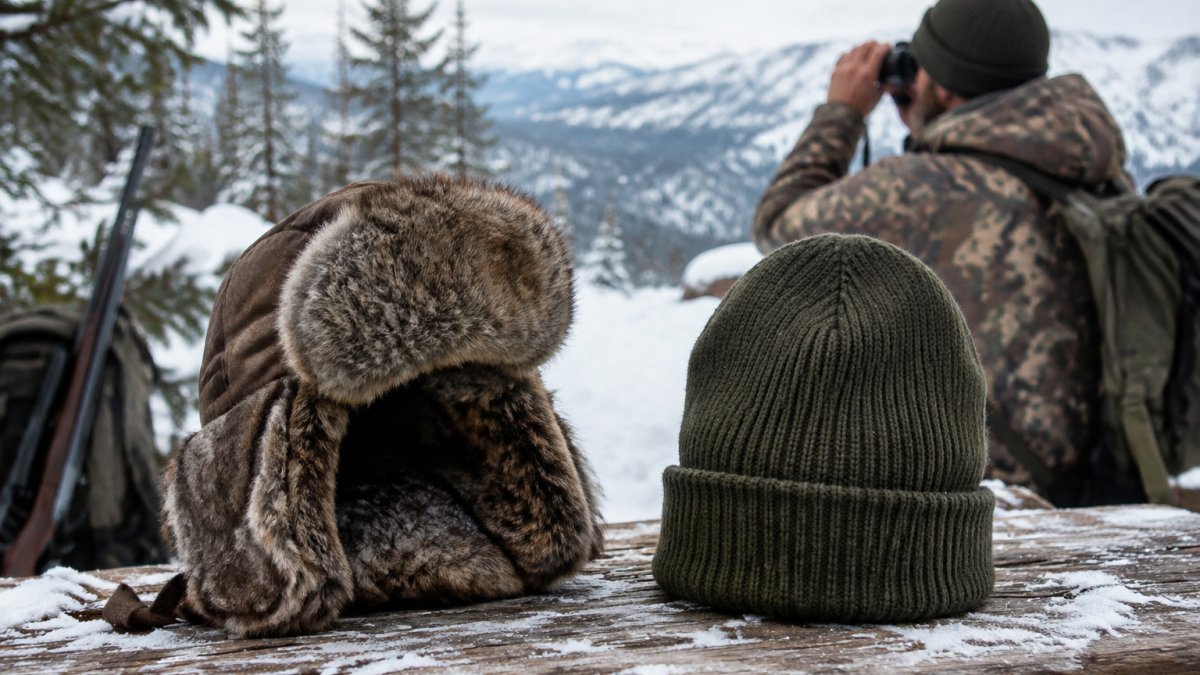
A trapper hat has earflaps that fold down over the ears and usually a chin tie or strap to hold them in place. A beanie is a close-fitting knit cap with no flaps. The difference looks small on a shelf, but it matters a lot when you are weighing a trapper hat vs beanie for winter hunting and sitting still at a stand for three hours.
Beanies are light, easy to pack, and quick to pull on and off. They work well for active hunters who move a lot and need to shed heat. Trapper hats trade some of that flexibility for coverage. Most hunters choose by asking one question first: how much of my head and ears will be exposed in the conditions I actually hunt?
Warmth and Cold-Weather Protection in the Field
Warmth depends on coverage and insulation together. A trapper hat with a fur or fleece lining covers the ears and the back of the neck, the areas that lose heat fastest. A beanie covers the crown well but leaves the ears exposed unless it is a heavy, long-cuffed style.
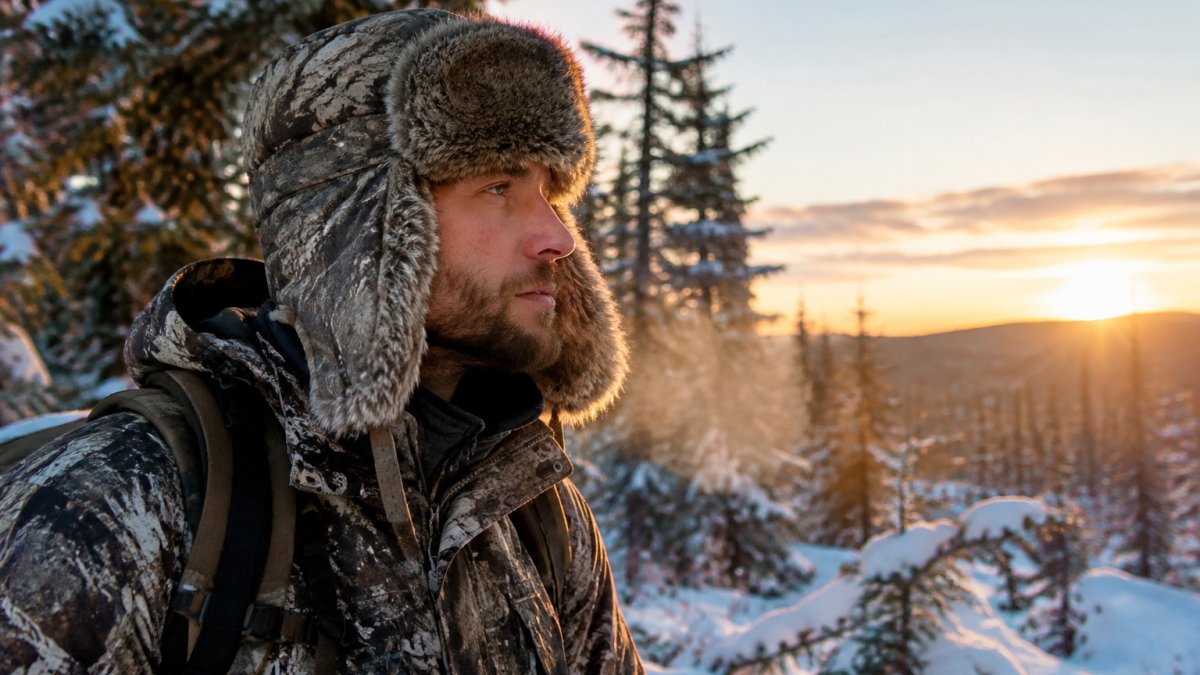
For long sits in very cold weather, the trapper hat's earflaps give you a clear advantage. For moderate cold with plenty of movement, a lined beanie often keeps you comfortable without overheating. Warmest hats for extreme cold are usually those with full ear coverage and dense insulation. Check how the hat sits when you have a hood or collar up, because gaps there let cold air in.
Ear Coverage, Hearing and Situational Awareness
For hunters, ear coverage is a trade-off between warmth and awareness, and when comparing a trapper hat vs beanie for winter hunting, the two styles sit at opposite ends of it. A beanie leaves the ears exposed to cold but keeps the ear canal open to sound. A trapper hat with the flaps down covers the ears completely, which blocks wind and cold but also muffles the high-frequency sounds hunters rely on: a branch snapping, a squirrel cutting, a safety being clicked off, or a partner's voice.
The mechanism is straightforward. Down earflaps place a layer of fur, fleece, or quilted fabric directly over the ear, and that layer absorbs and reflects sound before it reaches the ear canal. The thicker and denser the flap, the more high-frequency sound is lost. Fur flaps block more sound than thin fleece or unlined canvas, which is why a full-fur trapper hat is the warmest option but also the quietest.
Field scenarios where this matters:
- Still-hunting or spot-and-stalk: You need to hear movement before you see it. A beanie or a trapper hat with flaps tied up keeps your ears open.
- Stand hunting in severe cold: Hearing matters less than staying warm enough to sit still, so flaps down is the right call.
- Hunting with a partner: Down flaps can make conversation difficult, especially in wind. Tie the flaps up when you need to talk.
- Safety: If you hunt near roads, property lines, or other hunters, reduced hearing is a real risk. Many hunters keep flaps up until the cold forces them down.
Flap design changes the trade-off. Flaps that fold up and secure with a snap or tie give you a middle option: coverage when you need it, open ears when you don't. Flaps that tie under the chin stay down and block sound continuously. Flaps that are sewn down or have no adjustment force you to choose one setting for the whole hunt.
Peripheral vision is less affected by hat style than by fit. A beanie that sits low over the brow can narrow your upper field of view, and a trapper hat with a bulky fur brim can do the same. The fix is the same for both: try the hat on with your other layers and check that you can see clearly to the sides and above without tilting your head.
Watch out: A hat that covers your ears completely can mask the sound of another hunter approaching, so if you hunt in areas with heavy pressure, keep the flaps up until you are settled and the cold requires them down.
Wind, Precipitation and Moisture During Active Hunts
Wind cuts through knit fabric quickly. A trapper hat with a tight-woven outer layer and a fur or fleece lining blocks wind on the ears and neck better than a standard beanie. Beanies made from thick, tightly knit wool also perform well, but thin acrylic knits let wind through.
Moisture is the less obvious issue. Sweat from hiking to a stand can soak a knit beanie, and wet insulation loses much of its warmth. Fur and wool handle some moisture, but a damp hat takes a long time to dry in the field. Pack a spare hat if you expect a long walk in, and avoid overheating before you sit down.
Fit, Chin Ties and Compatibility With Hunting Gear
A winter hunting hat has to work with the rest of your gear, not just your head. This is where most hat comparisons stop short, and it is where the trapper-versus-beanie decision actually gets made in the field.
Chin ties and straps. A trapper hat's chin tie or strap does two jobs: it holds the flaps down in wind and it keeps the hat from blowing off when you turn or look up. Check that the tie sits below your jaw, not across your throat, and that it does not press against a face covering or neck gaiter. A tie that is too short will pull the hat down over your brow; one that is too long will flap.
Binoculars and rangefinders. Both styles can interfere with binoculars, but in different ways. A beanie's cuff can push against the eyecups and prevent a full field of view. A trapper hat's fur brim or flap edge can do the same, and a bulky flap can catch on a bino strap when you raise the glass. Test the hat on with your binoculars before you buy: raise them to your eyes and check that the hat does not shift or block the eyecups.
Shooting ear protection. Over-the-ear muffs need a seal around the ear, and a trapper hat with flaps down can break that seal or push the muffs off. Many hunters wear in-ear protection under a trapper hat, or switch to a beanie when they plan to wear muffs. If you use electronic muffs, check that the hat's flap does not press on the muff's microphone or battery compartment.
Hoods and face coverings. A hood over a trapper hat can compress the fur and push the flaps against your ears, which reduces both warmth and hearing. A beanie fits under a hood more easily but can slide up when you turn your head. If you hunt in a hooded jacket, try the hat on with the hood up and check that you can turn your head without the hat shifting.
Slings, packs, and collars. A trapper hat's flaps can catch on a rifle sling or pack strap when you shoulder your gear. A beanie's low profile avoids that, but a loose beanie can be pulled off by a sling. Check both with your actual pack and sling before the season.
Fit basics for both styles. A trapper hat should fit snugly enough that the flaps stay in place without the tie, but not so tight that it leaves marks on your forehead. A beanie should cover the ears if you want warmth, or sit above them if you want to hear, decide which you need before you choose the size. Try both on with the layers you actually wear, because a hat that fits over a bare head may not fit over a neck gaiter or a hood.
Choosing a Merino Wool Beanie or Ushanka Hat for Your Hunts
A ushanka is a trapper-style hat with a warm lining and ear flaps that tie under the chin. It sits between the two categories, giving full ear coverage with a traditional look. It is a good choice when you want the protection of a trapper hat and the familiar fit of a classic cap. Compare the lining thickness and how the flaps tie before choosing.
The article's comparison of a ushanka against the other two styles is easiest to scan at a glance:
| Hat style | Ear coverage | Key difference |
|---|---|---|
| Trapper hat | Full, flaps fold down | Warmest coverage, reduces hearing |
| Beanie | Open, no flaps | Light, quick to pull on and off |
| Ushanka | Full, flaps tie under chin | Trapper-style cover with a traditional look |
Matching Your Winter Hunting Hat to Your Next Hunt
Use these questions to decide:
- Long sits in severe cold: Choose a trapper-style hat with full ear coverage and a fur or fleece lining.
- Active hunts with heavy walking: Choose a lighter, breathable beanie or a merino wool hat that handles sweat.
- Hunts where hearing matters most: Choose a trapper hat with flaps that tie up, or a beanie you can keep open at the ears.
- Mixed conditions: Choose a trapper hat with adjustable flaps, which gives you both options in one hat.
, and our trapper-style Beaver Fur Hat is the option we recommend if you want full ear coverage for winter hunting. Browse our full range of fur hats to compare styles, and see how the beaver fur trapper hat fits your hunting conditions. For a full-fur versus lined comparison, read our guide to the beaver fur trapper hat, and for extreme-cold options see our guide to winter hunting headwear for extreme cold. If you are matching a hat with gloves, our guide to fur mittens for hunting covers fit and compatibility.
Frequently Asked Questions
Are trapper hats good for winter hunting?
Yes, trapper hats are well suited to winter hunting because the earflaps and brim cover the ears, cheeks and back of the neck, areas that lose heat quickly in cold wind. Many hunters choose them for sitting in a blind or standing still for long periods in low temperatures. Look for a lining that holds insulation when damp and an outer shell that blocks wind. Trapper hats are also easy to pull down over the ears when the wind picks up and push back when you need to hear game approaching.
Do hunters wear trapper hats?
Many hunters wear trapper hats, particularly in cold climates where ear and face protection matter during long waits in the field. The earflaps can be tied or folded up to keep hearing sharp when a deer or turkey is nearby. Hunters who move often may prefer a lighter option to limit sweat, while those who sit still for hours often value the extra coverage. Choosing a hat that works with your hood and base layers makes the difference in comfort.
When is a beanie a better choice than a trapper hat for hunting?
A beanie is often the better choice when you are active, such as walking, stalking or climbing into a stand, because it stays close to the head and produces less bulk under a hood. It also suits milder winter days when full ear coverage is not needed. Beanies do not block wind over the ears as well as a trapper hat, so pick the style that matches your expected conditions.
Can you wear a trapper hat with a hunting hood?
Yes, but fit matters. Some hunters find that a trapper hat under a hood compresses the insulation and reduces the hood's ability to fit snugly. A slimmer beanie or a hat with flat, low-profile earflaps usually layers more easily. Test the combination before the season so you can hear clearly, turn your head fully and keep the hood from slipping forward into your field of view.