 how-to
Storing Fur Hats in Texas Humidity: A Practical Guide
Last Updated: November 6, 2026
Quick Summary
Store fur hats in a cool, dark, dry spot with steady airflow, away from heat, sunlight, and exterior walls. Aim for roughly 45-55% relative humidity, use a breathable cotton or canvas bag, and never seal them in plastic. Check each hat monthly for damp, pests, and shape.
- A cheap digital hygrometer at hat height shows what your storage spot is actually doing.
- Stuff the crown loosely with acid-free tissue and set the hat on a hat form, never hang it by the brim.
- Skip mothballs and place cedar blocks nearby, not directly on the fur.
- Never use a hair dryer, radiator, or direct sun to dry a wet fur hat.
- Run the seasonal checklist before storage and re-check humidity after heavy rain.
Table of Contents
- Why Texas Humidity Is Hard on Fur Hats
- The Best Way to Store Fur Hats at Home
- Choosing the Best Storage Bag for Fur Hats
- How to Protect Fur From Moths and Other Pests
- How to Dry a Wet Fur Hat Safely
- When Home Storage Is Not Enough: Professional Fur Vaults
- Before You Store: A Seasonal Checklist
- Sourcing Fur Hats Built to Last
- Frequently Asked Questions
Why Texas Humidity Is Hard on Fur Hats
Learning how to store fur hats in Texas humidity comes down to one hard truth: leather and fur pull moisture straight out of the air.
Leather backing soaks up damp air like a sponge. Fur fibers lose their natural oils when moisture builds up. Then mold, mildew, and pests move in.
The damage from Texas humidity often starts quietly. A hat can look fine in October and be ruined by June.
Below, we'll show you exactly how to store fur hats so they survive the off-season intact.
The Best Way to Store Fur Hats at Home
The best way to store fur hats is in a cool, dark, dry spot with steady airflow, away from heat and sunlight. A closet on an interior wall usually beats an attic or garage. For the off-season specifics, see our guide on how to store fur hats during off-season.
Here is the short version:
- Keep the hat off the floor and away from exterior walls
- Leave space around it so air can move
- Never press it flat or stack anything on top
- Check it once a month
Most guides get this wrong by treating storage as a "set it and forget it" task.
Temperature, Humidity, and Air Circulation
Fur likes cool, dry air. Professional storage vaults are typically cold and tightly controlled, but a home setup can get closer with attention.
Aim for:
- Temperature: a cool room, ideally below 55°F if you can manage it
- Humidity: moderate, roughly 45-55% relative humidity
- Air: gentle movement, never sealed tight
A relative humidity around 45-55% is a commonly used general target for storing fur. The problem is that a typical home in a hot, humid climate does not sit at 45-55% relative humidity without help.
A few practical adjustments matter more than chasing an exact number:
- Measure, don't guess. A cheap digital hygrometer placed at hat height tells you what the storage spot is actually doing. Check it in the morning and late afternoon, because humidity swings with the cooling cycle.
- Keep the hat away from the AC vent and the exterior wall. A vent blowing cold, dry air directly on fur over-dries the leather; an exterior wall wicks heat and moisture inward.
- Never put a humidifier or dehumidifier right beside the hat. Run it in the room, not at the hat, so the fur is not sitting in a concentrated stream of moist or dry air.
- Use breathable storage. A sealed plastic bin in a humid closet traps damp air against the leather. That is how mildew starts. Cloth, canvas, or a clean cotton pillowcase left open at the bottom lets air move.
Watch out: a closet that feels dry to you can still be damp at floor level or against an outside wall.
Choosing the Right Hanger and Hat Form
A hat needs support, not pressure.
Never hang a fur hat by the brim. The weight pulls the shape out over time, and a stretched brim is very hard to correct.
A few rules that matter:
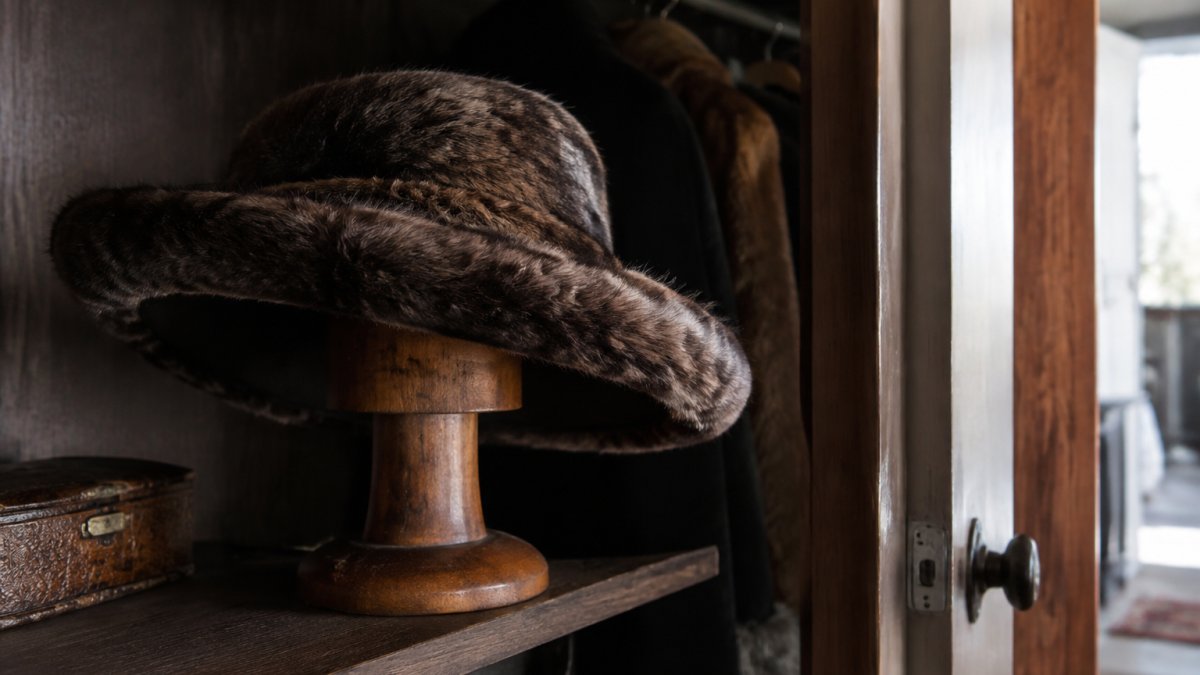
- Use a hat form or a clean, rounded block sized to the crown, not a narrow hook
- Skip wire hangers and narrow hooks
- Keep the brim free of pressure, including from the bag itself
- Rotate the hat's resting position now and then so one side does not take all the load
- Support the brim from underneath if it is wide, so it does not sag into the bag
For a hat with a tall crown or a stiff brim, a dedicated hat box with a built-in form is worth the space.
Choosing the Best Storage Bag for Fur Hats
The best storage bag for fur hats is breathable cotton or a cloth garment bag, never plastic. Cloth lets air move while keeping dust off the fur.
Here's what to look for:
- Cotton or canvas: breathable and safe
- Loose fit: room to breathe, no compression
- No plastic: plastic traps moisture and invites mildew
- No cardboard: cardboard holds damp and attracts pests
If you're short on cloth bags, a clean cotton pillowcase works in a pinch. Just leave it open at the bottom.
How to Protect Fur From Moths and Other Pests
Learning how to protect fur from moths starts with cleanliness and dry air, not chemicals. Moths and carpet beetles go after soil, sweat, and damp fibers.
Follow these steps:
- Brush the hat clean before storage
- Let it air out fully first
- Store it dry, never damp
- Add cedar blocks nearby, not directly on the fur
- Inspect monthly for webbing or shed hairs
Skip mothballs. The smell sinks into fur and is hard to remove. For a deeper walkthrough, read our guide on stopping moth damage in stored fur.
How to Dry a Wet Fur Hat Safely
How to dry a wet fur hat comes down to patience: shake off the water, blot gently, and let it air-dry away from heat. Never use a hair dryer, radiator, or direct sun. That much is standard advice. What most guides skip is that "wet" covers a range of situations, and each one calls for a slightly different response.
Match the response to how wet the hat actually is
- Sweatband damp from wear. This is the most common case and the easiest to ignore. Let the hat sit on a form in a shaded, airy room for a few hours after wearing. Do not put it straight into a bag or box. A sweatband that stays damp is where odor and mildew start.
- Condensation from a cold snap. A hat worn outdoors in cold weather and then brought into a warm room can collect moisture on the leather and fur. Let it come to room temperature on a form before storing it, and wipe the inside of the sweatband with a dry cloth if it feels clammy.
- Light rain or snow. Shake off loose water, blot with a clean towel without rubbing, and air-dry on a form. Do not brush the fur while it is wet, because the fibers are weaker and more likely to break.
- A full soaking. This is the case that justifies a call to a fur specialist. Home drying can save a lightly damp hat, but a soaked leather backing can stiffen or crack as it dries, and the risk of distortion is high.
The drying steps that actually matter
Do this:
- Shake off loose water
- Blot with a clean towel, don't rub
- Set it on a hat form to hold shape
- Dry in a shaded room with a fan moving air nearby, not pointed directly at the fur
- Keep the brim supported so it does not dry out of shape
Watch out: heat dries the leather too fast and cracks it, and sun fades the fur. A fan moving room air is fine; a fan blowing directly on the hat can push the fur fibers out of place as they dry.
Natural fur versus faux fur
The drying rules above are written for natural fur. Faux fur is a synthetic fiber on a fabric backing, and it behaves differently. It usually dries faster and tolerates more airflow, but it can mat and lose its texture if rubbed while damp, and some faux backings shrink or warp with heat. The same no-heat, no-direct-sun rules apply, but faux fur generally does not need the same slow, form-supported drying that leather-backed natural fur does.
When to stop and call a specialist
If the hat is soaked through, if the leather feels stiff after drying, if you see a tide line or discoloration on the fur, or if the shape has shifted, stop handling it. For a deeper look at what moisture does to fur, read what happens when real fur gets wet before you do anything else.
When Home Storage Is Not Enough: Professional Fur Vaults
A professional fur vault is a climate-controlled storage facility built for fur. Vaults hold cold temperatures and steady humidity that most homes can't match.
When should you consider one?
- Your home runs hot and humid all summer
- You own several high-value fur pieces
- You have no cool, dark closet available
For a single hat, a good closet often works. For a collection, a professional vault may be worth considering. Pricing depends on the facility and the number of pieces, so check the Campbell Fine Furs website or contact the business for current details.
Before You Store: A Seasonal Checklist
Run this checklist at the end of every fur season. For the broader process, follow our seven-step guide on how to store fur accessories. It takes about 20 minutes.
| Step | Task | Frequency |
|---|---|---|
| 1 | Brush and air out the hat | Before storage |
| 2 | Check for damp spots or stains | Before storage |
| 3 | Stuff the crown with acid-free tissue | Before storage |
| 4 | Place on a hat form or rounded support | Before storage |
| 5 | Slide into a breathable cloth bag | Before storage |
| 6 | Set in a cool, dark, dry spot | Before storage |
| 7 | Inspect for pests and damp | Monthly |
| 8 | Re-check humidity after storms | After heavy rain |
One more thing: Power outages in summer can push a closet from cool to damp quickly. If the AC dies, move the hat to the coolest interior spot you have and check it within a day.
Sourcing Fur Hats Built to Last
A hat built with quality materials and construction generally holds its shape better in storage.
A common mistake is buying on looks alone. Check the leather backing, the stitching, and how the crown holds shape before you buy.
Campbell Fine Furs offers fur hats, scarves, and mittens. If you're ready to add a hat worth protecting, browse our Mongolian style skunk fur hat and see the craftsmanship for yourself.
Texas humidity will test any fur hat. The fix is simple: keep it cool, dry, and breathing, and check it often.
Frequently Asked Questions
Do fur hats need cold storage?
Not always. A fur hat worn through the season can live in a cool, dark closet at home as long as the air stays dry and moving. Cold storage matters most for long-term or off-season storage, when heat and humidity have months to work on the leather backing. If your home runs warm and damp through the summer, a professional fur vault keeps the hat closer to the cool, moderate-humidity conditions fur prefers.
Can you store a fur hat in a plastic container?
Skip sealed plastic. Plastic traps moisture against the fur and leather backing, which invites mold, mildew, and a musty smell. Use a breathable cloth garment bag instead, and leave a little room so air can move around the crown. If you must use a box, choose one with ventilation and line it with acid-free tissue, never a sealed plastic bin.
How often should you check a fur hat in storage?
Look at it once a month during the off-season. Check for dampness, a musty smell, shedding, or small holes that suggest insects. Give the hat a gentle shake and let it air for a few minutes in a shaded room. Catching a problem early, before mold or moths settle in, is far easier than reversing the damage later.
When should a fur hat be taken to a professional furrier?
Take it in if you find mold, a persistent odor, matted or falling fur, or a stiff leather backing. A furrier can clean, condition, and reshape the hat and store it under controlled conditions. Bring it in before seasonal storage if the hat saw heavy wear, got soaked, or sat in a hot car for any length of time.