 how-to
How to Store Fur Hats During Off-Season?
Last Updated: October 25, 2026
Quick Summary
How to store fur hats during off-season involves cleaning and completely drying your hat, placing it in a breathable storage box with cedar or lavender for pest protection, and keeping it in a cool, stable closet away from heat and sunlight. Regular inspections every two to three months prevent damage from moisture, pests, and compression.
- Clean your hat gently with a soft brush and air dry for 24-48 hours before storage
- Store in a cool interior closet with stable temperature and humidity, away from radiators and sunlight
- Use cedar blocks or lavender sachets around the hat, not directly on the fur, to repel moths
- Inspect your stored hat every two to three months, checking the crown, brim underside, sweatband, and seams
- Professional cold storage is worth considering for high-value, inherited, or irreplaceable hats
Table of Contents
- Why Proper Storage Matters for Fur Hats
- Preparing Your Fur Hat for Off-Season Storage
- Choosing the Right Fur Hat Storage Box
- Creating the Ideal Storage Environment
- How to Protect Fur From Moths and Pests
- Supporting Hat Shape: Preventing Compression and Crushing
- Home Storage Versus Professional Fur Storage
- Getting Your Fur Hat Ready for the Next Season
- Frequently Asked Questions
Why Proper Storage Matters for Fur Hats
Learning how to store fur hats during off-season makes the difference between a hat that looks pristine next year and one that's matted, damaged, or unwearable. Moisture, heat, pests, and compression cause permanent damage no cleaning can reverse.
The good news: proper storage is straightforward and inexpensive.
Storing your fur hat correctly protects an investment that should last for years. This guide covers every step in how to store fur hats during off-season, from preparation to unpacking.
Preparing Your Fur Hat for Off-Season Storage
Before storage, your hat must be clean and completely dry. Learn safe brushing techniques before cleaning your hat for storage.
Cleaning Before Storage
Gently brush with a soft fur brush, working in the direction the fur naturally lies, to remove surface dust without damaging the hairs.
Air Drying Completely
After cleaning, place your hat in a cool, well-ventilated area for 24-48 hours until bone dry, ideally when humidity is low. Understand how moisture affects fur to ensure proper drying before storage.
Choosing the Right Fur Hat Storage Box
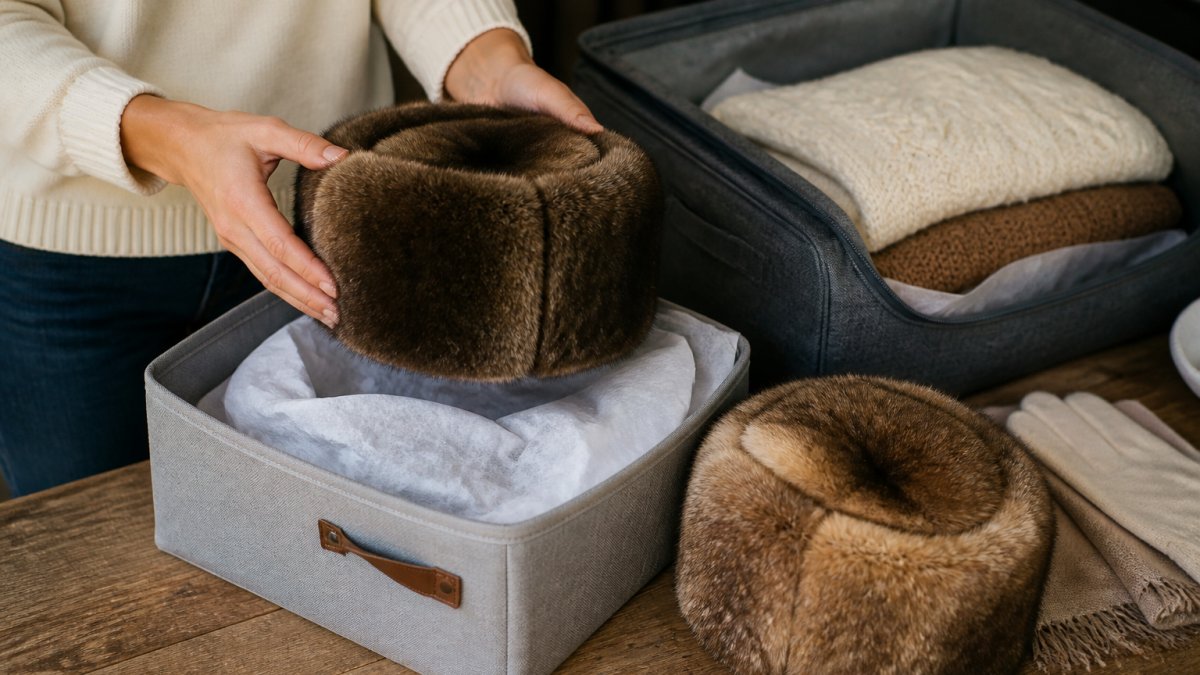
The container matters as much as the location, a storage box protects your hat from dust, pests, and crushing.
Creating the Ideal Storage Environment
Where you store your hat matters as much as how. The right environment keeps fur in perfect condition for months.
Temperature and Humidity Control
An interior closet is ideal for stable temperature and humidity. Keep the door closed to prevent fluctuations.
Protecting From Sunlight and Heat
Heat breaks down fur's natural oils, leaving hair dry, brittle, and prone to shedding. Keep your hat away from radiators, vents, and sunlit windows.
How to Protect Fur From Moths and Pests
Moths and other insects see fur as food. A single infestation can destroy a hat in weeks, often invisibly until it comes out of storage. Prevention is easier than repair, and the most effective prevention is a routine, not a single product.
Know What You're Actually Defending Against
A hat that smells musty, sheds more than usual, or shows bald spots after storage has likely hosted one of these. Inspect the crown, brim underside, sweatband, and lining seam, the four places larvae settle first.
Build a Layered Defense
- Clean before storage. Perspiration, skin oils, and food residue on the sweatband are what attract pests in the first place. A hat that goes into storage clean is far less likely to be found.
- Use a repellent barrier. Cedar blocks, cedar chips, or cedar-lined hat boxes work as a mild repellent. Place cedar around the hat, not directly against the fur, and refresh or lightly sand the cedar each season, the aromatic oils fade over time. Lavender sachets are a gentler alternative for people who dislike the smell of cedar.
- Seal the storage area, not the hat. Keep the hat in a breathable box, but store that box inside a closet with a closed door and no gaps to the outdoors. Pests usually arrive through openings, not through the box itself.
Inspect on a Schedule
Check the storage box every two to three months, and always before the season starts. A quick inspection takes under a minute:
If You Find Damage
When in doubt, especially with a valuable or inherited hat, consult a fur-care professional before attempting home treatment. They can identify the pest, assess the damage, and recommend whether the hat is safe to return to storage.
Pests target specific areas of a fur hat, and a layered defense strategy prevents infestations more effectively than any single product.
| Defense Layer | Method | Key Detail |
|---|---|---|
| Clean before storage | Remove perspiration and skin oils | Pests are attracted to sweat and residue |
| Use repellent barrier | Cedar blocks or lavender sachets | Place around hat, not directly on fur |
| Refresh cedar | Sand or replace each season | Aromatic oils fade over time |
| Seal storage area | Keep closet door closed | Pests arrive through openings, not boxes |
| Inspect regularly | Check every two to three months | Takes under one minute per inspection |
| Inspect high-risk areas | Crown, brim underside, sweatband, seam | Larvae settle in these four locations first |
Supporting Hat Shape: Preventing Compression and Crushing
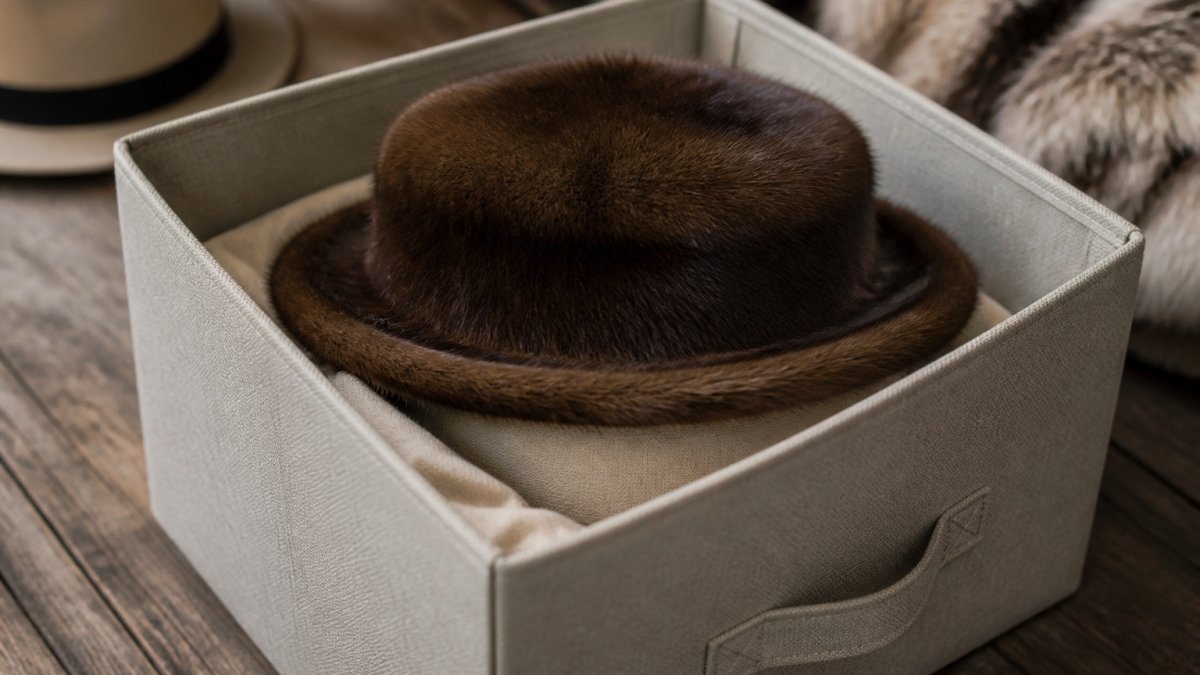
A fur hat's shape is part of its beauty and function. Crushed or compressed hats don't look right and may never fully recover.
Home Storage Versus Professional Fur Storage
Most people store fur hats at home successfully. It's affordable and convenient. But professional cold storage is a real option, and the decision should be based on four factors: your climate, how long the hat will be stored, the hat's value, and how much stable space you actually have. Treating cold storage as a blanket recommendation is a mistake, it isn't necessary for every hat, and it isn't a substitute for poor home conditions.
What Professional Cold Storage Actually Does
Cold storage also buys you a professional inspection. Many facilities will flag loose stitching, early pest activity, or moisture problems before they become expensive.
When Home Storage Is the Right Call
If any of those fail, especially the humidity and temperature points, home storage becomes a gamble. A damp basement or a hot attic will damage a fur hat faster than almost any other storage mistake.
When Professional Storage Is Worth It
- The hat is high-value or irreplaceable. An inherited or custom hat is difficult or impossible to replace, and the cost of storage is small relative to that risk.
- You live in a climate with extreme humidity or heat. Homes in these climates struggle to hold stable conditions through the off-season, even with air conditioning.
- You're storing for more than one season. Long-term storage amplifies every small risk, pests, moisture, compression, and professional facilities are built to manage them.
- You have multiple fur items. The per-item economics improve when a coat, hats, and accessories are stored together.
- You want insurance and inspection built in. Some facilities provide coverage and seasonal checks that are hard to replicate at home.
The Trade-Offs to Weigh
If you're unsure whether your home storage is adequate, ask a fur specialist to assess your closet conditions and the hat's construction. They can tell you whether the hat needs cold storage or simply better home habits.
Getting Your Fur Hat Ready for the Next Season
When warm weather ends and cold returns, it's time to take your hat out of storage. Browse fur hat options to replace or upgrade after the off-season. Do this carefully to avoid damaging the fur.
Frequently Asked Questions
Should a fur hat be stored in a plastic bag?
No. Plastic bags trap moisture and prevent air circulation, which can damage the fur structure and promote mold growth. Instead, use breathable storage materials like cotton garment bags or unbleached muslin. These allow the fur to breathe while protecting it from dust and pests. Avoid airtight containers entirely.
How do you keep a fur hat from losing its shape during storage?
Use a hat stand, crown support, or padded form inside your storage box to maintain the hat's shape. Never fold or stack fur hats, as compression and crushing damage the fur structure permanently. Fill the crown with acid-free tissue paper for extra support, and ensure the brim is fully supported on all sides to prevent bending or creasing.
How do you clean a fur hat before storing it for the season?
Gently brush the fur with a soft-bristled brush to remove surface dust and debris. For stubborn dirt, use a lint roller or soft cloth. Do not use water or cleaning solutions unless the hat is visibly soiled; in that case, consult professional fur care services. Allow the hat to air out in a clean environment for 24 hours before storage to ensure it is completely dry and free of odors.
Can you store a fur hat in a closet?
A closet can work if it maintains cool, stable conditions with low humidity and no direct sunlight. However, most home closets experience temperature fluctuations and inadequate humidity control, which can harm the fur. If using a closet, ensure it is well-ventilated, stays below 70°F, and has humidity between 40-50%. For long-term storage or in warm climates, professional cold storage is a safer option.
Storing a fur hat the right way takes minimal effort but delivers maximum protection. A cool, dark closet with stable humidity, a breathable storage box, and a hat form to maintain shape are all you need. Campbell Fine Furs creates hats built to last decades with proper care, storage is your part of that commitment. Take these steps now, and your hat will be ready to wear beautifully when you need it again.