 blog
blog
Buy Handcrafted Fur Blankets for Home: 2026 Guide
Table of Contents
- Why Handcrafted Fur Blankets Belong in Your Home
- Types of Fur: Fox, Mink, Rabbit, and Beaver Compared
- Sizing, Lining, and Customization Options
- Luxury Faux Fur Bedding for Rustic Bedrooms
- How to Style Fur Throws in the Living Room
- Best Practices for Cleaning Real Fur Blankets
- Ethical Sourcing, Artisanship, and What to Verify Before You Buy
- Frequently Asked Questions
Last Updated: September 22, 2026
Why Handcrafted Fur Blankets Belong in Your Home
A handcrafted fur blanket is a natural fiber throw made from real pelts, tanned and sewn by professional furriers rather than mass-produced on an assembly line. If you want to buy handcrafted fur blankets for home use, you're buying an investment piece, not a seasonal accessory. If you want to buy handcrafted fur blankets for home use, you're buying an investment piece, not a seasonal accessory.
Types of Fur: Fox, Mink, Rabbit, and Beaver Compared
Fox fur is the boldest choice: long guard hairs, dramatic color, and a lightweight feel. Mink fur is smoother and denser, with a low, sleek pile that suits tailored interiors. Rabbit fur is the softest and most affordable, though it wears faster than denser pelts. Beaver fur is the most durable, thanks to thick, water-resistant underfur that shrugs off heavy use.
Softness, Warmth, and Durability by Fur Type
| Fur Type | Feel | Warmth | Durability |
|---|---|---|---|
| Fox | Long, airy, dramatic | Moderate | Moderate |
| Mink | Smooth, dense, sleek | High | High |
| Rabbit | Very soft, light | Moderate | Lower |
| Beaver | Thick, sturdy | Very high | Very high |
Genuine Fur vs. Faux Fur: What Each Offers
Genuine fur delivers breathability and warmth that synthetic fibers struggle to copy, and it ages gracefully with proper care. Faux fur wins on price and easy cleaning, but it mats, pills, and sheds over time. Many buyers keep both: faux for high-traffic family rooms, genuine fur for the spaces they want to feel special.
Sizing, Lining, and Customization Options
Fur blankets are not sold in a single universal size, and the finished dimensions matter more than the pelt dimensions. Hand-sewn blankets can vary by an inch or two, and that difference changes how a throw drapes over a sofa arm or how a bed runner sits on a queen mattress.
Standard Sizes and Where Each One Works
Most makers build to a handful of conventional footprints. Use these as your starting reference:
| Size Class | Typical Finished Dimensions | Best Placement |
|---|---|---|
| Lap / pet throw | 30 x 40 in | Reading chair, foot of a twin bed, car |
| Standard throw | 50 x 60 in | Armchair, loveseat arm, sofa back |
| Large throw | 60 x 72 in | Full sofa, oversized chair, chaise |
| Bed runner | 30 x 90 in | Across the foot of a queen or king bed |
| Full bed cover | 90 x 100 in and up | Twin through king, layered over a duvet |
Lining Choices and What Each One Does
Lining is not decoration, it changes how the blanket behaves on furniture and against skin.
- Satin or silk lining: Slick surface that glides over leather and velvet without snagging. Cool to the touch, so it suits warmer rooms and decorative use.
- Quilted cotton or flannel backing: Adds weight and structure, keeps the blanket from sliding off a slick sofa, and feels warmer against the body. A common pick for beds.
- Velvet or microsuede backing: Grips upholstery well and adds a soft hand, but can pill over time with heavy use.
- Unlined (fur on both sides): The most luxurious feel and the heaviest drape, but it needs more careful handling and is harder to clean.
Custom Options Worth Asking About
Custom work usually covers size and lining fabric.
-
Custom sizing: Makers can cut to a specific sofa or bed footprint. Expect a longer lead time than in-stock sizes.
-
Backing swaps: Some buyers request a different lining after seeing swatches in person.
The Interior-Design Angle Most Buyers Miss
Sizing is a design decision, not just a fit decision. A throw that is too small looks like an afterthought on a large sectional; one that is too large swallows a small armchair. Match the blanket's visual weight to the furniture's scale:
- Rustic or cabin interiors: A larger, heavier throw in beaver or a thick fox reads as intentional against chunky wood and stone.
- Modern minimalist rooms: A single standard throw in mink or a low-pile fur keeps the line clean and avoids visual clutter.
- Transitional spaces: A bed runner in a contrasting tone adds texture without committing to a full fur cover.
Luxury Faux Fur Bedding for Rustic Bedrooms
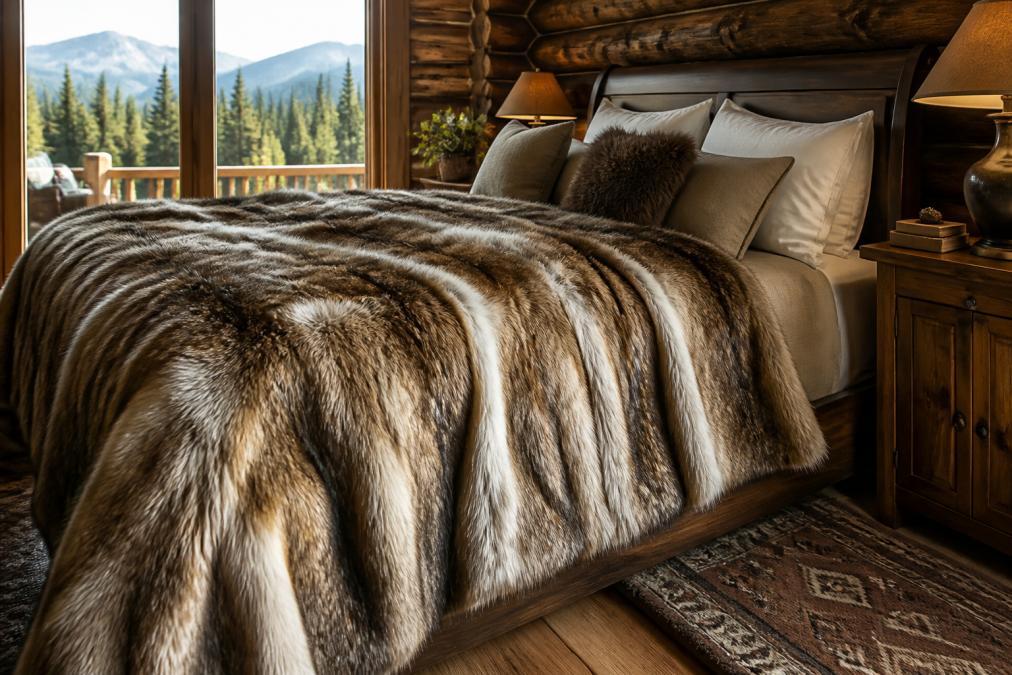
Faux fur has earned a real place in rustic bedrooms, but only when it is used as a deliberate layer, not as a full bed set. The goal is contrast: soft, dense texture against linen, wool, and wood.
What "Luxury" Faux Fur Actually Means
Not all faux fur is equal. The fiber blend determines how it feels, how it ages, and how it cleans.
- Acrylic faux fur: The most common and most affordable. Soft out of the box, but prone to matting and pilling with regular use.
- Modacrylic faux fur: A step up in durability and flame resistance. Holds its pile longer and resists crushing better than plain acrylic.
- Polyester blends: Often used for a silkier, lower-pile look. Resists shedding but can feel cooler and less plush.
- Backed vs. unbacked: A knit or woven backing keeps the pile from stretching. Cheap faux fur without a stable backing loses shape quickly.
Layering a Faux Fur Bed for a Rustic Room
A rustic bedroom works because of texture stacking, not because of any single piece. Build the bed in layers:
- Base: Linen or washed cotton sheets in cream, oatmeal, or stone gray.
- Mid layer: A wool or cotton blanket folded at the foot for warmth and structure.
- Fur layer: A faux fur throw draped across the foot of the bed, slightly off-center so it does not look staged.
- Accent: One genuine fur pillow or a single faux fur lumbar cushion for contrast.
Faux vs. Genuine: How to Choose for a Bedroom
Faux fur wins on price, easy cleaning, and peace of mind in a household with kids or pets. It also handles humidity and accidental spills far better than a real hide.
The Interior-Design Integration Guide
Most guides stop at "drape it on the bed." The real question is which aesthetic you are building toward.
- Rustic cabin: Heavy textures, warm browns, and a large faux fur throw layered over a wool blanket. Pair with leather, reclaimed wood, and iron accents.
- Modern minimalist: One low-pile faux fur in a neutral tone, folded neatly at the foot of the bed. No fringe, no pattern, no second fur piece.
- Scandinavian: A cream or light gray faux fur throw over white linen, with a single wool cushion. Keep the palette tight and the textures soft.
- Mountain lodge: A darker faux fur, charcoal or deep brown, layered over a plaid wool blanket. Add a genuine fur pillow for a mixed-texture focal point.
How to Style Fur Throws in the Living Room
The best placement for a fur throw is wherever people actually sit. Drape it over the arm of a leather armchair, fold it across a sofa back, or layer it over a linen slipcover for contrast.
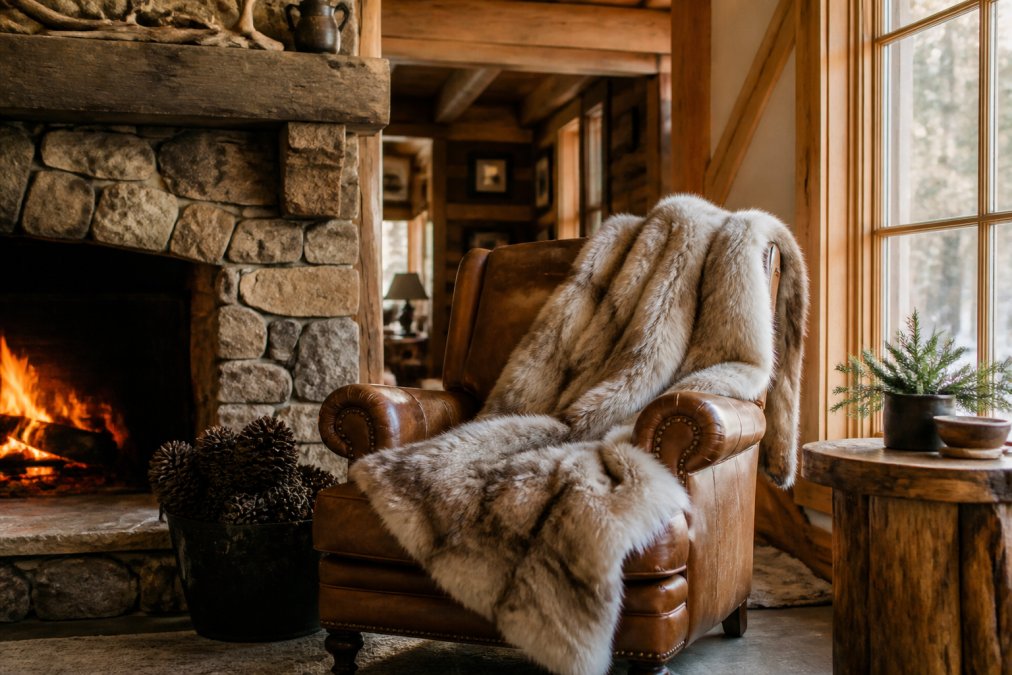
A few styling rules that hold up in practice:
- Match fur tone to your wood: warm browns with oak, cooler grays with weathered pine
- Keep one fur statement per seating area so it reads as a focal point
- Fold, don't bunch, so the texture stays visible from across the room
Best Practices for Cleaning Real Fur Blankets
Real fur needs cleaning far less often than fabric. Spot-clean small marks with a damp cloth and mild soap, always brushing with the grain. Shake the blanket outdoors regularly to release dust, and never machine wash or tumble dry genuine fur.
Long-Term Storage and Seasonal Care
Store fur blankets in a cool, dark place away from direct sunlight. Use a breathable cotton bag, never plastic, which traps moisture and invites mildew. Cedar blocks help deter insects without chemical sprays.
Ethical Sourcing, Artisanship, and What to Verify Before You Buy
Before ordering, confirm sizing, lining, shipping timelines, and the satisfaction guarantee in writing. Reputable sellers answer these without hesitation. If a seller dodges the sourcing question, walk away.
Frequently Asked Questions
How do you care for a handcrafted fur blanket?
Shake your handcrafted fur blanket regularly to remove dust and restore the nap. For genuine fur, spot-clean stains with a damp cloth and mild soap, then let it air dry away from direct heat. Never machine wash or tumble dry genuine fur. Faux fur can often be hand-washed in cold water. Store blankets in a breathable cotton bag, not plastic, and keep them out of prolonged sunlight to protect the pelts and fibers.
What should I look for when buying a luxury fur throw?
Check the fur type first, since fox, mink, rabbit, and beaver each differ in softness, warmth, and durability. Look at the backing and lining for quality stitching, and ask whether the piece is handcrafted by professional furriers or mass-produced. Confirm sourcing details if ethics matter to you, and request exact dimensions before ordering so the throw fits your sofa or bed.
What is the softest real fur blanket?
Mink fur is widely considered the softest and most plush, with a dense, silky texture that drapes well. Rabbit fur is also very soft but less durable over time. Fox fur offers a fluffier, more textured feel, while beaver fur is prized for durability and warmth rather than maximum softness. Your choice depends on whether you prioritize tactile softness, longevity, or warmth.
Can I use a fur blanket in a rustic bedroom with faux fur bedding?
Yes. Mixing genuine and faux fur in the same room works well when you keep colors and textures coordinated. A genuine handcrafted fur blanket layered over faux fur bedding adds depth and a focal texture. Stick to two or three neutral tones like cream, camel, and charcoal, and let the genuine fur be the statement piece rather than competing with everything else on the bed.
Choosing the right fur blanket comes down to matching fur type, size, and lining to how you actually live. Campbell Fine Furs offers handcrafted fur blankets, pillows, and home decor made with the same artisanal care as our fur hats, scarves, and mittens. Every piece is built to bring the beauty of the mountains into your home, with the craftsmanship and durability that mass-produced throws can't match. Browse the full collection and find the piece that fits your space.