 blog
Are Fur Scarves Worth It for Mountain Style?
Last Updated: October 29, 2026
Quick Summary
Fur scarves work well for mountain style when you match fur type to use: fox for everyday warmth and a classic look, Mongolian for texture and cabin weekends. Choose a pull-through or infinity design for technical shells, and care for real fur by air drying and storing it in a breathable cloth bag.
- Silver fox suits gray and black wardrobes; red fox pairs well with canvas and waxed cotton.
- A fur infinity scarf sits close to the neck without long ends that flap in wind.
- Never machine wash or submerge real fur, as water damages the leather backing.
- Store fur in a breathable cloth bag, never plastic, away from heat and damp.
- With proper care, a real fur scarf can last many seasons and be repaired.
Table of Contents
- Why Fur Scarves Make Sense for Mountain Style
- Fox Fur Scarf: The Classic Mountain Choice
- Mongolian Fur Scarf: Texture and Warmth in One
- Fur Scarf Styling: Pairing with Coats and Mountain Outfits
- How to Care for a Fur Scarf: Cleaning, Storage, and Longevity
- Real Fur vs. Faux Fur: Sourcing, Durability, and Trade-Offs
- Choosing Your Fur Scarf at Campbell Fine Furs
- Frequently Asked Questions
Why Fur Scarves Make Sense for Mountain Style
Mountain style is not a costume. It is a working wardrobe built around layers, texture, and gear that survives real weather.
Fox Fur Scarf: The Classic Mountain Choice
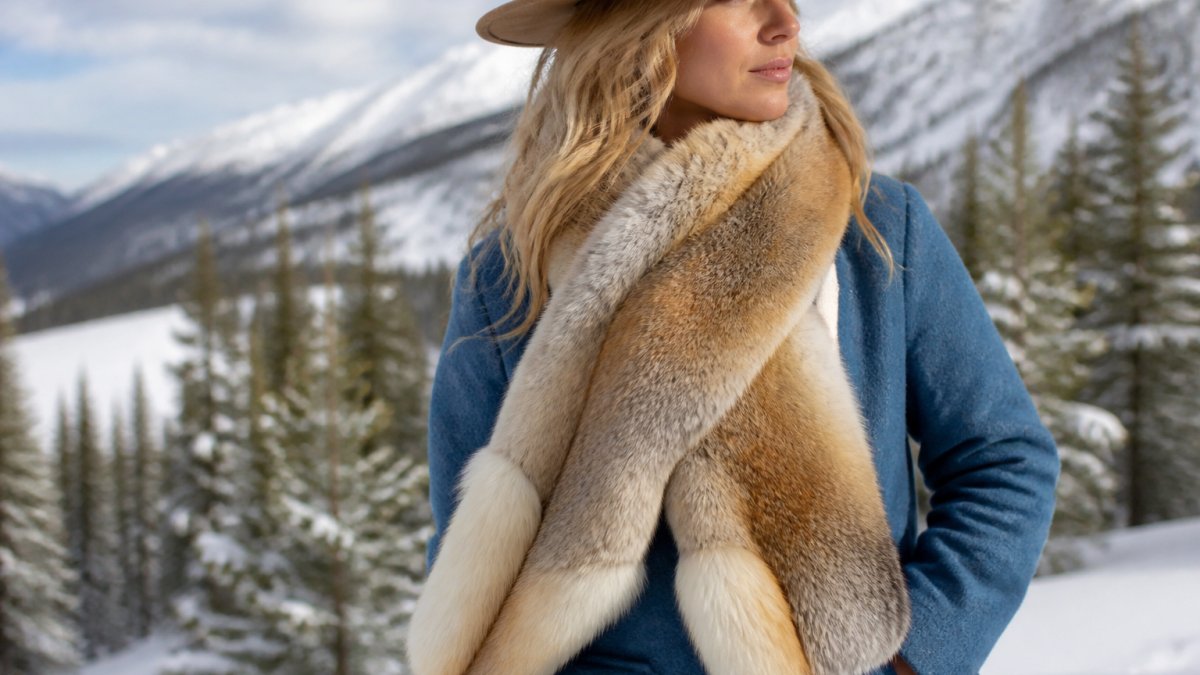
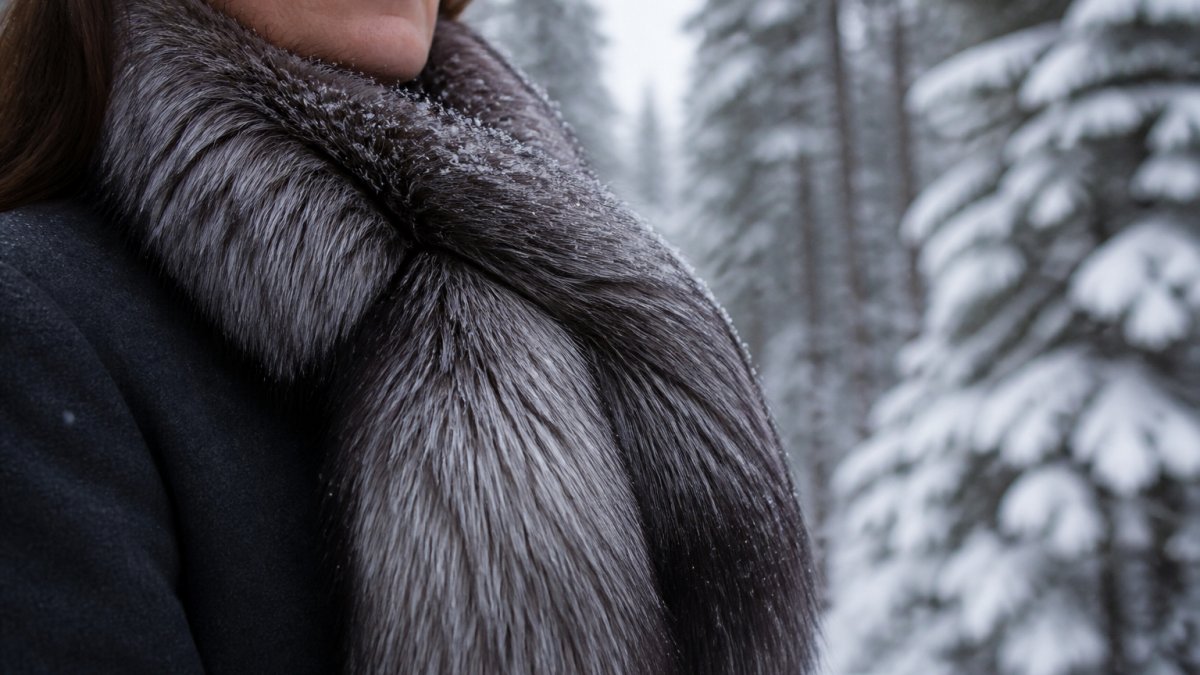
Long hair gives fox a fluffy, dramatic look that frames the face. It also makes the scarf forgiving: a fox scarf drapes well over a heavy coat collar and does not flatten the way shorter furs can. Silver fox and red fox are the two you will see most.
Silver Fox vs. Red Fox: What to Know
Neither is "better." Silver fox is the safer match for a wardrobe built on grays and blacks. Red fox brings more color and looks especially good against natural canvas and waxed cotton jackets. Both shed lightly at first and settle with wear.
Mongolian Fur Scarf: Texture and Warmth in One
One honest limitation: the long curl can catch on zippers, Velcro, and pack straps. If you spend a lot of time in technical gear, check how the scarf sits before you commit. For town days, cabin weekends, and layered outfits, the texture is the whole point.
Fur Scarf Styling: Pairing with Coats and Mountain Outfits
Styling a fur scarf for mountain use is not the same as styling one for a city commute. The difference is layering: a fur scarf has to work with a technical shell, a midlayer, and sometimes a helmet or hood, without creating bulk where you need mobility or trapping moisture against your neck. Get the proportion and placement right and the scarf becomes part of the system rather than an accessory you shed at the lift line.
Matching scarf volume to outerwear
The core rule is volume-to-volume. A long-haired fox scarf pairs best with structured wool coats, waxed cotton jackets, and smooth nylon shells where the contrast in texture reads intentional. A curly Mongolian lambskin scarf adds visual weight, so it works better over a trimmer puffer or a canvas anorak than over a bulky parka with a fur-trimmed hood. If your jacket already has a fur hood ruff, a matching fur scarf can look redundant; a smoother fur or a pull-through infinity design keeps the neckline clean.
Working with ski jackets and technical shells
- Pull-through or infinity scarf. A fur infinity scarf sits close to the neck without long ends that flap in wind or catch on chairlift bars. It layers under a jacket collar or over a base layer without adding bulk at the shoulders.
- Fur collar or snood. A detachable fur collar adds warmth and a finished edge to a technical shell without the loose ends of a scarf. It also packs flat when you do not need it.
Layering order that actually works
A fur scarf worn directly against the neck over a base layer gives the most warmth with the least bulk. Worn outside the shell, it adds wind resistance at the throat but is more exposed to snow and wet.
Color and contrast on the mountain
For more outfit ideas, see our guide on how to style fur scarves with Western wear, which covers pairing fur with denim, leather, and layered mountain looks. And if you are building a full cold-weather wardrobe, our roundup of the best winter accessories for mountain living shows where a fur scarf fits alongside hats, mittens, and blankets.
How to Care for a Fur Scarf: Cleaning, Storage, and Longevity
Fur care is not one routine. A long-haired fox scarf, a curly Mongolian lambskin scarf, and a synthetic faux fur scarf each need different handling, and mountain use adds snow, damp, and temperature swings to the equation. The basics below apply across materials; the material-specific notes tell you where to adjust.
Daily care after wear
Shake the scarf gently after each wear to release dust and restore loft. Hang it on a broad, padded hanger rather than a wire one so the shoulders do not crease. Never machine wash or submerge real fur, water damages the leather backing and can cause the fur to mat or shed. Faux fur is more forgiving but still benefits from gentle handling.
Drying after snow or rain
If the scarf gets damp, hang it away from direct heat and let it air dry at room temperature. Do not put it on a radiator, in front of a fireplace, or in a dryer, heat dries out the leather and makes fur brittle. A common pattern is to shake off loose snow before going inside, then hang the scarf to dry overnight. For a deeper walkthrough, see our guide on what happens if real fur gets wet.
Material-specific care
- Fox fur. Long guard hairs benefit from occasional brushing with a soft brush in the direction of the hair. Fox sheds lightly at first and settles with wear; heavy shedding is a quality signal, not a care issue.
- Mongolian lambskin. The tight curl hides everyday wear well but can mat if compressed. Store it loosely and avoid hanging it by the curl. Brush gently with a soft brush to keep the curl defined.
- Faux fur. Most faux fur can be spot-cleaned with a damp cloth and mild soap. Some pieces are machine washable on a gentle cycle, but check the label first. Air dry only; heat can melt synthetic fibers.
Storage that protects the investment
Store fur in a breathable cloth garment bag, never plastic. Plastic traps moisture and can cause the leather to crack or the fur to shed. Keep the scarf away from radiators, sunny windows, and damp basements. For mountain households, a cedar-lined closet or a breathable storage bag in a cool, dry room is ideal. Avoid compressing the scarf under heavy coats; a padded hanger or a loose shelf keeps the shape.
Seasonal maintenance and travel
At the end of winter, have real fur professionally cleaned and stored if you can. A furrier can also repair small tears and replace linings. For travel, roll the scarf loosely rather than folding it flat, and pack it in a breathable bag. If you are skiing or snowboarding, keep the scarf inside your jacket or in a dry bag rather than stuffed in a wet pack.
Longevity expectations
With proper care, a real fur scarf can last many seasons and be repaired when needed. Faux fur typically lasts one to two seasons of hard wear before matting or pilling. The care routine is the main variable: a fox scarf that is shaken, aired, and stored breathably will outlast a neglected one by years.
Real Fur vs. Faux Fur: Sourcing, Durability, and Trade-Offs
| Factor | Real Fur | Faux Fur |
|---|---|---|
| Warmth | High, traps air naturally | Moderate, depends on backing |
| Weight | Light for the warmth | Heavier per unit of warmth |
| Durability | Years with proper care | Often 1-2 seasons of hard wear |
| Care | Air dry, breathable storage | Machine wash in some cases |
| Repairable | Yes, by a furrier | Rarely |
| Best for | Cold climates, long-term wear | Occasional wear, travel |
Choosing Your Fur Scarf at Campbell Fine Furs
- Match fur type to use. Fox for everyday warmth and a classic look; Mongolian for texture and cabin weekends. You can view a Coyote Fur Scarf to see a specific product option.
- Check the backing and lining. A well-finished scarf feels smooth against the neck and holds its shape.
- Ask about shedding. Light shedding at first is normal; heavy shedding is a quality signal.
- Think about your coat. Bring a photo of your main winter coat and match color and volume. If you are comparing styles, you can also browse a Bobcat Fur Infinity Scarf.
Frequently Asked Questions
What type of fur scarf is warmest for winter?
Fox fur and mink tend to provide the most warmth because of their dense underfur and natural insulation. Mongolian fur scarves are also very warm but bulkier. For mountain conditions, a fox fur scarf offers a good balance of warmth, lightweight feel, and breathability. Layering matters too: a fur scarf worn over a wool coat traps heat effectively. At Campbell Fine Furs, each scarf is crafted from high-quality pelts selected for density and softness.
How do you style a fur scarf with a winter coat?
Drape a long fur scarf over the shoulders and let the ends hang loose for a relaxed look, or wrap it once around the neck for extra warmth. A pull-through or infinity style works well with structured coats. For mountain style, pair a fox fur scarf with a canvas or wool coat in earth tones. Avoid over-accessorizing; let the scarf be the focal point. Campbell Fine Furs offers scarves in natural colors that pair easily with most winter outerwear.
How should a fur scarf fit around the neck?
A fur scarf should sit comfortably without feeling tight. You want enough length to wrap once or twice, but not so much bulk that it restricts movement. For active use, a shorter pull-through style stays in place better. For everyday wear, a longer stole or boa allows flexible styling. Check that the inner lining feels smooth against your neck and that the scarf does not slide off easily when you move.
Can you wear a fur scarf with a ski jacket?
Yes, but choose a lightweight style. A fox fur scarf or a slim fur collar adds warmth without bulk under a ski jacket's collar. Avoid long, dangling styles that could catch on equipment. Faux fur is an option if you prefer synthetic materials, though real fur generally breathes better during activity. For apres-ski or casual mountain wear, a fuller Mongolian fur scarf works well over a puffer jacket.
Mountain winters punish gear that cannot keep up, and neckwear is where most wardrobes fall short. If you want a scarf that holds warmth, keeps its shape, and looks right with the coats you already own, we can help. Campbell Fine Furs offers handcrafted fur scarves, hats, and mittens built for cold-weather living, with artisanal construction and natural materials. Get started with Campbell Fine Furs and find a fur scarf made to last through many winters.