 blog
blog
Top 5 Authentic Fur Hats for Cowboy Style
Table of Contents
- What Makes a Fur Hat Authentic for Western Wear
- Top 5 Authentic Fur Hats for Cowboy Style: Quick Comparison
- Beaver Fur Felt Cowboy Hats: Why They Outlast Everything Else
- How to Clean Fur Felt Hats Without Damaging the Felt
- Sizing, Crown Shape, and Brim Width: Getting the Fit Right
- Ethical Sourcing, Repair, and Climate: What Most Guides Skip
- Conclusion
- Frequently Asked Questions
Last Updated: October 2, 2026
What Makes a Fur Hat Authentic for Western Wear
Authentic fur hats are made from felted animal fur, most often beaver, rabbit, or a blend, where fibers interlock into one dense material rather than being glued or woven. This guide from Campbell Fine Furs breaks down how to spot that difference before you buy.
Felt density is the tell. Run your thumb against the nap of a real fur felt hat and you feel resistance and spring, not a flat, fuzzy surface. Cheaper wool hats feel lighter and looser, and lose their shape the first time they get wet.
The five hats below cover what's worth buying in 2026, from pure beaver to practical blends, plus sizing, cleaning, and sourcing questions most buyers forget to ask.
Felt Density and Shape Retention: The Real Test
Felt density determines how long a hat holds its shape, the best predictor of whether you're buying for five years or twenty.
A practical test: press your thumb firmly into the crown. Quality fur felt pushes back immediately with no permanent dent; wool and low-density blends leave a lingering mark.
Shape retention also depends on finishing. Handcrafted hats are blocked and steamed over a form, setting fibers in a way machine pressing rarely matches.
Top 5 Authentic Fur Hats for Cowboy Style: Quick Comparison
Fur felt hats fall into five practical categories. The right one depends on your climate, budget, and how hard you'll wear it.
| Hat Type | Felt Material | Best For | Shape Retention | Weather Resistance |
|---|---|---|---|---|
| Pure beaver felt | 100% beaver fur | Daily wear, harsh weather | Excellent | High |
| Beaver blend | Beaver and rabbit mix | All-around use | Very good | Good |
| Rabbit fur felt | 100% rabbit fur | Occasional and dress wear | Good | Moderate |
| Hare and wool blend | Hare fur with wool | Budget western style | Fair | Low |
| Custom-blocked fur felt | Buyer's choice of fur | Fit-critical buyers | Excellent | Varies by fur |
The honest take: most cowboy hat shoppers don't need pure beaver. A beaver blend handles rain, holds a crease, and costs less. Pure beaver earns its place only for daily wear in real weather.
Beaver Fur Felt Cowboy Hats: Why They Outlast Everything Else
Beaver fur felt outlasts other types because beaver fibers have natural barbs that lock together tightly during felting, creating a denser, more water-resistant material than rabbit or wool can produce alone.
The trade-off is weight and price: pure beaver feels heavier than rabbit felt and takes longer to break in, but it holds a crease better over time, so a custom crown stays where you set it.
Beaver Blend vs. Pure Beaver: What You Actually Get
A beaver blend mixes beaver and rabbit fur, usually between 50/50 and 80/20.
Pure beaver gives maximum durability and shape retention, but it's the heaviest and priciest. A blend gets most of the weather resistance at lower cost and a lighter feel.
Daily wear in wet or cold conditions justifies pure beaver; a few times a week makes a blend the smarter buy.
How to Clean Fur Felt Hats Without Damaging the Felt
Cleaning fur felt hats starts with dry methods only. Never soak a fur felt hat in water or use soap on the felt.
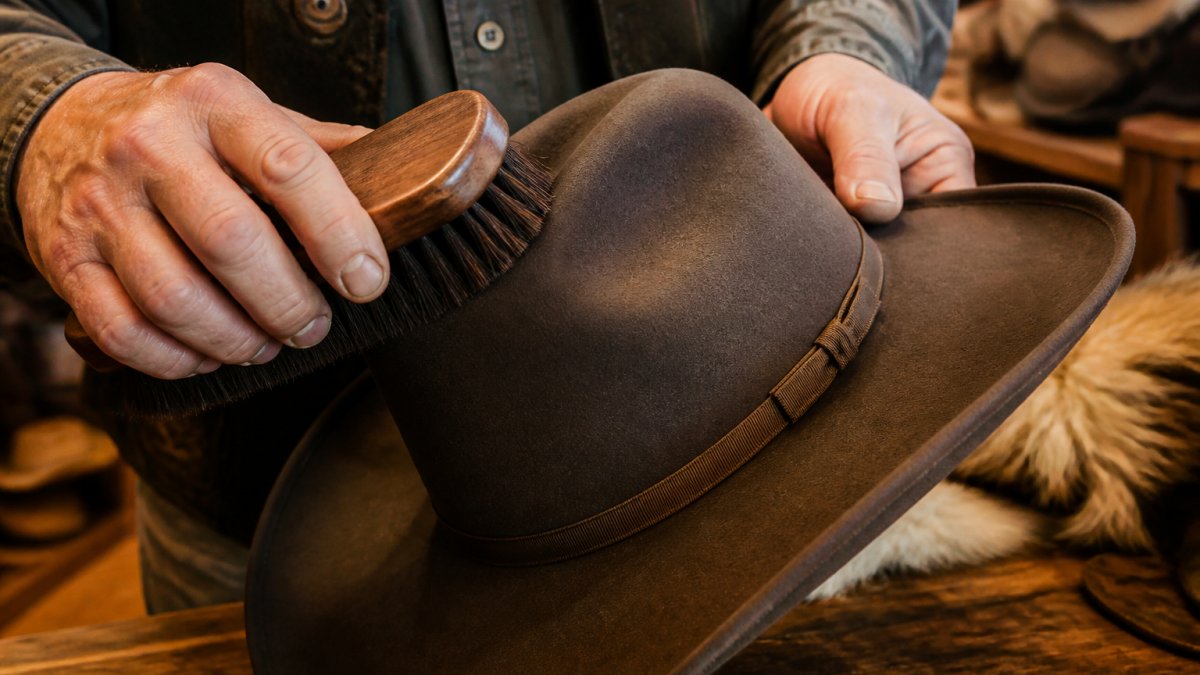
Start with a soft horsehair brush.
For heavier grime, use a damp cloth on the sweatband only, it tolerates a light wipe far better than the felt body.
For spots on the felt, use a specialty felt sponge or fine sandpaper lightly with the nap.
What to Do When the Hat Gets Soaked
If a fur felt hat gets caught in real rain, shake off the excess and air dry at room temperature, away from radiators, heaters, and direct sun, heat shrinks and hardens felt faster than water. While still slightly damp, reshape the crown by hand.
Never use a hair dryer, and never set a wet hat on its brim, which can curl as it dries.
Reblocking and Restoration: When to Hand It Off
For deeper cleaning or reshaping, take the hat to a professional hatter.
A full restoration covers more than the crown: a hatter can replace a cracked or sweat-stained sweatband, reattach or replace a hatband, sew a new liner, and reflange a wavy brim.
A vintage fur felt hat with a stiff, cracked crown has usually dried out beyond home care.
A Simple Care Rhythm
Brush every few wears. Spot-clean as stains appear. Air the hat out after heat or rain so moisture doesn't sit in the sweatband. Store it right-side up. Send it to a hatter every few years, or whenever the shape drifts. That rhythm separates a hat that lasts five years from one that lasts twenty.
Sizing, Crown Shape, and Brim Width: Getting the Fit Right
Hat sizing comes down to head circumference, but head shape matters just as much. Two people with the same circumference can need different sizes depending on whether their head is a long oval or a regular oval.
Measure around your head just above the ears and across the middle of the forehead. Between sizes, size up and fine-tune with the sweatband adjustment or felt tape.
Crown shape and brim width should match your face and use.
Ethical Sourcing, Repair, and Climate: What Most Guides Skip
Most guides stop at brand names and felt percentages. The three questions that actually determine whether a fur felt hat is worth owning are sourcing, repair, and climate fit.
Sourcing: The Question Buyers Ask Last and Should Ask First
Fur felt comes from animals, and buyers increasingly want to know how they were raised or harvested.
Vague answers are a red flag. A seller who can't name the country of origin or the type of operation is either reselling without knowing their supply chain or dodging the question, neither is a good sign for a hat you plan to keep for years.
Reputable makers often source beaver and rabbit fur as a byproduct of existing food and wildlife-management channels, so the fur isn't the primary reason the animal was taken.
Authenticity Verification: Telling Real Fur Felt From a Blend
You can verify felt authenticity before you buy with a few simple checks.
- The thumb test. Press your thumb firmly into the crown. Real fur felt pushes back immediately and leaves no permanent dent. Wool and synthetic blends leave a mark that lingers.
- The burn test (on a loose fiber only). Pull a stray fiber from the nap or the inside of the sweatband and burn it with a match. Real animal fur smells like burning hair and crumbles to ash; synthetic fibers melt into a hard bead and smell like plastic. Never do this on the hat body itself.
- The sheen check. Fur felt has a soft, natural luster that shifts as you turn the hat in the light. Synthetic felt tends to look flat or slightly shiny in a uniform way.
- The label and the seller. A hat labeled "fur felt" without naming the animal is usually a blend or a wool blend. Ask what percentage of the felt is beaver, rabbit, or hare, and whether the crown was hand-blocked or machine-pressed.
If a seller cannot answer those questions, treat the hat as a wool blend until proven otherwise.
Climate: Match the Felt to Your Actual Weather
Climate should drive your felt choice more than reputation does.
- Humid heat. A lighter rabbit or rabbit-blend felt breathes better and won't feel oppressive in shoulder-season heat. Heavy beaver felt can feel clammy when humidity is high because it holds moisture against the head.
- Dry heat. A heavier beaver hat is workable for sun protection because the felt blocks UV and holds its shape in the heat, but you'll want a lighter sweatband and good ventilation to manage sweat.
- Cold and wet. Beaver and beaver blends handle rain and snow far better than rabbit or wool. This is where pure beaver earns its price.
- Freeze-thaw and salt. In regions that see road salt and repeated freeze-thaw, a dense felt resists the stiffness that cheaper felt develops after repeated wetting and drying.
Match the felt weight to your actual weather, not to the hat's reputation. A pure beaver hat worn in a humid climate is often the wrong tool, and a rabbit felt hat worn in a wet one will not last.
Repair: The Long-Term Value Nobody Mentions
A good fur felt hat can be reblocked, rebanded, and have its sweatband replaced, extending its life by years. Ask whether the seller offers repair or can recommend a hatter who does, a maker who stands behind their hats is telling you how they built them.
This is where Campbell Fine Furs focuses its attention: artisanal fur accessories built around real materials and traditional craftsmanship.
Conclusion
Choosing among the top 5 authentic fur hats for cowboy style comes down to three questions: what weather you'll wear it in, how often, and how much shape retention you need. Answer honestly and the felt type picks itself.
Campbell Fine Furs offers handcrafted fur hats and accessories built from quality materials, spanning beaver blends, rabbit felt, and custom options for a specific fit or crown shape, plus artisanal fur accessories and Western-inspired goods.
View All Products to find the fur felt hat that matches your climate and your style, backed by craftsmanship that's meant to last.
Frequently Asked Questions
What materials make a cowboy hat authentic fur felt?
Authentic fur felt comes from animal fur, most often beaver, rabbit, or a blend of both. Beaver fur has barbed fibers that interlock tightly during felting, which creates dense felt that holds its shape through rain and repeated wear. Rabbit fur is softer and less expensive but wears faster. Wool felt, by contrast, uses sheep wool and lacks that interlocking structure, so it sags sooner. Check the label for a stated fur content percentage rather than a vague 'fur blend' claim.
What is the difference between beaver and rabbit fur felt?
Beaver fur felt resists water and holds its crown shape far longer than rabbit. The barbed beaver fibers lock together during the felting process, producing felt that survives years of sun, rain, and handling. Rabbit fur felt costs less and feels softer to the touch, but it loses shape faster and needs more frequent blocking. Many hats split the difference with a beaver blend, which pairs a percentage of beaver with rabbit for a middle ground on price and durability.
How should a high-quality fur cowboy hat fit?
A fur felt cowboy hat should sit level on your head, roughly one finger's width above your eyebrows, with no pressure points across the forehead. It should feel snug but not tight, and stay put when you nod or turn your head. Fur felt relaxes slightly with wear, so a hat that feels a touch firm at first is usually right. Know your oval shape too, since regular oval and long oval crowns fit differently, and sizing between brands varies.
How do you maintain an authentic fur cowboy hat?
Brush the felt with a soft horsehair brush after each wear to lift dust from the nap. Let the hat dry naturally at room temperature if it gets wet, never near a heater, and store it crown-down on a clean surface or in a hat box. For deeper cleaning, use felt-specific methods and avoid soaking the sweatband. Reblocking and reshaping by a professional extends the life of a beaver blend hat considerably and costs far less than a replacement.