 How-to
How to Choose the Right Lure for Bobcat Trapping
Last Updated: November 18, 2026
Quick Summary
Choosing the right lure for bobcat trapping depends on the season, weather, food supply, and set type. Gland lure draws bobcats in to investigate, while food-based and curiosity lures suit other conditions. Match the lure to your conditions, then pair it with bait when the animal needs a reason to stay.
- Lure attracts a bobcat's attention; bait gives it a reason to stay and work the set.
- Use gland lure sparingly and freshly applied, since overapplication can make a set smell unnatural.
- Choose food-based lures when natural prey is scarce, and curiosity lures when food is abundant.
- Place lure a few inches off the pan so the bobcat must step onto the trigger to reach it.
- Cold, dry air holds scent longer, while rain and snow wash lure away and require refreshing.
Table of Contents
- Lure vs. Bait: Knowing the Difference Before You Buy
- Understanding Bobcat Gland Lure and How Bobcats Respond to It
- Curiosity, Food-Based, and Gland Lures: Matching Lure Type to Conditions
- Best Bobcat Bait for Trapping and When to Pair It With Lure
- Trapping Lure Application Techniques: Placement and Set Design
- Weather, Scent Longevity, and Troubleshooting an Unproductive Set
- Planning Your Next Set With the Right Lure in Hand
- Frequently Asked Questions
Lure vs. Bait: Knowing the Difference Before You Buy
Choosing the right lure for bobcat trapping starts with understanding what a lure actually does in a bobcat trapping set. A lure attracts a bobcat's attention and draws it toward the set. Bait is something the animal eats or is drawn to consume. The two work together, but they have different jobs, and confusing them is one of the most common reasons a set goes unproductive.
At Campbell Fine Furs, we treat lure as the attention-getter and bait as the reason an animal stays and works the set.
A lure rarely feeds an animal. It gets a bobcat to investigate. Once it is curious, you need something that holds its attention through the trigger. Keep those roles separate in your head and your buying decisions get much simpler.
Understanding Bobcat Gland Lure and How Bobcats Respond to It
Gland lure is made from scent glands and is designed to trigger a territorial or social response during bobcat trapping. Browse the Weiser Western Lures Red Fox Gland Lure to see a gland lure option for these sets. Bobcats often investigate it closely, which makes it one of the most widely used lure types for this species. You can view the Weiser Western Lures Bobcat Gland Lure and compare it directly with other gland options.
A bobcat that encounters a strong gland scent often approaches to inspect the source. That approach is what you are working toward. The lure works best when it draws the animal into the trap pan area rather than past it.
Use gland lure sparingly and freshly applied. Overapplication can make a set smell unnatural, and a bobcat may simply avoid it. A small amount placed where the animal must pass near the pan usually performs better than a heavy coating.
Curiosity, Food-Based, and Gland Lures: Matching Lure Type to Conditions
There are three broad categories to consider: curiosity lures, food-based lures, and gland lures. Each one works on a different part of a bobcat's behavior, and the conditions around your set decide which one earns its place.
Gland lures carry scent-gland material and trigger a territorial or social response. For a non-bobcat option, see the coyote gland lure. A bobcat that catches a strong gland scent often closes in to inspect the source, which is exactly the approach you want near the pan.
Food-based lures appeal to hunger. They earn their keep when natural prey is scarce, when a cold snap has animals working harder for calories, or when you are running a set near fresh sign and want a bobcat to commit and work the set.
Curiosity lures rely on novelty. For a deeper look at how each lure category works, read the field guide to scents. They make a bobcat stop, turn, and investigate something that does not belong. They are useful when food is abundant and a hungry response is weak, and when you want a cat to break its travel line and come look.
A Decision Framework for Choosing a Lure
Work through these questions before you buy:
- What is the season? Breeding periods favor gland lure. Late winter, when cover is thin and prey is stressed, often favors food-based attractants.
- What is the weather doing? Cold, dry air holds scent and slows release, so a little goes a long way. Warm, humid air and steady wind push scent faster and shorten its life. Rain and snow wash lure off an applicator, so plan to refresh after weather.
- How much food is available? Scarce food favors food-based attractants. Abundant food may make curiosity lures more effective.
- What is your target? If you want bobcats specifically, choose a bobcat-appropriate gland lure over a general predator scent.
- What is your set type? Cubby and pan sets need lure placed to draw the animal onto the pan, so pick a scent strong enough to pull from the approach but not so heavy it overwhelms a tight set.
- How long will the set sit? A set you check daily can run a lighter curiosity scent. A set left for days needs a heavier gland or food-based lure that survives the weather.
If your answers point in more than one direction, start with a gland lure and track results for two or three weeks before changing. Change one variable at a time so you can tell whether the lure, the placement, or the weather made the difference.
Watch out: overapplying any lure, especially a heavy food-based scent, can make a set smell unnatural and cause a bobcat to circle and leave rather than commit.
Best Bobcat Bait for Trapping and When to Pair It With Lure
Bait holds a bobcat at the set once lure has drawn it in during bobcat trapping. For a practical overview of choices, see the best trapping bait for bobcats. The best bobcat bait for trapping is one the animal will consume or work on for an extended period.
Pair lure with bait when you need the animal to commit to the set. Use lure alone when you are testing whether bobcats are present in an area, since bait can attract non-target animals and add cost.
Trapping Lure Application Techniques: Placement and Set Design
Placement determines whether a lure does its job in bobcat trapping. The goal is simple: put the scent where a bobcat must approach the pan to reach it, and build the set so its path naturally crosses the trigger. Here is a repeatable sequence.
- Pick the approach. Find the natural travel line or sign and set up so the bobcat arrives from the cover side, not the open side. A cat that feels exposed will circle rather than commit.
- Build the set. For a cubby or backing set, create a small opening that funnels the animal toward the pan. Keep the opening low and tight so the cat has to lower its head and step in.
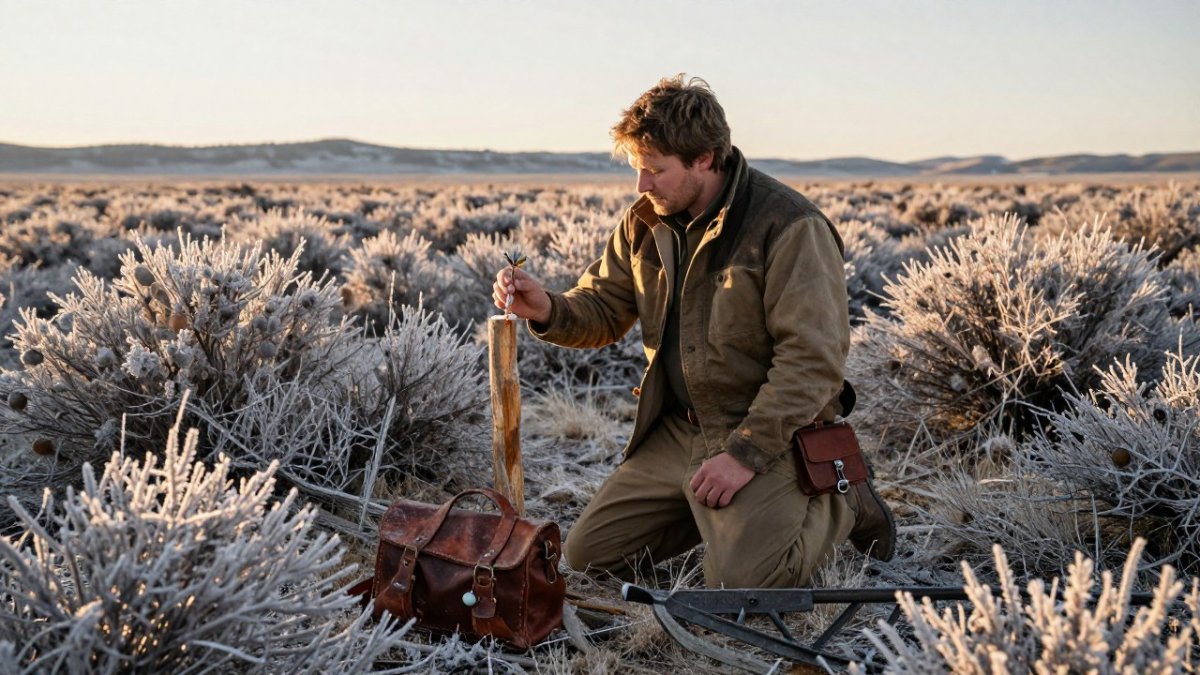
- Place the lure off the pan. Apply lure to a stick, a clump of grass, or a hanging object a few inches off the ground and just outside or beside the pan, so the animal must step onto or past the trigger to inspect the source. Never put lure directly on the pan, where a cat will dig around the trigger and trip nothing.
- Add a visual cue. A small hanging object, a feather, or a shiny piece near the lure gives a bobcat something to see from a distance and pulls it in to the scent.
- Bed the trap and cover the scent of your hands. Handle lure and trap with clean gloves, and keep disturbance low around the site. Human scent on the set makes a bobcat wary.
- Check the sightline. Step back and look at the set from the approach. If you can see the pan from the travel line, so can the cat, and it may stop short.
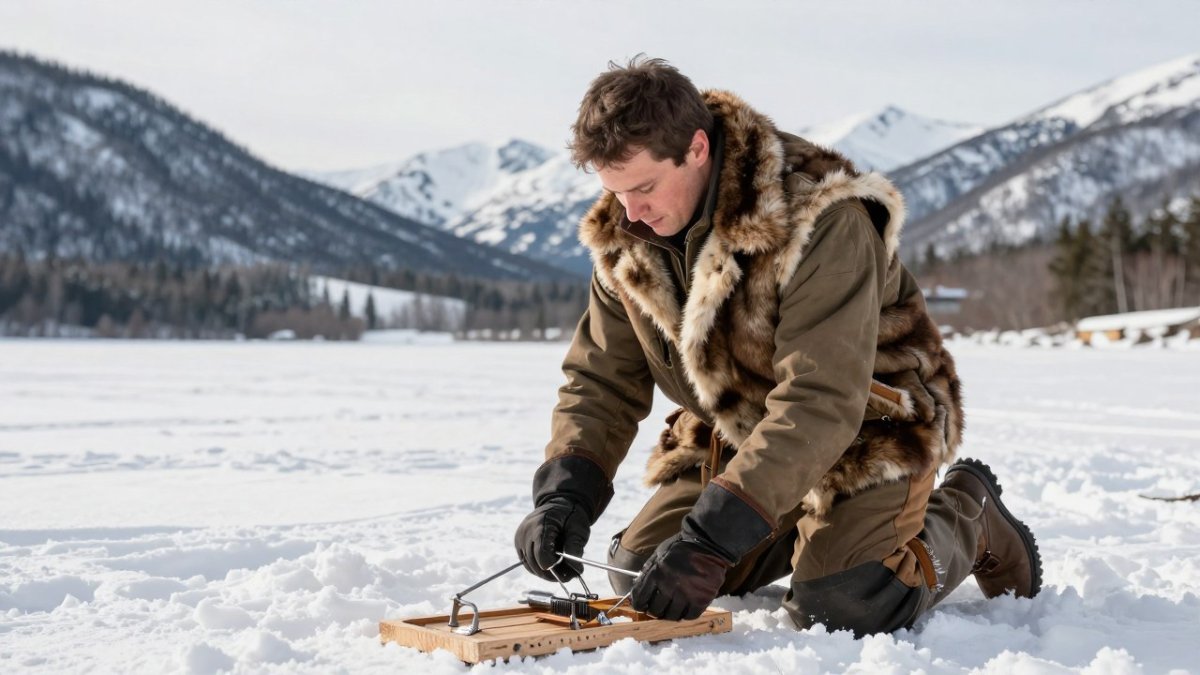
A trapper in outdoor winter clothing kneeling beside a small trap set on snowy ground, applying lure to a stick near the trap pan in soft morning light
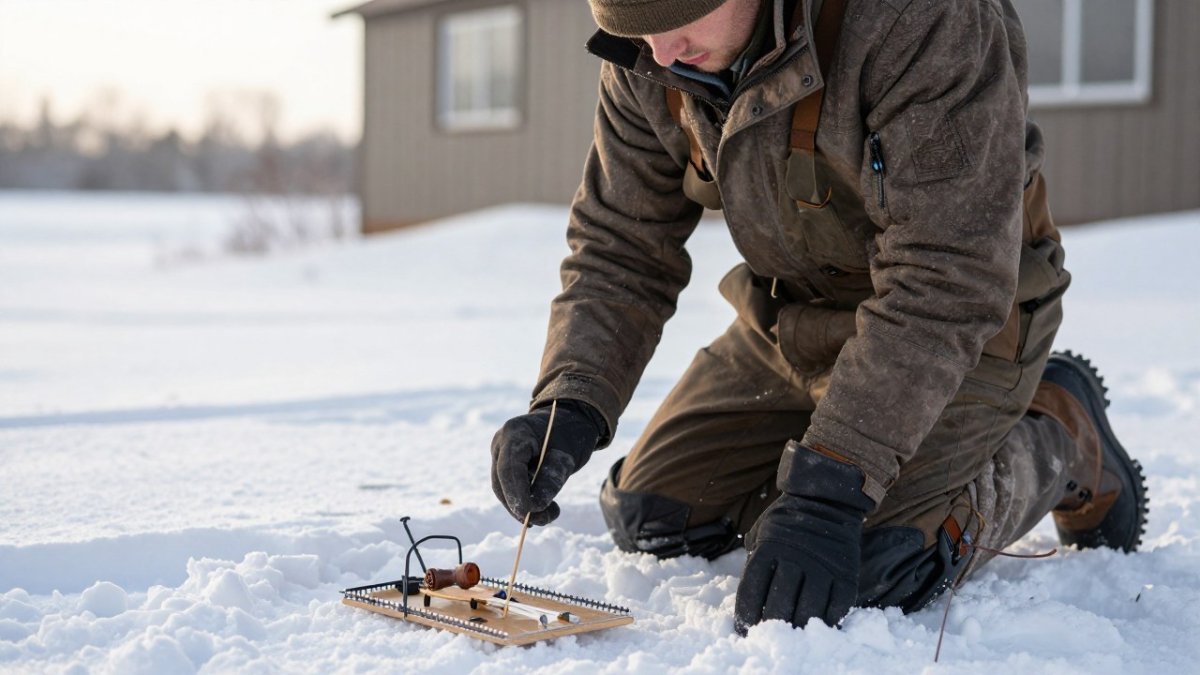
Set design matters as much as the lure itself. A tight set with a clear approach and lure placed to pull the animal onto the pan will outperform a heavy dose of scent in a sloppy set every time. Keep the set simple, keep it clean, and keep the lure where the cat has to commit to reach it.
Watch out: placing lure too far from the pan draws a bobcat in to investigate and then lets it leave without ever stepping on the trigger, which is one of the most common reasons a set looks worked but stays empty.
Weather, Scent Longevity, and Troubleshooting an Unproductive Set
Cold temperatures slow scent release, while rain and snow can wash lure away during bobcat trapping. Check set placement after storms.
If a set goes unproductive, check these first: lure freshness, placement relative to the pan, human scent on the site, and whether non-target animals are disturbing the set. Change one variable at a time so you can tell what made the difference. Legal and ethical trapping rules vary by state, so confirm the requirements that apply where you trap before setting out.
Planning Your Next Set With the Right Lure in Hand
Start with a clear purpose for each bobcat trapping set, pick the lure type that fits your conditions, and pair it with bait when the animal needs a reason to stay. Track what you use and what happens, and adjust from there.
Campbell Fine Furs carries Western lures made with Andy Weiser's formulas. Visit our product catalog to compare options and choose what fits your next set.
Frequently Asked Questions
What bait attracts bobcats?
Bobcats respond to several attractants, and the most productive choice depends on the season and what the cat is looking for. Pairing a lure with a bait at the trap is a common approach. Test different combinations over several sets and keep notes so you can see what produces the most investigation at your location.
How does a gland lure differ from a food-based bait?
A gland lure works mainly through scent. It is designed to trigger curiosity and investigation, and it is applied to the set to draw a bobcat's attention. A food-based bait offers something the animal can eat or smell as food, which can encourage it to stay at the set longer. Gland lures and food-based baits play different roles, so many trappers use them together rather than choosing only one. Matching the choice to the conditions you are trapping in will improve your results.
Should I use a call lure or a curiosity lure for bobcats?
A curiosity lure is generally used to make a bobcat stop, investigate, and approach the set, which is the behavior you need to get it to the trap pan. A call lure is designed to bring animals within range. The goal is to hold the cat's interest at the pan. Use the lure type that fits the set you are building and the conditions you face that day.
What is the best way to apply lure at a set?
Apply lure to a stick, log, or other object near the trap pan rather than directly on the pan itself, so the animal approaches the trap while investigating the scent. Keep the application consistent from set to set so you can compare results. Refresh the lure as scent fades, especially after rain, snow, or strong wind. Keep your own scent off the set by handling materials carefully and wearing gloves where practical.