 how-to
The Best Trapping Bait for Bobcats: A Practical Guide
Last Updated: November 5, 2026
Quick Summary
The best trapping bait for bobcats combines a strong-smelling meat base like beaver, muskrat, or oily fish with a gland lure that triggers a territorial response. Pair bait with bobcat urine, place it beyond a walk-through set, and keep application light so cautious cats commit.
- Beaver meat holds scent well and stays put in cold conditions.
- Oily fish baits carry scent best in wet, still air; furred meat rises in dry air.
- A bobcat gland lure signals a rival cat, pulling residents in to investigate.
- The walk-through set funnels cats through a narrow gap with the trap in the path.
- Over-baiting can make a cautious cat hang up and circle without committing.
Table of Contents
- How to Pick the Best Trapping Bait for Bobcats
- Meat Baits That Bring Bobcats In
- Why a Bobcat Gland Lure Belongs in Every Set
- Best Bobcat Trapping Sets for Bait and Lure
- Homemade Bobcat Bait Recipes and Cost Analysis
- Bait Preservation, Shelf-Life, and Terrain Tactics
- Bobcat Trapping Tips for Ethical, Non-Target-Safe Sets
- Stocking Your Trapping Kit with Quality Lures and Baits
- Frequently Asked Questions
How to Pick the Best Trapping Bait for Bobcats
Finding the best trapping bait for bobcats comes down to three things: a strong scent that carries, a texture a cat wants to bite and hold, and a placement that puts the smell where a bobcat naturally investigates. At Campbell Fine Furs, we offer Western lures and baits for trappers.
Bobcats are carnivores with a keen sense of smell and a habit of approaching a set cautiously. They circle, they test the wind, and they commit only when curiosity beats caution. Your bait and lure choices decide which way that balance tips.
Below, we break down the meat baits, gland lures, and set styles that work, plus how to preserve bait, avoid non-target catches, and stock a kit that holds up through a full season.
Meat Baits That Bring Bobcats In
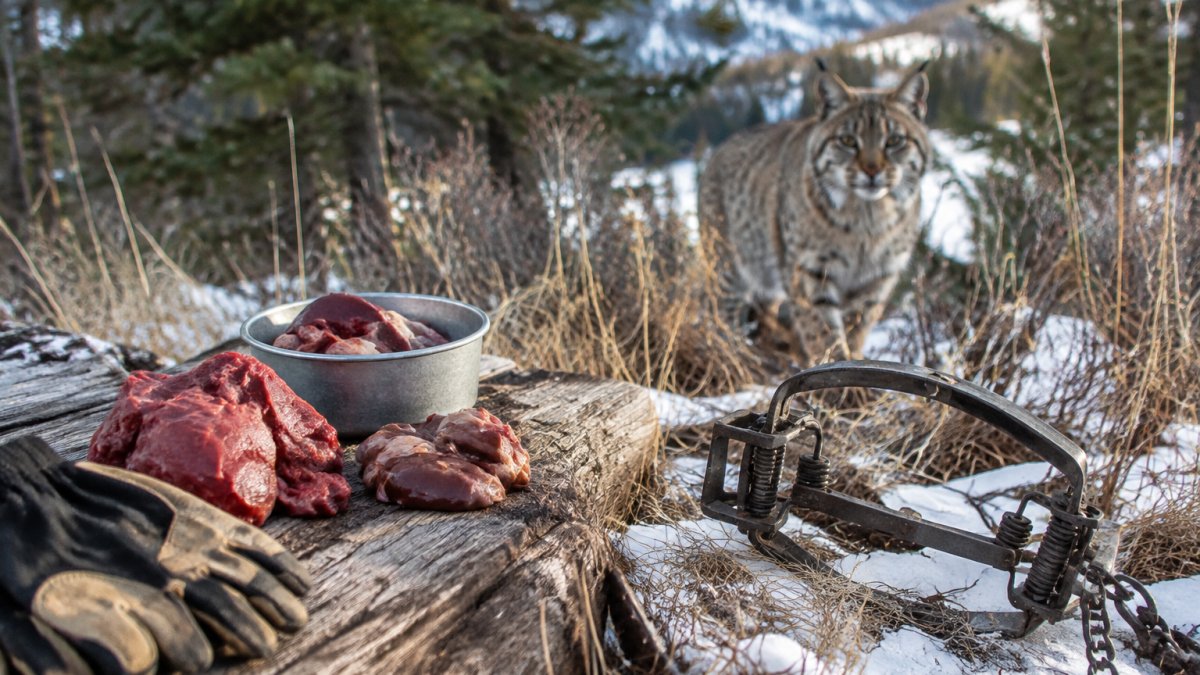
Fresh and tainted meats remain the backbone of most bobcat sets. The best options are oily, strong-smelling, and firm enough to stay on the bait stick through weather and repeated visits.
- Beaver meat holds scent well and stays put in cold conditions.
- Muskrat is a classic furbearer bait with a natural appeal to carnivores.
- Canned mackerel and sardines pack oil and a sharp scent that carries in damp air.
- Flesh bait cut into chunks gives a cat something to tug and work at.
Oily fish shines in wet, still conditions where scent hangs low. Furred meat performs better when the air is dry and you need the smell to rise. Many trappers rotate between the two across a season rather than committing to one.
If you want a ready-made option, browse our cat meat predator bait.
Why a Bobcat Gland Lure Belongs in Every Set
A gland lure is a concentrated scent made from animal glands that triggers a territorial or curiosity response in carnivores. For bobcats, a bobcat gland lure does something meat alone cannot: it signals another cat has been there, which pulls a resident cat in to investigate or mark the spot.
That territorial behavior is the whole game. A cat that smells a rival is far more likely to commit to a set than one that smells only food. Pair gland lure with urine and you cover both curiosity and territorial triggers at once.
Application matters. A little goes a long way, and over-applying can spook cautious cats.
You can see the specific bobcat gland lure we carry, and pair it with bobcat urine to round out the scent picture at each set.
Best Bobcat Trapping Sets for Bait and Lure
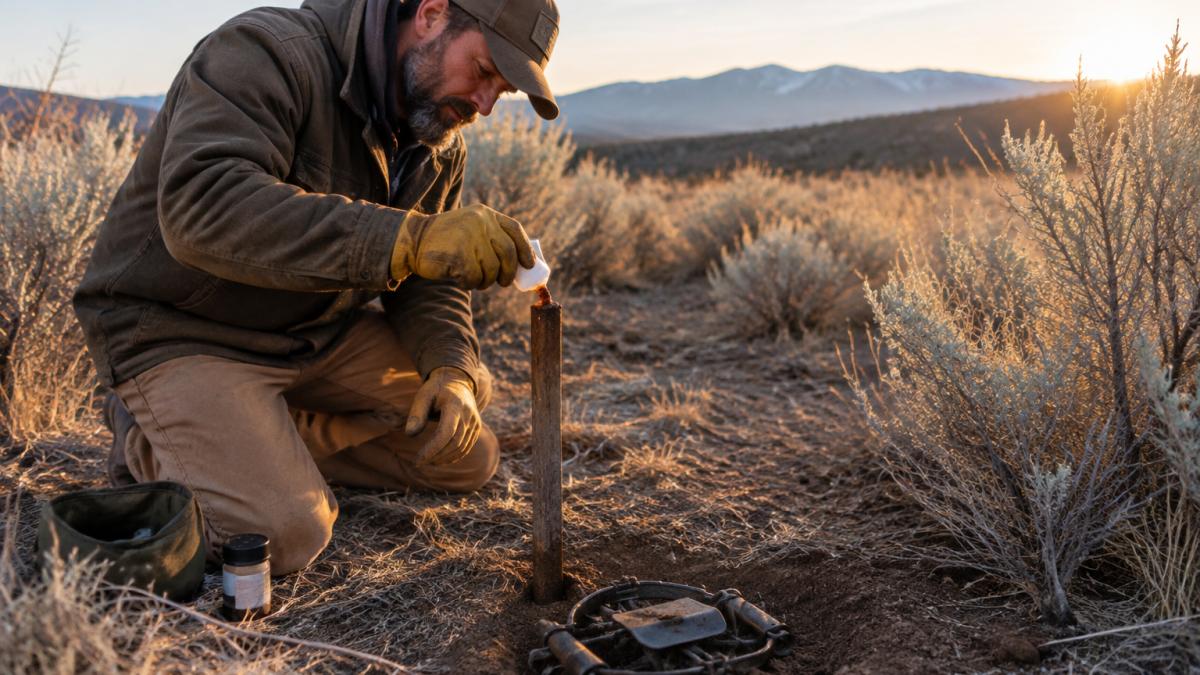
The walk-through set is the standard for a reason. You build a small opening with rocks, brush, or logs, bed the trap in the gap, and place bait and lure beyond it so the cat commits its weight forward as it reaches.
Three set styles cover most situations:
- Walk-through set: funnel the cat through a narrow gap with the trap in the path. Best for open terrain and predictable travel routes.
- Scent post set: a lure-soaked post draws the cat in to investigate, with the trap placed where it stops to sniff.
- Bait station set: a covered bait pile with the trap guarding the approach. Good for drawing cats across distance.
Trap placement matters more than bait volume. Bed the trap solid, disguise it with local material, and keep the pan where the cat's foot will land naturally as it reaches for the scent. For a deeper look at matching sets to scent, see our guide to the best trapping lures for western predators.
Three set styles cover most bobcat situations, each matched to different terrain and travel patterns.
| Set style | How it works | Best for |
|---|---|---|
| Walk-through set | Funnel cat through narrow gap with trap in path | Open terrain and predictable travel routes |
| Scent post set | Lure-soaked post draws cat; trap where it stops to sniff | Drawing cats in to investigate scent |
| Bait station set | Covered bait pile with trap guarding the approach | Drawing cats across distance |
Homemade Bobcat Bait Recipes and Cost Analysis
Making your own bait gives you control over freshness and scent strength, and it cuts the per-set cost compared with buying everything ready-made. The gap in most guides is that they tell you to DIY but never show the math. Here is a working recipe and a realistic cost picture so you can decide whether homemade is worth your time.
A reliable base recipe for a season's worth of sets:
- Base: ground beaver or muskrat meat, about two parts by volume. Beaver is oilier and holds scent longer; muskrat is leaner and cheaper if you trap your own.
- Scent boost: one tablespoon of fish oil per pound of meat, or a pea-sized dab of gland lure stirred in.
- Binder: a tablespoon of rendered fat per pound to hold the mix together in cold weather.
- Optional: a pinch of catnip, which some trappers report draws curiosity without overpowering the meat scent.
Mix cold, portion into small containers, and freeze what you won't use within a week.
If you trap your own beaver or muskrat, your meat cost is effectively your time and fuel. The trade-off is time and consistency: homemade bait can vary batch to batch.
Watch out: fish oil turns rancid fast in warm weather, and rancid oil can sour a whole batch. Keep oil sealed and cool, and smell every batch before you head out.
Bait Preservation, Shelf-Life, and Terrain Tactics
Bait that spoils or loses its scent is wasted effort, and how you store it depends on your climate. Store bait according to its type and your climate, keeping opened containers sealed. A common pattern is that frozen bait holds usable scent for a full season, while bait left at room temperature in summer can turn in days.
Terrain changes how scent moves, and most guides treat this generically. The specifics matter:
- Open desert and dry ground: scent disperses quickly and rises on heat. Use stronger, oilier baits and gland lures, and place sets where the wind carries toward travel routes rather than away from them.
- Thick forest and creek bottoms: scent holds close and can pool. A lighter application works better here, and over-baiting is the bigger risk.
- Mountain and high country: cold air and shifting thermals push scent downhill in the evening and uphill by day. Set scent posts where the cat's approach crosses the thermal flow, and favor firm baits that stay put in wind and snow.
A common mistake is over-baiting. Too much scent can make a cautious cat hang up and circle without committing. Start light, and add only if a set goes untouched.
Watch out: in wet, still conditions scent hangs low and can concentrate in a hollow, drawing a cat to circle downwind of the set instead of stepping in. Check your wind and reposition the scent post if a set keeps getting worked without a catch.
Bobcat Trapping Tips for Ethical, Non-Target-Safe Sets
Good trapping ethics protect both the resource and your reputation. Set traps where non-target species are less likely to travel, check sets regularly, and use pan tension and trap sizing that reduce accidental catches. Follow your state's trapping season and regulations, which vary by location, so confirm the rules for your area before you set.
A few habits that keep sets clean:
- Place traps away from obvious pet and livestock routes.
- Use guided or offset sets that steer the cat's approach.
- Release non-target species quickly and carefully.
- Keep scent confined to the set so you don't draw in the wrong animal.
These practices matter as much as bait choice. A well-baited set in a careless location still causes problems.
Stocking Your Trapping Kit with Quality Lures and Baits
A practical kit covers meat bait, gland lure, urine, and a sweet or call lure for variety, plus containers and gloves to keep scent controlled. Buy quality once and store it properly, and you'll spend less time replacing spoiled product mid-season.
We build our lures on Andy Weiser's formulas. If you're stocking up, browse our full range of lures, baits, and urines to match your sets and terrain.
The best trapping bait for bobcats is the one you can trust to perform every time you head out. Start with a strong meat base, add a gland lure for territorial pull, and keep your sets clean and well placed.
Frequently Asked Questions
What attracts bobcats the most?
Bobcats rely on scent and sight more than curiosity. A combination of a gland lure for territorial response and a visible bait station can draw them in. Catnip and sweet lures can add appeal,
Is it better to use meat-based bait or gland lures for bobcats?
Use both. Meat baits like beaver, muskrat, or canned mackerel give a bobcat a reason to stay and work the set, while a bobcat gland lure triggers territorial behavior and pulls the animal into trap placement. A walk-through set with a gland lure on a scent post and a small flesh bait nearby combines scent and feeding cues.
How often should you refresh bait at a bobcat trap site?
Check sets regularly and refresh bait as needed, especially after rain or warm weather. Keep a scent trail light, since over-applying lure can make a bobcat wary.
Do bobcats respond better to visual attractants or scent-based baits?
Scent is the primary driver, but visual attractants improve a set. A hanging wing, a bright feather, or a piece of fur fluttering above a scent post gives a bobcat something to focus on as it approaches. Pair that visual cue with a gland lure or bobcat urine on a scent post.
Ready to put a proven scent to work on your line? Get started with Campbell Fine Furs and stock your kit with Western lures and baits built for the field.