 blog
What Are the Best Trapping Lures for Western Predators?
Last Updated: October 24, 2026
Quick Summary
The best trapping lures for Western predators match scent strength to species, set type, and season: gland lure for coyote and bobcat, fox urine for red and gray fox, and long-distance attractants where sets are spread thin. Apply a few drops at the set plus a light urine trail rather than soaking the hole, and shift toward gland lure in cold weather.
- Coyote dirt-hole sets start with 4 to 6 drops of gland lure at the hole lip.
- Gray fox get 1 drop of fox urine because heavy gland application makes them hang back.
- Below freezing, gland lure becomes the primary draw because its oil carriers stay workable.
- Place lure where the prevailing wind carries it toward the approach, checked at the set.
- Start with one gland lure, one urine, and one bait to cover most Western sets.
Table of Contents
- Matching Trapping Lures to Western Species and Sets
- Coyote Trapping Lure: Gland, Urine, and Long-Distance Attractants
- Fox Trapping Lure: Matching Scent Strength to Red and Gray Fox
- Trapping Bait vs Lure: What Each One Does at the Set
- Cold Weather Predator Trapping Bait and Scent Handling
- Application Amounts, Placement, and Refresh Intervals
- Storage, Shelf Life, and Non-Target Considerations
- Choosing Your First Western Lure Order from Campbell Fine Furs
- Frequently Asked Questions
Matching Trapping Lures to Western Species and Sets
Western predators cover ground differently than eastern ones, which changes which trapping lures work at the set.
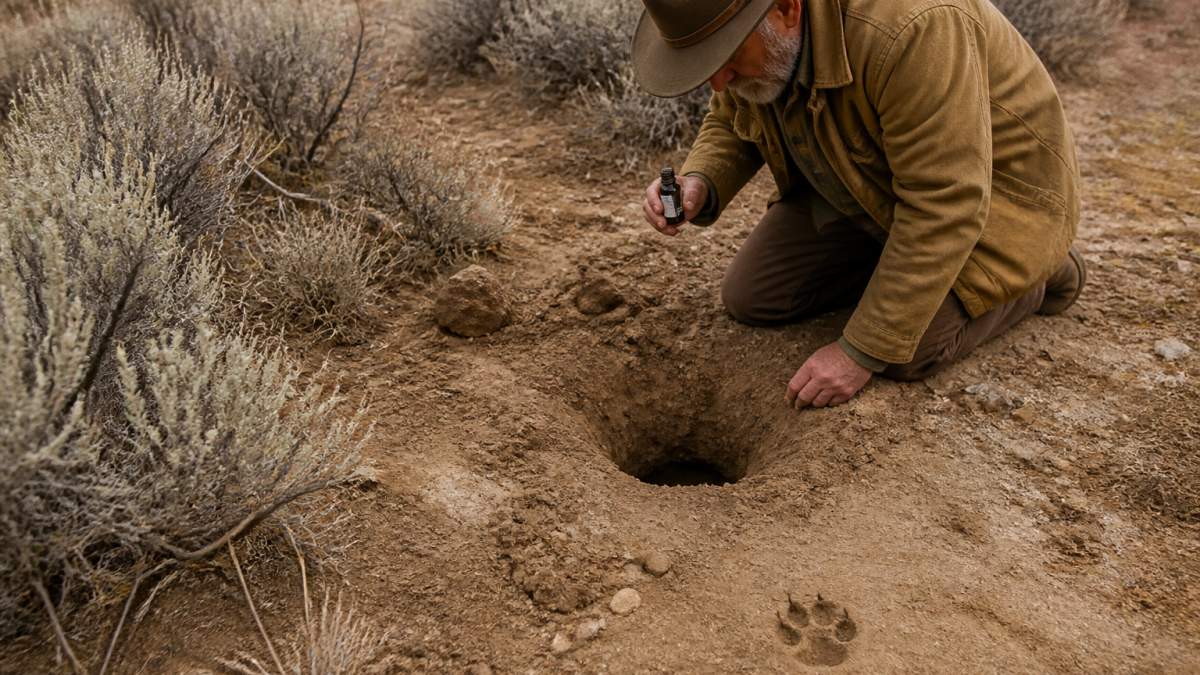
The biggest mistake we see is buying one bottle and using it everywhere. Lure choice should follow three things: the target species, the set type, and the season.
Why Western Habitat Changes Lure Choice
Open country forces a different approach.
Habitat also decides where you can place scent.
Dirt-Hole Sets, Step-Down Sets, and Scent Trails
Each set type calls for a different application.
Coyote Trapping Lure: Gland, Urine, and Long-Distance Attractants
A coyote trapping lure should do one of two jobs: pull the animal in from distance or hold it at the set long enough to commit. Gland lures handle the second job. They carry a heavy, musky note that reads as another canine and keeps a coyote working the set.
Long-distance attractants sit between the two, used when sets are spread thin and every coyote in the drainage needs to know something is there.
Fox Trapping Lure: Matching Scent Strength to Red and Gray Fox
Red fox and gray fox do not respond to the same scent strength. Red fox are bolder and will work a louder lure, while gray fox hang back and approach cautiously.
For gray fox, go lighter. A single drop at the hole lip and a faint trail is often enough.
If you want to buy red fox urine in a practical size after working out your scent strength, our products give you enough volume to run a full line without rebuying mid-season.
Trapping Bait vs Lure: What Each One Does at the Set
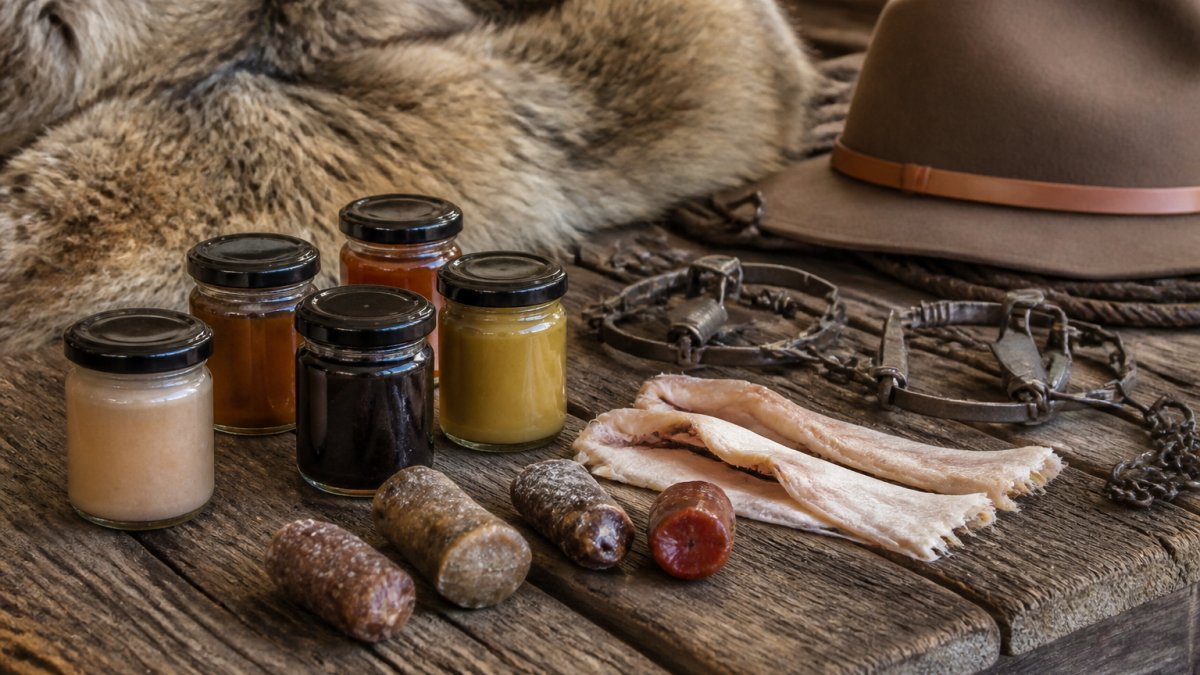
Trapping bait and trapping lure are not the same tool, and confusing them costs catches.
Bait goes in the hole; lure goes at the entrance, on a nearby rock, or along the approach.
Bait-and-Lure Combinations That Work Together
The strongest sets pair the two deliberately:
- Coyote: meat bait in the hole, gland lure at the lip, urine trail on approach
- Red fox: liquid bait at the back, fox urine at the entrance, light gland lure nearby
- Bobcat: meat bait buried, castor or muskrat-based lure at the set, minimal urine
- Gray fox: small bait portion, single drop of fox urine, no heavy gland application
If you want a concrete bait product to pair with your lure, our products are formulated to work alongside the scent line rather than compete with it.
Cold Weather Predator Trapping Bait and Scent Handling
Cold weather changes the physics of a set more than most trappers account for. Below freezing, scent-carrying compounds slow down, meat bait firms up and stops releasing odor, and water-based urine freezes into a block that broadcasts nothing.
What actually happens below freezing
Three things shift at once. Cold air is denser, so scent travels farther downwind but hugs the ground and disperses slowly. Low humidity in dry cold pulls moisture out of exposed bait and lure, sealing in the scent you paid for. And freeze-thaw cycles can lift a lure off its anchor or crack a carrier stored cold.
Winter trappers commonly shift the balance of the set: gland lure becomes the primary draw because its oil and fat carriers stay workable at low temperatures, while meat bait becomes a secondary commitment device.
Species-by-species cold-weather adjustments
- Coyote: lean on gland lure at the hole lip and a light urine trail on the sunny side of the approach. Coyotes cover more ground in cold, so a long-distance attractant earns more of its keep than in mild weather.
- Red fox: fox urine still reads correctly when applied to a warm surface, but cut the volume. A single drop at the lip plus a faint trail is enough in cold, because the animal is working tighter to cover.
- Gray fox: the most cautious of the group in cold. Keep applications minimal and avoid heavy gland notes that read as another canine's territory.
- Bobcat: cold-weather bobcat sets benefit from a heavier, oil-based lure placed on a natural object the cat will rub against, since bobcats investigate by contact more than by air scent alone.
A cold-weather routine that holds up
- Warm the lure bottle inside your coat before applying so the carrier flows and the scent volatilizes on contact with the set.
- Apply to a surface that catches morning sun, not deep shade, so the lure re-warms each day.
- Refresh more often in dry cold. Scent fades faster than trappers expect when humidity is low and wind is steady.
- Shield bait from direct wind so it does not case over and dry out.
- After a freeze-thaw night, check that lure has not run off its anchor or pooled in a low spot.
Application Amounts, Placement, and Refresh Intervals
Application is where most trappers overspend product and underspend attention. The bottle does not decide catches; amount, placement relative to wind and approach, and refresh cadence do. A measured application with a disciplined refresh schedule outperforms a soaked hole every time.
Starting amounts by species and set type
These are starting points, not rules. Adjust up in wide-open country and down in tight cover.
- Coyote, dirt-hole set: roughly 4 to 6 drops of gland lure at the hole lip, plus a urine trail of 3 to 4 small deposits on approach objects spaced a few feet apart.
- Coyote, step-down set: same gland amount at the shelf lip, with the urine trail concentrated on the last 10 to 15 feet of approach so the animal commits before it can circle.
- Red fox, dirt-hole set: 2 to 3 drops of fox urine at the entrance and a single light gland note on a nearby object. Red fox will work a louder set, but louder is not the same as soaked.
- Gray fox: 1 drop of fox urine at the lip and a faint trail. Heavy gland application is the most common reason a gray fox hangs back.
- Bobcat: a small dab of gland or castor-based lure on a natural rub object, with minimal urine. Bobcats investigate by contact, so placement on something they will rub against matters more than volume.
Placement rules that hold across species
- Put lure where the prevailing wind carries it toward the approach. Check wind direction at the set, not at the truck.
- Keep bait and lure a few feet apart so the animal must work between them rather than commit in one motion.
- Place scent on a natural object the animal will investigate anyway: a tuft of grass, a rock edge, a fence post base, a low branch.
- Anchor lure so it does not run off in rain or pool after a thaw.
- On rocky ground where a dirt hole will not hold, lean on urine for a scent trail rather than a bait pocket.
Refresh intervals
Refresh is driven by weather, not by calendar:
- After rain heavy enough to wash a set, refresh lure and urine.
- After sustained wind, refresh the urine trail first, since it disperses fastest.
- After a missed catch, refresh before the next check rather than assuming the set is still hot.
- In dry cold, shorten the interval; scent fades faster than trappers expect.
- In mild, humid weather, gland lure and bait hold longer, so the interval can stretch.
These starting amounts by species and set type give you a measured place to begin before tuning to your ground. For a beginner-friendly deeper guide on lure effectiveness, scent control, and set placement, read our full breakdown.
| Species and set | Lure and urine amount | Placement note |
|---|---|---|
| Coyote, dirt-hole set | 4 to 6 drops gland lure; 3 to 4 urine deposits | Gland at hole lip; urine on approach objects |
| Coyote, step-down set | Same gland amount at shelf lip | Urine trail on last 10 to 15 feet |
| Red fox, dirt-hole set | 2 to 3 drops fox urine; single light gland note | Urine at entrance; gland on nearby object |
| Gray fox | 1 drop fox urine and a faint trail | Heavy gland application makes gray fox hang back |
| Bobcat | Small dab gland or castor lure; minimal urine | Place on a natural rub object |
Storage, Shelf Life, and Non-Target Considerations
Storage protects your investment. Keep lure and urine sealed, out of direct sun, and away from heat; most formulas hold their character longer in a cool, dark space than a warm truck cab.
Non-target catches deserve planning, not luck. Set pan tension and hole size to favor your target species, and check sets often enough that a non-target animal is released quickly.
Choosing Your First Western Lure Order from Campbell Fine Furs
Start narrow. One gland lure, one urine, and one bait cover most Western sets; add species-specific formulas once you know which sets you run most.
If you are ready to build a line, browse the full selection and match your order to the species and sets you plan to run.
The difference between a quiet line and a productive one usually comes down to matching attractants to species, set type, and weather rather than buying more bottles.
Frequently Asked Questions
What types of lures are used for predator trapping?
Most predator trapping lures fall into a few families: gland lures built from muskrat, mink, or castor, urine-based scents such as fox or coyote urine, and food-type liquid baits. Gland lures work well as long-distance attractants at dirt-hole and step-down sets. Genuine urine adds a natural scent trail that reads as another animal passing through. Many trappers carry two or three types and rotate them across sets so the same scent is not used in the same spot all season.
What lure works best for coyotes?
A coyote trapping lure that pairs a gland base with a sharp, far-carrying note tends to pull coyotes from a distance, which matters in open western country. Coyote scent or coyote droppings placed near the set can add confidence. In practice, the best results come from matching the lure to the set: a stronger long-distance attractant on a dirt-hole set, something subtler where coyotes are already working a scent trail. Rotate formulas rather than relying on one bottle all season.
What is the difference between trapping bait, lure, and scent?
Trapping bait is food: meat bait, rodent meat, or meat-based paste that gives an animal a reason to work the set. A trapping lure is an odor that draws attention and guides approach, often gland-based. Predator scent, such as fox urine, is a natural-smelling cue that adds realism. The trapping bait vs lure distinction matters because bait holds an animal at the trap while lure brings it in. Most successful sets combine all three rather than relying on one.
How should weather affect predator lure selection?
Cold, dry air carries odor poorly, so a cold weather predator trapping bait or a strong gland lure usually outperforms a light scent in winter. Freezing temperatures also thicken liquid baits, so check consistency before field use and store bottles where they stay workable. Wet weather can wash out a set, which is why placement under a slight overhang or in a dirt hole helps. Wind direction decides where the scent trail lands, so set up so the odor drifts toward cover.