 how-to
How to Make Homemade Predator Lures That Work
Last Updated: October 27, 2026
Quick Summary
To make homemade predator lures, mix gland lure, urine, food-based bait and curiosity scent in glass jars, following simple ratios like one part gland lure to one part food bait. Label every batch with the date, store jars cool and sealed, and apply only a drop or two at the set.
- Use 2 to 4 oz glass jars with screw lids, never plastic, since residue clings.
- A simple coyote and fox gland lure uses one part gland lure and one part food-based bait.
- Bait goes in the hole or under the pan, while lure goes on a nearby guide.
- Apply a drop or two on a guide or above the set, and refresh after heavy rain.
- Test one set at a time so you know which lure actually worked.
Table of Contents
- What You'll Need Before You Start Mixing
- Trapping Lure Ingredients and What Each One Does
- Homemade Trapping Lure Recipes You Can Mix Today
- Predator Trapping Bait vs Lure: Which Belongs at Your Set
- How to Store Homemade Trapping Lure So It Keeps Working
- Applying Lure at the Set and Testing It in the Field
- Common Mistakes That Ruin Homemade Predator Lures
- Stocking Your Trapline Kit with Field-Ready Lures
- Frequently Asked Questions
What You'll Need Before You Start Mixing
Making homemade predator lures starts with a clean workspace and a short supply list. Skip the kitchen utensils. Once a spoon touches gland oil or urine, it never goes back in the drawer.
- Glass jars, 2 to 4 oz, with screw lids
- Funnel for clean pours
- Measuring spoons kept separate from food use
- Labels and a marker for batch dates
- Rubber gloves and a work apron
- A sealed storage box for finished bottles
Work outdoors or in a garage with the door open. The smells are strong, and a well-ventilated space keeps the job pleasant. Keep pets and kids away from the bench while you pour.
Trapping Lure Ingredients and What Each One Does
- Gland lure: strong, close-range attractor. Best on a dirt hole set. For regional picks, see the best trapping lures for western predators.
- Urine: marks territory and travels on the wind. Good for long distance pull.
- Food-based bait: draws animals in to feed. Works well in cold weather.
- Curiosity scent: sweet or musky notes that make a predator pause.
Homemade Trapping Lure Recipes You Can Mix Today
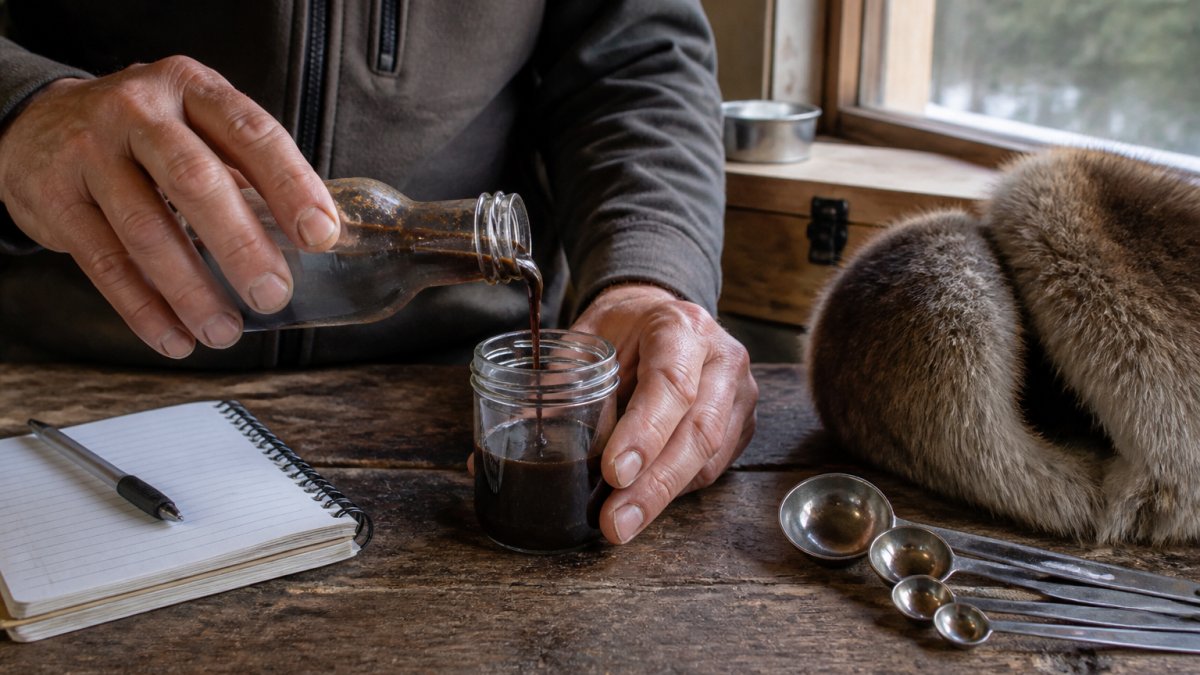
Before you pour, keep one rule in mind: label every jar with the date and the recipe. A lure you cannot identify six months later is a lure you will not trust.
Simple Coyote and Fox Gland Lure
- 1 part gland-based lure (or compare with a ready-made gland lure)
- 1 part food-based bait
- A few drops of curiosity scent to round it out
Cold-Weather Curiosity Lure
- 2 parts food-based bait
- 1 part curiosity scent
- A light splash of urine for a territorial edge
Predator Trapping Bait vs Lure: Which Belongs at Your Set
- Bait goes in the hole or under the pan. It holds the animal once it arrives.
- Lure goes on a nearby guide or above the set. It brings the animal in.
How to Store Homemade Trapping Lure So It Keeps Working
- Use glass jars with tight screw lids
- Keep jars cool and out of direct sun
- Label every batch with the date
- Store in a sealed box away from food and clothing
- Check older jars before the season starts
Applying Lure at the Set and Testing It in the Field
- A drop or two on a guide or above the set
- A small dab on the backing, not the pan
- Refresh after heavy rain or a long freeze
- Test one set at a time so you know what worked
Common Mistakes That Ruin Homemade Predator Lures
| Mistake | Why It Hurts | The Fix |
|---|---|---|
| Mixing in plastic | Residue clings and never washes out | Use glass jars only |
| Over-applying at the set | Spooks wary predators | A drop or two is enough |
| Skipping labels | You lose track of what worked | Date and name every batch |
| Storing in heat | Scent breaks down fast | Keep jars cool and sealed |
| Bare-hand contact | Human scent on the set | Wear gloves every time |
- Using kitchen tools. Keep lure spoons separate from food tools.
- Mixing too much at once. Small batches let you adjust.
- Ignoring the weather. Cold and rain change how scent carries.
Stocking Your Trapline Kit with Field-Ready Lures
- Two or three ready-made lures for backup
- One or two homemade batches you trust
- A small bait supply for cold weather
- Labels and gloves in the same box
Frequently Asked Questions
What ingredients are commonly used in homemade predator lures?
Most homemade predator lures start with a base of gland secretions or urine, then add a fixative such as glycerin so the scent holds up in cold weather. Common additions include fish oil, beaver castor, and small amounts of skunk essence for a curiosity trigger. Keep the mix simple: three to five ingredients is enough. Too many competing odors muddle the message a predator reads at the set, and you lose the ability to tell which ingredient is actually pulling animals in.
What is the difference between predator trapping bait vs lure?
Bait is food: it draws an animal in to eat and usually sits inside or behind the trap. Lure is scent used to pull an animal to the exact spot you want it to step, and it works from a distance through the air. Most successful sets use both. A food bait handles hunger, while a gland or curiosity lure handles the animal's drive to investigate. Place the lure where the wind carries it toward the approach trail, and keep the bait at the trap itself.
How should homemade trapping lure be stored?
Store homemade trapping lure in glass jars with tight lids, labeled with the recipe and the date you mixed it. Keep jars out of sunlight and away from heat, since warmth breaks down scent compounds faster. Most gland-based lures hold for a season or more when sealed properly. If a jar smells sour or rancid rather than musky, discard it. Never store lure next to food, clothing, or your fur accessories, because the odor transfers and does not wash out easily.
Can homemade predator lures attract coyotes and foxes?
Yes, when the recipe matches the species and the season. Coyotes respond strongly to gland and castor-based lures, especially during breeding and dispersal periods. Foxes tend toward curiosity and food-based scents. The bigger factor is placement and wind direction, not the recipe alone. Test a new batch at a few sets before committing it to the whole trapline, and note which sets produce tracks and which stay quiet so you can adjust the formula.
Mixing your own lure takes patience, clean tools, and good notes. When you want proven scent in the field without the guesswork, Campbell Fine Furs carries Western lures and baits made with Andy Weiser's formulas, alongside artisanal fur accessories built for cold mornings on the line. Our catalog includes ready-made gland lures, predator baits, and the fur hats and mittens that keep you warm while you check sets. Get started with Campbell Fine Furs and stock a trapline kit you can trust.