 how-to
How to Scent Post for Coyote Trapping Step by Step
Last Updated: November 3, 2026
Quick Summary
A scent post is a visual marker, such as a stick or post, treated with an attractant that draws coyotes to stop and investigate. Set it where coyotes already travel, position it so the wind carries scent toward their route, and place a trap nearby to catch them during that pause.
- Place the post on trails, game paths, fence crossings, or cover edges where coyotes already travel.
- Set the post so wind blows from the travel route across it, not from your own trail.
- Apply only a few drops of gland lure at the post and a light urine squirt at its base.
- Wear gloves and use a dedicated applicator to avoid transferring human scent to the post.
- Offset the trap about six to ten inches from the post and adjust based on where tracks and digs appear.
Table of Contents
- What a Scent Post Is and How It Attracts Coyotes
- Choosing the Right Location Along a Coyote Travel Route
- Positioning the Set Relative to the Prevailing Wind
- Selecting and Applying Scent Attractants and Lures
- Setting the Trap: Offset, Distance, Bedding, and Covering
- Coyote Trapping Mistakes That Ruin a Scent Post
- Checking and Resetting Your Scent Post
- Frequently Asked Questions
What a Scent Post Is and How It Attracts Coyotes
A scent post is a visual marker, such as a stick or post, treated with an attractant that draws coyotes to stop and investigate. Coyotes use scent to communicate, so they often stop at objects that smell like another animal.
The post works because coyotes check their routes for new smells and signs. When they find a marked post, they tend to pause, sniff, and sometimes leave their own scent. That pause is what gives you a chance to set a trap nearby.
Here is the basic idea behind every scent-post set:
- Visual marker: A post or stick that catches the eye
- Scent attractant: Lure or urine applied to the marker
- Natural sign: Droppings or scrapes that suggest coyote activity
A common mistake is thinking the post alone does the work. The scent and the location do most of the job.
Choosing the Right Location Along a Coyote Travel Route
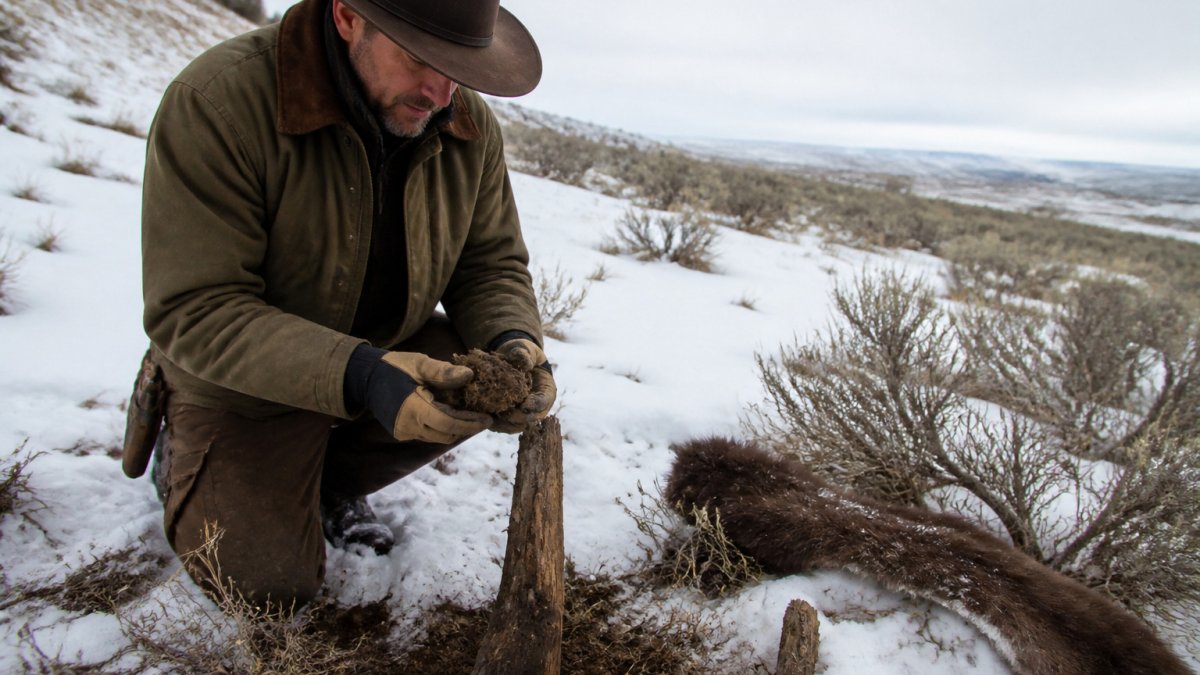
Set your post where coyotes already travel. Look for trails, game paths, fence crossings, and the edges of cover where they move between bedding areas and food.
Good locations usually show:
- Fresh tracks or droppings on a worn path
- Natural funnels, such as a gap in brush or a narrow crossing
- Open sight lines that let coyotes see the post from a distance
Avoid spots where people, livestock, or pets often pass. They can disturb the set and make wary coyotes avoid the area.
Positioning the Set Relative to the Prevailing Wind
Wind carries scent, so place your post so the wind moves the attractant toward the route coyotes use. In most cases, set the post so the wind blows from the travel route across the post.
Keep these points in mind:
- Check wind direction at the same time of day you plan to set
- Avoid placing the post downwind of your own scent trail
- Remember that wind shifts, so check the set on each visit
Watch out: if you approach the set from downwind, coyotes may smell you and skip the post entirely.
Selecting and Applying Scent Attractants and Lures
A scent post usually carries two different signals, and understanding the split is what separates a set that gets checked from one that gets ignored. Urine is a territorial and curiosity trigger: it tells a coyote another canine passed through and marked this spot. Gland-based lure is a social and investigative trigger: it reads as another coyote's presence and invites a closer, longer investigation. Natural sign, such as droppings or a scrape, reinforces that the spot is active. Most practitioners use urine to pull coyotes to the post from a distance and a gland lure at the post itself to hold them there long enough for a clean approach.
Match the attractant to the season and the coyote's frame of mind:
- Early season: Younger coyotes are curious and less conditioned. A lighter urine application plus a gland lure at the base of the post is usually enough.
- Late season and pressured areas: Coyotes have seen sets and smelled human handling. Reduce the amount, place lure slightly off the post rather than on the face of it, and lean on natural sign to make the spot look established rather than freshly baited.
- Breeding and dispersal periods: Territorial response rises, and gland-based lures tend to draw more investigation than plain urine.
Application details matter more than most beginners expect:
- Amount: A few drops of gland lure on the post or on a small twig at its base, and a light squirt of urine on the ground at the base. Heavy application drips, spreads, and reads as unnatural.
- Height: Put lure at roughly the height a coyote's nose reaches when it stops to sniff, so the animal's head is down and its feet land where you want them.
- Placement: Keep lure off your trap and off the pan. Scent on the trap itself invites digging and disturbance.
- Refresh schedule: Reapply lightly after rain or heavy dew, and avoid the habit of topping off the set every visit. A post that always smells freshly applied is a warning sign to a wary coyote.
- Handling: Wear gloves, use a dedicated applicator, and keep lure containers closed and stored away from fuel, soap, and other strong odors.
Watch out: applying lure with bare hands or a contaminated dropper transfers human scent directly to the post, which is one of the most common reasons a coyote stops short of the set.
Scent contamination is the part most guides skip. Boots pick up gasoline, oil, and household odors from the truck and garage; gloves pick up lure from previous sets; and a post handled after eating or smoking carries odors a coyote reads instantly. Keep a separate pair of gloves for lure, store lure in a sealed container, and approach the set from the side rather than walking straight up to the post. Nearby human activity, livestock, and pets do the same damage at a larger scale, which is why a clean location matters as much as a clean application.
For attractant options, our lure lineup includes Western lures made with Andy Weiser's formulas. Browse our View All Products page to see the current selection.
The table below summarises how to match the attractant to the season and how to apply it.
| Season or situation | Lure approach | Key adjustment |
|---|---|---|
| Early season | Lighter urine plus gland lure at post base | Younger coyotes are curious and less conditioned |
| Late season or pressured areas | Reduced amount, lure placed off the post | Lean on natural sign so the spot looks established |
| Breeding and dispersal periods | Gland-based lures | Territorial response rises and draws more investigation |
| Application amount | A few drops of gland lure, light urine at base | Heavy application drips and reads as unnatural |
| Lure height | Roughly the height of a coyote's nose when sniffing | Head down and feet land where you want them |
| Handling | Gloves, dedicated applicator, sealed containers | Bare hands transfer human scent to the post |
Setting the Trap: Offset, Distance, Bedding, and Covering
Trap placement is where a good scent post becomes a working set. The goal is to put the trap exactly where a coyote's foot lands when its nose is at the lure, not where it looks convenient to dig.
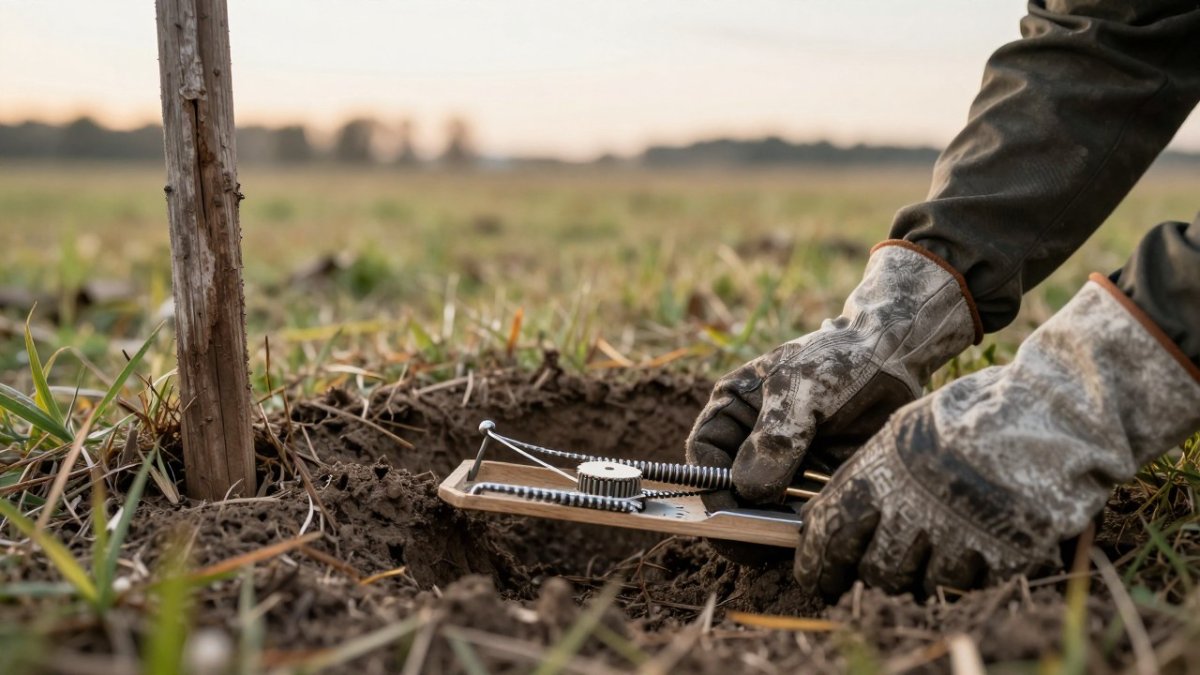
Offset and distance. Place the trap offset from the post, usually to one side and slightly in front of it, so the coyote approaches at an angle and steps onto the pan while circling to sniff. The right distance depends on lure height: a lure set low on the post brings the nose down close to the base and pulls the front feet in tight, while a lure set higher pulls the coyote's head up and its feet farther back.
Bedding. Dig a pocket just large enough for the trap and set it so the pan sits level with the surrounding ground, never above it. Bed the trap by working fine soil under and around the frame, then press the trap down and test it: the pan should drop smoothly under light pressure and reset without a hitch. A trap that rocks, sits high, or needs a hard push to fire will be avoided or will miss.
Covering. Cover the trap with a thin, even layer of sifted dirt, dry leaves, or material that matches the immediate surroundings. The cover should hide the trap outline without insulating the pan. In snow, use a white cover material and keep the layer thin so the pan still fires; in wet or freezing ground, expect the cover to crust and check the set after temperature swings.
Blending. Disturb as little ground as possible. Carry excess dirt away rather than piling it beside the set, and use local debris to break up the outline of the disturbed area. A set that looks like fresh digging is a set a wary coyote will circle.
Site conditions change the setup. Sandy or loose soil needs more careful bedding and a wider pocket; rocky ground may require a different trap style or a shifted location; frozen ground limits how deep you can bed and favors a flat, well-covered set. Compare how the set reads after rain, snow, and a hard freeze, and adjust distance and cover rather than rebuilding from scratch.
Checking and remaking after a catch. After a catch, remove the trap, sift the disturbed soil, and reset the bedding before replacing the trap. Refresh the scent lightly, confirm the wind still carries toward the travel route, and note what the catch tells you about distance and approach angle.
Coyote Trapping Mistakes That Ruin a Scent Post
Most failed sets come from a few avoidable errors:
- Too much scent: Heavy application can make coyotes wary.
- Bare-hand contact: Human scent on the post is a common warning sign.
- Poor trap bedding: A loose or raised trap is easy to spot.
- Wrong wind direction: Scent that blows away from the route gets ignored.
- Crowded sites: Disturbed ground and foot traffic make coyotes avoid the area.
A common mistake is refreshing the scent too often. Coyotes can become suspicious of a post that always smells freshly applied.
Checking and Resetting Your Scent Post
Check your set on a regular schedule, and note any signs of coyote visits, such as new droppings, tracks, or scrapes near the post. If the post has no activity after several visits, move the set to a different route rather than waiting longer.
When you reset, do these things:
- Remove old scent and replace it with a fresh, light application
- Re-check the bedding and cover on the trap
- Confirm the wind still carries scent toward the route
If you are unsure whether a lure or setup fits your area, contact Campbell Fine Furs through our website for more information on our products.
Frequently Asked Questions
What is the best scent for coyote trapping?
No single scent works on every coyote, because coyotes respond differently depending on season, food supply, and how much pressure they have already seen in an area. Trappers commonly start with a coyote urine attractant and use other scent sources, such as droppings or a natural sign, to support it. Rotate attractants if a set goes unvisited for several days, and keep your own scent off the set by handling materials with clean gloves. Check local regulations before you use any substance, and test one attractant at a time so you can tell what is working.
Where should you place a scent-post trap for coyotes?
Look for a spot along a visible coyote travel route, such as a trail between cover and a food source, a field edge, or a gap in a fence line. Place the scent post so it is easy for a coyote to approach from downwind, and set the trap offset from the post so the animal steps onto it while sniffing. Avoid spots where non-target animals travel heavily, and confirm that your location and method are permitted under the rules that apply where you trap.
How often should you check a coyote trap?
Check your trap at a frequency that meets the requirements that apply where you trap. Many trappers also check sets often enough to limit stress on any animal that is caught and to refresh or reset the set if it goes unvisited. Refresh the attractant on a regular schedule and move the set if you see no sign of coyote activity over several days.
How do you keep human scent away from a coyote set?
Wear clean gloves when handling the post, trap, and attractant, and store your gear away from strong odors such as tobacco, fuel, and food. Approach and leave the site by the same path when possible, and avoid touching vegetation near the set. Wind direction matters, so position the set so your scent does not drift toward the approach route coyotes are likely to use.