 how-to
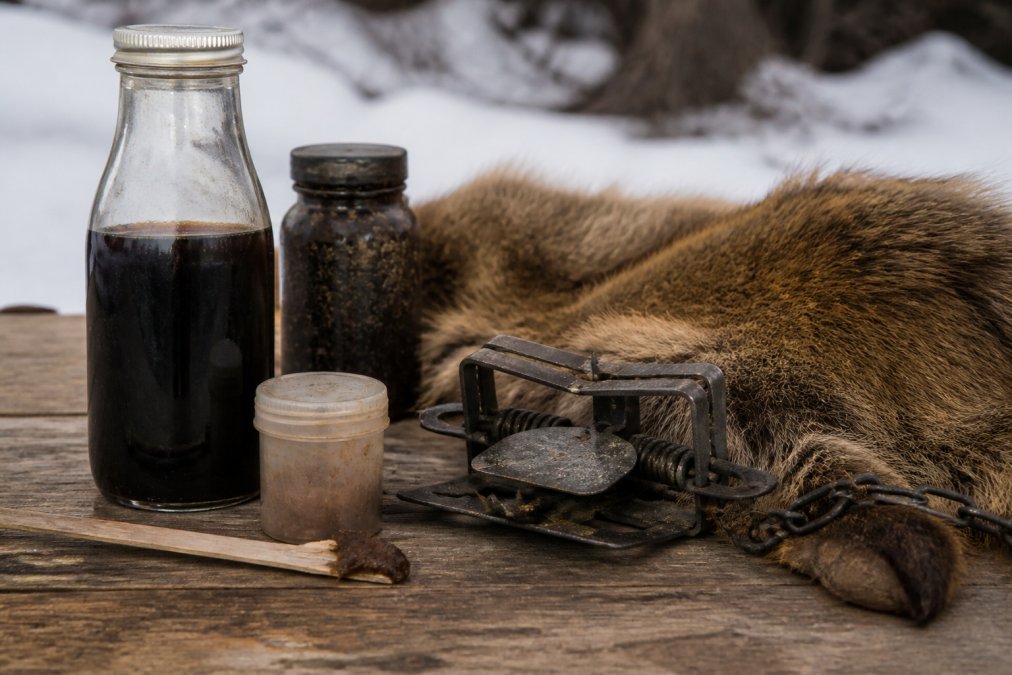
Effective Trapping Lures for Winter Hunting
Table of Contents
- Why Cold Weather Changes Everything About Trapping Lures
- Gland Lures vs. Food-Based Baits: Which Works in Winter
- The Best Coyote Trapping Bait for Winter Conditions
- How to Use Trapping Lures in Snow: Step-by-Step Set Construction
- Trapping Lure Shelf Life: When to Replace Old Attractants
- Troubleshooting Failed Winter Sets
- Frequently Asked Questions
Last Updated: September 23, 2026
Why Cold Weather Changes Everything About Trapping Lures
Cold air does more than make you miserable in the truck. It changes how scent moves, how long it lasts, and whether an animal bothers to investigate at all.
Gland Lures vs. Food-Based Baits: Which Works in Winter
Gland lures win in winter for one simple reason: they carry farther and last longer in cold air.
- Gland lures: high scent intensity, strong olfactory stimulation, long-range attraction
- Food-based baits: better for holding an animal once it arrives, weaker at pulling from distance
- Best combo: gland lure at the scent post, food bait at the dirthole
The Best Coyote Trapping Bait for Winter Conditions
The best coyote trapping bait for winter pairs a high-intensity gland lure with a food attractant that holds up in the cold. The reason is mechanical, not mystical: cold air is denser and holds fewer volatile scent molecules, so a lure has to release more scent over a longer window to reach a coyote that may pass 40 yards downwind.
Why Viscosity Matters More Than Volume
A lure's base determines how it behaves at low temperature. Thin, water-based mixes freeze or go inert fast. Thick oil and fat bases stay workable and keep releasing scent as temperatures drop. A lure with the consistency of warm honey clings to a post and meters out scent over days, while a watery lure dumps its scent in hours and then goes dead.
Look for these traits:
- High viscosity: a thicker lure clings to the post and releases scent slowly, which matters when you may not be able to re-lure for several days
- Skunk essence base: skunk essence is a sulfur compound that stays volatile at low temperatures, which is why it cuts through cold air when other scents go flat
- Sac oil or rendered fat: these resist freeze-down better than water-based mixes and act as a carrier that slows scent release
- Species targeting: coyote lures should read as coyote, not generic predator, a coyote investigating a fox gland set often reacts with caution
Coyote-Specific Winter Behavior to Exploit
Coyotes in winter are driven by two things: food scarcity and breeding season, which peaks in late winter in most regions. That gives you two scent strategies.
- Food-driven sets: use a food bait at the dirthole to hold a hungry coyote once it arrives, backed by a gland lure on the post to pull it in from distance
- Territorial and breeding sets: a gland lure that reads as a rival coyote can trigger a response even when the animal is not hungry, which is useful during the breeding window
Reading the Set Before You Blame the Lure
Before you swap lures, check what the coyote actually did. Tracks tell the story:
- Tracks approach and stop short: the scent is reaching but the set looks wrong, check for human scent, a visible trap, or a set sitting in the open
- Tracks circle downwind and leave: the coyote smelled you or the set, not the lure, re-glove and reset clean
- Tracks work the set and dig: the lure is working but too strong, or the bait is buried and the animal is frustrated
- No tracks at all: the set is off the travel route, not a lure problem
How to Use Trapping Lures in Snow: Step-by-Step Set Construction
Learning how to use trapping lures in snow comes down to two things: keep the trap working and keep the scent moving. Here is the full build.
What You'll Need
- Traps with adjustable pan tension
- Peat moss or buckwheat hulls for bedding
- A high-intensity gland lure
- A food-based bait
- Waxed paper or a trap cover
- Gloves
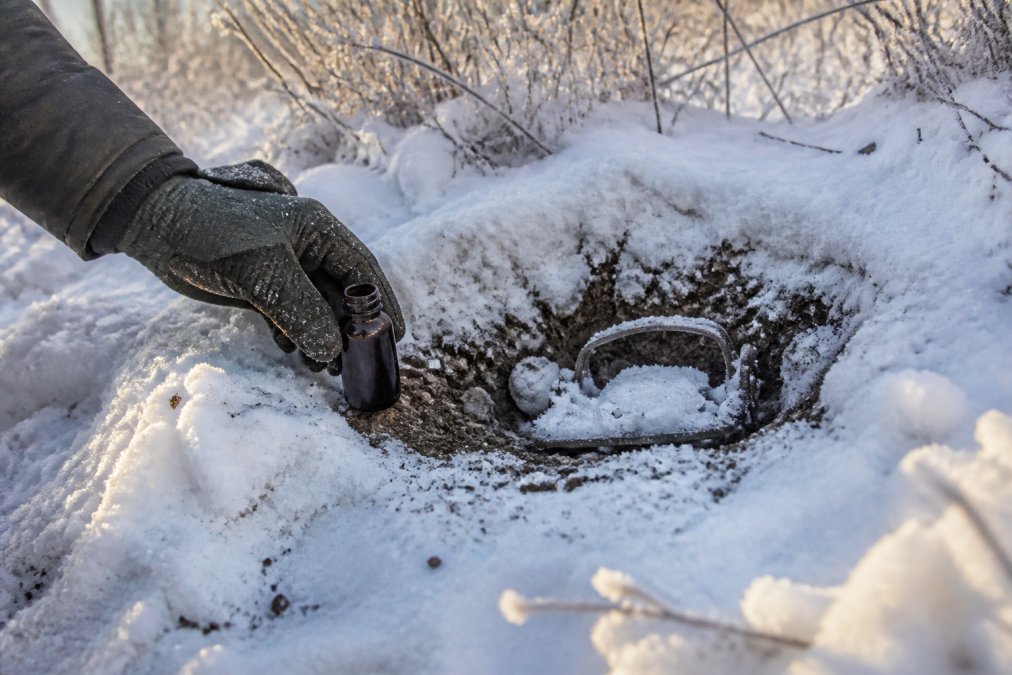
Step 1: Bed the Trap and Prevent Freeze-Down
Freeze-down is the number one reason winter sets fail. The trap pan ices to the ground and never fires.
- Clear snow down to bare ground or a stable base.
- Line the trap bed with peat moss or buckwheat hulls. Both drain moisture and insulate.
- Set the trap and check pan tension. Cold makes pans stiffer, so test it with a gloved finger.
- Cover the trap with waxed paper, then sift dry dirt or snow over the top.
Step 2: Apply Lure and Build the Scent Post
A scent post is a small stake or clump of brush that holds lure above the snow so air can move the scent.
- Push a short stake into the ground near the trap.
- Add a few drops of gland lure to the top. Keep it light.
- Place food bait at the dirthole, not on the post.
- Re-lure every few days, or after rain or heavy snow.
Trapping Lure Shelf Life: When to Replace Old Attractants
Trapping lure shelf life depends on the base. Oil-heavy gland lures last longer than water-based or meat-based baits, and the reason is chemistry: oils oxidize slowly and resist microbial breakdown, while water-based and meat-based products are a growth medium for bacteria and mold.
Here is a rough guide:
| Lure Type | Typical Shelf Life | Storage |
|---|---|---|
| Gland lure (oil base) | 2-3 seasons | Cool, dark, sealed |
| Skunk essence blend | 2+ seasons | Airtight, out of sun |
| Food-based bait | 1 season | Frozen or refrigerated |
| Urine-based attractant | 1 season | Sealed, cool |
Why Lures Go Off: The Mechanism
Three things kill a lure:
- Oxidation: oxygen reacts with the oils and volatile compounds, flattening the scent over time. This is why a half-empty bottle with air in it degrades faster than a full one.
- Microbial growth: water-based and meat-based products grow bacteria and mold, which produce off-smells that mask the attractant.
- Separation: oils and water phases separate and will not re-emulsify, so the scent releases unevenly or not at all.
How to Test a Suspect Bottle
Before you trust a bottle that has sat since last season, run a quick check:
- Smell it cold. Take it outside on a cold morning and smell it. If the scent is faint or flat at low temperature, it will be faint in the field.
- Check the texture. Gritty, rancid, or separated means the base has broken down.
- Shake and wait. If oils separate and will not mix back after a good shake, the emulsion is gone.
- Do a test set. Put a few drops on a clean post near known coyote sign and check for tracks after two nights. If nothing works the set, the lure is dead.
Storage That Actually Extends Life
- Keep bottles full. Top off or transfer to smaller containers to minimize air space.
- Store cool and dark. A basement shelf beats a hot garage or truck bed.
- Seal tight. Airtight lids slow oxidation and keep volatile compounds from escaping.
- Freeze food-based baits. Freezing stops microbial growth and preserves scent until you need it.
- Label with the season. Write the purchase year on the bottle so you know what you are working with.
The Unique Angle: Build a Lure Log
A simple lure log, date, set location, lure used, weather, and outcome, turns shelf-life guesswork into data. After a season or two, you will know which formulas hold up in your conditions and which ones go flat.
Troubleshooting Failed Winter Sets
- Frozen trap: the pan iced down. Fix the bedding and add more insulation.
- No scent: the lure stopped releasing in cold. Switch to a higher-viscosity gland lure.
- Educated animals: too much scent or a dug set. Cut back and reset clean.
- Wrong location: the set sits off the travel route. Move to fresh sign and edges.
For rules on trapping seasons, licenses, and legal methods, check your state wildlife agency before you set. Regulations vary widely and change year to year.
Frequently Asked Questions
Does trapping lure lose its effectiveness in freezing temperatures?
Yes, cold weather thickens lure and slows scent dispersal. Lures made with rendered fat or sac oil can harden below freezing, while glycerin- or propylene glycol-based formulas stay workable. Choose freeze-proof lures designed for sub-zero trapping, warm the bottle inside your coat before applying, and refresh every three to five days. Skunk essence and gland lures hold up better in cold than thin urine-based attractants because their heavier molecules release scent more slowly over time.
What is the best coyote trapping bait for winter?
Coyotes shift toward high-fat, high-protein foods when temperatures drop. Rendered fat baits, beaver meat, and gland-based pastes outperform sweet or grain baits in winter. Pair a food-based bait at the dirt hole with a skunk essence or gland lure on a nearby scent post to trigger both curiosity and hunger. In deep snow, place bait slightly above the trap bed so melting snow does not bury it, and re-bait after every storm.
Does trapping lure go bad?
Yes. Most trapping lures have a shelf life of one to three years when stored properly. Heat, sunlight, and air exposure break down the volatile compounds that carry scent. Store lures in airtight glass jars in a cool, dark place. If a lure smells flat, rancid, or unusually weak, replace it. Urine-based attractants degrade faster than gland or fat-based formulas, often within a single season if left in a warm truck or shed.
How often should you refresh trapping lures during the winter season?
Refresh lures every three to five days in normal winter conditions, and after every heavy snow, rain, or freeze-thaw cycle. Cold air slows scent dispersal, so a set that worked for a week in October may fade in two days in January. Add a few drops of fresh lure to the scent post and re-work the backing. If you see no tracks or sign within a week, move the set rather than adding more scent.
Winter trapping rewards preparation over gadgets. The trappers who fill tags in January are the ones who bed traps properly, keep scent moving, and swap out tired lures before the season starts. If you want lures and baits built for cold-weather performance, Campbell Fine Furs carries Western lures made with Andy Weiser's formulas, alongside our handcrafted fur hats, mittens, and accessories for the season. View All Products and gear up before the next cold front.